 Bellingham Exterior
 Two Products, One Job, Very Different Outcomes
Homeowners in Bellingham comparing siding quotes eventually run into the same fork in the road: James Hardie fiber cement or LP SmartSide engineered wood. Both are marketed as durable, low-maintenance upgrades over vinyl or old cedar lap. Both come with paint or factory finishes, both are sold through reputable dealers, and both will look good on the day they're installed. The difference shows up five, ten, and twenty years later, once Whatcom County's weather has had time to work on them.
We're an exteriors contractor, not a materials manufacturer, and we don't have a stake in which brand wins nationally. What we do have is years of pulling old siding off houses in this county and seeing, firsthand, which products aged the way they were supposed to and which ones didn't. That experience is why we install James Hardie exclusively and don't offer LP SmartSide as an option, even though plenty of respectable contractors do. This page explains the actual differences so you can judge that decision yourself.
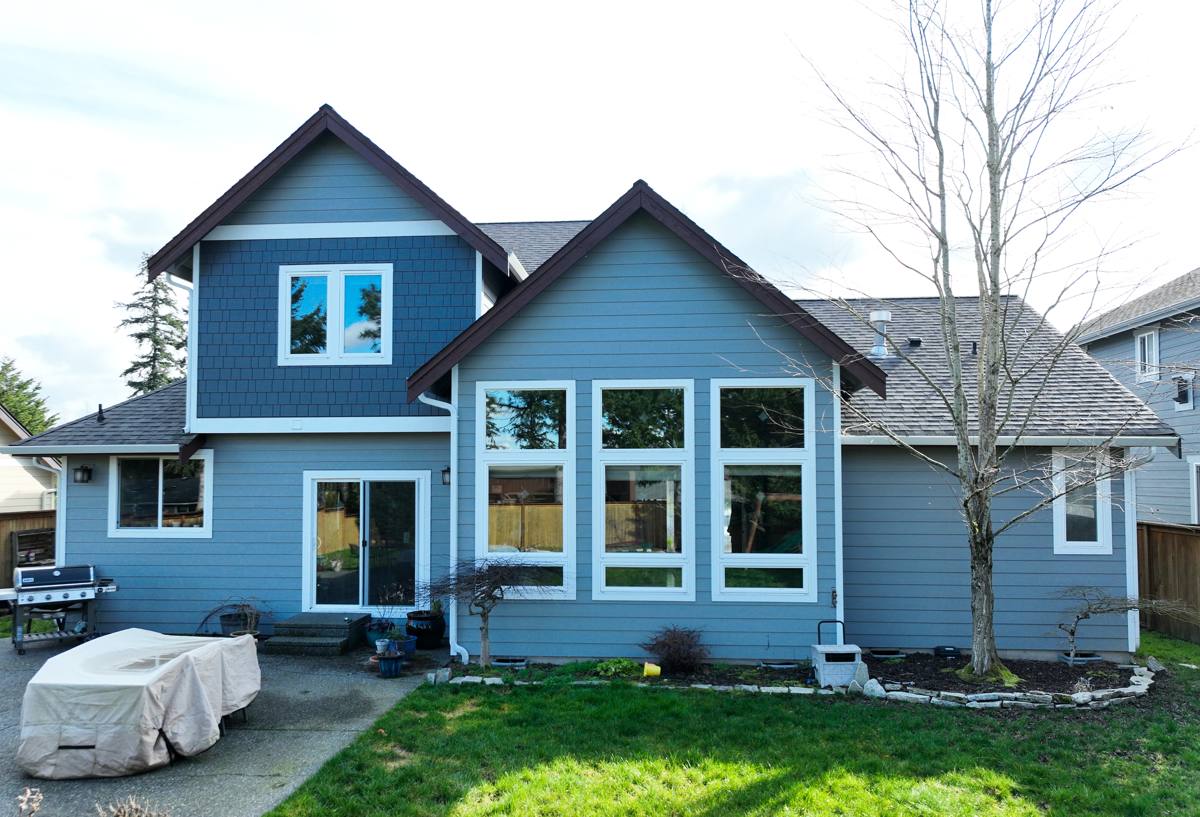
What Engineered Wood Siding Actually Is
LP SmartSide and similar engineered wood products are made from wood strands and fibers, bound with resins and waxes, then pressed into panels or lap boards under heat. The strand-based core is treated with a zinc borate additive intended to resist fungal decay and insect damage, and the exterior face gets a factory-applied primer or overlay. It's a genuine engineering improvement over the old primed hardboard siding of the 1980s and 90s, which had a well-documented history of swelling and rot in wet climates.
The core material, though, is still wood. That's not a knock — it's just a fact that shapes everything else about how the product behaves once it's on a house. Wood-based products expand, contract, and absorb moisture at cut edges, fastener penetrations, and any spot where the factory coating gets breached during installation or over time.
Why It Appeals to Homeowners and Builders
Engineered wood siding is lighter than fiber cement, easier to cut without special blades or dust control, and often less expensive per square foot installed. For a builder working on a tight schedule and budget, those are real advantages, and we don't pretend otherwise.
What Fiber Cement Actually Is
James Hardie siding is made from Portland cement, sand, and cellulose fiber, mixed and cured under pressure and heat (autoclaving) into a dense, stable board. There's no organic wood core to swell, rot, or feed fungus. The material itself is essentially inert to moisture in the way wood is not — it can get wet and dry out without the dimensional movement that causes paint failure and joint gaps in wood-based sidings.
Hardie also engineers its HZ5 product line specifically for climates like ours — the Pacific Northwest zone — with formulations tuned for high moisture exposure and freeze-thaw cycling rather than a one-size-fits-all national product.
Moisture, Salt Air, and Moss: The Local Reality
This is the section that actually matters for a house in Bellingham. We're not comparing these products in a lab or in Phoenix. We're comparing them against Whatcom County's specific conditions: months of driving rain off the Salish Sea, salt-laden air along the waterfront and up through Fairhaven and Chuckanut, and a moss season that can run from October through May on north-facing walls and anything shaded by fir trees.
How Engineered Wood Handles It
The zinc borate treatment in engineered wood is a real improvement, but it protects against decay organisms — it does nothing to stop water absorption at an exposed cut edge, a missed caulk joint, or a fastener that backs out slightly over a few winters. Once moisture gets into the wood-strand core through one of those points, it doesn't evaporate quickly in our climate, where relative humidity stays high and drying days are limited. Swelling at butt joints and panel edges is the most common failure pattern we see on engineered wood siding in this area, usually starting three to eight years in, well before the rest of the wall shows its age.
How Fiber Cement Handles It
Because the board itself doesn't have an organic core, fiber cement doesn't swell or rot from the same moisture exposure. It still needs correct flashing, gapping, and caulking — no siding product is a substitute for good building science — but the material forgives small installation imperfections in a way engineered wood cannot. That matters in a climate where "small imperfections" are inevitable over a 30-year service life.
Fire Performance
This isn't the top concern for most Bellingham homeowners the way it is in wildfire-prone parts of the state, but it's worth stating plainly: fiber cement is noncombustible. Engineered wood, even with fire-retardant treatments, is still a wood-based product and will burn. For homes near wooded lots — common throughout Whatcom County's more rural and forested neighborhoods — this is a genuine, if secondary, factor in the decision.
| Factor | James Hardie Fiber Cement | LP SmartSide Engineered Wood |
|---|---|---|
| Core material | Cement, sand, cellulose fiber | Wood strand/fiber with resin binder |
| Combustibility | Noncombustible | Combustible (treated) |
| Moisture behavior | Does not swell or rot; dries out | Can swell/decay at breached edges |
| Factory finish | ColorPlus baked-on finish available | Factory primer; typically field-painted |
| Typical warranty | 30-year, non-prorated, transferable | 5-year finish / limited product warranty |
| Weight/handling | Heavier; requires fiber-cement blades | Lighter; easier to cut on site |
Finish and Long-Term Maintenance
James Hardie's ColorPlus finish is baked on at the factory under controlled conditions, which produces a more consistent, UV- and moisture-resistant coating than most field-applied paint jobs, and it comes with its own dedicated finish warranty. LP SmartSide is typically factory-primed and then painted after installation, which means the finish quality depends heavily on the painting contractor and the weather window they had to work in — not ideal in a region where a dry, mild stretch long enough for proper paint cure isn't guaranteed every month of the year.
Moss and algae staining is a maintenance issue for any siding in this climate, fiber cement included. The difference is what happens underneath the surface staining. On fiber cement, moss growth is a cosmetic problem you can pressure-wash or treat without worrying about what's happening to the substrate. On engineered wood, prolonged moss and moisture retention against the wall increases the risk that the underlying material is absorbing water at the same time, turning a cosmetic problem into a structural one.
Warranty Structure: Read the Fine Print
Both manufacturers offer warranties, but they're not comparable in scope. James Hardie's standard warranty runs 30 years, is non-prorated, and is transferable to a subsequent homeowner if the home sells — a meaningful selling point in a market where buyers increasingly ask about exterior condition and remaining product life. Engineered wood warranties are typically shorter, more prorated in later years, and often carry more exclusions tied to moisture exposure and installation method — which matters, because moisture exposure is exactly what a Bellingham wall gets the most of.
Cost: Upfront vs. Over Time
We won't quote you invented prices, but the honest framing is this: engineered wood siding typically has a lower material and installation cost upfront. Fiber cement costs more to install, partly because of the material itself and partly because it requires more careful handling, different tooling, and more experienced crews. The real comparison isn't the install-day price — it's the cost of ownership over 20-30 years, including repainting cycles, potential edge or joint repair, and the risk of a partial re-side if moisture damage shows up in one section before the rest of the wall is due for replacement.
Why We Standardized on Hardie
We made a business decision to install one fiber cement system, correctly, every time, rather than offer multiple product lines and let price shop the decision. That decision came from watching engineered wood siding fail at joints and edges on homes across Whatcom County well before its expected service life, and from wanting to stand behind a 30-year transferable warranty rather than a shorter, more conditional one. It also lets our crews specialize — every install uses the same flashing details, the same fastening schedule, and the same product knowledge, instead of splitting attention across product systems with different installation requirements.
What to Check Before You Hire Anyone for a Re-Side
- Ask what warranty actually transfers to a future buyer, and whether it's prorated
- Ask whether the finish is factory-applied or field-painted, and who warranties the paint
- Ask how the contractor details butt joints, corners, and window/door flashing — this matters more than the brand
- Ask how the product performs specifically in coastal, high-rainfall climates, not just "in general"
- Get the manufacturer's installation instructions and confirm the contractor follows them exactly — most siding failures trace back to installation, not the product itself
If you're weighing a re-side in Bellingham or anywhere else in Whatcom County, we're glad to walk your home, point out what our salt air and rain season have already done to your current siding, and give you a straightforward, no-pressure estimate for a James Hardie install done to spec.