 Bellingham Exterior
 Exterior Work Built for Fairhaven's Coastal Conditions
Fairhaven sits close enough to Bellingham Bay that salt-laden air is a daily fact of life for the homes here, not an occasional inconvenience. Add in the driving rain that comes off Puget Sound through the fall and winter, plus a moss season that can stretch for months in the shaded, tree-lined streets typical of this part of Bellingham, and you have a combination that is genuinely hard on a home's exterior. We work throughout Whatcom County, but Fairhaven's specific mix of salt exposure, moisture, and shade is why we approach every estimate here with a close look at how a home's siding, roofline, windows, and any exterior wood have actually held up — not just how old they are.
Older homes in and around Fairhaven were often built with materials that made sense decades ago but were never engineered for this climate. Newer homes sometimes have the opposite problem: materials chosen for cost or speed of installation that don't hold up well once the marine layer, rain, and moss get to work year after year. Either way, the fixes are the same short list — siding, roofing, windows, and decks — and getting each one right in this climate is less about the brand name and more about material choice and installation detail.
Salt Air: The Quiet Damage You Don't See Right Away
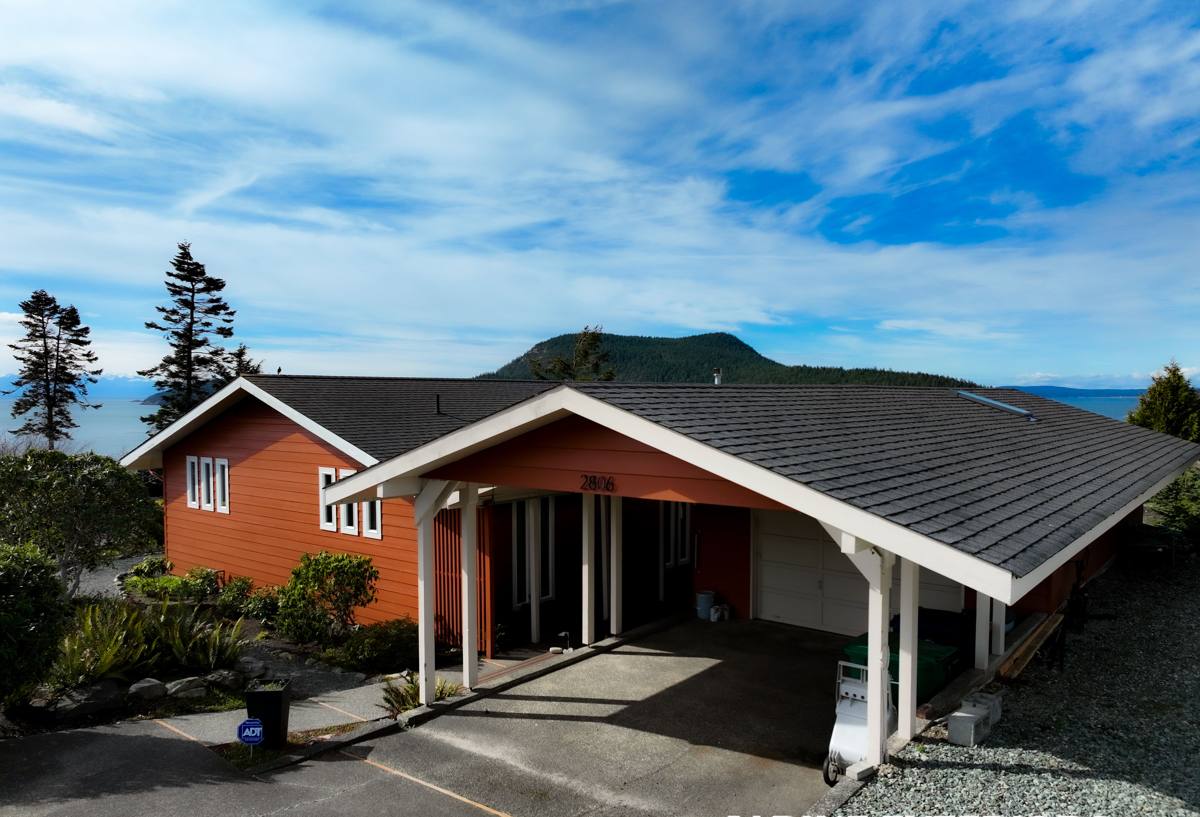
Salt air doesn't just sit on a house — it works its way into fasteners, flashing, and any exposed metal, accelerating corrosion in ways that aren't always visible until a problem is already established. On siding, this shows up as rust bleeding through paint at nail heads, corroded trim fasteners, and premature failure of caulking and sealants that were never rated for a marine environment. On roofing, it means faster degradation of metal flashing, valleys, and any exposed fasteners, which is often where leaks start even when the shingles themselves look fine.
What This Means for Material Choices
In a salt-air environment, corrosion-resistant fasteners and flashing aren't an upgrade — they're the baseline. The same goes for siding materials that don't rely on a surface coating alone to resist moisture intrusion, since coatings are exactly what salt air and driving rain attack first.
Siding: Why We Only Install James Hardie Fiber Cement
We install James Hardie fiber cement siding exclusively. We don't install vinyl, LP SmartSide, Cemplank, Allura, or primed spruce or cedar, and homeowners in Fairhaven deserve to know why before they commit to any siding project.
Vinyl
Vinyl is inexpensive and easy to install, which is exactly why it's common. But it's a thin plastic product that expands and contracts with temperature swings, can crack or warp in wind-driven rain events, and offers no real fire resistance. In a salt-air coastal setting, the fasteners and trim pieces behind vinyl are often the first thing to corrode, and once that happens, repairs mean matching decades-old colors that have long since faded or discontinued.
LP SmartSide
LP SmartSide is an engineered wood product — strand board with a resin coating. It performs reasonably well when installation and caulking are perfect and stay perfect, but it's still a wood-based product, and wood-based products are vulnerable to moisture intrusion at cut edges, seams, and fastener points. In a climate with Fairhaven's rain totals and humidity, any gap in maintenance can let moisture in, and once wood-based siding starts to swell or delaminate, it's a visible, spreading problem.
Cemplank and Allura
Cemplank and Allura are also fiber cement products, and fiber cement as a category is the right call for this climate — non-combustible, dimensionally stable, and resistant to moisture and pests. Where we draw the line is the finish system and the manufacturer standing behind it. We've standardized on James Hardie specifically for its ColorPlus factory-applied finish and its long track record and warranty structure, which we'll cover below.
Primed Spruce or Cedar
Solid wood siding has real appeal — it's a traditional look that fits a lot of Fairhaven's older homes. But solid wood requires ongoing painting, caulking, and inspection to keep moisture out, and in a marine climate with extended damp and shaded periods, that maintenance window shrinks. Moss and mildew take hold faster on wood siding that stays damp, and once rot sets in at a butt joint or corner, the repair often means replacing more than just the damaged board.
James Hardie: What We Install Instead
- Non-combustible fiber cement core that doesn't feed a fire the way vinyl or wood-based products can
- ColorPlus factory finish, baked on under controlled conditions rather than field-painted, which resists fading and chipping better than site-applied paint
- HZ5 and HZ10 product lines engineered for specific climate zones, including moisture and freeze-thaw exposure relevant to the Pacific Northwest
- Dimensionally stable material that doesn't swell, warp, or rot the way wood-based sidings can
- A strong transferable warranty backed by a manufacturer with decades of fiber cement manufacturing behind it
Correct installation matters as much as the product. That means proper clearance from grade and roof lines, correctly lapped and sealed joints, corrosion-resistant fasteners set to the manufacturer's spec, and flashing detail that actually sheds water rather than trapping it — all of which matters more in Fairhaven's rain and salt exposure than it would in a drier inland climate.
| Material | Fire Resistance | Moisture Behavior | Typical Maintenance |
|---|---|---|---|
| Vinyl | Poor | Doesn't rot, but seams and fasteners fail | Low, but limited repair options |
| LP SmartSide | Moderate | Vulnerable at cut edges and seams | Ongoing caulk and paint upkeep |
| Cedar / Spruce | Poor | Prone to rot and moss in damp shade | High — regular painting and sealing |
| Cemplank / Allura | Excellent | Stable, moisture-resistant | Moderate — finish varies by product |
| James Hardie | Excellent | Stable, engineered finish | Low — factory finish holds up |
Roofing: Where Moss and Rain Do the Most Damage
Fairhaven's tree cover and marine humidity make it prime territory for moss and algae growth on roofs, especially on north-facing slopes that don't get much direct sun. Moss holds moisture against shingles, lifts edges over time, and accelerates granule loss — all of which shortens the life of an otherwise sound roof. Driving rain also puts more demand on flashing around valleys, chimneys, and roof penetrations than a drier climate would.
What a Roof Inspection Should Cover Here
- Moss and algae buildup, especially on shaded and north-facing slopes
- Flashing condition around valleys, chimneys, skylights, and vent penetrations
- Granule loss and shingle wear from prolonged dampness
- Gutter and downspout function — clogged gutters back water up under roof edges
- Ventilation, since trapped moisture in the attic compounds every other issue
Windows: Sealing Out Wind-Driven Rain
Wind-driven rain off the Sound doesn't just fall straight down — it gets pushed sideways into window frames, sills, and trim. Older single-pane windows and poorly flashed replacements are common sources of slow leaks that show up as soft trim, stained drywall, or fogged glass long before anyone notices standing water. When we replace windows, correct flashing and sealing at the rough opening matters as much as the window unit itself, especially on walls that take direct weather exposure toward the water.
Energy performance is a secondary but real benefit — well-sealed, properly insulated window units cut down on the drafts and condensation that are common in older Fairhaven homes during the wetter months.
Decks: Built to Handle Standing Moisture
A deck in Fairhaven deals with the same driving rain and shade-driven dampness as the rest of the exterior, plus the added stress of standing water on horizontal surfaces and ground-level moisture wicking up through posts and framing. Moss and algae build up quickly on deck boards that don't get much sun, making surfaces slippery as well as unsightly. The details that matter most are proper drainage and slope, ledger board flashing where the deck meets the house (a common source of hidden rot), and fasteners and hardware rated for wet, coastal conditions.
Deck Material Considerations
- Composite decking resists moisture and moss better than untreated wood but still needs proper ventilation underneath
- Pressure-treated wood requires regular sealing to keep performing in this climate
- Ledger board flashing and joist protection tape are not optional extras in a climate this wet
- Under-deck drainage prevents water pooling against the house foundation
Why a Local Crew Matters in Fairhaven
General contracting advice about siding, roofing, or decks doesn't always account for what a specific neighborhood's microclimate does to a house. A crew that works throughout Whatcom County regularly sees how Fairhaven's proximity to the bay, its tree cover, and its rain exposure compare to drier or more sheltered parts of Bellingham — and that shapes real decisions, like where to prioritize corrosion-resistant fasteners, which roof slopes need closer moss monitoring, and how aggressively to flash a wall that takes direct weather off the water. Local knowledge also means faster response for follow-up questions or warranty service, without a home needing to explain its own climate to an out-of-area company.
Getting Started
Whether you're dealing with a siding system that's past its useful life, a roof with a moss problem that keeps coming back, windows that leak in a windstorm, or a deck that's gone soft at the ledger board, the right first step is an honest, in-person look at what's actually happening — not a guess based on the home's age alone. We'd be glad to take a look at your property in Fairhaven and give you a straightforward assessment, with no pressure attached. Reach out below to schedule a free estimate.