 Bellingham Exterior
 Exterior Contracting in South Hill
South Hill sits above downtown Bellingham with some of the best views in Whatcom County — and with those views comes direct exposure to weather rolling in off Bellingham Bay. Homes on the hill catch wind and driving rain that lower, more sheltered parts of town don't see as often. That elevation and exposure is part of what makes South Hill such a desirable place to live, but it also means the exterior of a house up here works harder than average, year after year, to keep water and wind out.
We're a Bellingham-based exterior contractor working in siding, roofing, windows, and decks. We don't cover all of Western Washington and we don't run crews out of a truck from three counties away — South Hill is inside our normal service radius, and we're familiar with how the older housing stock on the hill, along with the newer infill construction nearby, tends to be built and where it tends to show wear first.
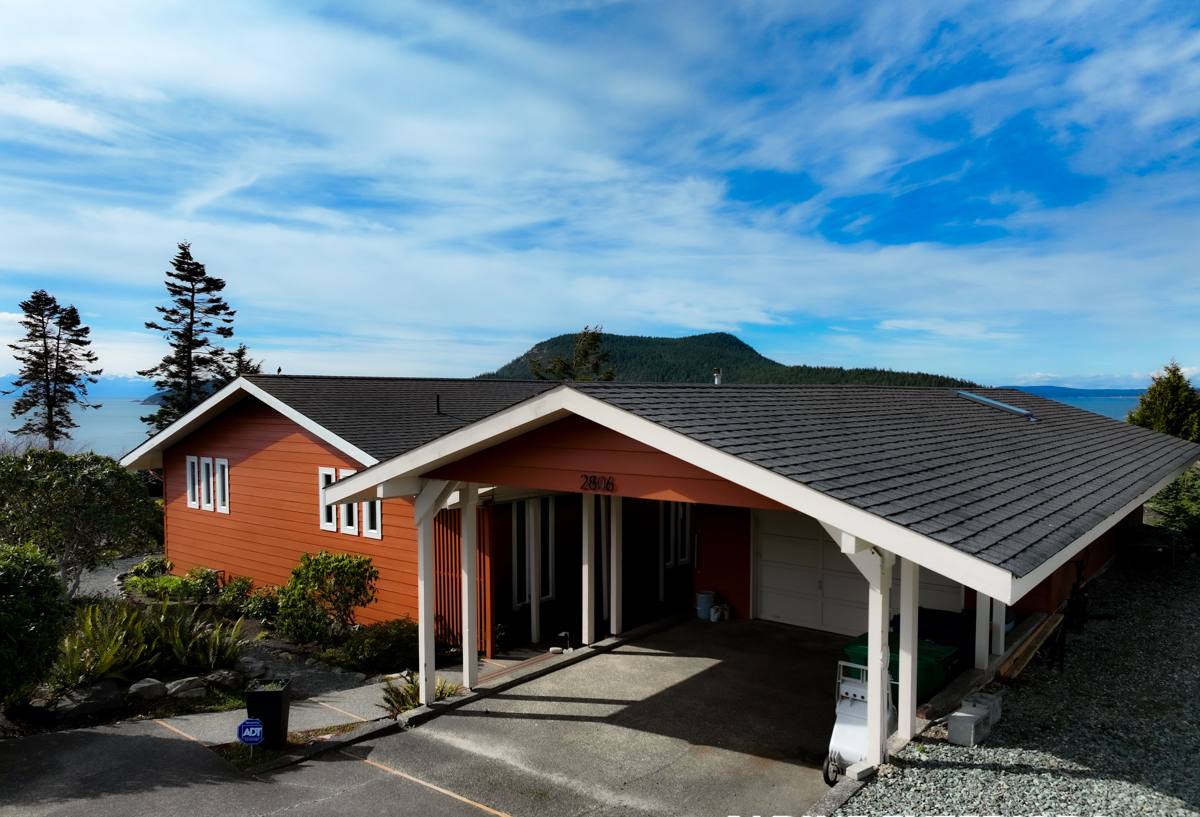
What South Hill's Climate Does to a House
Three things define exterior wear in this part of Bellingham: salt-laden air off the bay, sideways rain during fall and winter storms, and a long, damp moss season that runs from roughly October through April. None of these are dramatic events — there's no single storm that destroys a house here. It's the cumulative effect of moisture sitting against building materials, month after month, that causes problems.
Salt Air
Homes with bay-facing or elevated exposure pick up airborne salt that accelerates corrosion on fasteners, flashing, and metal roofing components. Untreated or under-spec metal hardware on an exterior can start showing rust and pitting years before it would inland.
Driving Rain
Wind-driven rain doesn't just fall straight down — it gets pushed sideways and upward under eaves, around window trim, and behind siding laps that aren't properly sealed or flashed. This is the mechanism behind most hidden rot: water intrusion at a joint or seam that isn't visible from the ground.
Moss and Sustained Dampness
Bellingham's long wet season keeps north-facing walls, roof valleys, and shaded siding damp for extended stretches. Moss and algae take hold on surfaces that don't dry out quickly, and on the wrong siding material, that sustained moisture works its way into the substrate rather than staying on the surface.
Siding: Why We Only Install James Hardie
Siding is where climate exposure shows up first and does the most damage if the wrong product is used. We install James Hardie fiber cement exclusively — we don't install vinyl, LP SmartSide, or wood siding, and that's a deliberate standard, not a limitation of what we're capable of installing.
Vinyl siding can warp, fade, and crack in temperature swings, and it relies almost entirely on caulking and overlap for water management — caulking that needs periodic renewal in a climate that stresses it constantly. Wood siding (cedar, primed spruce) looks good initially but requires ongoing maintenance — repainting, caulking, and moisture monitoring — to hold up against Bellingham's rain totals, and it's genuinely vulnerable to the rot and moss growth this region is known for. Engineered wood products like LP SmartSide perform better than raw wood in some respects but are still wood-based composites, meaning they can swell or degrade at cut edges and panel joints if moisture gets past the finish.
James Hardie fiber cement is cement, sand, and cellulose fiber — it doesn't rot, it isn't a food source for moss and algae growth in the way wood is, and it's non-combustible. Hardie's ColorPlus finish is baked on at the factory under controlled conditions, which gives it better fade and moisture resistance than field-applied paint, and it's backed by a strong transferable warranty. Hardie also makes climate-engineered HZ product lines specifically formulated for different exposure levels, which matters on a hill where one side of a house can see dramatically more wind-driven rain than the other.
| Factor | James Hardie Fiber Cement | Vinyl / Wood-Based Alternatives |
|---|---|---|
| Moisture behavior | Doesn't rot or swell; engineered for wet climates | Wood can rot at joints; vinyl relies on caulk seals |
| Moss/algae resistance | Not an organic food source | Wood is vulnerable; vinyl can still stain |
| Finish durability | Factory-baked ColorPlus finish | Field paint or extruded color, fades/chalks sooner |
| Fire rating | Non-combustible | Vinyl melts; wood is combustible |
| Long-term maintenance | Occasional cleaning | Repainting, caulk renewal, rot inspection |
Roofing on an Exposed Hillside
Roofs on South Hill deal with the same wind and moss pressure as siding, plus direct exposure to whatever storm system is coming off the water. We look at a few things specific to hillside homes when we assess a roof:
- Moss and organic buildup in valleys and on north-facing slopes, which holds moisture against shingles or panels
- Flashing condition around chimneys, skylights, and roof-to-wall transitions — the most common source of leaks in wind-driven rain
- Gutter and downspout capacity, since undersized systems overflow fast in Bellingham's heavier rain events and push water back toward the fascia and siding
- Fastener and metal component corrosion from salt exposure on more exposed lots
We handle both roof replacement and the exterior transitions that go with it — proper flashing where a new roof meets Hardie siding is not something that should be treated as an afterthought.
Windows: Sealing Out Wind-Driven Rain
Older homes on South Hill often still have original or early-replacement windows that were never detailed for the kind of sideways rain this hill sees. Window failure here is rarely the glass itself — it's failed flashing, degraded sealant, or a rough opening that was never properly integrated with the water-resistive barrier behind the siding.
When we replace windows, we treat the flashing and integration with the siding system as part of the job, not a separate trade working in isolation. That matters more on an exposed lot than it does in a sheltered, low-elevation yard, because there's simply more water pressure trying to find a way in during a winter storm.
Signs a Window Needs Attention
- Fogging or condensation between panes (seal failure)
- Soft or discolored trim or sill material
- Drafts or water staining on interior walls below or beside the window
- Visible gaps or failed caulk at the siding-to-window trim joint
Decks: Built for Damp, Not Just Sunny Days
A deck on South Hill spends most of the year wet, shaded part of the day, or both, depending on lot orientation and tree cover. That means ledger board flashing, joist protection, and drainage under the deck surface matter more than the decking material itself. We build and repair decks with an eye toward keeping water moving away from structural framing, since a deck that looks fine on top can be hiding rot in the framing underneath if it wasn't detailed correctly at installation.
Why a Local Crew Matters Here
We're not a national franchise dispatching whoever's available that week. Working across Bellingham and Whatcom County day in and day out means we see how houses on South Hill specifically hold up over time — which sides of a house take the worst of the weather, which older siding and window systems tend to fail first, and what actually needs to be different about a build detail here versus a drier inland climate. That local pattern recognition is hard to replace with a generic install crew, and it's part of why we standardized on materials, like Hardie fiber cement, that are engineered to handle this kind of climate rather than just tolerate it.
What to Expect From an Estimate
A typical exterior assessment on a South Hill home includes a walk-around to check siding condition, roof and gutter condition, window seals and trim, and any deck or framing exposure issues. We'll tell you honestly what needs attention now versus what can wait, and we won't push a full exterior replacement if a targeted repair is the right call.
Questions Worth Asking Any Exterior Contractor Before You Hire
- Are you licensed, bonded, and insured in Washington State?
- Who is actually on the crew doing the work — employees or subcontractors?
- What's your plan for flashing and water management at siding, window, and roof transitions?
- What warranty applies to materials, and separately, what warranty applies to your labor?
- Can you walk me through why you recommend one material over another for this specific house?
If you're dealing with aging siding, a roof that's past its prime, drafty windows, or a deck that needs attention on South Hill, we're happy to take a look and give you a straight assessment. Reach out for a free, no-pressure estimate using the form below.