 Bellingham Exterior
 Exterior Work in Cordata, Bellingham
Cordata is one of the newer, faster-growing pockets of north Bellingham, sitting close to I-5 and Bellis Fair with a mix of housing stock that ranges from established subdivisions to homes built within the last couple of decades. That mix matters when you're thinking about exteriors. Newer homes in the area were often built with whatever siding, trim, and window packages were standard or cost-effective at the time, and those choices are now old enough that homeowners are starting to see how they actually held up against Whatcom County weather — not how they looked on a spec sheet.
We work throughout Bellingham and Whatcom County, and Cordata gets the same climate reality as the rest of the region: salt-tinged marine air off the Sound, driving rain that comes in sideways during fall and winter storms, and a moss and algae season that can run most of the year on shaded north- and west-facing walls. None of that is unique to Cordata, but it's worth taking seriously if you're planning any siding, roofing, window, or deck work here.
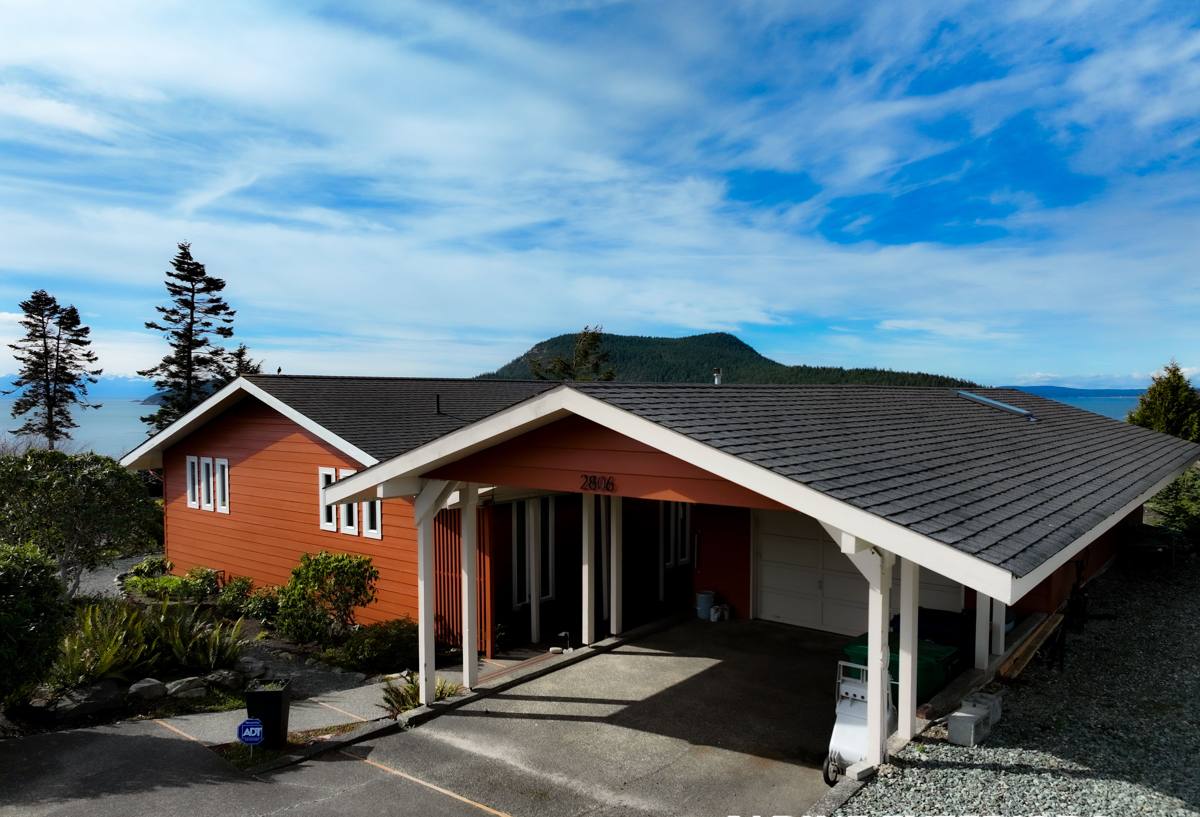
What the Climate Does to Cordata Homes
Moisture Is the Constant Threat
Bellingham doesn't get extreme weather often, but it gets sustained, low-intensity moisture exposure almost constantly for a good chunk of the year. Wind-driven rain finds gaps in flashing, caulking, and siding laps that a calmer climate would never expose. Over years, that steady moisture works its way behind poorly sealed siding, around window frames, and under roofing that wasn't detailed correctly the first time.
Moss, Algae, and Shade
Cordata's tree cover and lot layouts mean plenty of homes have at least one elevation that rarely sees direct sun. Those shaded walls and roof planes are where moss and algae take hold first — and once established, they hold moisture against the surface underneath, accelerating rot, paint failure, and, on roofs, granule loss and shingle degradation.
Salt Air, Even Inland
Bellingham sits on the water, and salt-laden air carries further inland than most people expect, especially with the region's prevailing winds. Salt exposure speeds up corrosion on fasteners, flashing, and any exterior material that isn't rated to handle it, and it can accelerate the breakdown of coatings and finishes that aren't built for a marine-adjacent climate.
Siding: Why We Only Install James Hardie
We install James Hardie fiber cement siding exclusively. We don't install vinyl, LP SmartSide, Cemplank, Allura, or primed wood siding like spruce or cedar, and that's a deliberate standard, not an accident of what we happen to stock.
- Vinyl is affordable and low-maintenance in mild, dry climates, but it can warp in temperature swings and its seams and J-channels give wind-driven rain a lot of entry points over time.
- LP SmartSide and other engineered wood products perform well when installation is flawless, but they're wood-based, and any breach in the factory coating exposes the substrate to exactly the kind of sustained moisture Whatcom County delivers.
- Cemplank and Allura are also fiber cement, and they're not bad products in the abstract — but we've standardized our crews, training, and warranty process around one system rather than juggling several, and Hardie's specific HZ5 formulation and ColorPlus finish are engineered for exactly this climate zone.
- Primed spruce or cedar requires disciplined repainting on a schedule most homeowners don't keep up with, and once bare wood is exposed to Bellingham's rain cycle, rot can move fast.
James Hardie fiber cement doesn't absorb water the way wood-based products can, it won't warp or buckle the way vinyl can in a heat cycle, and it's non-combustible, which matters as wildfire smoke and dry-season risk become more of a Pacific Northwest reality even in a generally wet region. The ColorPlus factory finish is baked on and warrantied against fading and chipping, which means fewer repaint cycles over the life of the siding. For a home in Cordata that's going to face decades of marine rain and shaded moss growth, that combination is why we put Hardie on the wall and nothing else.
Roofing in a Wet, Mossy Climate
Roofs in Cordata take a beating from the same conditions that affect siding: sustained rain, shaded moss growth, and salt air working on fasteners and flashing. Roofing failures around here are rarely dramatic — they're usually slow leaks that start at a valley, a chimney flashing, or a vent boot that wasn't sealed correctly, and they go unnoticed until there's staining on an interior ceiling.
Good roofing work in this climate comes down to details more than material choice: proper underlayment, correctly lapped flashing at every penetration, ice-and-water shield in vulnerable areas, and ventilation that keeps moisture from building up in the attic space. We also pay attention to how a roof sheds water toward gutters, since undersized or poorly pitched gutter systems are a common contributor to fascia and soffit rot on homes throughout Whatcom County.
Windows That Hold Up to Driving Rain
Wind-driven rain is the test that exposes weak window installations in this region. It's rarely the window unit itself that fails first — it's the flashing and sealant detail around it. Water that gets behind a window frame and into the wall cavity can sit there for months before it becomes visible, and by then there's often rot in the framing or sheathing around the opening.
When we replace windows, we treat the flashing and integration with the surrounding siding as seriously as the window unit itself. That's part of why we prefer to handle siding and window work together where possible — it lets us control the water management at every transition point instead of inheriting someone else's flashing details.
Decks: Built for Year-Round Exposure
Decks in Cordata deal with the same shade-and-moisture combination as siding and roofing, plus foot traffic and standing water if drainage isn't right. Ledger board attachment, proper flashing where the deck meets the house, and materials that can handle a long wet season without becoming slick with algae are the things that separate a deck that lasts from one that needs major repair inside a decade. We build and repair decks with the same attention to water management we bring to siding and roofing, because a deck that leaks at the ledger board is really a siding and structural problem wearing a deck's clothing.
Siding Material Comparison for Whatcom County Homes
| Material | Moisture Behavior in This Climate | Maintenance Burden | Our Position |
|---|---|---|---|
| James Hardie Fiber Cement | Doesn't absorb/swell; factory finish sheds moisture well | Low; occasional wash, no repainting cycle with ColorPlus | What we install |
| Vinyl | Seams and channels allow wind-driven rain intrusion | Low, but prone to warping/cracking over time | Not installed |
| LP SmartSide / Engineered Wood | Wood-based; vulnerable if coating is breached | Moderate; edge sealing and inspection needed | Not installed |
| Cemplank / Allura Fiber Cement | Similar performance profile to Hardie | Low | Not installed (standardized on Hardie) |
| Primed Cedar / Spruce | Bare wood exposed once coating fails; rot risk is real | High; repainting on a strict schedule | Not installed |
Why a Local Crew Matters
Exterior work in Whatcom County isn't the same job as exterior work in a dry inland climate, and it shows in the details — how flashing is lapped, how much ventilation a wall assembly needs, where moss is likely to establish itself first, how deep salt exposure reaches from the water. A crew that works Bellingham and the surrounding communities regularly builds a feel for which elevations of a house need the most attention and which failure points show up first on homes like yours. That's not something a crew unfamiliar with the region picks up on the first pass.
We also know the practical side of working in Cordata specifically: navigating the mix of subdivision HOAs and standalone lots, working around the area's tree cover and drainage patterns, and scheduling around the region's wetter months without letting a job drag into the next storm system.
What to Check Before Hiring for Exterior Work in Cordata
- Ask what siding material they install and why — a contractor who installs everything usually isn't specialized in any one system's correct detailing.
- Confirm they carry Washington contractor licensing and adequate insurance, and ask to see it, not just hear about it.
- Ask specifically how they handle flashing at windows, roof penetrations, and deck ledger boards — this is where most Whatcom County exterior failures start.
- Get a written scope that separates material, labor, and any tear-off or disposal costs.
- Ask about warranty coverage on both material and labor, and get it in writing.
- Be wary of bids that are dramatically lower than others for the same scope — it usually means a corner is being cut somewhere in the assembly you can't see once it's closed up.
Getting Started
If you're in Cordata and dealing with siding that's starting to show its age, a roof that's due for attention, windows that let in drafts or moisture, or a deck that needs rebuilding, we're glad to take a look and give you a straight assessment of what's going on and what it'll take to fix it. We offer free, no-pressure estimates — fill out the form below and we'll get in touch to schedule a time to come out.