 Bellingham Exterior
 Exterior Work Built for Columbia's Conditions
Columbia sits close enough to Bellingham Bay that salt-laden air is a daily fact of life, not an occasional nuisance. Add Whatcom County's long wet season, driving rain off the water, and a moss season that can stretch from fall through spring, and you have a neighborhood where exterior materials get tested harder than they do a few miles inland. We've built our approach around those specific conditions, not a generic "Pacific Northwest" checklist.
Homes in Columbia range from older single-family construction to newer infill, and each era brings its own exterior weak points. What they share is exposure: wind-driven moisture that finds its way into seams and laps, and a moss and algae load that thrives in the shade and dampness this area holds onto longer than sunnier parts of town. Exterior materials and installation details that work fine in a dry climate often fall short here.
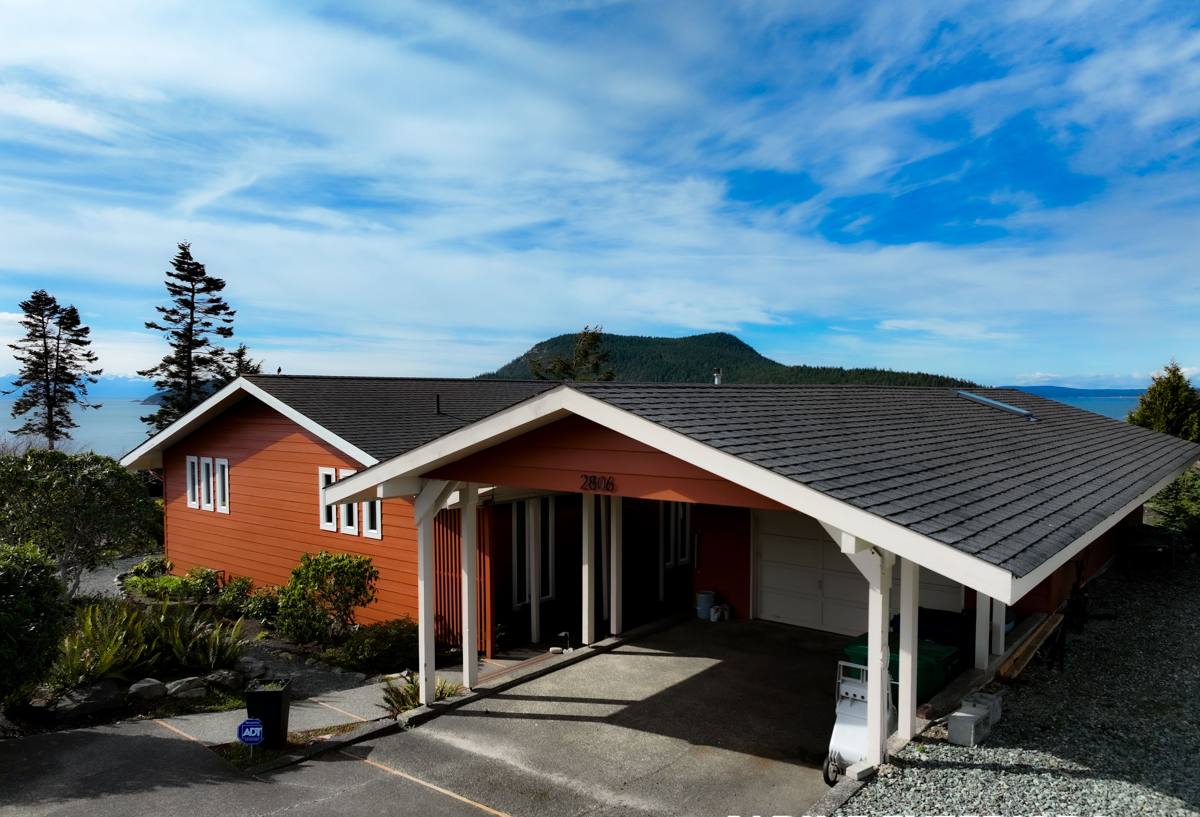
What Salt Air and Driving Rain Actually Do to a House
Salt Air
Proximity to the bay means airborne salt settles on siding, trim, roofing, and metal fasteners. Over years, that accelerates corrosion in unprotected metal components — flashing, nail heads, gutter hardware — and it can degrade paint finishes faster than in areas farther from the water. It doesn't destroy a house overnight, but it shortens the service life of anything not specified or finished to handle it.
Driving Rain
Rain that comes in sideways off the water behaves differently than a straight-down shower. It gets pushed up under laps, into gaps around windows, and behind trim that isn't properly flashed. A roof or siding system that only has to shed water vertically can still fail when wind is pushing that water horizontally into every seam it can find. This is a detailing problem as much as a materials problem — it's about how the pieces are installed together, not just what they're made of.
Moss Season
Shade, moisture, and cool temperatures are moss's favorite combination, and Columbia has plenty of all three for a good part of the year. Moss holds water against roofing and siding surfaces long after the rain has stopped, which is exactly the kind of prolonged dampness that causes rot in wood-based products and accelerates wear on roofing materials. Left unaddressed, moss growth on a roof or along the base of siding is a slow, steady problem that gets more expensive to fix the longer it's ignored.
Siding: Why We Only Install James Hardie
We install James Hardie fiber cement siding exclusively. We don't install vinyl, LP SmartSide, Cemplank, Allura, primed spruce, or cedar, and we're upfront about why. Each of those products has genuine strengths — cedar looks great when new, vinyl is inexpensive, engineered wood siding installs quickly — but in a climate like Whatcom County's, with salt air and sustained moisture exposure, they carry trade-offs we're not willing to put our name behind.
Wood-based and engineered wood siding products are vulnerable to moisture intrusion at cut edges and seams; once water gets in, rot can spread before it's visible from the outside. Vinyl can warp or fade with UV and temperature swings, and it's a thin material that doesn't hold up well to impact. Cedar requires ongoing maintenance — staining or sealing on a recurring schedule — to keep moisture out, and skipping a cycle in a wet climate has real consequences.
James Hardie fiber cement is non-combustible, dimensionally stable, and engineered specifically for climate zones like ours through its HZ5 product line, which is formulated for the wetter, milder conditions found in the Pacific Northwest. The factory-applied ColorPlus finish is baked on under controlled conditions, which gives it more consistent, longer-lasting color performance than field-applied paint — a real advantage when salt air and UV are working against a finish year-round. Hardie backs the product with a strong transferable warranty, but that warranty only holds up if installation follows manufacturer specifications for flashing, clearances, and fastening. That's where a lot of siding jobs — regardless of brand — actually go wrong.
Correct Installation Details We Follow
- Proper clearance between siding and grade, decks, patios, and roof lines to prevent wicking
- Flashing at every window, door, and penetration, installed to shed water outward and downward
- Correct fastener type, spacing, and depth per Hardie's published installation guide
- Caulking and sealant only where specified — not as a substitute for proper flashing
- Butt joints and seams treated to prevent water intrusion at the most vulnerable points
Roofing for a Wet, Mossy Climate
Roofing in Columbia has to manage two things at once: shedding heavy, wind-driven rain and resisting moss and algae growth in the shaded, damp stretches that don't dry out quickly. We look at ventilation, underlayment quality, and flashing detail as closely as we look at the roofing material itself, because a roof that traps moisture underneath the surface will develop problems no matter how good the shingles are.
Moss prevention starts with design choices — reducing the organic debris that collects in valleys and along eaves, and specifying materials and treatments suited to shaded exposure — combined with a realistic maintenance conversation about periodic cleaning. We'd rather set that expectation up front than have a homeowner surprised by moss creeping back a year or two after a roof replacement.
Windows: Sealing Out Wind-Driven Rain
Window performance in this neighborhood comes down almost entirely to installation quality. A well-made window installed with poor flashing will leak; a mid-grade window installed correctly, with proper flashing integration into the surrounding siding, will outperform it. We pay particular attention to how window flashing ties into the Hardie siding system around it, since that transition point is one of the most common places water finds its way into a wall assembly during a sideways rain event.
We also talk with homeowners about energy performance, since older single-pane or early double-pane windows in this area often show their age through condensation, drafts, and higher heating costs during Whatcom County's long heating season.
Decks: Built to Handle Standing Moisture
A deck in Columbia deals with the same moss and moisture pressures as the roof and siding, but at ground level, where drainage and airflow matter even more. Proper spacing between boards, adequate ventilation underneath, and materials or finishes suited to sustained dampness all factor into how long a deck holds up before boards start cupping, splitting, or hosting moss and algae themselves.
We evaluate existing structures for rot at ledger boards and posts — common failure points where water collects and doesn't dry out — before recommending repair versus rebuild.
Comparing Siding Options for This Climate
| Factor | James Hardie Fiber Cement | Vinyl | Cedar / Wood-Based |
|---|---|---|---|
| Moisture resistance | Engineered for wet climates; non-combustible | Water-resistant but can warp with moisture and temperature swings | Vulnerable to rot at cuts and seams without diligent maintenance |
| Maintenance | Low; factory-baked ColorPlus finish | Low, but fading and warping increase over time | High; recurring staining/sealing required |
| Salt air performance | Strong when properly finished and installed | Can become brittle with UV and salt exposure over years | Requires more frequent finish renewal near the coast |
| Warranty | Strong transferable warranty, contingent on correct install | Varies widely by manufacturer and grade | Typically limited or none on the material itself |
Why a Local Crew Matters Here
Exterior work in Columbia isn't the same job as exterior work in a drier, inland part of Washington. A crew that installs to spec in a mild climate can make choices — on flashing, clearances, fastening, or ventilation — that simply don't hold up against sustained salt air and driving rain. We work in Whatcom County conditions every day, which means we're not guessing at how a wall assembly or roof detail will perform once winter storms roll in off the water.
That local familiarity also shapes how we sequence a project. We plan around this area's wet season rather than fighting it, and we know which details — flashing laps, deck ledger connections, roof valley treatment — deserve the extra ten minutes it takes to get right the first time.
Getting Started
If you're noticing moss creeping up your roofline, siding that's holding moisture longer than it should, windows that draft or fog, or a deck that's starting to feel soft underfoot, it's worth having a local crew take a look before small issues turn into structural ones. We offer free, no-pressure estimates for homeowners in Columbia — use the form below to get started.