 Bellingham Exterior
 Decks in Columbia Take a Different Kind of Beating
Columbia sits close enough to Bellingham Bay that salt-laden air is a daily fact of life, not an occasional weather event. Combine that with Whatcom County's long wet season and the moss growth that comes with months of shade and moisture, and you've got a set of conditions that ages an outdoor deck faster than most homeowners expect. A deck that would hold up fine in a dry inland climate can show real structural trouble here in half the time if it wasn't built — or isn't being replaced — with this specific environment in mind.
This page is about one job, done right, in one neighborhood: full deck replacement for Columbia homes. Not a general overview of decking, and not a repair guide. If your deck is past the point where patching boards makes sense, here's what actually goes into replacing it correctly in this climate, and why the details matter more here than they would somewhere drier.
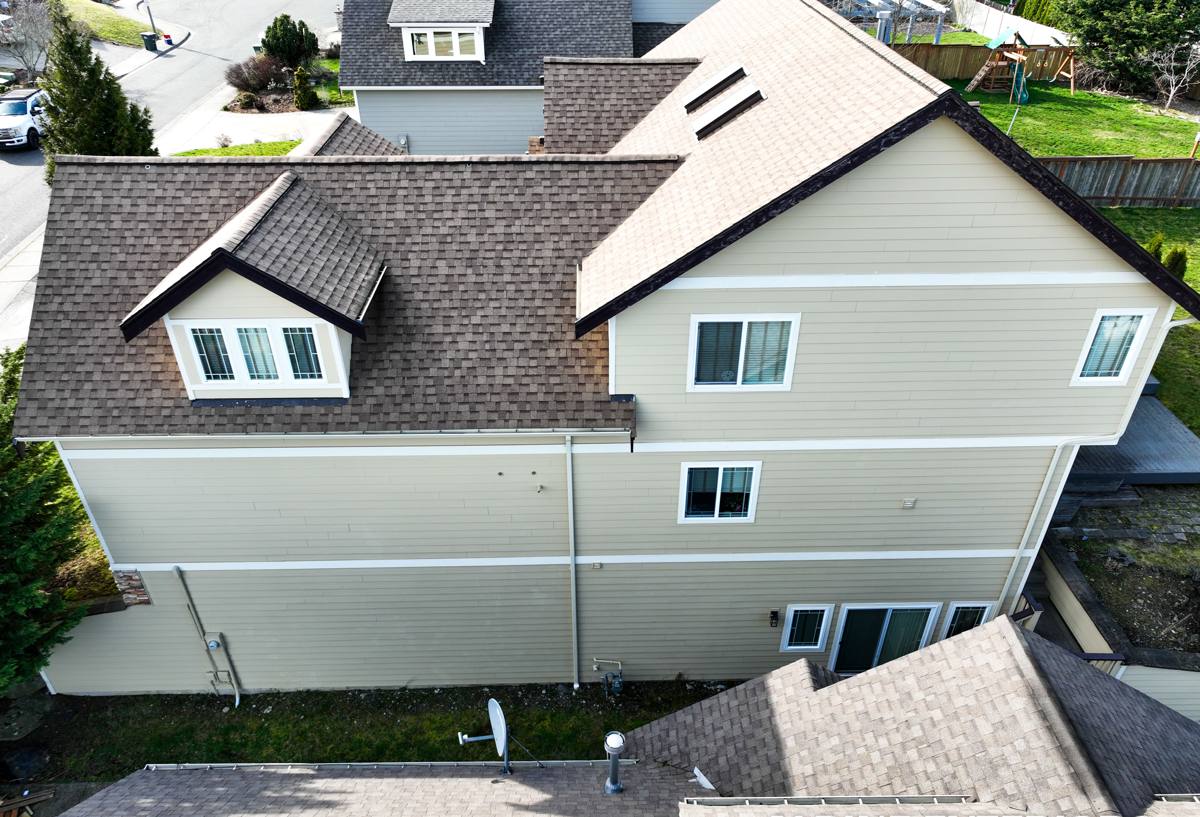
What Salt Air, Rain, and Moss Actually Do to a Deck
Salt Air and Metal Fasteners
Airborne salt accelerates corrosion in anything metal — nails, screws, joist hangers, bolts. Once fasteners start corroding, they lose holding strength long before the wood around them looks obviously bad. A deck can look structurally sound on the surface while the connections underneath are quietly failing. This is one of the main reasons a deck that's ten to fifteen years old near the bay needs a hands-on inspection rather than a guess from the porch.
Driving Rain and Moisture Intrusion
Bellingham doesn't just get rain — it gets rain pushed sideways by wind off the water, which finds its way into places a straight-down rain wouldn't reach: ledger board connections, under railing posts, around any spot where two pieces of wood meet without a gap to drain and dry. Once moisture gets trapped in a joint, it stays trapped, and that's where rot starts — usually invisible until a board flexes or a post feels soft.
Moss and Constant Surface Moisture
A long moss season means extended stretches where the deck surface simply doesn't fully dry out, especially on the shaded side of a house or under overhangs. Moss and algae hold moisture against the decking material, which is hard on wood fibers and can make composite and wood surfaces alike dangerously slick. Beyond the slip hazard, chronic surface dampness is one of the biggest drivers of premature decking failure in this part of Whatcom County.
Signs a Columbia Deck Needs Replacement, Not Another Repair
Repairs make sense when the problem is isolated. Replacement makes sense when the problems are systemic — when the same climate stress that damaged one board or one post has likely been working on the rest of the structure at the same time. Here's a practical checklist we use when evaluating a deck:
- Soft, spongy, or spring-back decking in multiple areas, not just one board
- Rust staining or visibly corroded fasteners around joist hangers and ledger connections
- Gaps or movement where the ledger board meets the house — a common failure point in wet climates
- Posts or railing supports that feel loose or flex under normal weight
- Persistent moss or dark staining that keeps returning within weeks of cleaning
- Visible daylight or rot at joist ends, especially near the ground or under low-clearance sections
- A deck older than 15–20 years that has never had its structural connections inspected
If two or more of these apply, it's usually more cost-effective — and safer — to replace than to keep chasing repairs on a structure that's fighting the climate on every front.
What a Correct Deck Replacement Actually Involves
Starting Below the Surface
A deck replacement that's worth doing starts with the parts you won't see once it's finished: footings, framing, and the ledger connection to the house. In a climate with this much sustained moisture, footings need to be sized and set correctly for our soil and frost conditions, framing needs proper spacing for drainage and airflow underneath, and the ledger board — the single most common failure point on any deck attached to a house — needs correct flashing so water is directed away from the house structure instead of into it.
Fasteners and Hardware Built for This Environment
Given the salt air exposure in Columbia, we don't treat fastener selection as an afterthought. Corrosion-resistant hardware rated for coastal or high-moisture exposure costs more up front but is the difference between a deck that holds its structural integrity for decades and one that develops hidden weak points within a handful of years.
Drainage and Airflow Underneath
One of the most overlooked parts of a correct deck build is what happens under the decking surface. Proper joist spacing, ventilation, and grading beneath the deck let moisture escape instead of pooling — which matters enormously here given how many months out of the year the ground stays damp.
Choosing Decking Material for a Bay-Adjacent Climate
There's no single "correct" decking material for every homeowner — it depends on budget, maintenance appetite, and how much sun or shade the deck gets. But in a salt-air, high-moisture environment, some trade-offs matter more than others.
| Material | How It Handles This Climate | Maintenance Reality |
|---|---|---|
| Pressure-treated wood | Solid structural performance if fasteners and flashing are correct; surface still absorbs moisture | Needs regular cleaning and refinishing to resist moss and graying |
| Cedar | Naturally moisture- and insect-resistant, ages well with the coastal look many homeowners want | Needs periodic sealing to hold its resistance long-term |
| Composite decking | Doesn't absorb moisture the way wood does; consistent performance across wet seasons | Low maintenance, but surface can still get slick with moss and algae — needs regular cleaning |
| PVC decking | Fully moisture-resistant surface, strong option directly exposed to salt air | Very low maintenance; higher upfront material cost |
We're happy to walk through these trade-offs in person — what matters most is picking a material that matches how you actually use the deck and how much upkeep you want to take on, not just what looks best on day one.
How Our Deck Replacement Process Works
1. On-Site Assessment
We start by physically checking the framing, footings, and ledger connection — not just the visible decking — so you know whether you're dealing with a surface problem or a structural one before any work begins.
2. Straight Talk on Scope and Options
You'll get a clear explanation of what needs to be replaced, what material options make sense for your specific exposure and budget, and why — no upselling material you don't need.
3. Permitting
Deck replacement in the City of Bellingham and unincorporated Whatcom County typically requires a building permit, particularly for decks above a certain height or attached to the house. We handle that process as part of the job so you're not left tracking down paperwork.
4. Demolition and Structural Rebuild
Old decking, framing, and any compromised footings come out. We rebuild the structure to current code, with the flashing, fastener, and drainage details that this climate demands.
5. Decking Installation and Final Walkthrough
Once the structure is sound, we install your chosen decking material and finish with railings, stairs, and any trim work, then walk the finished deck with you before calling the job done.
What Deck Replacement Typically Costs
Every deck is different, and the honest answer is that final cost depends on size, material, structural condition, and site access. That said, here are the main factors that move the number:
| Cost Factor | Why It Matters |
|---|---|
| Deck size and layout | Square footage and complexity (multiple levels, stairs, angles) drive labor and material quantities |
| Decking material chosen | Pressure-treated wood, cedar, composite, and PVC span a wide cost range |
| Structural condition underneath | Rotted framing or undersized footings add rebuild work beyond the visible surface |
| Ledger and flashing work | Correcting a poor original ledger connection is worth the extra cost to prevent repeat moisture damage |
| Railings and code requirements | Height and guardrail requirements affect both material and labor |
| Site access | Grade changes, tight yards, or limited equipment access can add time |
We give real, itemized numbers after an on-site look — not a phone estimate — because in this climate, what's under the old decking often changes the scope.
Why It Matters That We Already Work in Columbia
A deck built for a dry inland climate and a deck built for Columbia's salt air and moss season are not the same project, even if they look identical from the street. Crews that don't regularly work near Bellingham Bay can miss the details that matter here — under-spec fasteners, ledger flashing that doesn't account for wind-driven rain, or decking material chosen without factoring in a long moss season. We're on Columbia decks regularly enough to know which failure points show up first in this specific environment, and we build to prevent those problems rather than fix them again in five years.
We also understand that Bellingham and Whatcom County permitting requirements, inspection expectations, and local code details are part of doing the job right the first time — not a separate hassle layered on top of construction.
Ready When You Are
If your deck is showing the wear that's common on Columbia homes — soft boards, rusting hardware, moss that won't quit, or a structure you're just not confident in anymore — we're glad to take a look. Fill out the form below for a free, no-pressure estimate, and we'll give you a straight assessment of what your deck actually needs.