 Bellingham Exterior
 Why Siding Replacement Looks Different in Sudden Valley
Sudden Valley sits back from saltwater, but it doesn't escape the marine climate that defines Whatcom County. Weather systems moving through Bellingham and off the Salish Sea still bring the same salt-tinged, moisture-laden air, driving rain, and long gray stretches that wear on exterior materials countywide. What makes Sudden Valley's siding challenge distinct is what's layered on top of that: dense second-growth forest, lakeside humidity off Lake Whatcom, and lots where tree canopy keeps whole sides of a house in shade for most of the year.
Shade is the quiet enemy of siding here. A wall that never sees direct sun stays damp longer after every rain, and that extended dry-out time is exactly what moss, algae, and mildew need to take hold. Combine that with the driving rain that comes sideways during fall and winter storms, and you get siding that's under near-constant moisture stress in a way a sunnier, more open Bellingham lot simply isn't. Any replacement plan for a Sudden Valley home has to account for this before a single board goes up.
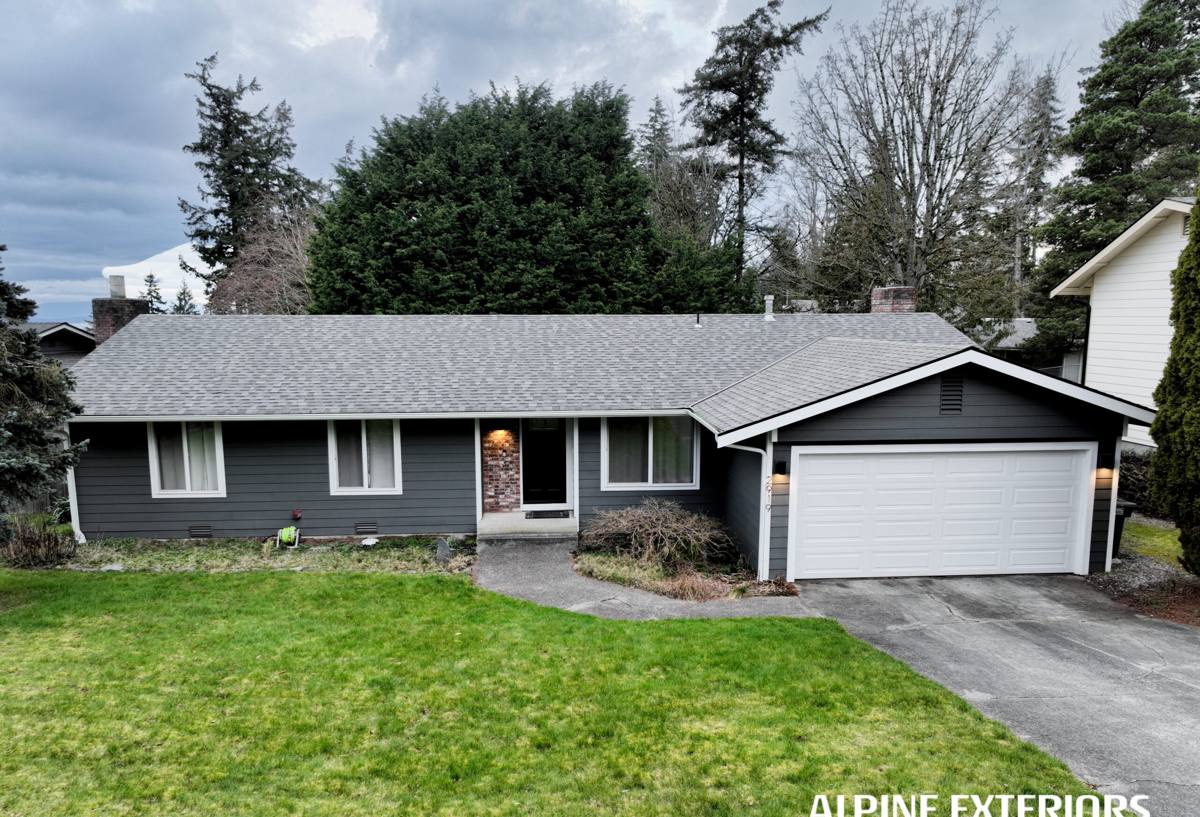
Signs Your Sudden Valley Home Needs New Siding, Not Just Repair
Not every siding problem calls for full replacement, but in a shaded, moisture-heavy setting like this one, small issues escalate faster than homeowners expect. Here's what tells us a home is past the point of patching:
- Green or black staining that returns within weeks of being pressure washed or treated
- Soft, spongy, or crumbling spots when you press on the siding, especially near the bottom courses or under window sills
- Visible warping, buckling, or gaps between boards that weren't there a few years ago
- Paint that's peeling, bubbling, or failing in the same spots year after year despite repainting
- Siding that's original to a home built more than 20-25 years ago, particularly if it's wood, hardboard, or older composite material
- Interior signs like musty smells, peeling interior paint, or soft drywall on exterior walls
Any one of these can sometimes be addressed locally. Several together, especially on a shaded or lake-facing elevation, usually means the water-resistive barrier and sheathing behind the siding have already been compromised — and that's a replacement conversation, not a repair one.
What a Correct Siding Replacement Actually Involves
Siding replacement done right is mostly about what happens before the new material goes on. On a shaded, moisture-prone property, cutting corners at this stage is how a home ends up with the exact same rot problem in ten years, just hidden behind new boards.
Tear-off and inspection
Old siding comes off in full, not patched around, so we can actually see the sheathing underneath. This is where we find out if there's hidden rot, soft spots, or water staining that never showed on the surface — common in wooded lots where moisture sits against the wall longer than it should.
Water-resistive barrier and flashing
A new weather-resistant barrier gets installed correctly lapped, sealed at seams, and integrated with flashing at every window, door, and roofline transition. This is the layer that actually keeps water out of the wall assembly — the siding itself is the second line of defense, not the first. Given how much rain a shaded Sudden Valley wall sees, this step gets no shortcuts.
Proper fastening and clearances
James Hardie siding has manufacturer-specified nailing patterns, fastener types, and minimum clearances from grade, roofing, and decks. On wooded lots, we also pay close attention to clearance from landscaping and tree cover, since siding installed too close to soil or vegetation traps moisture and invites the moss and mildew growth that's already a challenge here.
Finish work
Trim, caulking at the right joints (and no caulking at the ones that need to breathe), and touch-up of factory-finished edges. Small details, but they're the difference between siding that sheds water cleanly and siding that starts failing at the seams within a few seasons.
Why We Install Only James Hardie Fiber Cement
We install James Hardie fiber cement siding exclusively. We don't offer vinyl, LP SmartSide, or primed wood siding, and that's a deliberate standard, not a lack of options. In a climate where siding sits damp for extended periods under tree cover, we want a material that doesn't rot, doesn't feed mold and moss the way wood-based products can, and doesn't warp or crack in temperature swings the way vinyl does over time. Fiber cement is also non-combustible, which matters to an increasing number of Whatcom County homeowners thinking about wildfire exposure on wooded properties.
Hardie's ColorPlus factory finish is baked on under controlled conditions, which gives it better fade and moisture resistance than field-applied paint — a real advantage on shaded elevations where paint has less sun exposure to help it cure and hold. It's not that other products can't work anywhere; it's that we'd rather stand behind one system we know performs correctly in this specific climate than install several and hope.
Choosing the Right Hardie Line and Color for a Wooded, Lakeside Lot
James Hardie's HZ5 product line is engineered for climates like ours, with freeze-thaw cycles and sustained moisture exposure. Beyond the base product, a few choices matter more in Sudden Valley's setting than they would on an open, sunny lot:
| Consideration | Why it matters here |
|---|---|
| Color value | Very dark colors on heavily shaded walls show algae and moss growth less readily than pale colors, though all siding benefits from occasional cleaning |
| Panel vs. lap profile | HardiePlank lap siding is the most common choice; HardiePanel with battens can suit a more modern or cabin-style look that fits Sudden Valley's wooded aesthetic |
| Trim and soffit detailing | Proper venting and trim keep moisture from getting trapped where tree cover already slows drying |
| ColorPlus vs. field paint | Factory finish holds up better under low-sun, high-moisture conditions than paint applied and cured on-site |
None of these choices are purely cosmetic on a lot like this — each one either helps the siding shed and dry out faster, or works against it.
Our Process for Sudden Valley Projects
Sudden Valley is a private, gated community, and that shapes how we schedule and run a project there compared to a typical in-city job. We coordinate access in advance, work efficiently once on-site, and keep the property tidy day to day, since these are often tighter, tree-lined lots with less staging room than a standard Bellingham street.
We also build weather into the schedule realistically. Tear-off and water-resistive barrier installation need a dry window to be done right, and we'd rather adjust timing around a rain system than rush a step that protects the house for the next 30-plus years. On a wooded, shaded lot, that patience matters more than it would somewhere drier.
If your property is part of an HOA with design review requirements, we can work from those guidelines for siding color and material before we ever order product, so there are no surprises partway through.
Cost Factors for a Sudden Valley Siding Replacement
Every home is different, but these are the main variables that move the price of a siding replacement in this area, in roughly the order they tend to matter:
| Factor | Why it affects cost |
|---|---|
| Extent of hidden damage | Rot or soft sheathing found during tear-off adds repair scope before new siding can go on |
| Home size and wall complexity | More corners, gables, and trim detail mean more labor and material cutting |
| Siding profile chosen | Lap siding, panel systems, and shingle-style Hardie products carry different material and labor costs |
| Site access | Tree cover, slope, and tighter lots can affect staging, scaffolding, and disposal logistics |
| Trim and accessory work | Fascia, soffits, and window trim replaced alongside siding add scope but prevent mismatched materials later |
We won't quote a number without seeing the house, but we'll walk you through exactly which of these factors apply to your home and why, so the estimate makes sense rather than feeling like a black box.
Why Local Experience with Sudden Valley Matters
A crew that's already worked in Sudden Valley knows the practical realities of the community before they show up: gate and access logistics, the tighter footprint of many lots, the tree cover that affects both the job and the long-term performance of the siding, and, where applicable, the design expectations of the HOA. That familiarity saves time on scheduling and reduces the back-and-forth that slows down projects for out-of-area contractors working there for the first time.
It also means we've seen, firsthand, how siding performs on shaded Sudden Valley lots over years, not just on paper. That's the kind of knowledge that shapes real recommendations, not generic ones pulled from a spec sheet.
If you're weighing a siding replacement on your Sudden Valley home, we're happy to take a look and walk you through what we find, no pressure and no obligation. A free estimate gets you a clear, honest read on your home's condition and what correct James Hardie installation would involve.