 Bellingham Exterior
 Barkley sits close enough to Bellingham Bay and the surrounding wetlands that its homes deal with a particular mix of weather stress: salt-tinged air moving in off the water, long stretches of driving rain through the fall and winter, and a moss season that seems to start earlier every year. If you own a home in this part of Bellingham, you've probably already noticed how it shows up — green streaks on north-facing walls, soft spots where trim meets the ground, or a roof that never quite dries out between storms. None of that is unusual for Whatcom County. It's just what the climate does to exteriors that weren't built with it in mind.
Bellingham Exterior Contractors works on homes throughout Barkley and the neighborhoods around it, and we approach every job with the same starting point: this is a marine climate, and the materials and installation details have to account for that, not fight it.
What the Barkley Climate Actually Does to a House
Barkley's mix of mature landscaping, proximity to the bay, and the Pacific Northwest's wet season combine into a few predictable failure patterns. Understanding them helps explain why we make the recommendations we do.
Moisture that doesn't leave
Bellingham gets long stretches of low-intensity rain rather than short, hard downpours. That means exterior surfaces stay damp for days at a time rather than getting wet and drying quickly. Wood-based siding products and trim absorb that moisture at the edges, seams, and fastener points, and over years that leads to swelling, soft spots, and paint failure — even on products that were installed correctly.
Moss, algae, and organic growth
Shaded lots, tree cover, and consistent moisture are exactly what moss and algae need to establish themselves on roofing, siding, and decking. Left unaddressed, moss holds water against the surface underneath it, which accelerates rot on wood substrates and shortens the life of asphalt roofing.
Salt air and coastal exposure
Homes closer to the bay deal with a low-grade but constant exposure to salt-laden air. It's not the aggressive corrosion you'd see right on the waterfront, but over enough years it does accelerate the breakdown of lower-grade metals, fasteners, and finishes that weren't built for coastal conditions.
Wind-driven rain at joints and transitions
Storms coming off the Sound don't just fall straight down — wind pushes rain sideways into wall assemblies, especially at window and door transitions, corners, and butt joints in siding. This is where poor flashing detail or the wrong caulking approach turns a manageable rain event into a moisture problem behind the wall.
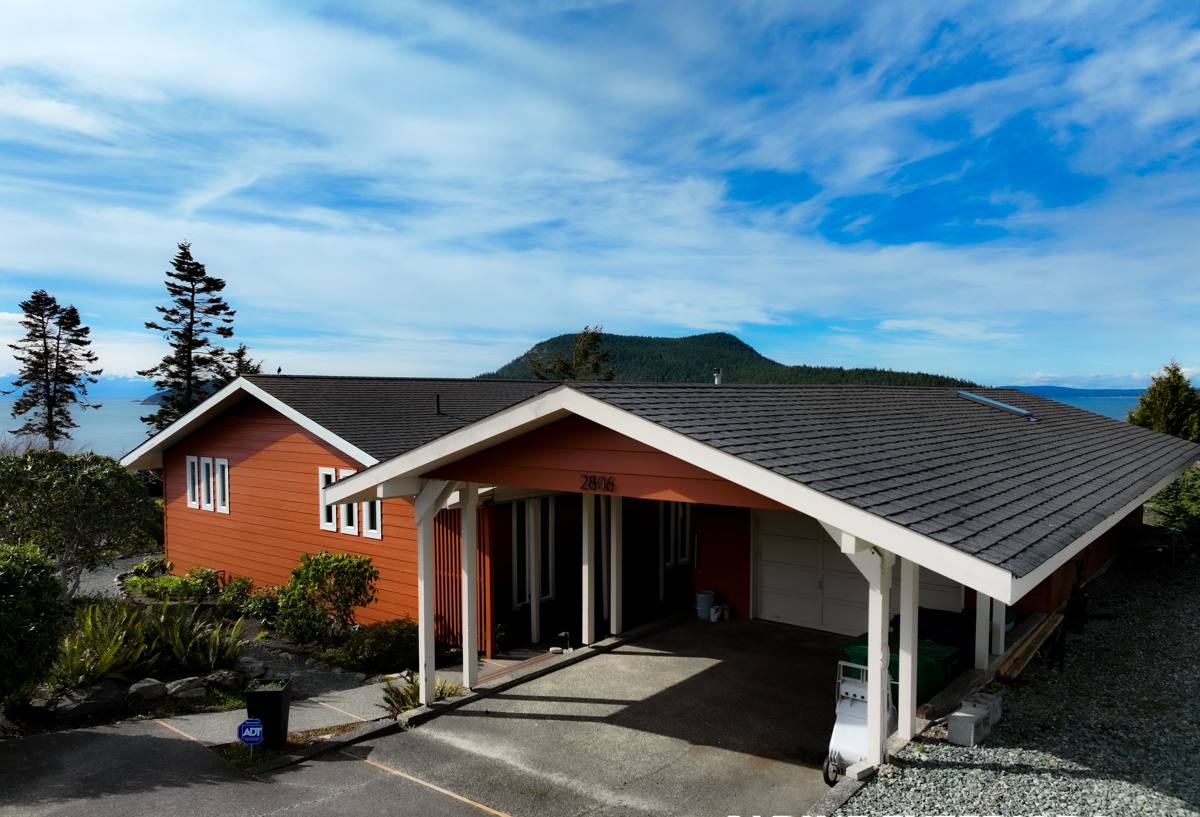
Siding in Barkley: Why We Only Install James Hardie
We get asked fairly often why we don't offer vinyl siding, LP SmartSide, or lower-cost fiber cement alternatives like Cemplank or Allura. It's a fair question, and the honest answer is that we made a standardization decision based on what actually holds up in this climate over the long term — not on what's cheapest to install.
What we ruled out, and why
- Vinyl siding: It's inexpensive and low-maintenance in dry climates, but it expands and contracts more than fiber cement, and in a wet, wind-exposed environment like Barkley, seams and panel edges are more prone to water intrusion over time. It also doesn't hold paint if you ever want to change the color.
- LP SmartSide: An engineered wood product with real strengths, but it's still wood-based at its core. In a climate with this much sustained moisture, wood-based siding is more dependent on flawless caulking, flashing, and maintenance discipline than we're comfortable building our reputation on.
- Cemplank, Allura, and other fiber cement alternatives: These are legitimate fiber cement products, and we don't dispute that. Our decision came down to finish quality and warranty structure — we standardized on one manufacturer so we can guarantee installation consistency and back it with a single, well-documented warranty rather than juggling multiple product lines with different specs.
Why James Hardie fits Barkley specifically
James Hardie fiber cement is non-combustible, doesn't swell or rot when it takes on moisture the way wood-based products can, and comes with a factory-applied ColorPlus finish that's engineered to hold color and resist the fading that harsh UV and salt air can cause on field-painted surfaces. Hardie also makes climate-specific HZ5 product formulations built for exactly the kind of freeze-thaw and moisture cycling Whatcom County sees. For a Barkley home dealing with salt air and constant rain, that combination matters more than it does somewhere drier.
Roofing Considerations for Barkley Homes
Roofing in this part of Bellingham has to deal with sustained rain, moss pressure from tree cover, and occasional wind events. We look at a few things specifically when we're on a Barkley roof:
- Moss and algae growth patterns, especially on north- and shade-facing slopes
- Flashing condition at valleys, chimneys, and roof-to-wall transitions — the most common source of slow leaks
- Ventilation, since a poorly ventilated attic traps moisture and accelerates deck and shingle deterioration from the inside out
- Gutter and downspout capacity, since undersized systems back up quickly during heavy Pacific Northwest rain events
Windows: Sealing Out Wind-Driven Rain
Window failures in Barkley are rarely about the window unit itself — they're almost always about the installation detail around it. Wind-driven rain finds any gap in flashing or sealant at the window perimeter, and once water gets behind the trim, it can sit there for a long time before it becomes visible as interior damage or siding rot. When we replace windows, we treat the flashing and integration with the surrounding siding as the part of the job that actually determines whether it lasts.
Decks: Built for a Wet Climate
Decks in Barkley take the same moisture and moss exposure as siding and roofing, plus direct foot traffic and standing water on horizontal surfaces. Ledger board attachment, proper drainage slope, and material choice all matter more here than they would in a drier climate — a deck that traps water against the house structure creates the same kind of hidden rot problem as a poorly flashed window.
Cost Factors for Exterior Work in Barkley
Every home and project is different, but these are the factors that most often move the price on exterior work in this area:
| Factor | Why It Matters Locally |
|---|---|
| Extent of moisture damage already present | Hidden rot behind old siding or trim is common in homes that haven't been re-sided in 20+ years; repair scope isn't known until removal |
| Roof and wall complexity | Steep pitches, multiple stories, and tree-shaded lots add labor time and access requirements |
| Moss and growth remediation | Heavily shaded Barkley lots may need more prep work before new material goes on |
| Material selection | Fiber cement, roofing grade, window performance tier, and deck material all shift the budget |
| Flashing and detail work at transitions | Proper flashing at windows, corners, and roof intersections takes more time but is what prevents future leaks |
Why a Local Crew Matters in Barkley
Exterior work isn't one-size-fits-all, even within Bellingham. A crew that works across Whatcom County regularly knows what a Barkley home is actually up against — the moss cycle, the salt air, the way wind-driven rain behaves coming off the bay — versus a crew that treats every job like it's in a dry climate. That local knowledge shows up in small decisions: how much flashing overlap to use, which way to detail a butt joint, whether a shaded roof section needs different treatment than the rest of the house. Those decisions are usually invisible until they fail, which is exactly why they matter.
A Checklist Before You Commit to Exterior Work
- Ask what specific siding, roofing, and window products the contractor installs — and why
- Confirm whether the estimate includes flashing and moisture-barrier detail, not just material and labor
- Ask how they handle hidden damage discovered mid-project
- Check that the contractor is licensed and insured to work in Washington State
- Ask about warranty coverage — both manufacturer and workmanship — and get it in writing
- Get a clear timeline that accounts for Bellingham's rainy-season scheduling realities
If you're weighing siding, roofing, window, or deck work on a Barkley home, we're happy to take a look and walk you through what we're seeing and why. There's no cost and no pressure to move forward — just a straight assessment from a crew that works in this climate every day. Use the form below to request a free estimate.