 Bellingham Exterior
 Roof Repair Built Around How Barkley Weather Actually Wears a Roof
Barkley sits close enough to Bellingham Bay that salt-laden air is a constant, low-grade stress on every roof in the neighborhood, and it's mixed with the kind of driving, wind-pushed rain that comes off the water during fall and winter storms. Add a long, shaded moss season that runs from roughly October through April, and you have three separate forces working against the same roof at the same time. A roof repair here isn't just patching a leak — it's addressing whichever of these three is actually the root cause, and usually more than one of them together.
We work on roofs throughout this part of Bellingham regularly, which means we're not guessing at what's normal wear versus what's an early warning sign. That distinction matters more in Whatcom County than in drier parts of the state, because a small deferred repair here tends to turn into a bigger one faster.
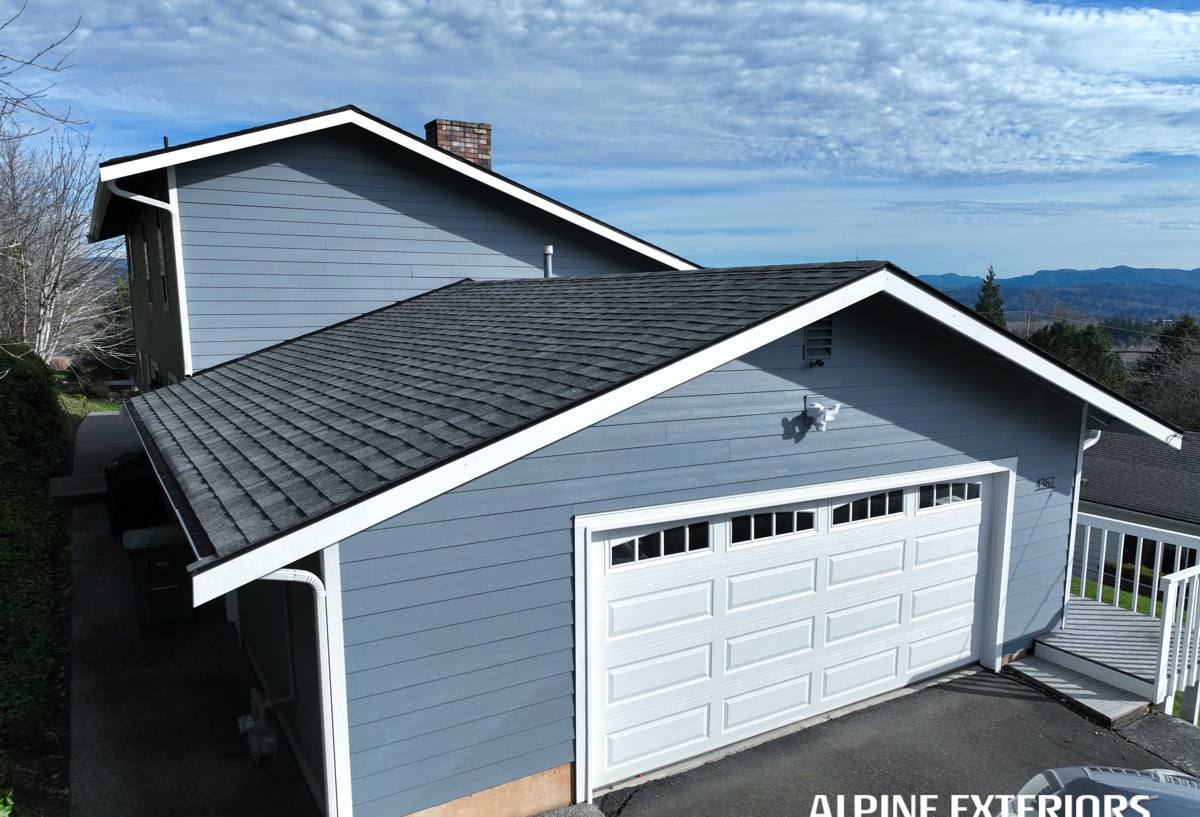
What Barkley's Climate Does to a Roof
Salt Air and Metal Components
Flashing, fasteners, and any exposed metal on a roof slowly corrode faster near the bay than they would inland. Once flashing starts to pit or a fastener head corrodes, it stops sealing the way it was designed to, and water finds that gap during the next hard rain.
Moss and Trapped Moisture
Shaded, north-facing slopes and roofs under mature tree cover — common throughout Barkley's mix of established lots and newer landscaped subdivisions — stay damp longer after every rain. Moss roots into the surface of shingles and shakes, lifts the edges, and holds water against the roof deck instead of letting it run off. By the time moss is visible from the ground, it's usually already worked its way under multiple courses.
Driving Rain and Wind-Driven Leaks
Wind off the water doesn't just drop rain straight down — it pushes it sideways and up under shingle edges, around chimney flashing, and into any gap that would stay dry in a calmer climate. This is why roofs that look fine from the street can still have active leaks at valleys, skylights, and wall-to-roof transitions.
The Repairs We See Most Often in Barkley
Every roof is different, but certain repair calls come up again and again in this neighborhood:
- Moss-damaged shingles that have lifted, cracked, or lost their granule coating along shaded slopes
- Corroded or failing flashing around chimneys, skylights, and roof-to-wall transitions
- Valley leaks where debris and moss build up and hold water against the roofing material
- Gutter and edge damage that lets water back up under the first few courses of shingles
- Isolated storm damage — lifted shingles or minor puncture damage — after a windstorm
- Soft or discolored decking discovered once a leak is traced back to its source
What a Correct Roof Repair Actually Involves
A repair done right starts above the leak, not at it. Water rarely enters exactly where it shows up on a ceiling — it travels along the underlayment, framing, or decking before finding a path inside. That means the repair has to trace the water back to its actual entry point, which is usually a flashing seam, a nail hole, a cracked shingle several courses up, or a moss mat holding standing water against the roof.
We also match materials and installation methods to what's already on the roof. A patch using the wrong shingle profile, the wrong flashing metal, or the wrong fastener length can look fine for a season and then fail again, often faster than the original problem did. On a roof with moss damage, that usually means removing and replacing more than just the visibly affected shingles, because moss growth under adjacent courses is common even where it isn't visible yet.
Repair Steps Homeowners Should Expect
- A full roof inspection, not just a look at the reported leak location
- Identification of the actual entry point, tracing water path along the deck if needed
- Removal of moss, debris, and any compromised shingles or flashing in the affected area
- Inspection of the exposed decking for soft spots or rot before anything is closed back up
- Repair using materials matched to the existing roof's type, age, and manufacturer where possible
- A final check of surrounding areas — valleys, penetrations, gutters — that could cause the same failure again
Our Roof Repair Process
We keep the process straightforward because most homeowners just want the leak stopped and an honest answer about what it will take.
- Inspection and diagnosis — We look at the roof from the ground and, when safe, walk it directly to find the actual source of the problem rather than assuming it matches the reported symptom.
- Written estimate — You get a clear explanation of what's wrong, what the repair involves, and a price before any work starts.
- The repair itself — We remove and replace only what's actually compromised, matching materials and technique to the rest of the roof.
- Site cleanup — Old shingles, moss debris, and any replaced material are cleared from the roof and property.
- Follow-up — If a repair was tied to a broader issue — widespread moss, aging flashing throughout the roof — we'll tell you honestly what to watch for going forward.
Repair or Replacement: How We Help You Decide
Not every leak means the whole roof needs to go, and not every roof is worth continuing to patch. We look at the age of the roofing material, how widespread the damage is, and how the rest of the roof is holding up before recommending either path.
| Factor | Points Toward Repair | Points Toward Replacement |
|---|---|---|
| Roof age | Well within expected lifespan for the material | Near or past the material's typical service life |
| Damage extent | Isolated to one area, valley, or penetration | Widespread moss, curling, or granule loss across multiple slopes |
| Decking condition | Solid, no rot found during inspection | Soft or rotted decking discovered under the damaged area |
| Repair history | First or second repair in this area | Same spot has needed repair multiple times |
| Material availability | Matching shingles or flashing still available | Discontinued product, visible mismatch likely |
When a roof is a genuine borderline case, we'll say so directly rather than pushing toward the more expensive option by default.
Keeping a Barkley Roof Healthy Between Repairs
Given the moss and moisture pressure in this area, a little routine attention goes a long way toward avoiding repeat repair calls.
- Have moss treated or removed before it spreads across an entire slope, not after
- Keep gutters and valleys clear of needles and leaf debris, especially into late fall
- Trim back overhanging branches that keep sections of roof shaded and damp longer than the rest
- Have flashing checked periodically, since salt-air corrosion is gradual and easy to miss from the ground
- Address small leaks the season they appear — deck rot from a slow, ignored leak costs far more to fix than the original repair would have
Why a Crew That Already Works in Barkley Makes a Difference
A repair crew that regularly works this part of Bellingham already knows which roof types and ages are common in the area, how local HOA or design guidelines can affect visible repair materials, and how quickly moss returns given the tree cover typical of the neighborhood. That local familiarity means less time spent diagnosing basics and more time spent getting the actual repair right the first time. It also means we're a call away if a repair needs a follow-up visit, rather than a company that has to be booked and rebooked from across the county.
Materials We Repair
Barkley has a mix of roofing types depending on when a home was built, and we work on the common ones found throughout the neighborhood:
- Asphalt composition shingles, both 3-tab and architectural profiles
- Cedar shake and shingle roofs, where repairs require extra care to avoid disturbing surrounding weathered wood
- Metal roofing sections and flashing, including standing-seam repairs where fastener or seam failure is the issue
- Flat or low-slope sections, such as those over porches or additions, where membrane or torch-down repairs are needed
Whatever the material, our standard is the same: repair with the right product for that roof type and installation method, not whatever's fastest to install.
Get a Straight Answer on Your Roof
If you're dealing with a leak, visible moss, or storm damage on a Barkley roof, we'll come take an honest look and tell you exactly what we find — no pressure, no upsell to a full replacement unless that's genuinely the right call. Reach out below for a free estimate.