 Bellingham Exterior
 Exterior Work in Lynden's Climate
Lynden sits in the Nooksack Valley in Whatcom County, close enough to Bellingham Bay and the Salish Sea that homes here deal with the same marine-influenced weather pattern as the rest of northwest Washington: long stretches of driving rain, heavy fall and winter dew, and a moss season that can run from October well into spring. Add in the salt-tinged air that moves inland off the bay on windy days, and you have a climate that is genuinely hard on exterior building materials, even ones that look fine from the curb.
None of this is dramatic, storm-driven damage. It is slow, cumulative wear — moisture that finds its way behind trim, moss that holds water against a roofline, wood that swells and shrinks with every wet-dry cycle. A house built or resided without that pattern in mind will show it within a decade: soft trim boards, streaked and stained siding, roof valleys that never quite dry out, and decking that cups or splinters. Homes that are detailed correctly for this climate hold their look and their integrity far longer.
Siding: What Lasts Here, and What Doesn't
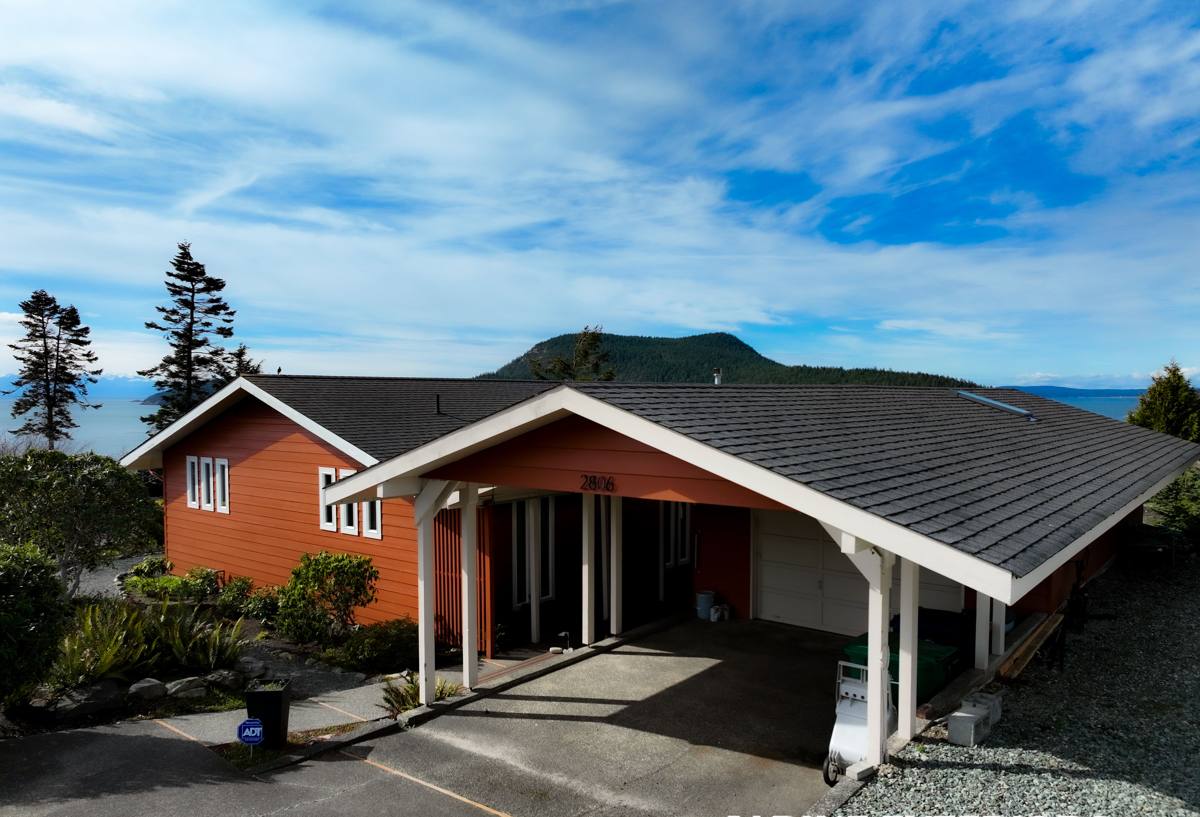
Siding is the material most directly exposed to Lynden's weather, and it's also where the biggest difference in long-term performance shows up. We install James Hardie fiber cement siding exclusively, and we're upfront about why.
Why We Don't Install Everything
Vinyl siding is affordable and low-maintenance in mild weather, but it's a thin plastic product that can warp under heat, become brittle in cold snaps, and never truly seals at the seams — moisture gets behind it more easily than most homeowners expect, and once it's back there in a wet climate like this one, it doesn't dry out quickly. Primed spruce and cedar are beautiful natural materials, but they're wood: they need repainting on a strict cycle, they're vulnerable to rot at end grain and butt joints, and in a place with this much sustained moisture, that maintenance cycle is relentless. Engineered wood products like LP SmartSide hold up better than raw lumber, but they're still wood-based at the core, which means the same moisture-intrusion vulnerability if a seam, cut edge, or fastener point isn't sealed exactly right — and one missed detail can compromise the whole panel over time.
Why James Hardie
Fiber cement is sand, cement, and cellulose fiber — it does not absorb water the way wood-based products do, it will not rot, and it's non-combustible, which matters more every wildfire season. James Hardie's HZ5 product line is engineered specifically for climates like Whatcom County's, with a factory-applied ColorPlus finish that resists the fading and cracking that field-applied paint jobs eventually show. It's also backed by a strong transferable warranty, which is a real asset if you ever sell the home. Correct installation — proper clearances, flashing, and fastening — is what makes the difference between siding that lasts thirty-plus years and siding that fails early, which is why we treat installation detail as seriously as the material choice itself.
Roofing: Managing Moss and Sustained Moisture
Roofs in Lynden fight two related battles: constant moisture and the moss and algae that moisture supports. Moss isn't just cosmetic — it holds water against shingles, works its way under tabs, and can lift roofing material over time, especially in shaded valleys and north-facing slopes where the roof rarely gets direct sun to dry out. Gutters and valleys that collect debris compound the problem, since trapped organic material holds moisture even longer.
Good roofing work in this area means proper underlayment, correctly lapped flashing at every penetration and valley, and ventilation that lets the roof deck actually dry between rain events. Zinc or copper strips near the ridge can help slow moss regrowth, but they're a supplement to good material and installation, not a substitute. Regular inspection matters too — catching a lifted shingle or a clogged valley early is a lot cheaper than dealing with the water damage that follows a winter of neglect.
Windows: Sealing Out Driving Rain
Windows are one of the most common places water finds its way into a home in this climate, because wind-driven rain doesn't fall straight down — it pushes sideways into the wall, and any gap in flashing or sealant becomes an entry point. Older windows, or windows installed without proper flashing integration into the surrounding wall assembly, are a frequent source of hidden rot that isn't discovered until the trim or wall sheathing is already compromised.
Replacement windows with good thermal performance also help with the condensation that this climate's humidity and temperature swings tend to cause on interior glass. When we replace windows as part of a siding or exterior project, we integrate the flashing and water management with the new siding assembly rather than treating them as separate jobs — that continuity is where a lot of leaks get prevented before they ever start.
Decks: Built for Wet-Dry Cycling
Decks in Lynden spend most of the year either wet or drying out, and that constant cycling is hard on both structure and surface materials. Wood decking needs consistent maintenance — cleaning, sealing, and repainting or re-staining on a schedule — to avoid splintering, graying, and eventual rot at fastener points and ledger connections. Composite decking costs more upfront but resists moisture absorption and doesn't need the same maintenance cycle, which is worth weighing against a wood deck's lower initial cost.
Whatever the decking material, the structural framing underneath — ledger board flashing, joist protection, and proper drainage away from the house — matters as much as what's visible on the surface. A deck can look fine on top while the framing underneath is quietly failing from trapped moisture.
Why a Local Crew Matters
Whatcom County's weather isn't the same as Seattle's, and it isn't the same as inland Washington's either. A crew that works this area regularly knows how much clearance siding needs off a deck or grade line here, how aggressively moss takes hold on a shaded roof, and which flashing details actually hold up through a full wet season rather than just looking right on installation day. That local repetition is what prevents the small mistakes that don't show up until year three or four, once the warranty conversation gets complicated and the fix is a lot more expensive than it would have been to do right the first time.
Comparing Exterior Material Options
| Material | Moisture Resistance | Maintenance | Typical Lifespan |
|---|---|---|---|
| Vinyl siding | Seams vulnerable to water intrusion | Low, but limited repairability | 15-25 years |
| Cedar/primed wood siding | Absorbs moisture, rot-prone | High — regular repainting required | 10-20 years with upkeep |
| Engineered wood (e.g. LP SmartSide) | Better than raw wood, still moisture-sensitive at seams/cuts | Moderate | 20-30 years if detailed correctly |
| James Hardie fiber cement | Does not absorb water, won't rot | Low — factory finish, occasional wash | 30+ years |
| Composite decking | Resists moisture absorption | Low | 25-30 years |
| Wood decking | Absorbs and releases moisture constantly | High — annual sealing/staining | 10-15 years with upkeep |
What Drives Project Cost
Every exterior project is different, but the same handful of factors move the price in this area:
- Home size and the amount of surface area being sided, roofed, or reframed
- Extent of moisture or rot damage discovered once old siding or roofing comes off
- Roof complexity — number of valleys, penetrations, and dormers affects both material and labor
- Window count and whether flashing needs to be integrated with new siding
- Deck size, decking material choice, and condition of the existing structural framing
- Site access and staging space, which affects labor time on tighter lots
A Simple Pre-Project Checklist
Before committing to any exterior work, it's worth walking your own property with a critical eye:
- Check for soft or spongy siding, especially near the bottom courses and around windows
- Look at north-facing roof slopes and valleys for moss buildup or dark streaking
- Check window sills and interior trim for staining that suggests water intrusion
- Test deck boards for softness, and inspect the ledger board where the deck meets the house
- Ask any contractor bidding the work what warranty is transferable if you sell the home
- Get manufacturer specifics in writing, not just a verbal description of the product
If you're seeing any of these signs on a Lynden home, or you're simply due for an honest look at your siding, roof, windows, or deck, we're happy to walk the property with you and give a straight assessment. There's no cost and no pressure for an estimate — just a clear look at what your home actually needs.