 Bellingham Exterior
 Building a Custom Deck That Actually Holds Up in Lynden
Lynden homeowners ask for a lot of different things when it comes to a new deck — a quiet spot off the kitchen, a bigger space for hosting family, something that finally replaces a rotting structure from the 1990s. But underneath all of those requests is the same basic problem: this part of Whatcom County is hard on wood and hardware. Long stretches of driving rain, cool damp shoulder seasons, and months where moss and algae get a real foothold on any shaded or north-facing surface all add up over time. A deck that looks good in July can start showing soft spots, slick moss growth, or rusted fasteners within a few winters if it wasn't built with this climate in mind.
We build custom decks for homes throughout the Bellingham and Lynden area, and we treat the regional weather as a design input, not an afterthought. That means the right footing depth, the right flashing details where the deck meets the house, hardware rated for wet exposure, and decking material chosen for how it actually performs here — not just how it looks on day one.
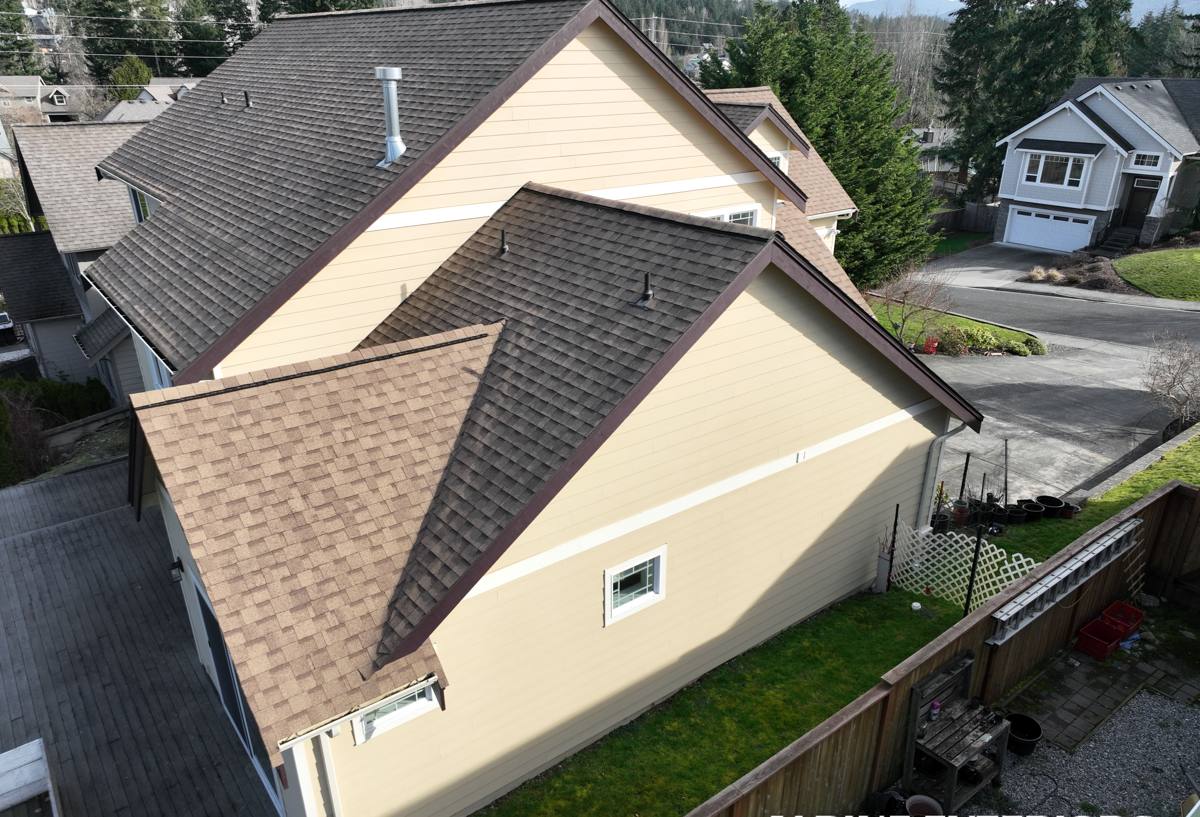
What Whatcom County Weather Does to a Deck Over Time
Moss, Algae, and Standing Moisture
The long wet season in this part of Washington isn't just an inconvenience — it's the single biggest factor in how long a deck surface lasts and how safe it stays underfoot. Shaded areas, spots under overhangs, and decking with tight board spacing all tend to hold moisture longer, which is exactly what moss and algae need to get started. Once established, that growth doesn't just look bad; it makes a deck surface genuinely slippery, and it traps moisture against the wood or composite surface, accelerating wear underneath.
Ground Contact and Footings
Saturated soil during the wet months puts real stress on posts and footings that weren't sized or set correctly. Undersized or shallow footings can shift over time as the ground around them repeatedly saturates and drains, leading to a deck that develops a wobble or a lean years down the road.
Fasteners and Hardware
Standard hardware corrodes faster in this kind of persistent damp climate. Rust stains bleeding down the face of decking boards are one of the most common signs of a deck that was built with the wrong fasteners for the region — usually general-purpose screws or nails instead of hardware rated for treated lumber and wet exposure.
Choosing the Right Decking Material for This Area
There's no single "best" decking material — there's a best fit for your budget, your maintenance appetite, and how much sun or shade the deck actually gets. Here's how the common options stack up for a Lynden property:
| Material | Upfront Cost | Maintenance in This Climate | Typical Lifespan |
|---|---|---|---|
| Pressure-treated lumber | Lowest | Needs regular cleaning and re-sealing to resist moss and moisture staining | 15-20 years with upkeep |
| Cedar | Mid-range | Naturally moisture-resistant but still needs periodic cleaning and finish renewal | 15-25 years with upkeep |
| Composite decking | Higher | Low — periodic washing to keep algae from taking hold, no staining or sealing | 25-30+ years, manufacturer-dependent |
We install all three, and we're honest about the trade-offs with each one. Pressure-treated lumber is a reasonable choice on a tighter budget as long as the homeowner is realistic about the annual cleaning and resealing it needs to resist this area's moss cycle. Cedar gives a warmer, natural look and holds up well to moisture, but it's not maintenance-free — it will gray and needs occasional attention to keep its color and resist surface mildew. Composite decking costs more upfront but shifts most of the long-term maintenance burden off the homeowner, which is a big part of why it's become the most common request we get for new builds in this area. We don't push one product over another — we walk through how each one actually behaves over ten or twenty years of Whatcom County weather and let that inform the decision.
Framing and Footings Done Right
The parts of a deck nobody sees are the parts that determine whether it's still solid in fifteen years. A few things we treat as non-negotiable on every custom deck build:
- Footings set to proper frost depth and bearing width for the soil conditions on the lot, not just poured to a standard minimum
- Ledger board attachment flashed correctly where the deck meets the house — this is the single most common failure point we find on older decks, since water intrusion here can damage the home's siding and framing, not just the deck
- Joist spacing and beam sizing matched to the actual decking material and span, since composite and wood decking don't always carry load the same way
- Hardware rated for treated lumber and wet exposure throughout — structural connectors, screws, and joist hangers included
- Airflow underneath the deck maintained, since trapped, still air under a low deck accelerates rot and moss growth on the framing itself
Skipping any one of these doesn't usually show up as a problem in year one. It shows up in year eight or ten, as soft framing, a leaning post, or water damage tracking back into the house at the ledger board — and by then it's a much bigger repair than it would have been to do correctly the first time.
Railings, Stairs, and Code Compliance
Any deck raised above a certain height needs a code-compliant guardrail, and stairs need proper rise, run, and handrail details. These aren't just inspection checkboxes — baluster spacing and guardrail height requirements exist because they genuinely prevent falls, and stair geometry that's slightly off is one of the most common tripping hazards on older decks. We build every railing and stair system to current residential code, and we handle the permit and inspection process as part of the job rather than leaving it for the homeowner to sort out.
Our Process for a Lynden Deck Build
We keep the process straightforward from first visit to final walkthrough:
- On-site assessment — we look at sun exposure, drainage, soil conditions, and how the deck will tie into the house before recommending a design or material
- Design and material selection — sized and laid out for how you'll actually use the space, with an honest conversation about material trade-offs for this climate
- Permitting — we handle the paperwork and coordinate inspections so it's done to code, not just done fast
- Footings and framing — built to proper depth and spec, with flashing and hardware chosen for long-term exposure to Whatcom County weather
- Decking, railings, and finish work — installed and, where applicable, sealed or finished before we walk the job with you
We don't rush footings or framing to hit a faster timeline. Those are the parts of the job that determine whether we're back out for a warranty repair in three years or the deck is still solid when your kids are grown.
Maintenance Checklist for Decks in This Climate
Whatever material you choose, a little seasonal attention goes a long way in a climate like this one. We give every deck customer some version of this list:
- Sweep debris off the deck surface regularly, especially in fall when leaves and needles trap moisture against the boards
- Wash the surface at least once or twice a year to keep moss and algae from establishing, particularly on shaded sections
- Check and clear gaps between boards so water can drain through rather than pool on the surface
- Inspect the ledger board area and any flashing yearly for signs of water staining or gaps
- Reseal or restain wood decking on the schedule the product actually needs — don't wait until it's visibly gray and worn
- Check railing posts and stair stringers periodically for movement or soft spots, especially after a wet winter
Why It Matters to Hire a Crew That Already Works in Lynden
A deck built from a generic national spec sheet doesn't account for how differently wood and composite materials age here compared to a drier climate. A crew that already works throughout Bellingham and Whatcom County knows which details actually matter locally — where moss takes hold first, how deep footings need to go in this soil, and which hardware holds up instead of streaking with rust after a couple of wet seasons. That local experience shows up less in how a deck looks the day it's finished and more in how it holds up ten winters later.
If you're planning a new deck or replacing an aging one in Lynden, we're glad to come take a look and talk through what makes sense for your property. Reach out for a free, no-pressure estimate using the form below.