 Bellingham Exterior
 Exterior Contractor Serving Happy Valley
Happy Valley sits close enough to Bellingham Bay and the surrounding hills that homes there deal with a specific mix of weather stress: salt-laden air moving in off the water, long stretches of driving rain through the fall and winter, and shaded, damp conditions that keep moss and algae active for much of the year. None of that is unique to one street or one style of house — it's the baseline for exteriors in this part of Whatcom County. What it means practically is that siding, roofing, trim, windows, and decks in Happy Valley all age differently than they would in a drier inland climate, and they need to be built and maintained with that in mind.
We work on siding, roofing, windows, and decks, and we treat those four systems as connected rather than separate line items. Water that gets past a roof detail ends up in the siding. A window that isn't flashed correctly rots the wall around it. A deck ledger attached without proper flashing can feed moisture straight into the house. Understanding how those systems interact is a big part of doing exterior work correctly in a climate like this one.
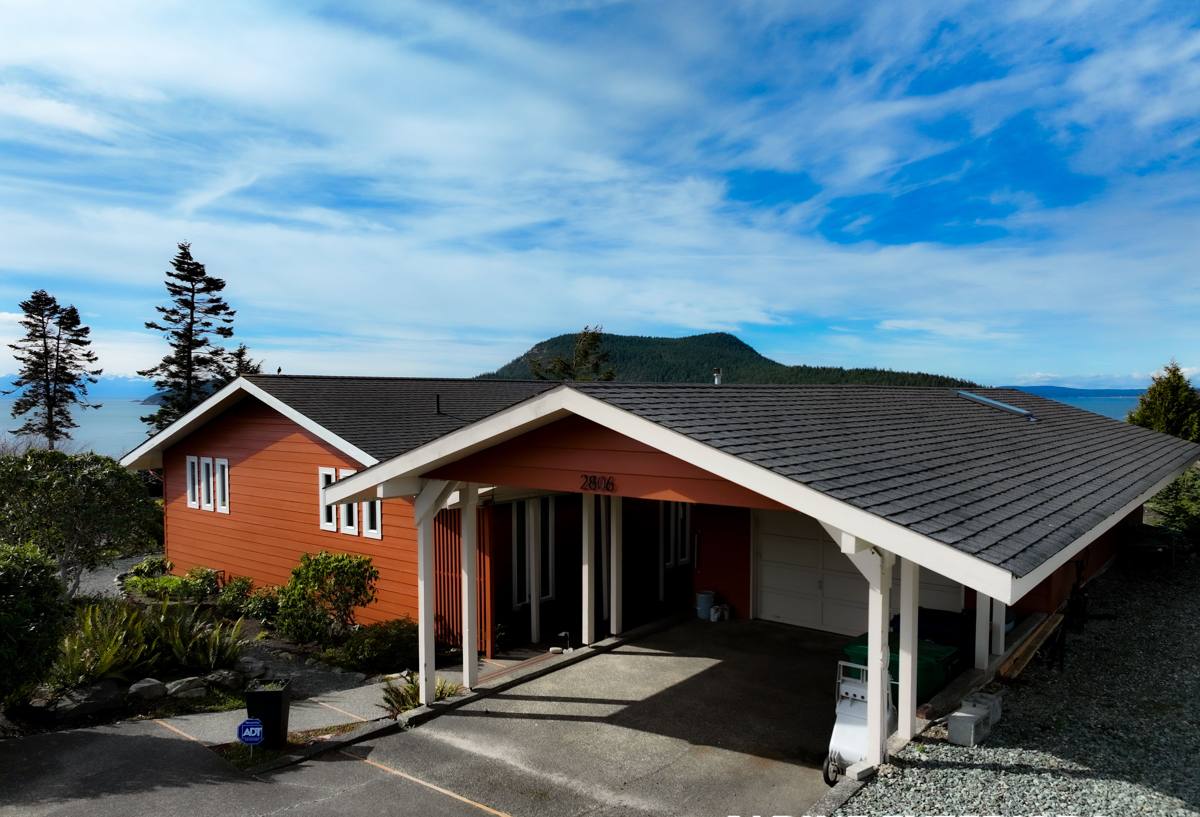
What This Climate Actually Does to a House
Salt Air
Proximity to Bellingham Bay means airborne salt is a real factor, especially on the sides of a house that face the water or catch prevailing wind. Salt accelerates corrosion on fasteners, flashing, and any exposed metal, and it can be tough on lower-quality paint finishes over time. It's one more reason we're particular about the materials and hardware we use — corrosion-resistant fasteners and flashing aren't optional extras here, they're the baseline.
Driving Rain
Bellingham doesn't get the heaviest rainfall totals in Washington, but a good share of what falls comes in sideways, driven by wind off the water. Wind-driven rain finds gaps that vertical rain never would — around window and door trim, at siding laps, at deck ledger connections, at roof-to-wall transitions. A home built or maintained without that in mind will show water intrusion problems years before a comparable home elsewhere would.
Moss and Algae Season
Shade, moisture, and mild temperatures add up to a long moss and algae season — on roofs, on north-facing siding, and on decks that don't get much direct sun. Moss holds moisture against a surface far longer than open air would, which shortens the life of roofing material and keeps siding and deck boards damp when they should be drying out. Regular removal and good airflow around the house both matter more here than they would in a drier climate.
Siding: Why We Only Install James Hardie
Siding is the material most exposed to everything described above — salt, driving rain, and moss — for years at a stretch with no way to hide from it. That's the reason we standardized on James Hardie fiber cement and don't install vinyl, LP SmartSide, or engineered wood products, even when a customer asks for them.
Fiber cement doesn't rot, and it isn't a food source for moss and algae the way wood-based products can be. It holds up to sustained moisture exposure without the swelling, delamination, or edge deterioration that engineered wood siding can be prone to if water gets past a seam or a poorly sealed cut edge. Hardie's ColorPlus factory finish is baked on and warranted separately from the panel itself, which matters in a climate where a lot of siding spends a good part of the year visibly wet. We're not saying other siding products can't be installed correctly — we're saying that after years of exterior work in this climate, fiber cement is the material we're willing to put our name behind for Whatcom County weather, and it's the only one we install.
Siding Material Trade-Offs in This Climate
| Material | How It Handles Sustained Moisture | Moss/Algae Resistance | What We Install |
|---|---|---|---|
| James Hardie fiber cement | Non-combustible, does not rot or absorb water like wood-based products | Not a food source; surface growth cleans off without damaging the substrate | Yes |
| Engineered wood (e.g. LP SmartSide) | Can swell or delaminate at cut edges and seams if moisture gets in | Wood-based substrate can support growth if damp persists | No |
| Vinyl | Doesn't absorb water, but seams and fastening can loosen or warp with temperature swings | Surface growth is common in shaded, damp areas | No |
| Cedar / primed spruce | Requires ongoing sealing and finish maintenance to resist moisture | Natural wood substrate is susceptible without diligent upkeep | No |
Roofing in Happy Valley
A roof in this area is doing constant work between rain events and moss cycles, not just shedding the occasional storm. We look at more than shingle condition when we inspect a roof here — flashing at valleys and chimneys, ventilation, and how well moss has been kept off. Poor attic ventilation combined with a shaded roof plane is a common combination that shortens roof life in this part of Bellingham, because trapped moisture works on the roof deck from underneath while surface moisture and moss work on it from above.
When we replace or repair a roof, we're also thinking about how it ties into the siding below it — proper kick-out flashing at roof-to-wall intersections is a small detail that prevents a disproportionate amount of water damage over time.
Windows
Windows fail two ways in this climate: through the glass unit itself (seal failure, fogging) and, more often, through the flashing and trim around them. Wind-driven rain tests window installations harder than a gentle, straight-down rain would, so flashing sequence — how house wrap, flashing tape, and trim layer together — matters as much as the window unit itself. We integrate window flashing with the surrounding siding installation rather than treating them as separate trades, because a gap between the two is exactly where this climate finds its way in.
Decks
Decks in Happy Valley face two main enemies: standing moisture on horizontal surfaces and moss on any board that doesn't get much sun. Ledger attachment to the house is one of the most consequential details on any deck — improperly flashed ledgers are a common source of hidden rot where a deck meets the wall. Beyond structure, board spacing, fastener choice, and orientation all affect how quickly a deck dries out after rain, which in turn affects how much moss and mildew maintenance it needs.
What to Look for in a Local Contractor
- Familiarity with wind-driven rain flashing details, not just standard installation manuals
- A clear answer on how they handle moss and algae — removal method and prevention, not just a one-time cleaning
- Corrosion-resistant fasteners and flashing specified for a salt-air environment
- Willingness to explain how siding, roofing, window, and deck details connect on your specific house
- Local references and a physical presence in Whatcom County, not a crew passing through from another region
- A written warranty that's specific about what's covered — material, labor, or both
Seasonal Maintenance That Actually Matters Here
A few habits go a long way toward protecting an exterior in this climate:
- Clear moss off roofs and shaded siding before it builds a thick mat — thin growth is far easier to manage than established moss
- Keep gutters clear heading into the fall rains so water is directed away from siding and foundation lines
- Walk the exterior after major windstorms to check for lifted flashing, loose trim, or displaced shingles
- Check deck boards and ledger areas each spring for soft spots or dark staining, which often signal trapped moisture
- Keep vegetation trimmed back from siding so walls get airflow and sun exposure where possible
Why a Local Crew Matters
Exterior work done by people who don't work in this specific climate regularly tends to follow generic installation manuals written for drier, calmer regions. That gap shows up years later as moisture problems that a Bellingham-based crew would have designed around from the start. Working throughout Whatcom County means we see how these systems actually perform here — not in a manufacturer's climate-controlled test, but through an actual Pacific Northwest wet season, salt air, and moss cycle, year after year.
Getting Started
If you're dealing with an aging roof, siding that's showing wear, windows that are letting in more air or water than they should, or a deck that needs attention, we're glad to take a look and give you a straightforward assessment. If you'd like to talk through options for your home in Happy Valley, request a free, no-pressure estimate using the form below.