 Bellingham Exterior
 Exterior Work Built for Sudden Valley's Wooded, Lakeside Setting
Sudden Valley sits in a different microclimate than a lot of the rest of Whatcom County. It's a heavily wooded community wrapped around Lake Whatcom, and that combination of mature tree canopy, lake-adjacent humidity, and hillside terrain puts a different kind of stress on a home's exterior than you'd see on an open lot closer to town. Homes here spend more of the year in shade, catch more falling debris, and stay damp longer after a storm passes. That changes what "durable" actually means for siding, roofing, windows, and decks in this neighborhood.
We work throughout Bellingham and greater Whatcom County, and Sudden Valley is one of the areas where we adjust our approach the most. A house that would hold up fine on a sunny, exposed lot near Bellingham Bay can struggle here if the wrong materials and details were used. This page covers what we see on Sudden Valley homes, how our four core services address it, and why the products we choose matter as much as the labor.
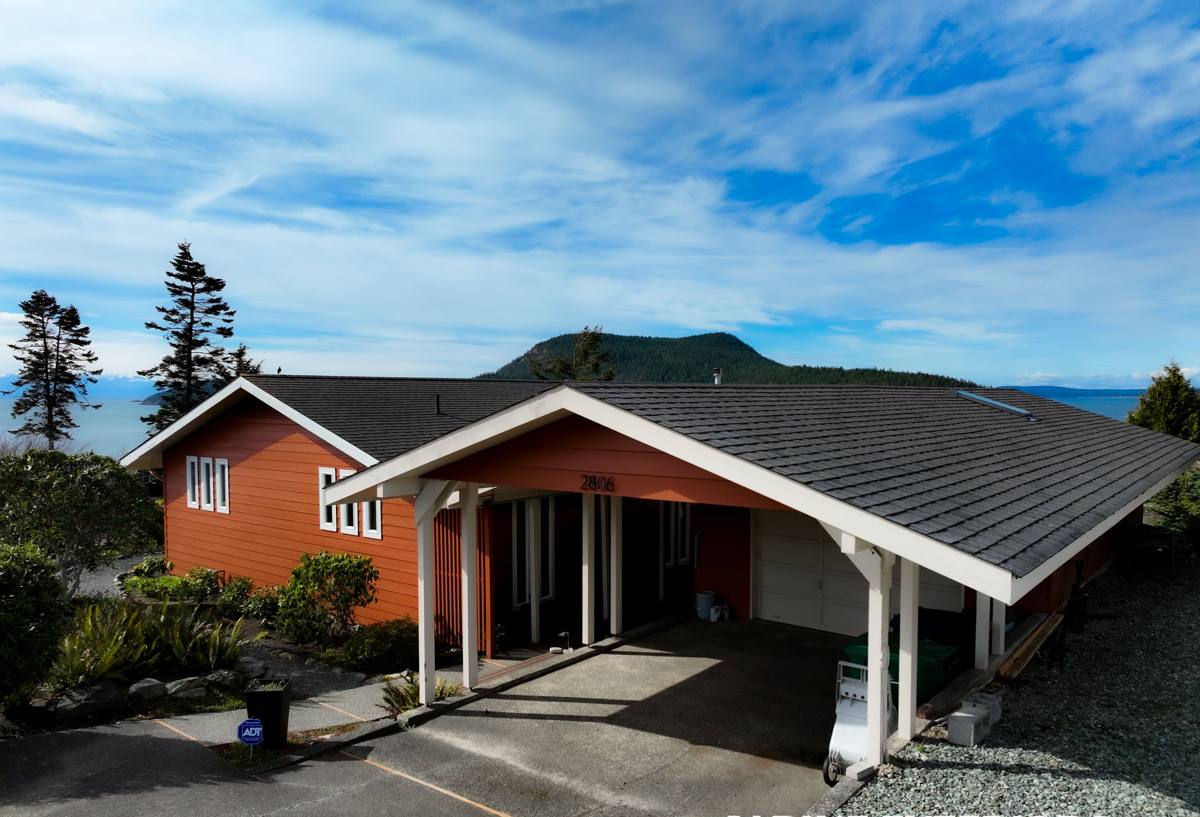
What the Local Climate Does to a Home's Exterior
Shade and a Long Moss Season
Tree cover is the defining feature of Sudden Valley, and it's a double-edged sword. It's part of what makes the neighborhood attractive, but it also means large sections of roofs, siding, and decking rarely see direct sun. Without sun to dry things out quickly, moisture lingers. That's exactly the environment moss, algae, and mildew need to take hold, and once they're established on a roof or a north-facing wall, they hold even more moisture against the surface underneath.
Driving Rain and Wind Off the Water
Lake Whatcom and the surrounding terrain funnel wind and rain in ways that can drive moisture sideways into wall assemblies, not just straight down onto roofs. Whatcom County's marine climate already means a wet fall and winter; on a wooded, lake-adjacent lot, wind-driven rain combined with dripping tree canopy keeps exterior surfaces wet longer than in more open parts of Bellingham.
Debris, Sap, and Organic Buildup
Needles, leaves, and sap accumulate in roof valleys, gutters, and deck boards faster under a tree canopy. Left alone, that organic material holds water against roofing and decking materials and accelerates rot, staining, and granule loss on shingles far quicker than a clear roof would experience.
Salt-Influenced Regional Air
Whatcom County's proximity to Bellingham Bay and the Puget Sound means the broader region deals with salt-laden marine air that contributes to corrosion on fasteners, flashing, and hardware over time. It's a smaller factor in Sudden Valley than the moss and moisture issues, but it's still part of why we spec corrosion-resistant fasteners and flashing on every job in this area, not just projects closer to the water.
Siding: Why We Install James Hardie and Nothing Else
Siding is the first line of defense against everything described above, and it's also the exterior surface most affected by prolonged shade and moisture. We made a deliberate decision as a company to install only James Hardie fiber cement siding — we don't install vinyl, LP SmartSide, Cemplank, Allura, primed spruce, or cedar. That's not a marketing position; it's a standard we hold because of what we've seen these products do (and not do) on homes in exactly this kind of environment.
Why Shaded, Damp Lots Are Hard on Other Siding Products
- Vinyl doesn't rot, but it traps moisture behind it if not installed with proper ventilation, and in constant shade it never gets the warm, dry cycles that help a wall assembly shed trapped humidity. It also becomes brittle and can warp with age.
- Engineered wood products like LP SmartSide use a wood-strand core. That core performs well when detailed and maintained correctly, but any wood-based product is inherently more vulnerable to sustained moisture exposure than fiber cement, and a wooded, low-sun lot is one of the least forgiving environments for a wood-based substrate.
- Cedar and primed spruce are natural wood. They can look excellent, but they require an ongoing maintenance commitment — refinishing, caulking, and vigilance against moisture and pests — that most homeowners underestimate, especially on a shaded lot where wood never fully dries out between rain events.
- Other fiber cement brands (Cemplank, Allura) are legitimate fiber cement products in the same general category as Hardie. We don't install them because we've standardized our crews, warranty process, and factory-finish system around James Hardie specifically, not because these products are without merit.
Why James Hardie Fits This Environment
James Hardie fiber cement is non-combustible and dimensionally stable — it doesn't swell, rot, or delaminate the way wood-based products can when exposed to prolonged moisture. Hardie's ColorPlus factory finish is baked on under controlled conditions and holds up to the fading, staining, and mildew growth that shaded, damp walls are prone to, far better than field-applied paint. Hardie also engineers specific product lines (HZ5 and HZ10) for different climate zones, and the Pacific Northwest falls squarely in the range those lines are built for. Backed by a strong, transferable warranty, it's the product we're comfortable standing behind on a Sudden Valley lot that stays wet and shaded most of the year.
Roofing for Heavy Tree Cover
A roof under a tree canopy needs more than a good shingle — it needs the right details in the valleys, flashing, and ventilation to keep moisture and debris from becoming a long-term problem. We look closely at:
- Proper attic and roof ventilation, which helps roofing dry out between rain events instead of staying saturated
- Ice-and-water shield and flashing detail in valleys and around penetrations, where debris and standing moisture concentrate
- Moss-resistant shingle options and treatment recommendations where canopy cover is heaviest
- Correct underlayment for a climate that sees prolonged damp periods, not just occasional heavy rain
We also talk homeowners through realistic maintenance expectations — a roof under mature trees will need debris clearing and moss treatment more often than a roof on an open lot, regardless of how well it's installed.
Windows That Handle Wind-Driven Rain and Condensation
Shaded, humid conditions put extra demand on window flashing and glazing. Poorly flashed windows are one of the most common sources of hidden water intrusion we find behind siding and around trim, and in an environment where walls rarely fully dry out, a small flashing gap becomes a bigger problem faster than it would on a sunnier lot. We install windows with correct flashing integration into the water-resistive barrier and siding system, and we pay attention to units with good thermal performance to help reduce interior condensation — a common complaint in shaded homes that don't get much passive solar warmth in the colder months.
Decks Built to Dry Out, Not Just Look Good
Decking takes a beating under tree cover — constant leaf and needle drop, sap, and shade that keeps boards damp long after the rest of the yard has dried. We build and repair decks with attention to:
- Proper board spacing and structural airflow underneath, so decking can actually dry between rain events
- Flashing and ledger board detail where the deck meets the house, a common rot point on older Sudden Valley homes
- Material choices that suit a shaded, debris-heavy environment rather than an open, sunny yard
- Fasteners and hardware rated for damp, marine-influenced regional conditions
Comparing Exterior Siding Options for a Shaded, Wet Lot
| Material | Moisture Behavior in Shade | Maintenance Burden | Longevity Expectation |
|---|---|---|---|
| James Hardie Fiber Cement | Dimensionally stable; resists rot and moisture-driven warping | Low — factory finish, periodic washing | Long-term with strong transferable warranty |
| Vinyl | Can trap moisture behind panels if ventilation is poor | Low, but prone to warping and fading over time | Moderate; shorter in constant damp/shade |
| LP SmartSide / Engineered Wood | Wood-strand core is more moisture-sensitive than fiber cement | Moderate — depends heavily on installation and upkeep | Good if maintained; more sensitive to sustained damp exposure |
| Cedar / Primed Spruce | Natural wood; slow to dry in constant shade | High — refinishing, caulking, pest vigilance | Variable; heavily maintenance-dependent |
Why a Local Crew Matters in a Neighborhood Like This
Sudden Valley isn't a typical subdivision. Private roads, a wooded terrain, and lots that back onto forest or lake frontage all affect how a crew stages materials, accesses roofs and walls, and manages debris and cleanup on a job site. A contractor who works in Whatcom County regularly and understands this particular community's layout and conditions plans the job more realistically from the estimate stage forward — fewer surprises, better sequencing around weather windows, and material choices that actually fit the site instead of a generic spec.
Signs Your Sudden Valley Home May Need Exterior Attention
- Green or black staining on siding, especially on north-facing or heavily shaded walls
- Moss buildup in roof valleys or along shingle edges
- Soft or spongy decking, especially near the ledger board where the deck meets the house
- Peeling paint, bubbling, or visible warping on wood or engineered wood siding
- Condensation or fogging between window panes, or drafts around window frames
- Gutters that overflow regularly due to needle and leaf buildup
- Visible gaps, cracking, or caulk failure around windows, doors, or trim
Get a Free, No-Pressure Estimate
If you're seeing any of the signs above, or you just want an honest read on how your siding, roof, windows, or deck are holding up to Sudden Valley's shade and moisture, we're happy to take a look. Use the form below to request a free estimate — no pressure, just a straightforward assessment from a crew that works in this kind of environment regularly.