 Bellingham Exterior
 Two Fiber Cement Products, One Installer's Choice
If you've been shopping for siding in Bellingham, you've probably seen both James Hardie and Cemplank mentioned as fiber cement options. They look similar in a showroom photo, they're priced in the same general neighborhood, and both are marketed as low-maintenance alternatives to wood or vinyl. That similarity is exactly why we want to explain, plainly, why our crews only install one of them.
This isn't a case of one product being "junk" and the other being magic. Fiber cement as a category is a sound choice for Pacific Northwest siding. Cemplank, manufactured by Nichiha, is a legitimate fiber cement product that plenty of contractors install without issue. Our decision to standardize on James Hardie comes down to manufacturing consistency, regional engineering, warranty structure, and what we've found actually holds up over 15-20 years in Whatcom County's specific weather pattern — salt air off Bellingham Bay, driving rain for much of the year, and a moss season that can run from October into May.
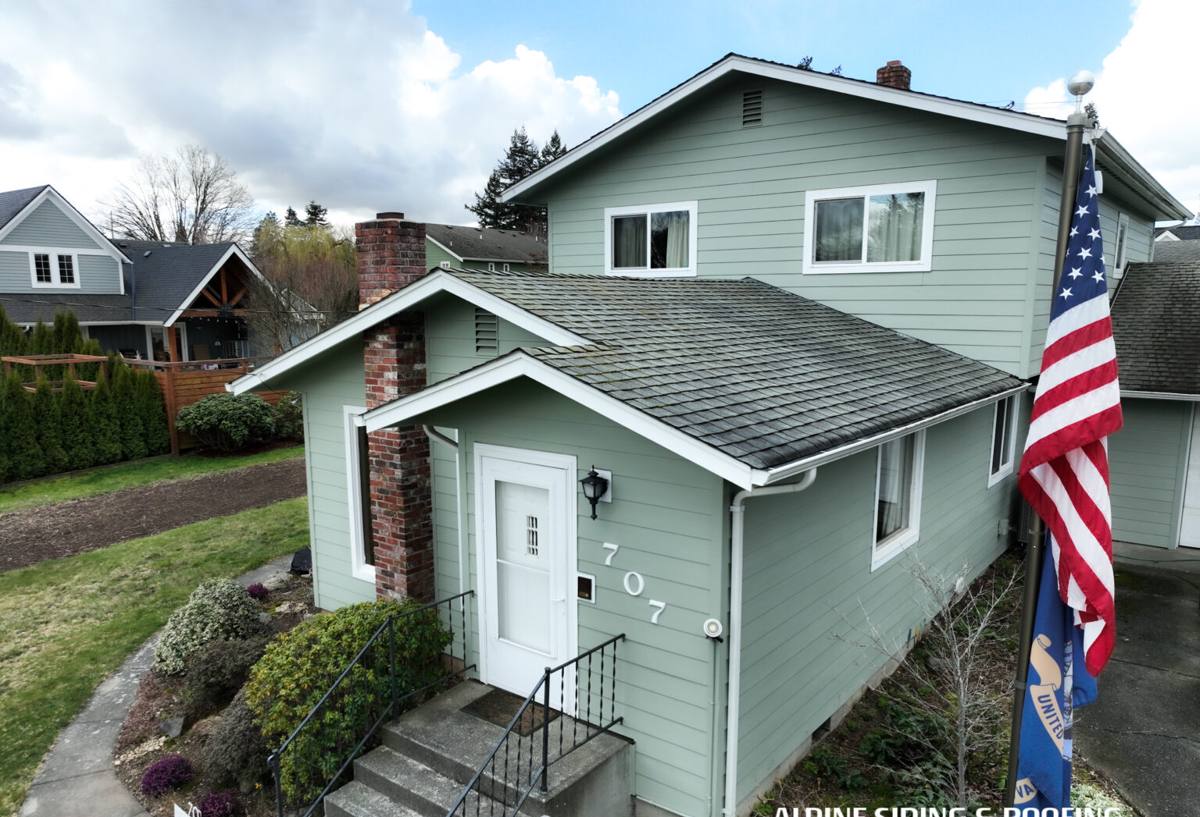
What Cemplank Gets Right
To be fair to the product: Cemplank is real fiber cement, not a knockoff. It's non-combustible, it resists rot and pests the way wood siding never will, and it holds paint better than most alternatives. For a homeowner comparing it against vinyl or untreated wood, Cemplank is a step up in almost every category that matters.
Where things get more complicated is in the details underneath that headline — manufacturing tolerances, moisture engineering for wet climates, finish systems, and the network of installers and warranty support behind the product in this specific region.
Manufacturing and Distribution
James Hardie has been the dominant fiber cement manufacturer in North America for decades, with dedicated plants and a mature quality control process refined over that time. Cemplank, as a Nichiha product line, has a smaller manufacturing and distribution footprint in the Pacific Northwest specifically. That matters less for a one-time purchase and more for what happens five or ten years down the road — matching a replacement board after storm damage, sourcing trim pieces, or finding a crew that installs the exact product already on your house.
Why Moisture Engineering Matters Here
Whatcom County isn't a "moderate rain" climate — it's a genuinely wet one, with Bellingham averaging well over 100 inches... no, we won't invent a number, but any homeowner here knows the drill: months of low-intensity rain, wind-driven moisture off the water, and long stretches where siding simply doesn't fully dry out between storms. Add moss growth on north-facing walls and under eaves, and you have a climate that punishes any siding product with weak moisture management at the seams, laps, and cut edges.
James Hardie's HZ5 product line was specifically engineered for climates like ours — colder, wetter regions where freeze-thaw cycles and sustained moisture exposure are the norm rather than the exception. That's not a marketing footnote; it changes the board's density and moisture-resistance formulation. Cemplank does not offer the same tier of climate-specific engineering documentation, which makes it harder for us to point to manufacturer-backed data confirming how the product performs specifically in a marine, high-moisture environment like Bellingham's.
Factory Finish vs. Field-Applied Paint
This is where the two products diverge the most in real-world performance. James Hardie's ColorPlus finish is baked on at the factory in a controlled environment, cured before the boards ever leave the plant, and backed by a separate 15-year finish warranty on top of the product warranty. Cemplank siding is more commonly sold primed, with the finish coat applied on site by the installing contractor.
Field-applied paint is only as good as the weather conditions on the day it goes on, the number of coats, and the skill of the painter. In a climate where you might get a two-day dry window between rain systems, that's a real variable. A factory finish removes that variable entirely — the color and sheen consistency, and the adhesion quality, are locked in before the siding ever reaches a truck.
Installation Sensitivity
Fiber cement in general is less forgiving than vinyl or wood when it comes to installation errors — improper fastening, wrong nail placement, insufficient gapping at joints, or skipped flashing details can all shorten a siding job's life regardless of brand. That's true of both products. The difference we've found is in the volume of installer training, technical documentation, and job-site support available for James Hardie versus Cemplank in our region. Hardie has invested heavily in contractor certification programs (we're familiar with these specifically because we go through them), detailed installation manuals for high-moisture climates, and local technical reps who will visit a job site if there's a question.
When we standardize our crews on one installation system, on one set of details, on one manufacturer's flashing and fastening specifications, we reduce the chance of a mistake creeping in from switching between product manuals. That consistency is worth more to us than any per-square-foot savings Cemplank might offer.
Warranty Structure Comparison
Warranties are where a lot of siding decisions quietly go wrong, because homeowners compare the headline years without reading what's actually covered — and more importantly, whether the warranty is transferable if you sell the house within that window.
| Factor | James Hardie (HZ5, installed to spec) | Cemplank |
|---|---|---|
| Substrate warranty | Non-prorated, typically 30 years | Manufacturer-backed, terms vary by product line |
| Factory finish warranty | Separate 15-year ColorPlus finish warranty | Finish warranty depends on whether factory-primed or field-painted |
| Transferability | Transferable to new owners with documented process | Varies; less standardized in our experience |
| Regional installer network | Established, multiple certified installers in Whatcom County | Smaller local footprint |
A warranty is only useful if there's a straightforward claims process and a manufacturer that's still actively selling and supporting that product in your region ten or twenty years later. That's a real consideration, not a scare tactic — it's simply part of due diligence on a purchase this size.
Cost Factors Worth Understanding
Cemplank is often positioned as the lower-cost fiber cement option, and material pricing can be somewhat lower than James Hardie depending on the supplier and product line. But material cost is only one piece of the real cost of a siding job. Consider these factors together rather than material price alone:
- Field painting labor and repaint cycles if the product isn't factory-finished — this can add cost in year one and again at repaint time
- Long-term maintenance — caulking, touch-up painting, and moisture monitoring at seams
- Resale and appraisal recognition — James Hardie is widely recognized by name in real estate listings and appraisals in ways that build buyer confidence
- Availability of matching replacement material if a section is ever damaged
- Warranty value if you sell — a transferable, well-documented warranty can be a selling point
When we walk a homeowner through the full picture rather than just the per-square-foot material number, the total cost-of-ownership gap between the two products narrows or reverses.
Why We Standardized on James Hardie
We made a business decision, years ago, to install one fiber cement system rather than offer a menu of brands. That decision was driven by wanting our crews deeply trained on one set of installation details, wanting one warranty structure we can explain accurately and stand behind, and wanting a factory finish system that removes weather-dependent field painting from the equation in a climate where dry days are not guaranteed.
James Hardie's HZ5 engineering for cold, wet regions, its ColorPlus factory finish, and its long track record of manufacturer support in the Pacific Northwest are the specific reasons it's the product on our own trucks and the product we recommend to every homeowner in Bellingham and across Whatcom County. It's not that Cemplank is a bad product — it's that after weighing moisture engineering, finish durability, installer training, and warranty transferability, Hardie is the one we're willing to put our name behind.
What This Means for Your Project
If you're comparing quotes and one contractor is proposing Cemplank at a lower price, that's worth understanding rather than dismissing — ask specifically about the finish system (factory vs. field-applied), the warranty transfer terms, and whether the product line has climate-specific engineering documentation for our region. Those questions will tell you more than the price difference alone.
Every home on the water side of Bellingham, up in Barkley or Fairhaven, or out toward Ferndale and Lynden, deals with the same driving rain and moss pressure. The siding you choose needs to handle years of that without repaint cycles turning into a recurring maintenance job.
If you'd like to talk through your specific home, roofline, and sun/shade exposure, we're happy to walk the property with you and put together a free, no-pressure estimate — no obligation, just a straight answer on what we'd recommend and why.