 Bellingham Exterior
 Living on the Water Comes With a Maintenance Bill
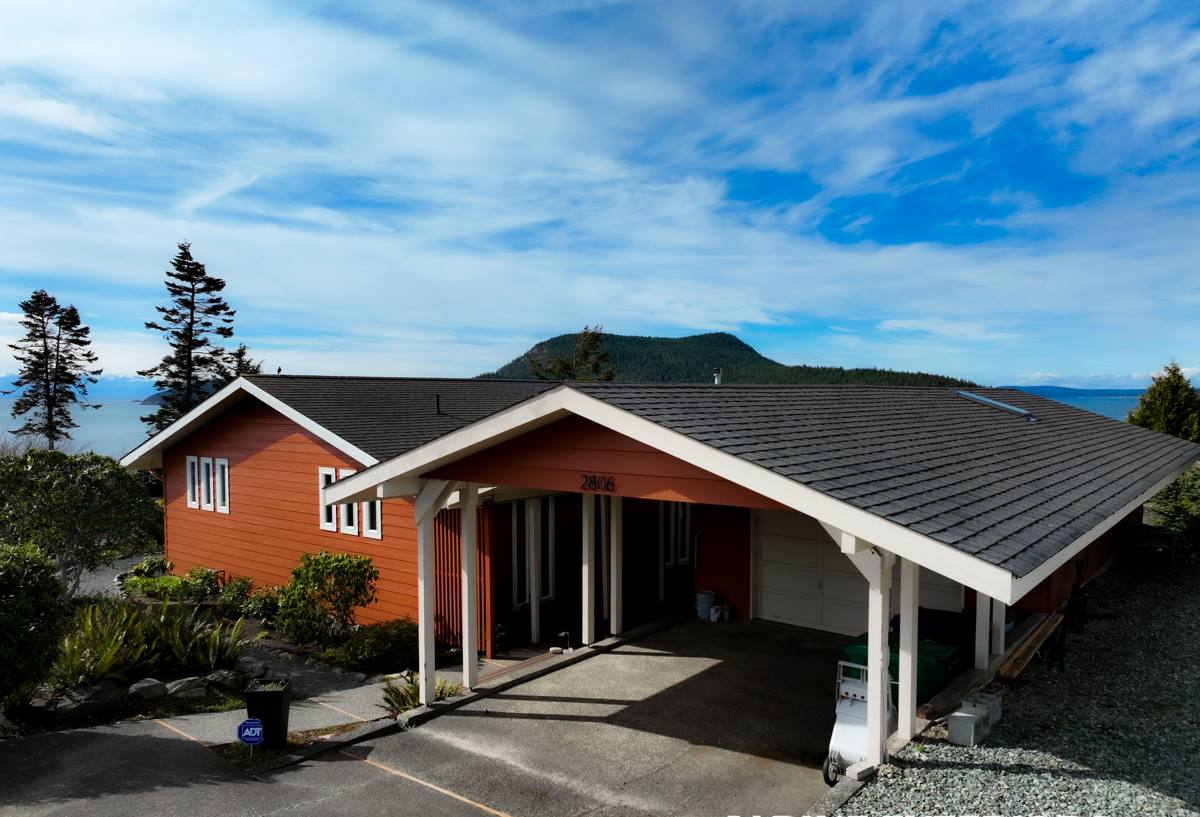
Silver Beach sits close enough to Bellingham Bay that the salt air is part of daily life, not an occasional thing. That's part of what makes the neighborhood worth living in — but it's also why exteriors here age differently than they do a few miles inland. Salt-laden air, wind-driven rain off the water, and a shoulder season that seems to stretch from October into May all put steady pressure on siding, roofing, trim, and anything made of wood. Homes here need a different maintenance conversation than homes in, say, the Irongate or Cordata areas of Bellingham, even though they're only minutes apart.
We're a Bellingham-based exterior crew, and Whatcom County's coastal microclimates are the only climate we build for. That matters more than it sounds like it should. A crew that mostly works dry inland subdivisions and takes an occasional job near the water can miss the details that actually matter here — fastener choice, flashing sequencing, how a product handles repeated wetting and drying. We don't have to guess at Silver Beach's conditions because we're dealing with them on jobs up and down the Bellingham waterfront on a regular basis.
Salt Air and Coastal Moisture
Salt air accelerates corrosion on anything metallic — fasteners, flashing, hardware, even the coating systems on lower-grade building products. It also tends to travel with moisture, so a home near the water is dealing with a one-two punch: salt exposure plus more sustained dampness than a home set back from the shoreline. Over years, this shows up as premature fastener rust bleeding through paint, trim that swells and softens at the edges, and finishes that chalk or fade faster than the same product would inland.
This is one of the practical reasons we standardized on James Hardie fiber cement siding rather than offering a menu of siding materials. Fiber cement doesn't absorb moisture the way wood-based products do, and it isn't vulnerable to the swelling, delamination, and rot that come from repeated wet-dry cycling. In a location like Silver Beach, that difference isn't cosmetic — it's the difference between a 30-year exterior and one that needs real attention inside a decade.
Why We Don't Install Everything on the Market
We get asked fairly often about vinyl siding, LP SmartSide, and engineered wood products, since they're common around Whatcom County and often cost less upfront. Vinyl can crack and warp under UV and temperature swings, and its seams and fastening system give it less resistance to wind-driven rain than a properly installed fiber cement system. Engineered wood siding (LP SmartSide and similar products) is wood-based at its core — treated and engineered, but still vulnerable to moisture intrusion at cut edges and fastener points if the installation isn't flawless and maintenance lapses even briefly. Near the water, where the margin for error from moisture is smaller, we don't think those trade-offs make sense for a home we're putting our name behind. That's a professional standard we hold to, not a claim that every other product is unusable everywhere.
Moss, Rain, and Roof Longevity
Whatcom County's long wet season and the shade from mature trees common in established neighborhoods like Silver Beach create ideal conditions for moss growth on roofs. Moss holds moisture against roofing material, works its way under shingle edges, and can lift granules and shorten the life of asphalt shingles well before their rated age. Combined with driving rain coming off the bay at an angle, roof details — valleys, flashing, ridge caps — take more abuse here than they would on a roof in a drier, more sheltered part of the county.
Our roofing work leans on redundancy at the details that fail first: proper underlayment, correctly lapped flashing, and ventilation that keeps the roof deck from staying damp longer than it needs to. We also talk with homeowners honestly about moss control — physical removal and preventive treatments matter more here than in most parts of the state, and skipping that maintenance is one of the most common ways a good roof gets a shortened life.
Siding for a Waterfront Climate
James Hardie's HZ5 product line is engineered specifically for climates with more moisture exposure, which is exactly the profile Silver Beach and the broader Bellingham waterfront present. It's a fiber cement product, meaning it's non-combustible and dimensionally stable — it doesn't expand and contract with moisture the way wood-based sidings do, which keeps caulk lines and paint film intact longer.
ColorPlus Factory Finish
Most of the siding failures we see that involve moisture intrusion trace back to a compromised finish — paint that's failed at a lap joint or cut edge, letting water behind the material. Hardie's ColorPlus finish is baked on at the factory under controlled conditions, which gives a more consistent, better-adhered finish than field-applied paint typically achieves, and it comes with a longer finish warranty than repainting a field-primed product. In a salt-air environment, a finish that holds up without repainting every several years is a real, measurable benefit.
Installation Details That Matter Here
Correct installation matters everywhere, but near the water it matters more. We follow Hardie's fastening and clearance specifications closely — proper ground clearance, correct nail placement, and flashing at every penetration and butt joint. Cutting corners on these details is what turns a good product into a maintenance headache regardless of what siding is on the wall.
Roofing Built for the Conditions
Beyond moss management, we pay close attention to ventilation and underlayment quality on every roof we touch in this area. A roof that traps humid attic air is more prone to moss and moisture issues from underneath, in addition to whatever it's dealing with from the outside. We also look closely at valleys and any roof-to-wall transitions, since those are where wind-driven rain finds its way in on homes exposed to weather coming off the bay.
Windows for Wind-Driven Rain
Window performance near the water comes down to two things: how well the unit itself is built, and how well it's flashed and sealed into the wall. We install windows with flashing details designed to shed water outward at every layer, so that even in a hard, wind-driven rain event, water is directed back out rather than finding a path inward around the frame. Older single-pane or poorly flashed windows in this area often show their age through condensation, drafts, and soft trim at the sill — signs that moisture has already been finding a way in for some time.
Decks in a Salt Air Environment
Decks facing the water take a beating from UV, salt, and moisture all at once, and fasteners are usually the first thing to show it — corrosion staining around screw heads is one of the most common deck complaints we see in coastal Bellingham neighborhoods. We build and repair decks with corrosion-resistant hardware and materials chosen for how they hold up under this specific combination of exposure, not just general Pacific Northwest weather.
Why a Local Crew Matters
A national franchise or a crew based well outside Whatcom County can install a product correctly on paper and still miss what actually matters in a location like Silver Beach — how close the home sits to salt water, how the site drains, whether the shade from established trees keeps moss pressure high year-round. We're in this microclimate constantly, which means our estimates, our material choices, and our installation details already account for it before a homeowner has to ask.
| Factor | Fiber Cement (James Hardie) | Vinyl Siding | Engineered Wood (LP SmartSide) |
|---|---|---|---|
| Moisture resistance | High — cement-based, not moisture-absorbent | Moderate — seams and fastening points can allow water behind panels | Moderate — engineered wood core still vulnerable at cut edges |
| Salt air / coastal durability | Strong — non-organic material, factory finish | Can chalk, fade, and become brittle over time | Requires diligent maintenance to prevent edge swelling |
| Finish longevity | ColorPlus factory finish, long finish warranty | Color molded in, but can fade and chalk | Field or factory finish, typically shorter warranty |
| Fire resistance | Non-combustible | Combustible | Combustible |
| Typical upfront cost | Higher | Lower | Moderate |
Signs Your Silver Beach Home Needs Exterior Attention
- Rust streaks bleeding through paint near nail heads or trim edges
- Moss buildup on the roof, especially in shaded valleys or north-facing slopes
- Soft or spongy trim, especially around window sills and deck posts
- Paint that's chalking, peeling, or fading faster than expected
- Drafts, condensation, or visible daylight around older window frames
- Fastener corrosion or discoloration on deck boards and railings
How We Work With Silver Beach Homeowners
Every project starts with a walk-around assessment specific to the home's exposure — how close it sits to the water, how much shade and moss pressure it deals with, and what condition the current siding, roof, windows, or deck are actually in versus what they look like from the street. From there we put together a straightforward scope and material plan, with James Hardie fiber cement as our siding recommendation and an honest explanation of why, rather than a sales pitch built around whatever has the best margin.
If you're weighing a siding, roofing, window, or deck project for a home in Silver Beach or elsewhere along the Bellingham waterfront, we're happy to take a look and put together a free, no-pressure estimate.