 Bellingham Exterior
 Exterior Work Built for Puget's Corner of Bellingham
Homes in the Puget area sit close enough to the water that salt air, wind-driven rain, and a moss season that seems to stretch longer every year are simply part of owning property here. Whatcom County's marine climate is milder than most of the country, but "mild" doesn't mean easy on a house. It means constant low-grade moisture pressure, twelve months a year, on siding, roofing, windows, and decking. We've built our business around exterior materials and installation methods that hold up to exactly that kind of pressure, not the drier, more forgiving climates that a lot of national products are engineered for.
This page covers what we see most often on homes in and around Puget, how we approach siding, roofing, windows, and decks for this specific setting, and why a crew that works this area regularly — rather than one passing through from out of town — tends to catch problems before they become expensive ones.
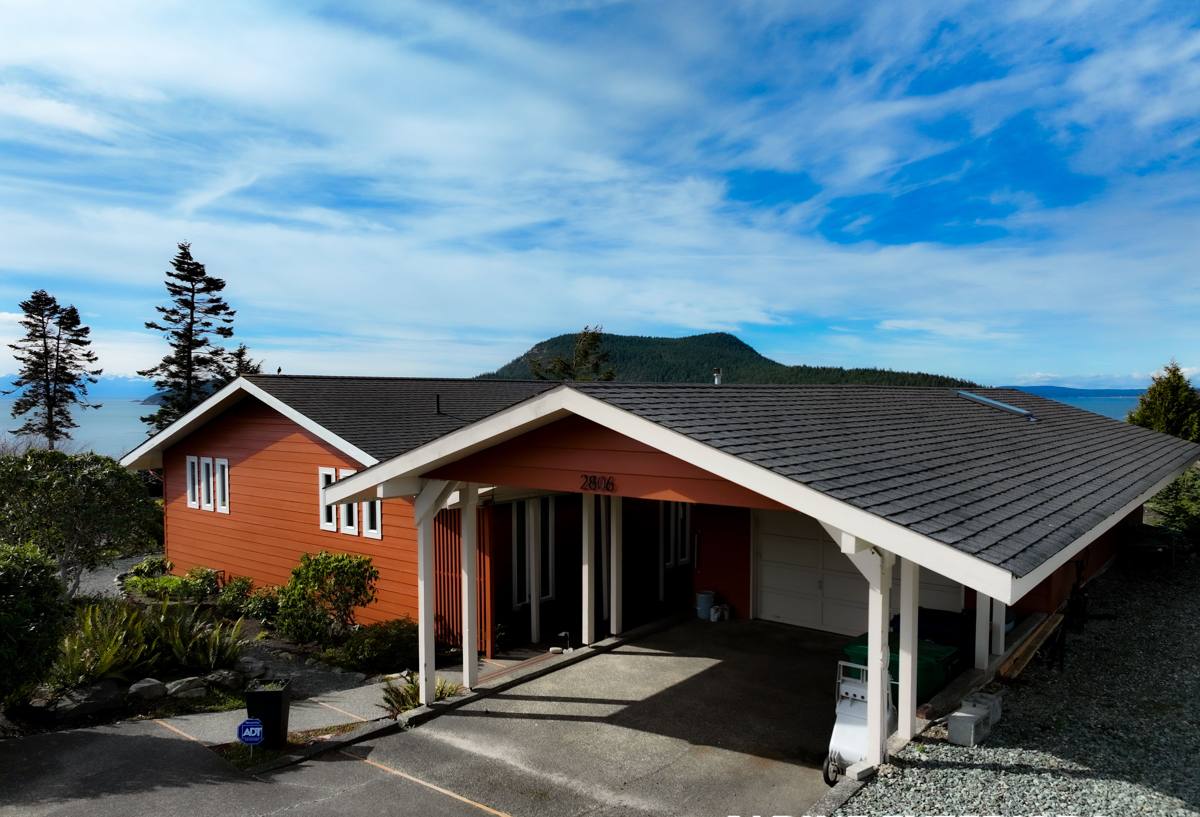
What the Puget Sound Climate Does to a House
Salt Air and Moisture
Proximity to Puget Sound means airborne salt and moisture settle on exterior surfaces even on dry days. Over years, that combination accelerates corrosion on fasteners, flashing, and any metal trim that isn't rated for a marine-adjacent environment. It also means paint films and caulk joints break down faster than they would inland, which is one reason we pay close attention to product selection and detailing rather than assuming a standard install will hold up the same way here as it would in a drier region.
Driving Rain
Bellingham gets plenty of straight-down rain, but the storms that do real damage are the ones that come in sideways off the water. Wind-driven rain finds every gap in a lap joint, every under-caulked window flange, and every place where flashing was an afterthought instead of a plan. A siding or window system that performs fine in calm rain can still let water in when wind is pushing it horizontally against a wall for hours at a time.
Moss, Algae, and a Long Damp Season
Whatcom County's moss season isn't really a season — for a lot of properties it's most of the year. Roofs, north-facing siding, and shaded decking stay damp long enough for moss and algae to take hold, and once established, that growth holds moisture against the surface underneath it, which shortens the life of whatever material is there. Regular cleaning helps, but the bigger factor is starting with materials and details that don't trap moisture in the first place.
Siding: Why We Only Install James Hardie Fiber Cement
Siding is the single biggest exterior investment most homeowners make, and it's also the surface most exposed to salt air, rain, and moss over the life of the house. We install James Hardie fiber cement exclusively — not vinyl, not LP SmartSide, not Cemplank, not Allura, not primed spruce or cedar. That's not a marketing position; it's a standard we've held to because of what we've seen these products do over time in exactly this kind of climate.
What Fiber Cement Does That Matters Here
- It's non-combustible, which matters for insurance and for peace of mind, though fire isn't the main reason it suits this climate.
- It doesn't absorb water the way engineered wood products can when a seam or cut edge is left exposed.
- It doesn't expand and contract with humidity swings the way wood-based siding does, so joints stay tighter over time.
- James Hardie's ColorPlus factory finish is baked on and warranted against fading, which matters when your siding is facing constant UV plus salt spray rather than one or the other.
- Hardie's HZ5 product line is specifically engineered for wetter, harsher climates — the Pacific Northwest is exactly the kind of environment that line was built for.
Why We Passed on the Alternatives
Vinyl siding is inexpensive and low-maintenance in the sense that it doesn't need painting, but it's a poor match for driving rain and wind exposure — it relies on lap joints and gaps for expansion, which are exactly the kind of openings that wind-driven rain exploits, and it can become brittle over time. Engineered wood products like LP SmartSide perform well when installation and caulking are perfect and stay perfect, but any breach in that seal in a climate this consistently damp becomes a moisture entry point that's expensive to catch early. Other fiber cement brands like Cemplank or Allura are reasonable products on paper, but we've standardized on one manufacturer, one finish system, and one warranty structure so we can install to spec every time and stand behind the result without qualifiers. Primed spruce and raw cedar look great on day one, but they demand a maintenance schedule — repainting, recaulking, moisture monitoring — that most homeowners underestimate until it's overdue, and in a climate with this much sustained moisture, "overdue" arrives faster than people expect.
Siding Product Comparison
| Material | Moisture Behavior in This Climate | Maintenance Load | Our Position |
|---|---|---|---|
| James Hardie Fiber Cement | Dimensionally stable, factory-sealed finish, engineered HZ5 line for wet climates | Low — occasional wash, no repainting for the life of the finish warranty | What we install |
| Vinyl | Relies on loose-fit joints; vulnerable to wind-driven rain intrusion behind panels | Low, but can crack or warp over time | Not installed |
| LP SmartSide / engineered wood | Performs well if seals stay intact; any breach lets moisture into the substrate | Moderate — caulk and paint upkeep required | Not installed |
| Cemplank / Allura (other fiber cement) | Similar base material to Hardie, different finish and warranty terms | Low to moderate | Not installed — we standardize on one system |
| Primed Spruce / Cedar | Attractive but absorbent; needs consistent sealing to avoid rot in sustained damp conditions | High — regular repainting and inspection | Not installed |
Roofing in a Long Moss Season
Roofs in Puget deal with the same moss and algae pressure as siding, but with more consequences if it's ignored — trapped moisture under moss mats works its way under shingles and shortens roof life significantly. We look at ventilation, valley flashing, and edge details as much as the roofing material itself, because a roof that can't shed water and dry out between storms will underperform no matter what's on top of it. Where a roof section stays shaded most of the day, we factor that into material choice and maintenance recommendations rather than treating every slope the same.
Windows: Sealing Against Wind-Driven Rain
Window failures in this climate are rarely about the glass — they're about flashing and the seal between the window unit and the wall assembly. A window that's rated well but installed without proper flashing integration will leak in a sideways storm regardless of its specs. When we replace windows, we treat the flashing and sealing detail as equally important as the unit itself, and we coordinate that work with siding so the water management plane is continuous around the whole opening, not patched together after the fact.
Decks: Built for Damp, Shaded Conditions
Decks in the Puget area often sit under tree cover or face the water, which means they see the same sustained dampness as roofing and siding. Ledger board flashing, proper drainage gaps between boards, and material choice all matter more here than they would on a deck that dries out quickly between rains. We build in drainage and airflow from the start rather than relying on the decking material alone to resist moisture damage.
Checklist: Signs Your Exterior Is Losing the Battle with the Climate
- Moss or dark streaking building up on siding, especially on north- or shade-facing walls
- Soft or spongy spots on decking, particularly near the house or under overhangs
- Paint or caulk cracking and pulling away at siding seams or window trim
- Visible moss mats or granule buildup in gutters from the roof
- Window frames that feel damp or show staining on interior sills after storms
- Rust streaking from fasteners or metal flashing
Why a Local Crew Matters Here
Puget's exposure to salt air and wind-driven rain isn't uniform across Bellingham — it varies block by block depending on how close a property is to open water and which direction it faces. A crew that works this specific area regularly develops a feel for which details need extra attention on a given lot, rather than applying a one-size-fits-all install pulled from a manual written for a different climate. We're a Whatcom County crew, and the work we do in Puget reflects what we've actually seen hold up — and what hasn't — on homes just like the one you're standing in front of.
What to Expect When You Call Us
We start with a walk-around of the exterior — siding, roofline, windows, and any decking — to see what condition things are actually in, not just what a homeowner suspects. From there we give a straight assessment: what needs attention now, what can wait, and what the real cost range looks like for the work involved. We don't oversell a full exterior replacement when a repair or partial section will hold, and we don't install products we don't stand behind just to win a bid.
If you're dealing with moss buildup, a leak you can't source, or you're simply planning ahead for a home in the Puget area, we're happy to take a look and put together a free, no-pressure estimate using the form below.