 Bellingham Exterior
 Storm Damage Roofing in Lynden's Climate
Lynden sits far enough inland from Bellingham Bay to avoid the worst of direct salt spray, but it still sits inside the same Whatcom County weather system: wet Pacific fronts moving in off the Salish Sea, months of low-angle rain, and winter windstorms that can gust hard across the open farmland surrounding town. That combination is rough on roofs in a way that's different from a single dramatic storm event. Most of the damage we see in Lynden isn't from one catastrophic blow-through — it's cumulative. Wind lifts a few shingle tabs during a November gale, driving rain finds that opening over the following weeks, and by the time a homeowner sees a stain on the ceiling, the underlying decking has already been wet for a while.
Add in Whatcom County's long moss season — mossy roofs hold moisture against the shingle surface for months at a stretch — and you get a climate that punishes any roof with even minor storm damage. A gap that would dry out quickly in a drier climate stays wet here, and wet roof components fail faster. That's the local reality that should shape how storm damage repair gets done in Lynden: it's not just about patching what the wind broke, it's about closing the roof back up before the next system rolls through.
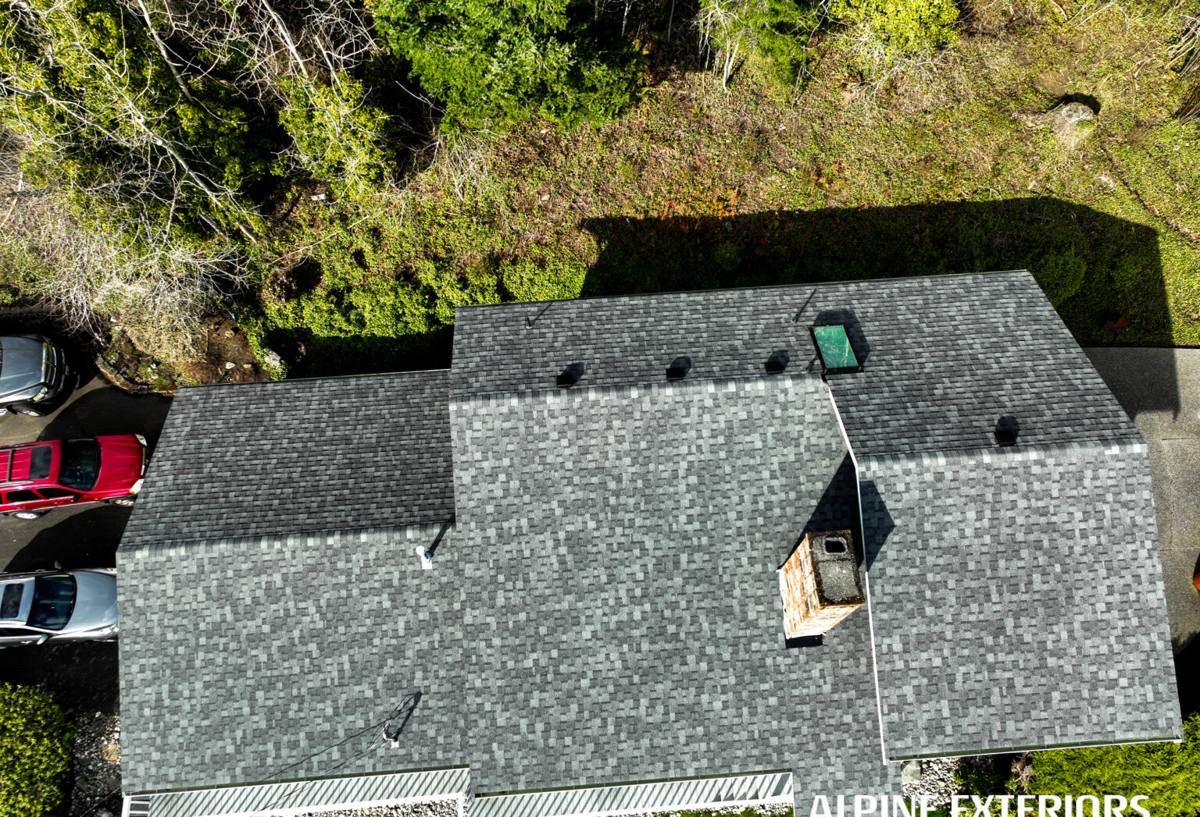
Signs Your Lynden Roof Has Storm Damage
Storm damage isn't always obvious from the ground, and it isn't always as simple as missing shingles. Here's what we tell Lynden homeowners to watch for after a windstorm or heavy rain event:
- Shingles that look lifted, curled, or creased, especially on the roof faces that catch the prevailing wind
- Granules collecting in gutters or at the base of downspouts — a sign of shingle surface abrasion from wind-driven debris
- Bent, lifted, or missing flashing around chimneys, vent pipes, and skylights
- New or worsening water stains on interior ceilings, especially near exterior walls or roof valleys
- Damp or musty smells in an attic that weren't there before the storm
- Visible daylight through the roof deck when viewed from inside the attic
- Debris — branches, moss clumps, blown-off neighbor's shingles — lodged in valleys or against roof penetrations
- Gutters pulled away from the fascia or sagging under storm debris and saturated moss
Any one of these on its own might be minor. Several together, or any sign of active water intrusion, means it's worth having someone look before the next front comes through.
What a Correct Storm Damage Repair Actually Involves
Inspection Before Any Work Starts
A repair that's done right starts with a full inspection, not just a look at the obviously damaged spot. Wind and rain rarely limit their damage to one tidy area — we check the whole roof plane the wind hit, the valleys, all flashing points, and the attic from the inside, because a leak often travels along the decking before it shows up as a stain directly below the actual entry point. Skipping this step is how homeowners end up paying for a second repair a few months later because the crew fixed the visible damage and missed the related problem six feet away.
Matching the Repair to the Roof
Storm repairs on an older roof need to account for the fact that new shingles won't perfectly match sun-faded or moss-stained existing ones, and that's worth discussing honestly up front rather than promising an invisible patch. On a roof where the surrounding shingles are brittle from age, a patch repair can also disturb adjacent shingles that weren't part of the original damage — we walk homeowners through that trade-off rather than surprising them with it afterward.
Flashing and Water-Path Details
A large share of storm-related leaks in this region trace back to flashing, not shingles — the metal or membrane details around chimneys, skylights, vent pipes, and roof-to-wall transitions. Wind can peel flashing edges or work fasteners loose without doing obvious damage to the shingles nearby, so a correct repair always re-seats or replaces flashing that's been compromised, and re-establishes proper water-shedding laps rather than just caulking over a gap. Caulk is a short-term fix, not a repair, in a climate that sees this much sustained rain.
Decking and Underlayment
If water has been getting into the roof assembly for any length of time, we check the decking underneath for soft spots or delamination before closing the roof back up. Replacing shingles over damaged decking just hides the problem until it fails again, often at a worse point in the season. Where underlayment has been compromised, it gets replaced too — it's the roof's actual water barrier, and shingles alone aren't designed to be watertight on their own.
Common Storm Damage Repairs in Lynden
| Damage Type | Typical Cause Here | What the Repair Involves |
|---|---|---|
| Lifted or missing shingle tabs | Sustained wind gusts, aging adhesive strips | Shingle replacement, re-securing adjacent tabs, sealing exposed nail heads |
| Flashing failure at chimneys/vents | Wind uplift, fastener fatigue, moss-driven corrosion | Flashing removal and reinstallation with correct laps and sealant |
| Valley leaks | Debris damming water flow, worn valley material | Debris clearing, valley liner repair or replacement |
| Gutter and fascia damage | Wind-driven debris, ice weight in cold snaps | Gutter re-hanging or replacement, fascia repair where rotted |
| Soft or stained decking | Prolonged undetected leak from earlier storm damage | Decking replacement, underlayment renewal, shingle tie-in |
| Moss-accelerated shingle wear | Long wet season, shaded or north-facing roof planes | Moss removal, treatment, and repair of granule-stripped areas |
Our Process, Start to Finish
- Contact and scheduling — you describe what happened and what you're seeing; we schedule a roof inspection, prioritizing active leaks.
- On-site inspection — we get on the roof and in the attic, document the damage, and identify anything beyond the obvious storm impact.
- Written assessment — you get a clear explanation of what's damaged, what's causing it, and the repair options, in plain language.
- Repair or tarp-and-schedule — active leaks get temporary protection immediately if a full repair can't happen the same day; permanent repair follows.
- Final walk-through — we confirm the repair with you before considering the job done, including attic access if a leak was involved.
Insurance and Storm Damage Claims
Many storm repairs in Lynden end up going through homeowners insurance, especially when a named windstorm or hail event caused the damage. We can document damage in a way that's useful for a claim — photos, a written description of cause and extent, and a clear scope of repair — but we're a roofing contractor, not an insurance adjuster or public adjuster, and we won't promise a claim outcome we don't control. What we will do is give you an honest assessment of the damage regardless of how the claims process goes, because that assessment needs to be accurate whether insurance covers it or you're paying out of pocket.
Repair vs. Replace: How We Help You Decide
| Factor | Favors Repair | Favors Replacement |
|---|---|---|
| Age of existing roof | Roof is under 10-12 years old | Roof is near or past its expected service life |
| Extent of storm damage | Damage is localized to one area or plane | Damage is widespread across multiple roof faces |
| Decking condition | Decking is sound under the damaged area | Multiple areas of soft or delaminated decking found |
| Prior repair history | Roof has no significant patch history | Roof already carries several past repairs |
| Moss and moisture exposure | Isolated moss growth, otherwise healthy shingles | Heavy, long-term moss damage across the roof |
We'll tell you plainly which side of that table your roof falls on. A roof that's a good repair candidate doesn't need to be sold as a replacement, and a roof that's genuinely past the point of a durable repair shouldn't be patched just to delay the real conversation.
Why a Crew That Already Works Lynden Matters
Storm repair work benefits from local familiarity in ways that aren't obvious until something goes wrong. A crew that regularly works Whatcom County roofs knows how the region's moss growth, wind exposure from open farmland, and sustained wet-season rainfall interact with different roofing materials over time — that shapes how we assess damage and what we flag as a future risk, not just what's broken today. It also means faster response after a widespread storm event, when demand for roofing repair spikes across the county and homeowners who don't already have a local contact can end up waiting weeks for someone to even look at the damage.
Being local also means accountability. If a repair doesn't hold up the way it should, we're not a crew that did one job in Lynden and moved on to the next county — we're working roofs here on an ongoing basis, and that's exactly the kind of relationship that keeps a repair honest.
Reducing Future Storm Damage
Part of a good storm repair is leaving the roof better positioned for the next storm, not just restored to its exact prior condition. That can include re-securing shingles beyond the immediate damage zone if they're showing early lift, upgrading flashing details that were undersized to begin with, and clearing moss and debris from valleys and gutters so water has a clear path off the roof during the next heavy rain. None of that needs to be a major project — it's targeted work that reduces the odds of a repeat call after the next windstorm.
If your Lynden home has visible storm damage, or you're just not sure what that last windstorm did to your roof, we'll come take an honest look. The estimate is free, there's no pressure attached to it, and you'll get a clear answer about what's actually going on up there — use the form below to get started.