 Bellingham Exterior
 Barkley's Mix of Homes, and What the Weather Does to Them
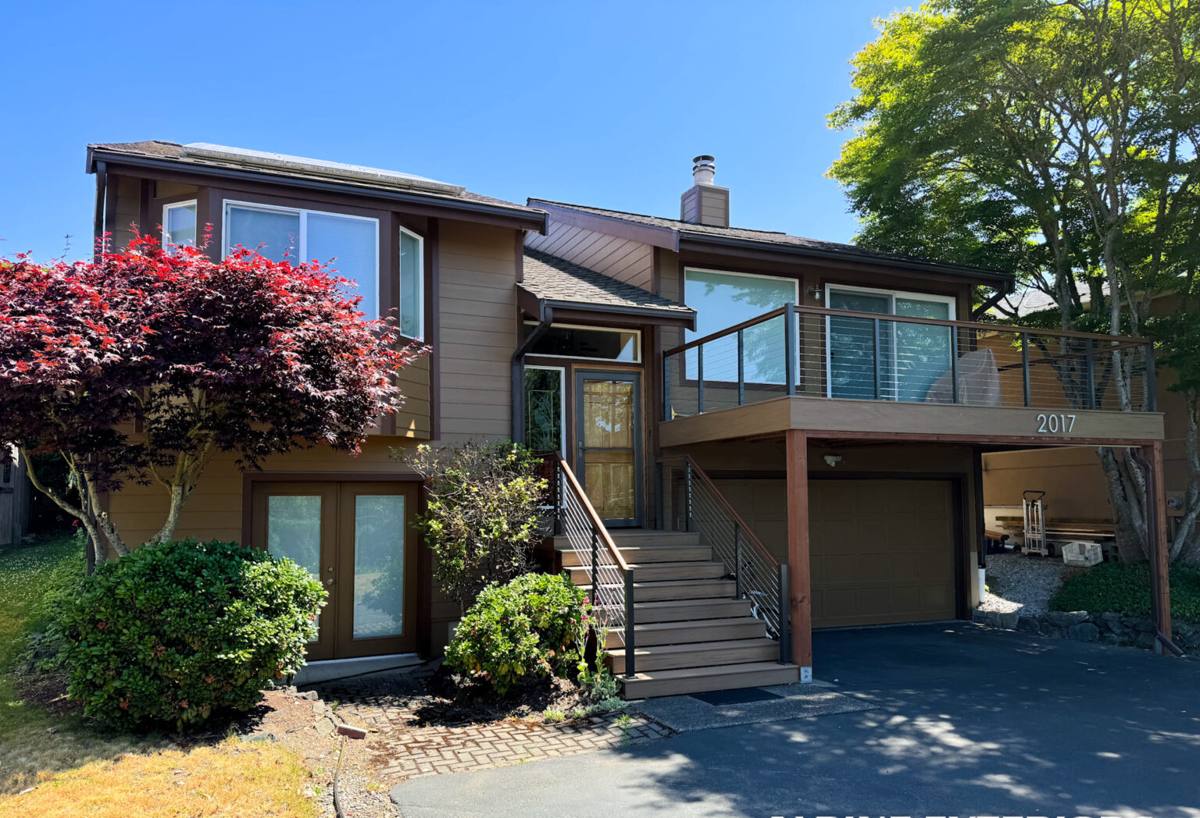
Barkley is one of Bellingham's newer planned neighborhoods, with a mix of homes built from the 1990s through today — many still well within their expected siding lifespan on paper, but already showing wear in practice. That's not unusual here. Whatcom County sits close enough to the water that salt-laden air reaches inland neighborhoods like Barkley on a regular basis, and it works on exterior materials in ways that inland Washington towns simply don't have to deal with.
Add in Bellingham's long stretch of driving rain from fall through spring, and a moss season that can run half the year on shaded, north-facing walls, and you have a climate that is quietly hard on siding. It's not dramatic weather — no hurricanes, no hail the size of golf balls — but it's relentless, and relentless is what actually wears siding out. Homes in Barkley with mature landscaping and taller trees nearby tend to hold moisture and moss longer than homes in open, sunnier parts of town, which matters when we're diagnosing why one wall looks fine and the wall next to it doesn't.
What This Climate Does to Different Siding Types
Every siding material responds to salt air, rain, and moss differently, and understanding that difference is the starting point for any honest replacement recommendation.
- Vinyl siding can become brittle and fade faster under UV exposure combined with salt air, and it doesn't hold paint if you want to change the look later.
- Untreated or primed wood products (including primed spruce) are the most vulnerable to moisture wicking at seams and cut edges, which is exactly where our driving rain finds its way in.
- Engineered wood siding depends heavily on factory sealing and correct field caulking of every cut edge — miss one, and moisture gets a foothold.
- Fiber cement siding is inert to moisture in the way wood-based products aren't, which is a major reason it holds up better in exactly the kind of climate Barkley sits in.
None of this means every non-fiber-cement product is doomed to fail — it means the margin for installation error is much thinner with moisture-sensitive materials, and this climate doesn't forgive thin margins.
Signs a Barkley Home Needs Siding Replacement, Not Just Repair
We get called out for a lot of "small" siding problems that turn out to be symptoms of something bigger. Here's what tends to separate a patch job from a full replacement:
| Symptom | Likely Repair | Likely Full Replacement |
|---|---|---|
| Isolated crack or impact damage on 1-2 boards | Yes | No |
| Persistent moss on multiple walls, returns within a season of cleaning | No | Yes |
| Soft or spongy siding when pressed near the bottom courses | No | Yes |
| Paint failure (bubbling, peeling) across large sections | Sometimes | Often |
| Visible gaps, warping, or cupping boards | No | Yes |
| Interior stains or musty smell on exterior walls | No | Yes |
The soft-spot test is worth doing yourself before you call anyone: press firmly near the bottom of exterior walls, especially under windows and near ground level. If it gives at all, there's a good chance moisture has already gotten past the surface and into the sheathing behind it — at that point, no amount of caulk or paint fixes the underlying problem.
What a Correct Siding Replacement Actually Involves
Siding replacement done right is not just "old boards off, new boards on." The parts of the job that don't show up in a photo are the parts that determine whether the new siding lasts 10 years or 40.
Tear-Off and Inspection
Removing the old siding is also our best chance to see what's actually happening behind it — sheathing condition, any rot, and how the old water-resistive barrier held up. This step is where a lot of the real decisions get made, and it's why we don't quote a job sight-unseen without at least a solid exterior inspection first.
Water-Resistive Barrier and Flashing
Every window, door, and penetration needs correctly lapped flashing and a continuous water-resistive barrier behind the siding. In a climate that gets as much driving rain as Bellingham does, this layer is doing more work than the siding itself — the siding sheds the bulk of the water, but the WRB and flashing are what stop the rest from reaching your framing.
Fastening and Clearances
Fiber cement siding has specific fastening patterns, nail types, and minimum clearances from grade, decks, and roof lines that are all spelled out by the manufacturer. Skipping these isn't a cosmetic shortcut — it's the difference between a warranty that's valid and one that isn't.
Trim, Caulking, and Finish
Cut edges need to be sealed, joints need to be caulked with the right product, and trim needs to be detailed so water sheds away from the wall rather than pooling against it. This is where crews in a hurry cut corners, and it's usually the first place problems show up two or three years later.
Why We Install Only James Hardie Fiber Cement
We don't install vinyl, LP SmartSide, Cemplank, Allura, primed spruce, or cedar siding. That's a deliberate standard, not a lack of options. In a climate that combines salt air, sustained rain, and long moss seasons, we've found that James Hardie fiber cement gives homeowners the best combination of moisture resistance, non-combustible construction, and finish durability of any product we've worked with.
Hardie's ColorPlus factory-applied finish is baked on under controlled conditions rather than field-painted, which matters a lot in a place where field painting has to fight rain windows and humidity. Hardie also builds region-specific HZ5 products engineered for wetter, harsher climates like ours, and backs the material with a long transferable warranty that follows the house if it sells. That's not a knock on every other product on the market — plenty of them have real strengths — but for what this specific climate does to a house over decades, fiber cement is what we're willing to put our name behind.
Our Process, Start to Finish
- Exterior inspection — we look at your current siding, trim, and any visible trouble spots before quoting anything.
- Written estimate — scope, material, and a clear cost breakdown, no vague allowances.
- Tear-off and sheathing check — old siding comes off, sheathing gets inspected and repaired if needed.
- WRB and flashing installation — the moisture-management layer goes in before a single new board is hung.
- Hardie installation to manufacturer spec — correct fastening, clearances, and joint treatment.
- Trim, caulking, and final finish — details that determine long-term water shedding.
- Final walkthrough — we go over the finished work with you before calling the job done.
What Drives the Cost
| Factor | Why It Matters |
|---|---|
| Sheathing condition found at tear-off | Rot or water damage discovered mid-job adds repair scope |
| Home size and wall complexity | More corners, gables, and trim detail means more labor |
| Siding profile (lap width, panel vs. plank) | Affects material cost and install time |
| Existing moisture barrier condition | Full WRB replacement vs. reuse changes scope |
| Access and site conditions | Landscaping, slopes, and setbacks affect staging and labor |
We won't give you a number over the phone with any real confidence — too much of the cost depends on what's actually behind the old siding, which is exactly why the inspection step matters.
Why a Crew That Already Works Barkley Matters
A contractor who's worked a number of homes in and around Barkley already knows the general age and construction patterns common to the neighborhood, has a feel for which walls tend to hold moss longest, and isn't guessing at how Bellingham's rain and salt exposure behave differently than a job forty miles inland. That familiarity shows up in small ways — knowing to check specific trouble spots first, not underestimating how much moisture exposure a shaded wall has taken, and pricing the job with fewer surprises for you along the way.
Simple Maintenance Checklist for New Siding
- Rinse siding annually to knock back salt residue and early moss growth, especially on shaded or north-facing walls.
- Keep gutters clear so water sheets off the roof rather than running down the siding face.
- Trim back landscaping that keeps walls shaded and damp for long stretches.
- Re-caulk trim joints if you notice gaps forming — small gaps are easy to fix, big ones aren't.
- Watch for paint or finish changes at the bottom courses, which is usually where moisture problems start.
If your Barkley home is showing any of the signs above, or you're just planning ahead for a siding project, we're happy to take a look and walk you through what we're seeing. There's a free, no-pressure estimate form below — no obligation, just an honest read on your home's siding.