 Bellingham Exterior
 Why Silver Beach Siding Has to Work Harder Than the Brochure Suggests
Silver Beach is one of Bellingham's established residential neighborhoods, and like most of Whatcom County, it sits inside a marine climate that doesn't let up for long. Salt-laden air off the water, driving rain that comes in sideways during winter storms, and a moss season that can stretch from October well into spring all put steady pressure on exterior siding. A siding job that looks fine on installation day but wasn't detailed for this climate usually starts showing problems within a few years — not because the product failed, but because the installation didn't account for what the Pacific Northwest actually does to a house.
This page is about one service, in one place: siding installation for homes in and around Silver Beach. We're not going to give you a generic rundown of siding in general. We're going to walk through what this specific climate demands, what a correct installation looks like, and why the crew doing the work matters as much as the material going on the wall.
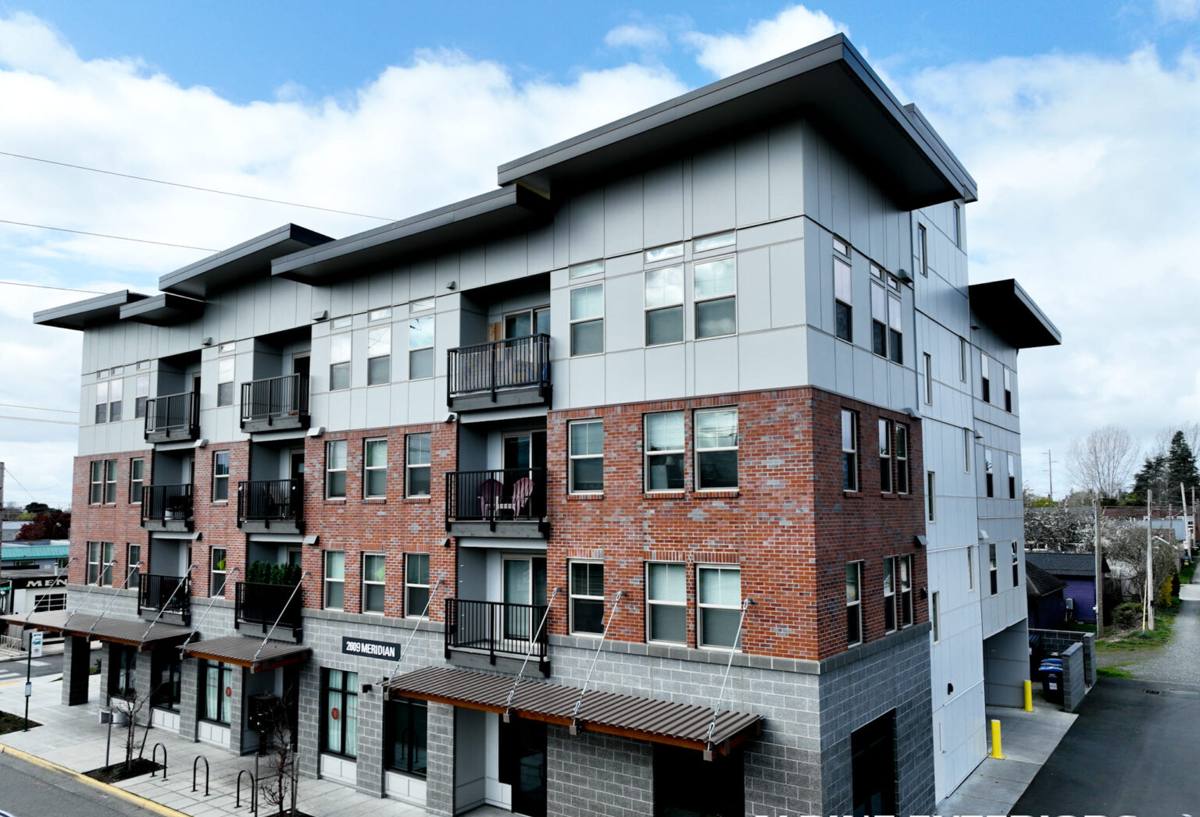
What Bellingham's Marine Climate Actually Does to Siding
Moisture Intrusion
Driving rain doesn't just wet the surface of a wall — wind-driven moisture gets pushed up under laps, into seams, and behind trim if the water-resistive barrier and flashing details aren't right. Over time, water that finds its way behind siding and can't drain or dry out leads to sheathing rot, framing damage, and mold, often well before the siding itself shows any visible sign of trouble.
Moss, Algae, and Organic Growth
Shaded, north-facing walls and anything close to trees or landscaping stay damp for extended stretches during a Whatcom County winter. That constant dampness is exactly what moss and algae need to establish themselves on siding surfaces, in seams, and around trim. Beyond the appearance issue, sustained organic growth holds moisture against the siding longer, which accelerates whatever underlying moisture problems already exist.
Salt Air and Fastener Corrosion
Homes anywhere near the water in Bellingham deal with airborne salt that accelerates corrosion on unprotected metal — fasteners, flashing, and trim hardware included. Siding systems that don't specify corrosion-resistant fasteners and flashing are more likely to develop staining, streaking, and eventually loosened boards as fasteners degrade faster than the siding around them.
Why We Install Only James Hardie Fiber Cement
We standardized on James Hardie fiber cement siding and don't install vinyl, LP SmartSide, cedar, primed spruce, or other fiber cement brands. That's a deliberate choice built around what this climate does to a house over decades, not just what a product looks like on day one.
James Hardie's HZ5 product line is engineered specifically for climates like ours — freeze-thaw cycles, sustained damp weather, and wind-driven rain. It's non-combustible, which matters more each year as wildfire smoke and regional fire risk become a bigger part of Pacific Northwest summers. The factory-applied ColorPlus finish is baked on under controlled conditions, so it resists the fading and moisture-related failure that field-applied paint on wood or wood-composite siding is prone to. And because it's fiber cement rather than an organic material, it doesn't feed moss and mildew the way wood-based siding can.
None of this means other products are without merit — it means that after years of doing this work in this specific climate, fiber cement engineered for the Pacific Northwest is what we're willing to put our name behind.
What a Correct Siding Installation Actually Involves
The material is only part of the equation. Most siding failures we're called to diagnose trace back to installation details, not the product itself. A correct installation in a climate like Silver Beach's includes:
- A continuous, properly lapped water-resistive barrier behind the siding — no gaps, no shortcuts around windows and penetrations
- Correct flashing at every window, door, roofline, and horizontal trim transition, integrated with the WRB so water sheds outward and down, never behind the assembly
- Manufacturer-specified fastener type, spacing, and penetration depth — under- or over-driven nails are one of the most common causes of premature siding failure
- Proper clearance between siding and grade, decks, patios, and roof lines so water and debris don't sit against the bottom edge
- Caulking only where Hardie's installation instructions call for it — over-caulking traps moisture just as often as under-caulking lets it in
- Ventilation behind the cladding so any moisture that does get in has a way to dry out
Skip or rush any one of these and you can end up with a wall system that looks correct for a few years and then fails from behind, which is the hardest and most expensive kind of siding problem to catch early.
Our Installation Process, Start to Finish
- On-site assessment. We look at existing siding, sheathing condition, trim, flashing, and any signs of past moisture intrusion before quoting anything.
- Tear-off and sheathing inspection. Once old siding is off, we inspect the sheathing and framing underneath. Any rot or damage gets addressed before new siding goes up — covering a moisture problem with new siding just delays and hides it.
- Water-resistive barrier and flashing. This is the layer that does the real work of keeping water out, installed to manufacturer and code specifications before a single piece of siding is hung.
- Hardie installation to spec. Fastening pattern, gapping, clearances, and trim details follow James Hardie's published installation guidelines, not shortcuts.
- Trim, caulking, and finish details. Corner boards, window trim, and transitions are finished to shed water correctly, not just to look clean.
- Cleanup and final walkthrough. We walk the finished job with you before calling it done.
Choosing the Right Hardie Line and Color for a Silver Beach Home
James Hardie's product lines cover most of the exterior looks common to Bellingham homes, and choosing the right one is about matching the home's style and exposure, not just personal preference.
| Hardie Product | Best Fit For |
|---|---|
| HardiePlank lap siding | Traditional and craftsman-style homes; the most common choice in established neighborhoods |
| HardieShingle | Accent gables, dormers, or full shingle-style exteriors where a textured look is wanted |
| HardiePanel | Modern or board-and-batten looks, and some garage or accent wall applications |
| HardieTrim | Corner boards, window and door trim, and fascia — paired with any of the above |
We generally recommend factory-applied ColorPlus finishes over field-painted siding whenever the color selection supports it, since the factory finish is baked on under controlled conditions and carries its own finish warranty — a meaningful advantage in a climate where field-applied paint is fighting rain and dampness for a good part of the year.
Cost Factors for Siding Installation in Silver Beach
Every home is different, so we don't quote a number without seeing the house — but the factors below are what actually move the price up or down, and knowing them ahead of time makes for a more useful estimate conversation.
| Factor | Why It Affects Cost |
|---|---|
| Sheathing and framing condition | Rot or moisture damage found during tear-off requires repair before new siding can go on |
| Home size and wall complexity | More corners, gables, and trim transitions mean more labor and material detail |
| Product line and finish | HardieShingle and custom trim details cost more in labor than straightforward lap siding |
| Story height and access | Two-story walls and difficult access require more staging and time |
| Existing siding removal | Tear-off of old siding, especially layered or asbestos-era materials, adds scope |
Why Hiring a Crew That Already Works Silver Beach Matters
Bellingham's permitting requirements, the age and construction style of many Whatcom County homes, and the specific ways moisture shows up in this climate aren't things you learn from a manual — they're things you learn from doing the work locally, repeatedly. A crew that's already worked in and around Silver Beach knows what to look for when sheathing comes off an older home, understands how local wind and rain exposure differs from one side of a lot to another, and isn't guessing at how a Hardie installation needs to be detailed for this specific weather. That local pattern-recognition is what separates a siding job that holds up for decades from one that needs attention again in five years.
Keeping Your New Siding Performing for Decades
A correctly installed Hardie siding system is low-maintenance, but low-maintenance isn't no-maintenance. A little attention goes a long way in this climate:
- Rinse siding annually to clear pollen, salt residue, and early moss growth before it establishes
- Keep gutters clean and downspouts directed away from the foundation and siding base
- Trim back vegetation and tree limbs that keep walls shaded and damp
- Inspect caulking at trim joints and penetrations every couple of years and re-seal as needed
- Address any paint or finish touch-ups promptly rather than letting bare spots sit exposed
- Have flashing and trim checked after major wind events
If you're weighing a siding project for a home in Silver Beach, we're happy to take a look and walk you through what your home specifically needs — no pressure, no obligation. Reach out using the form below for a free estimate.