 Bellingham Exterior
 Deck Building in Lynden, Built for the Weather We Actually Get
Lynden sits in the flat, fertile Nooksack Valley of Whatcom County, close enough to Bellingham Bay and the Salish Sea that the region's marine climate shapes everything we build outdoors. That means long wet stretches from fall through spring, driving rain that gets pushed sideways by wind off the water, and a moss season that can run eight months out of the year on anything shaded or north-facing. A deck built here has to handle all of it every single year, not just survive one good winter.
We've built and repaired decks across Lynden and the surrounding county long enough to know which shortcuts show up as callbacks two years later. This page covers what a deck actually needs to hold up under Whatcom County conditions, what our process looks like, and how to think about materials, permits, and maintenance before you commit to a project.
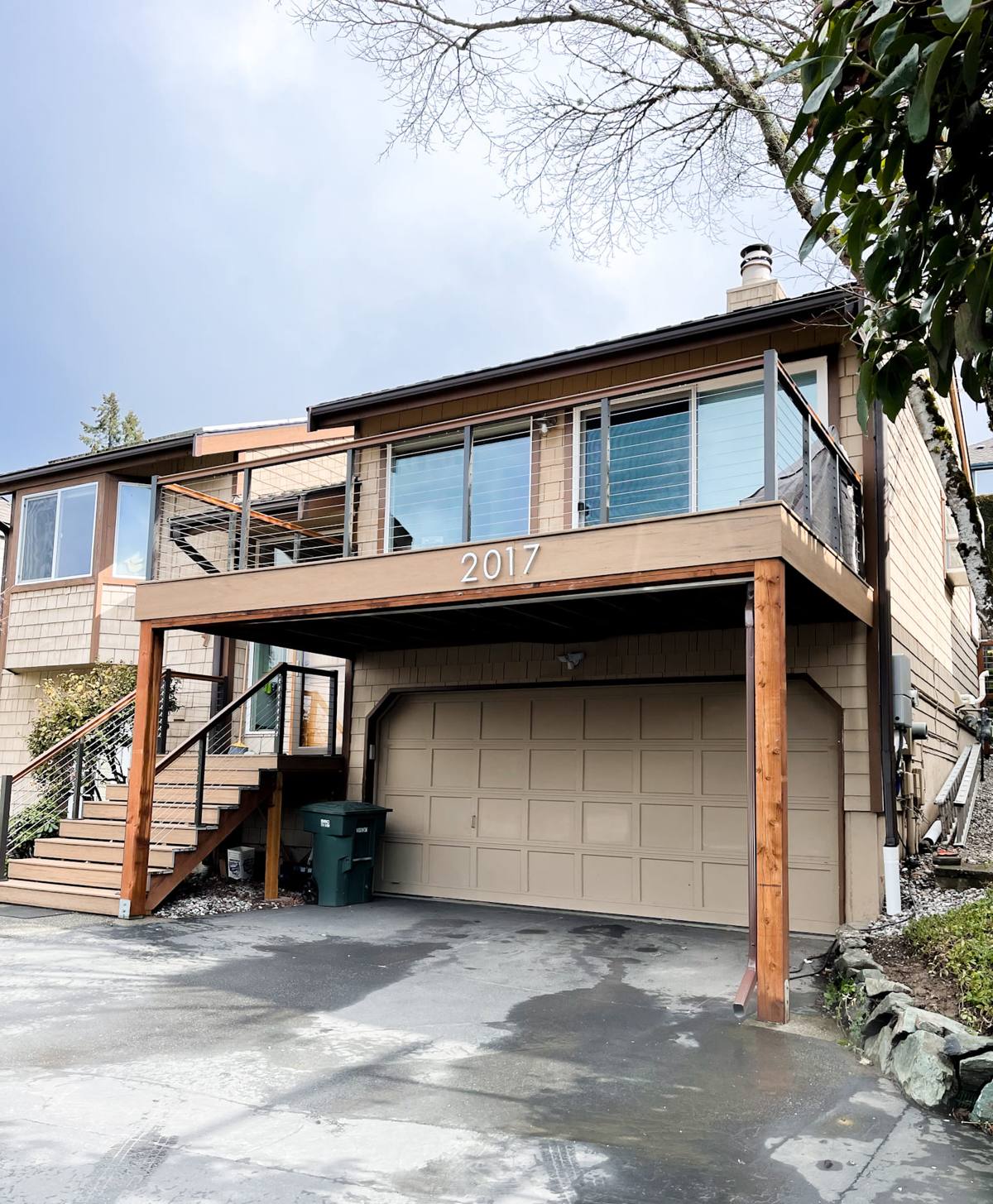
What Lynden's Weather Does to a Deck Over Time
Most deck failures we see aren't dramatic — they're slow. Water finds a gap, wood stays damp longer than it should, and a few years later a board that looked fine is soft underneath. Understanding the mechanism helps explain why certain build details matter more here than they would in a drier climate.
Moisture That Doesn't Get a Break
Whatcom County doesn't get short, hard downpours followed by sun — it gets sustained drizzle and steady rain that soaks into end grain, fastener holes, and any spot where two pieces of wood meet without a gap to drain. Decks that don't have enough airflow underneath, or that pitch water back toward the house instead of away from it, stay wet for days after a storm even when the rain has stopped.
Moss, Algae, and Slick Surfaces
Shaded decks, north-facing decks, and anything near overhanging trees will grow moss and algae here almost regardless of material. Left alone, that growth holds moisture against the surface, stains wood and composite alike, and turns stairs and walkways into a fall hazard on wet mornings — which in Lynden is most mornings for a good chunk of the year.
Salt-Influenced Air and Hardware Corrosion
Lynden isn't beachfront, but Whatcom County's proximity to the Salish Sea means the air carries more salt content than an inland climate would. Over years, that accelerates corrosion on lower-grade fasteners, brackets, and connectors — which is why hardware selection matters more here than in a lot of the country, even on a deck that's miles from open water.
Freeze-Thaw Cycling
Winters in the Nooksack Valley aren't brutally cold, but they do dip below freezing on and off, and that freeze-thaw cycling works on any water that's already trapped in a joint, a fastener hole, or a crack in aging wood. It's a slower, quieter version of the damage colder climates see all at once — but it adds up the same way.
Choosing the Right Decking Material for This Climate
There's no single "best" decking material — there's a best material for your budget, your maintenance appetite, and how much sun or shade your deck actually gets. Here's how the common options hold up under Whatcom County conditions specifically.
| Material | How It Handles Our Climate | Maintenance Reality |
|---|---|---|
| Pressure-treated lumber | Affordable and structurally solid when detailed correctly, but end grain and cut edges need sealing or the wood will absorb moisture and check over time | Needs cleaning and a fresh sealer or stain every 1-2 years, more often on shaded sections |
| Cedar | Naturally moisture- and insect-resistant, and it looks the part, but it's softer and will gray and green up fast without upkeep | Annual cleaning and periodic oil or stain to keep the color and prevent surface softening |
| Composite decking | Doesn't absorb water or rot, resists moss better than wood, and holds up well to our wet season | Occasional washing to prevent surface algae film; no staining or sealing needed |
| PVC/capped polymer | Fully sealed surface, best resistance to moisture and staining of any option, performs well in shade and low-airflow spots | Lowest maintenance of the group; periodic rinsing only |
We'll walk you through the real trade-offs for your specific site — sun exposure, tree cover, and how the deck ties into your home's style — rather than pushing one material as a default. Our professional standard is to size and space every board, regardless of material, so water sheds instead of pooling, since that's what actually determines how long a deck lasts here.
What a Correctly Built Deck Substructure Involves
The decking boards are the part homeowners see, but the substructure is what determines whether the deck is still safe and level in fifteen years. In a climate like ours, a few details matter more than they would somewhere drier.
Footings and Posts
Footings need to sit below the local frost line and bear on undisturbed, well-draining soil — not fill dirt that will settle or heave with the seasonal freeze-thaw cycling common in the valley. Post bases should hold the post up off the concrete, not embed it directly, so the end grain isn't sitting in standing water after every storm.
Ledger Board Flashing
Where a deck attaches to the house, the ledger board connection is the single most common source of hidden rot we find on older Lynden decks. Proper flashing — metal flashing under the siding, a water-resistant barrier behind the ledger, and correct fastener spacing — keeps water from working its way behind the house's exterior wall. Skipping or shortcutting this detail is the number one reason we get called out to repair structural damage that started invisibly.
Joist Spacing and Protection
Joist spacing has to match the decking material's span rating — composite and PVC products often require tighter spacing than solid wood. We also detail joist tops with protective tape or flashing so moisture that gets through the decking doesn't sit directly on bare lumber, which is one of the cheapest details to add during construction and one of the most expensive to retrofit later.
Airflow Underneath
Low-to-the-ground decks with poor underside ventilation trap moisture and speed up rot and moss growth on the framing itself, even if the surface boards look fine. We plan clearance and skirting to keep air moving underneath wherever the site allows it.
Railings, Fasteners, and Hardware That Actually Hold Up
Railings take constant hand contact and structural load, and fasteners are the connection points most likely to fail first in a wet, salt-influenced climate. We use corrosion-resistant, code-rated hardware throughout — hidden fastener systems where the decking allows it, and stainless or heavy-coated structural connectors at every load-bearing point. Cheap galvanized fasteners can look fine for a year or two before rust streaks start bleeding into the decking around them, which is a cosmetic and structural problem we'd rather avoid than repair.
Permits and Building Requirements in Whatcom County
Most decks above a certain height or size require a building permit, and requirements can differ between unincorporated Whatcom County and the City of Lynden depending on exactly where your property sits. Rather than guess, we confirm current permit thresholds, setback rules, and inspection requirements with the applicable local building department before work starts on your project. Handling this correctly up front avoids the two worst outcomes: a stop-work order mid-project, or a deck that becomes a problem when you go to sell the house and it turns up unpermitted.
Our Deck Building Process
- On-site assessment: we look at sun exposure, drainage, soil conditions, and how the deck will tie into your home before recommending anything
- Design and material selection: we walk through the trade-offs for your specific site and budget, honestly, including what each option will actually cost you in upkeep over time
- Permitting: we handle the paperwork and inspections with the relevant local building department
- Site prep and footings: footings are set to proper depth and bearing before any framing begins
- Framing and flashing: ledger connections, joist protection, and structural hardware are installed to hold up under our wet season, not just pass a quick look
- Decking, railing, and finish work: boards and railings are installed with correct spacing and fastening for the material chosen
- Final walkthrough: we go over the finished deck and what maintenance it needs, if any, so there are no surprises later
Maintenance Checklist for Lynden Homeowners
A well-built deck still needs some seasonal attention in this climate. Here's what we recommend keeping on top of, regardless of which material you choose:
- Sweep debris off the surface regularly, especially fallen leaves and needles that trap moisture against the boards
- Clean moss and algae off the surface and stairs before it builds up, particularly on shaded or north-facing sections
- Check and clear gaps between boards each fall so water and debris don't dam up against the framing
- Inspect fasteners and railings annually for rust streaking, looseness, or corrosion
- Reseal or restain wood decking on the schedule appropriate to the product — don't wait until it's visibly gray and dry
- Confirm the ledger board area and any flashing still look tight and undamaged, especially after a hard winter
- Keep gutters and downspouts near the deck clear so roof runoff isn't dumping extra water onto or under it
Why Hire a Crew That Already Works in Lynden
A deck built to a generic national spec can still fail here if it doesn't account for how wet our winters run, how long moss season lasts, or how the local building departments handle permitting. Working regularly in Lynden and across Whatcom County means we're not guessing at frost depths, drainage patterns, or which details actually matter in this specific climate — we're applying what we've already confirmed works on homes like yours. That local familiarity is what separates a deck that looks good on installation day from one that still looks and performs well a decade in.
If you're planning a new deck or need an honest assessment of an existing one, we're happy to take a look and give you a straightforward, no-pressure estimate. Use the form below to get started.