 Bellingham Exterior
 Why Roofs Around Lynden Wear the Way They Do
Lynden sits back from Bellingham Bay, but distance from the water doesn't buy local roofs much protection from Whatcom County's weather. The same marine air pattern that moves in off the Salish Sea pushes moisture-laden air across the county for much of the year, and it carries fine salt farther inland than most homeowners expect. Combine that with long stretches of low-intensity rain, the occasional driving windstorm off the Strait, and a growing season that never really shuts off, and you get roofs that age differently here than they would in a drier climate. The failures we see on Lynden roofs are rarely dramatic. They're slow: a shingle that's lost its granules, a valley that holds water a little too long, a fastener that's started to corrode under a patch of moss nobody noticed for two winters.
Moss and Organic Growth
Moss is the single biggest factor shortening roof life in this part of Whatcom County. Shade from mature trees, morning dew that doesn't burn off quickly, and mild winters that never freeze hard enough to knock growth back all add up to a long moss season. Moss doesn't just sit on top of shingles — it works into the granule layer, holds moisture against the roof deck, and lifts shingle edges as it grows, which is exactly the kind of small gap that turns into a leak two or three rainy seasons later.
Driving Rain and Wind-Driven Moisture
Most of the year the rain here is steady rather than heavy, but Whatcom County does get its share of wind-driven storms, and wind-driven rain behaves differently than rain falling straight down. It finds its way under loose shingle tabs, around poorly sealed flashing, and into nail penetrations that a calmer rain would never reach. A roof that's held up fine for years can suddenly leak during one windy front simply because the wind pushed water sideways into a weak spot that was already there.
Freeze-Thaw and Temperature Swings
Lynden's winters aren't brutal, but they're not nothing either — occasional hard frosts and the freeze-thaw cycling that comes with them can be tough on a roof that's already retaining moisture from moss or clogged gutters. Water trapped under organic growth or in a low spot that freezes and expands, even a handful of times a winter, will eventually crack shingles or open up seams that were otherwise sound.
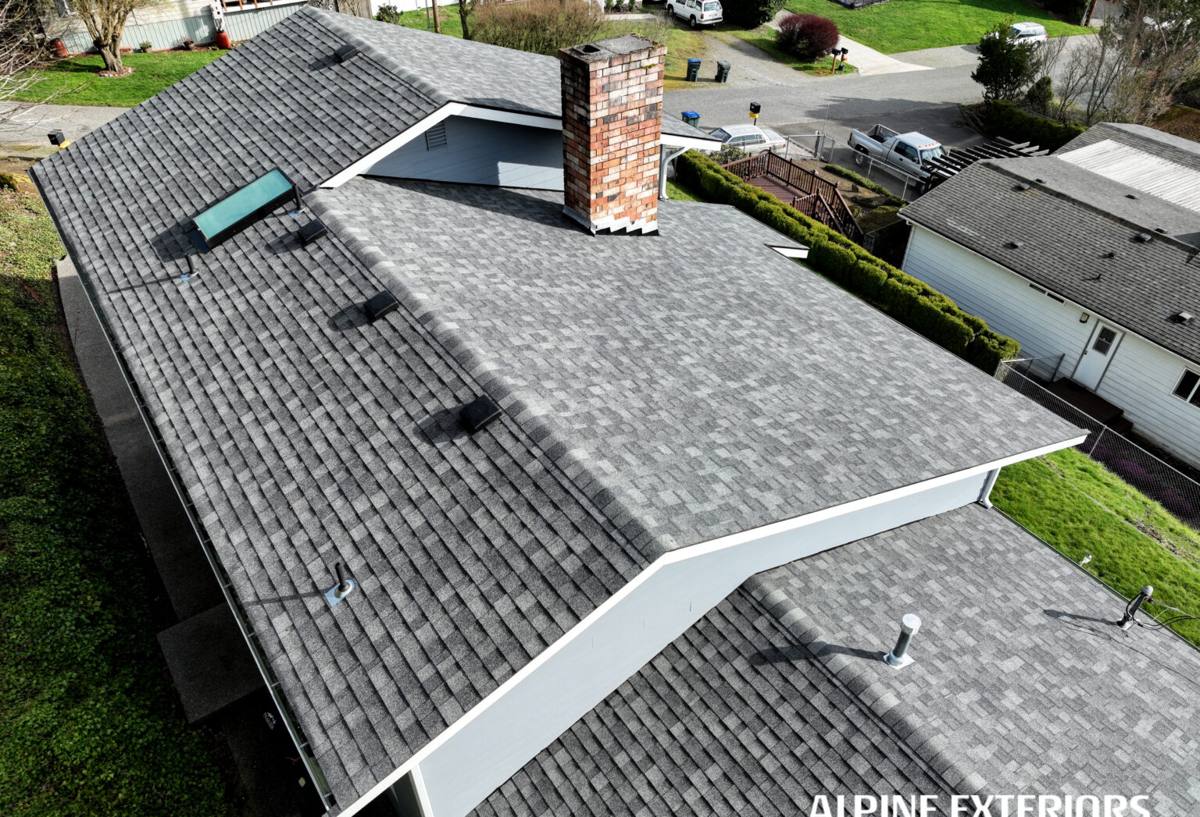
Warning Signs Lynden Homeowners Shouldn't Ignore
Roof problems in this climate rarely announce themselves with a dramatic leak on day one. They show up as small, easy-to-dismiss signals first. If you're noticing any of the following, it's worth having a roof looked at before the next stretch of rain turns a minor issue into an interior repair.
- Dark streaking or thick moss patches, especially on north-facing slopes or under tree cover
- Granules collecting in gutters or at downspout outlets
- Shingle edges that look curled, cracked, or lifted
- Soft or discolored spots on interior ceilings after a rainy stretch
- Rust staining or visible corrosion around flashing, vents, or metal valleys
- Gutters that overflow during moderate rain, not just downpours
- Daylight visible through the roof deck from inside an attic
- Sagging or uneven roof lines when viewed from the street
Any one of these on its own might be minor. Two or three together usually means the roof has been quietly losing ground for a while.
What a Correct Roof Repair Actually Involves
There's a real difference between a repair that stops water for a season and one that holds up through several wet winters. A rushed patch job — a bead of sealant over a crack, a shingle tab glued down without checking what's underneath — will often look fine from the ground and still fail within a year. A proper repair starts with figuring out where the water is actually getting in, which is not always where it's showing up inside the house. Water can travel along rafters or sheathing for several feet before it drips through a ceiling, so tracing the real entry point matters more than treating the visible symptom.
Once the source is identified, the repair needs to address the roofing material, the underlayment beneath it, and the flashing or fasteners around it — not just the top layer. Skipping the underlayment or flashing check is how a "fixed" roof leaks again from the same spot the following winter.
Common Repair Types We Handle in Lynden
| Repair Type | Typical Cause | What's Involved |
|---|---|---|
| Moss and organic growth removal | Shade, slow-drying roof sections, long wet season | Careful mechanical removal, granule inspection, treatment to slow regrowth |
| Flashing repair or replacement | Corrosion, poor original installation, thermal movement | Removing and resealing or replacing flashing at chimneys, valleys, and wall intersections |
| Valley and low-slope leak repair | Water pooling, debris buildup, undersized underlayment | Deck inspection, underlayment upgrade, re-lacing or re-lapping roofing material |
| Wind or storm damage repair | Lifted or missing shingles after high-wind events | Replacing damaged sections, resealing tabs, checking surrounding material for hidden lift |
| Vent, skylight, and penetration leaks | Aged boots, cracked seals, settled flashing | Boot and seal replacement, flashing reset, deck check for rot |
| Gutter and edge-related leaks | Overflow or backup pushing water under the roof edge | Drip edge inspection, gutter correction, edge resealing |
Repair or Replace? How We Help You Decide
Not every roof problem in Lynden calls for a full replacement, and we're not going to push one when a solid repair will genuinely hold up. But there are situations where patching a symptom just delays a bigger cost. Part of an honest inspection is telling you plainly which category your roof falls into.
| Factor | Leans Toward Repair | Leans Toward Replacement |
|---|---|---|
| Age of roofing material | Under roughly 12-15 years, isolated issue | Near or past manufacturer's expected service life |
| Extent of moss or granule loss | Localized to one or two slopes | Widespread across most of the roof |
| Deck condition | Solid, dry sheathing under the problem area | Soft, delaminated, or rotted decking found during inspection |
| Number of past repairs | First or second repair in this location | Same area has already been patched more than once |
| Leak pattern | Single, identifiable source | Multiple unrelated leaks appearing across different seasons |
When a roof is on the fence between these two columns, we'll say so, and explain the trade-offs rather than defaulting to whichever job is more profitable for us.
How Our Repair Process Works
We keep the process straightforward because homeowners in Lynden deal with enough uncertainty already when there's a leak in the house.
1. Inspection and Diagnosis
We get on the roof, not just up a ladder to eyeball it from the edge. That means checking the material itself, the flashing, the valleys, and — where accessible — the underside of the deck from the attic. Wet climates hide problems that a quick visual pass from the ground will miss entirely.
2. A Clear Explanation Before Any Work Starts
Before we touch anything, you'll know what we found, why it's happening, and what the repair involves. If the roof is genuinely fine and just needs moss removal and a cleaning, we'll tell you that instead of manufacturing a bigger job.
3. The Repair Itself
We match materials to what's already on the roof where possible, replace underlayment and flashing rather than just resealing over failing material, and check adjacent sections for hidden damage before we consider the job done — since water rarely stays confined to exactly one shingle or one seam.
4. Cleanup and Final Check
Debris, old material, and moss removed from the roof gets cleared off the property, gutters and downspouts get checked so the repair isn't undone by a clog somewhere else, and we walk the finished work with you if you'd like.
Why It Matters to Hire a Crew That Already Works in Lynden
Roofing knowledge that works in a dry climate doesn't automatically translate here. A crew that mostly works inland deserts or hard-freeze climates is solving for different problems than a crew that repairs roofs through a Whatcom County winter every year. Knowing which slopes in this area tend to hold moss longer, which flashing details fail first under sustained wind-driven rain, and how long a given roofing material actually holds up under our specific combination of moisture and mild temperatures comes from doing this work locally, season after season — not from a general roofing background.
There's also a practical side to hiring local: a contractor working in and around Bellingham and Lynden regularly can get to a leak faster during the wet season when schedules fill up quickly, and stands behind the work because they're not driving in from out of the area for a one-time job.
Maintenance That Extends the Life of a Repair
A good repair lasts longer when the rest of the roof is maintained around it. These are the basics worth staying on top of between professional inspections.
- Clear gutters and downspouts at least twice a year, more often under trees
- Trim back branches that keep a section of roof shaded and slow to dry
- Have moss removed before it thickens rather than after — thin growth is far easier to deal with
- Check attic ventilation; poor airflow traps moisture that speeds up deck and shingle wear
- Walk the roofline visually after major windstorms for lifted or missing material
- Schedule a professional inspection every year or two, not just after a leak appears
None of this replaces a proper repair when something has actually failed, but it does mean fewer repairs are needed in the first place, and the ones that are needed tend to be smaller and cheaper to fix.
Get a Straightforward Estimate
If you're dealing with a leak, spotting moss creeping across your roofline, or just want an honest read on where your roof stands after another wet Whatcom County winter, we're happy to take a look. There's no pressure and no obligation — just a clear explanation of what we find and what it would take to fix it right. Fill out the form below to request a free estimate for roof repair in Lynden.