 Bellingham Exterior
 Why Metal Roofing Works Differently in Lynden
Lynden sits in the Nooksack Valley, close enough to the water and the foothills that its roofs deal with a mix most homeowners don't think about until it's a problem: long stretches of damp, shaded weather that feeds moss, wind-driven rain that finds every weak lap and fastener, and a steady dose of salt-laden air moving in off the Strait of Georgia and Bellingham Bay. None of that is unusual for Whatcom County. But it does mean a metal roof installed here has to be detailed differently than the same product installed in a drier, inland climate.
We install and repair metal roofing on homes throughout Lynden and the surrounding farm and residential areas, and most of the calls we get aren't about whether metal roofing is a good idea — it usually is — but about roofs that were installed without accounting for local conditions. This page covers what actually matters for a metal roof on a Lynden home: what the climate does to it, what correct installation looks like, and what to check before you hire someone to do the work.
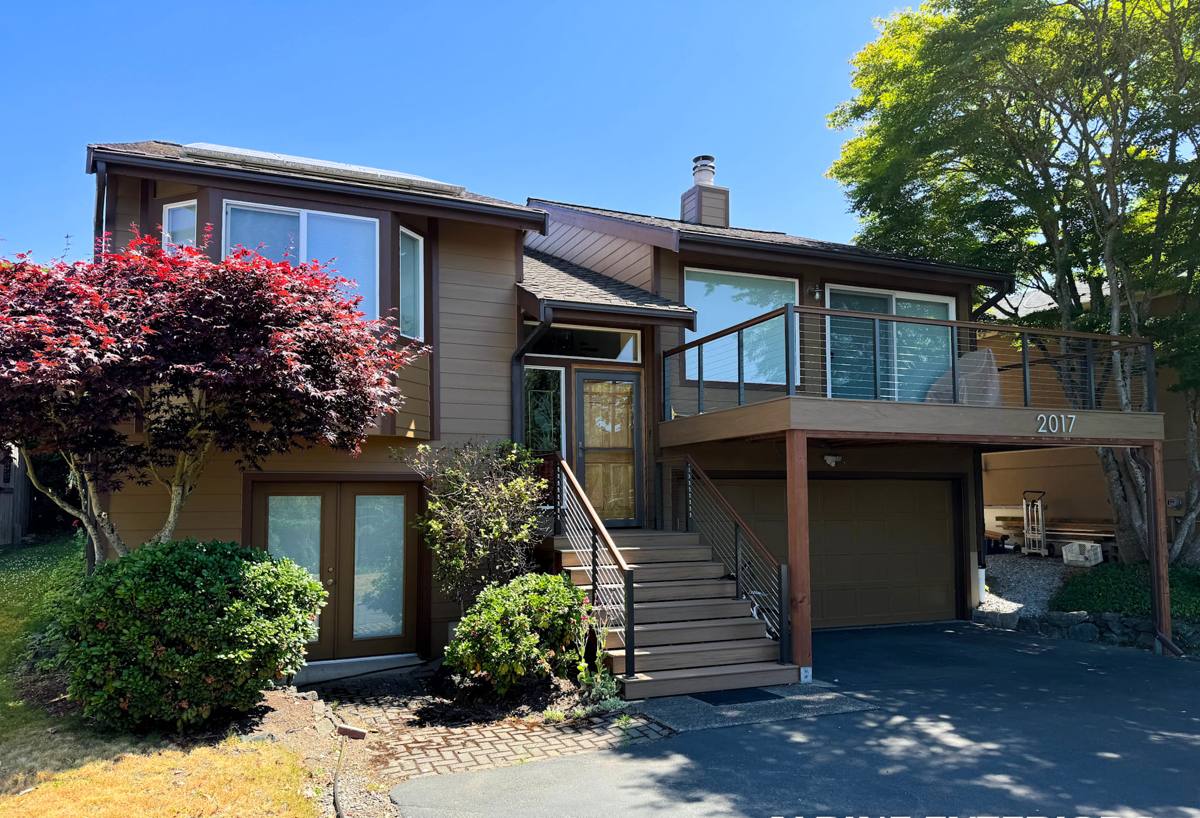
What Lynden's Climate Actually Does to a Roof
A Long Moss Season
Lynden gets enough shade, humidity, and mild temperatures for moss and algae to establish on roofing surfaces for a large part of the year. On asphalt shingles, moss roots into the mat and lifts granules. Metal roofing doesn't give moss the same foothold, but debris buildup in valleys, at panel laps, and around penetrations still holds moisture against the surface long enough for organic growth to start, especially on roofs with low pitch or heavy tree cover. A metal roof reduces the moss problem; it doesn't eliminate the need to keep the roof clear of debris.
Driving, Wind-Driven Rain
Rain here rarely falls straight down. Storms moving through the valley push rain sideways into eaves, ridge caps, and vertical laps. A roofing system that would shed water fine in a calmer climate can leak in Lynden if the underlayment, flashing, and fastening details weren't built for wind-driven moisture. This is the single biggest cause of the "why is my metal roof leaking" calls we get on homes where the panels themselves are in good shape.
Salt Air and Corrosion
Homes closer to the water deal with airborne salt that accelerates corrosion on the wrong metal or the wrong fastener. It's not as severe as a beachfront property, but it's real, and it shows up first at cut edges, exposed fasteners, and wherever two dissimilar metals touch and start a galvanic reaction. Choosing the right base metal and coating matters more here than it would twenty or thirty miles inland.
Choosing the Right Metal Roofing System
"Metal roofing" isn't one product — the panel style and fastening method change how the roof performs against rain and wind over time. For Lynden's climate, the two systems worth comparing are standing seam and exposed-fastener panels.
| Factor | Standing Seam | Exposed Fastener |
|---|---|---|
| How it's fastened | Concealed clips, no exposed screws through the panel face | Screws driven through the panel face with rubber washers |
| Weather resistance | Higher — no penetration points for wind-driven rain to exploit | Good, but washers degrade over time and need eventual re-tightening or replacement |
| Best fit | Steeper roofs, homes closer to the water, long-term low-maintenance goals | Outbuildings, budget-conscious projects, lower-pitch simpler roofs |
| Upfront cost | Higher material and labor cost | Lower upfront cost |
| Expected upkeep | Minimal — mainly debris clearing and occasional inspection | Periodic fastener inspection, especially after the first several years |
Both are legitimate systems. Which one makes sense depends on the roof's pitch, exposure to weather, and how the homeowner weighs upfront cost against long-term maintenance. We walk through this trade-off honestly on every estimate rather than defaulting to whatever's easiest to install.
What a Correct Metal Roofing Installation Involves
Metal panels themselves are durable, but a metal roof is only as good as everything underneath and around them. In this climate, the details below are where roofs succeed or fail:
- Underlayment: A synthetic underlayment rated for the exposure, not just whatever is cheapest, since it's the backup layer when wind pushes rain past the panel laps.
- Ice and water shield at vulnerable areas: Eaves, valleys, and around chimneys and skylights get self-adhered membrane, not just underlayment, because these are where wind-driven rain concentrates.
- Fastening pattern and clip spacing: Matched to local wind exposure, not just the manufacturer's minimum spec.
- Flashing at every penetration: Vents, chimneys, and wall intersections are common leak points if flashing is undersized or improperly lapped.
- Ridge and hip ventilation: Proper airflow keeps moisture from condensing on the underside of the panels, which matters in a climate with as much ambient humidity as ours.
- Compatible fasteners and metals: Matching fastener and panel metal to avoid galvanic corrosion, particularly important given the salt air moving through the valley.
Skipping any one of these doesn't usually show up on day one. It shows up two, five, or ten years later as a leak, streaking, or premature corrosion — which is why we treat these as non-negotiable rather than upgrade options.
Metal Panel Materials and Coatings That Hold Up Here
Steel and aluminum are both common choices for residential metal roofing, and each has trade-offs worth understanding before you pick one.
Steel panels, typically galvanized or Galvalume-coated, offer strength and a lower material cost, but the coating and any cut edges need to be handled correctly to resist corrosion over decades of Whatcom County weather. Aluminum costs more but naturally resists corrosion without relying entirely on a coating, which can be an advantage on homes with more direct exposure to salt air. On top of either base metal, the paint finish matters — a quality PVDF-type coating holds color and resists chalking far longer than a basic polyester finish, which matters given how much rain and UV exposure a Lynden roof sees across a year.
We'll walk through which combination fits your home's exposure, budget, and how long you want to go before the roof needs any attention at all.
Our Process, Start to Finish
- On-site assessment: We look at the existing roof deck, ventilation, pitch, and exposure — not just the surface — before recommending a system.
- Honest scope and estimate: You get a clear breakdown of materials, labor, and why we're recommending the specific panel and fastening approach for your roof.
- Deck prep and underlayment: Any damaged decking is addressed before anything goes over it, and underlayment and ice/water shield go down to spec, not to the minimum.
- Panel installation and flashing: Panels, fasteners, and flashing are installed to hold up against wind-driven rain from the start, not just under calm conditions.
- Final walkthrough: We review the finished roof with you, including what maintenance (if any) it will need going forward.
Maintenance Through Moss Season
A well-installed metal roof needs far less upkeep than shingles, but "none" isn't realistic in this climate. A simple annual routine keeps a metal roof performing the way it should:
- Clear leaves, needles, and debris from valleys and around penetrations before fall rains set in
- Check gutters and downspouts for blockages that can back water up under the eave edge
- Look for any organic growth building up in shaded valleys or low-pitch sections and remove it gently
- Inspect exposed fasteners (if applicable) for loosening or washer wear every few years
- Watch for any streaking or discoloration at cut edges or fastener heads, which can signal early corrosion
Most of this is a once-a-year task. We're glad to do a maintenance check for clients who'd rather not get on the roof themselves.
What Affects the Cost
Every roof is different, but the factors below are what typically move the price on a Lynden metal roofing project:
| Factor | How It Affects Cost |
|---|---|
| Panel system | Standing seam costs more upfront than exposed-fastener panels |
| Base metal | Aluminum generally costs more than steel |
| Roof complexity | More valleys, dormers, and penetrations mean more flashing labor |
| Existing roof condition | Deck repair or full tear-off adds labor beyond a straightforward re-cover |
| Pitch and access | Steeper or harder-to-access roofs take longer and require more safety setup |
We don't quote a per-square-foot number without seeing the roof, because these variables move the price too much for a blanket figure to mean anything. What we will give you is a detailed, itemized estimate so you know exactly what you're paying for.
Why Hiring Local Experience Matters
A crew that works roofs across Bellingham and Whatcom County regularly sees how different systems actually hold up against this specific mix of rain, moss, and salt air — not how they perform in a manufacturer's spec sheet written for a national market. That experience shows up in small decisions: how much ice and water shield to use at a given eave, which fastener to spec near the water, how to detail a low-slope valley so it doesn't collect debris. Those are the details that separate a metal roof that performs for decades from one that needs attention in year five.
If you're weighing metal roofing for a home in Lynden, we're happy to take a look, answer questions honestly, and put together a free, no-pressure estimate — no obligation either way. The form below gets you started.