 Bellingham Exterior
 Siding Replacement in Lynden: Built for Whatcom County Conditions
Lynden sits in the Nooksack River valley, a low, flat agricultural landscape a short drive from Bellingham and Whatcom County's shoreline. That geography matters more than most homeowners realize when it comes to siding. The valley traps moisture. Morning fog rolls in and lingers longer here than it does on higher, more exposed ground. Add in the driving rain that moves through the region much of the year, plus the marine air that reaches inland from the Puget Sound and Georgia Strait, and you get a climate that is genuinely hard on exterior building materials — even when a house looks fine from the street.
Moss is the most visible symptom. It doesn't just grow on roofs here; it colonizes anything that stays damp long enough, including siding that isn't shedding water the way it should. Underneath that surface issue, the real damage is happening at the seams, the fastener points, and the bottom edges of siding boards — the places where moisture gets in and doesn't fully dry out between storms. A siding system that isn't matched to this climate, or wasn't installed correctly for it, tends to fail from the inside out long before it looks bad from the curb.
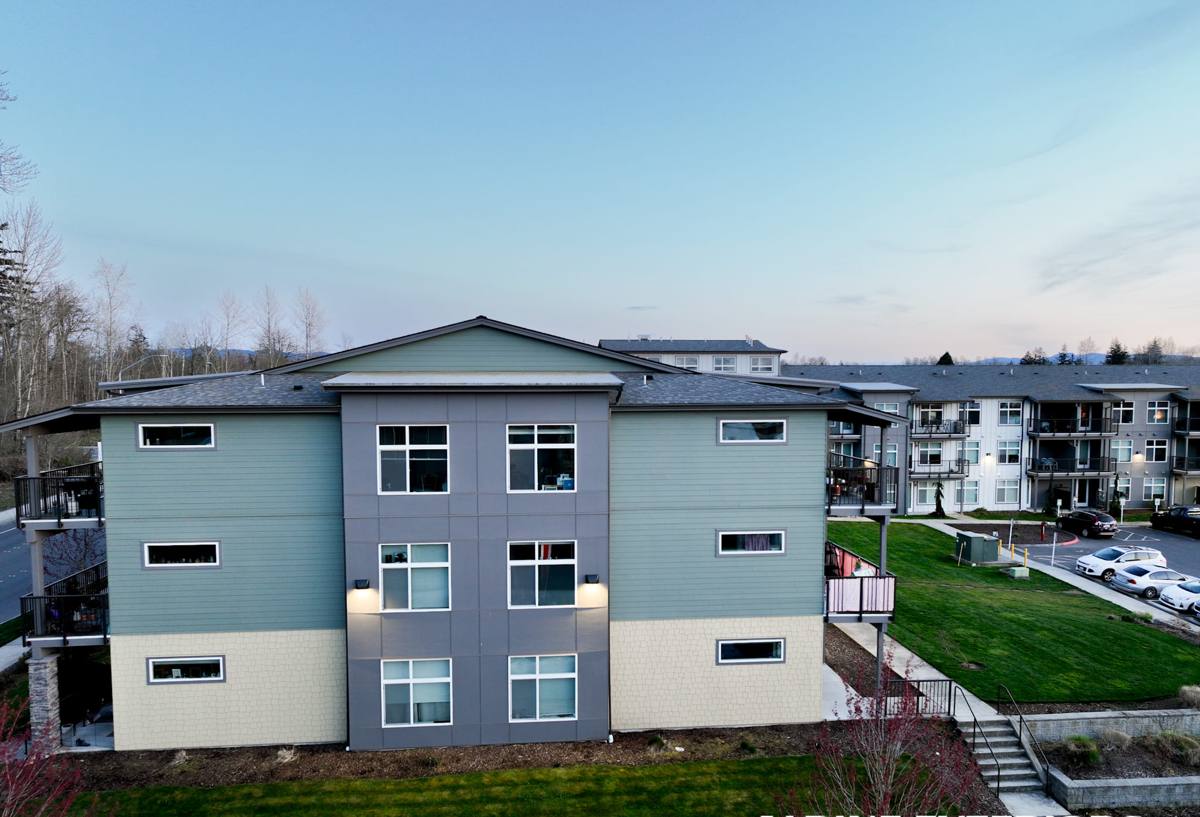
Signs a Lynden Home Needs Replacement, Not Repair
Not every siding problem calls for a full replacement. But there's a point where patching stops making sense and a full tear-off and reinstall is the honest recommendation. In our experience working around Whatcom County, these are the signals worth taking seriously:
- Soft, spongy spots when you press on siding, especially near the bottom courses or below windows
- Persistent moss or dark streaking that returns within a season or two of cleaning
- Visible cupping, bowing, or delamination of siding boards or panels
- Paint that's failing evenly across large sections rather than in one worn spot
- Soft trim or fascia boards near siding joints, which often signals water has been tracking behind the cladding
- Siding that's original to a home built more than 20-25 years ago, especially wood-based products
If you're seeing two or more of these, it's worth having someone look at what's happening behind the siding, not just at the surface.
What a Correct Siding Replacement Actually Involves
Siding replacement done right is not a cosmetic swap. It's a rebuild of the wall's entire moisture-management system, and in a climate like this one, that system has to work every single day of the year, not just on dry ones.
Full Tear-Off, Not Overlay
We remove the old siding down to the sheathing rather than installing new material over it. Overlaying traps whatever moisture or rot is already present and hides it for years until it becomes a much bigger, more expensive problem.
Sheathing Inspection and Repair
Once the old siding is off, the sheathing gets inspected for soft spots, delamination, or rot — most commonly found near window openings, at the base of walls, and around old penetrations. Any compromised sheathing gets replaced before anything new goes back up.
Weather-Resistive Barrier
A properly lapped and sealed weather-resistive barrier goes on next, installed shingle-style so water is directed down and out rather than getting trapped behind it. This layer is doing most of the real work of keeping a Whatcom County home dry, and it's also the layer that's easiest to install badly and impossible to inspect once siding is back on.
Flashing at Every Penetration
Windows, doors, hose bibs, vents, and any other wall penetration get proper flashing and integration with the weather barrier. This is where a large share of moisture intrusion problems actually originate, and it's the detail that separates a crew that understands wall assemblies from one that's just hanging siding.
Correct Fastening and Clearances
Fiber cement siding has specific fastening patterns, nail penetration requirements, and clearance requirements from grade, roofing, and horizontal surfaces. Getting these wrong doesn't show up immediately — it shows up as premature failure five or ten years down the road.
Why We Install Only James Hardie Fiber Cement
We don't offer a menu of siding brands in Lynden or anywhere else we work. We install James Hardie fiber cement siding, and we've made that a standing policy rather than a sales preference. Here's the honest reasoning behind it, specific to this climate:
Non-Combustible Composition
James Hardie siding is fiber cement, not wood-based, which means it doesn't feed a fire the way engineered wood products can. That's a meaningful difference in a region where wildfire smoke and dry-season fire risk have become a bigger part of the conversation in the Pacific Northwest.
Climate-Engineered HZ Product Lines
Hardie manufactures its HZ5 product line specifically for cold, wet, freeze-prone climates like the Pacific Northwest. The engineering accounts for moisture cycling, freeze-thaw stress, and the kind of prolonged damp exposure that's normal here, not exceptional.
ColorPlus Factory Finish
The ColorPlus finish is baked on at the factory under controlled conditions, which gives it better adhesion and UV resistance than field-applied paint. In a climate with this much rain and fog, a finish that resists moisture intrusion at the surface is doing real work, not just looking good on day one.
Moisture Behavior Over Time
Fiber cement doesn't absorb and release water the way wood-based siding products do. That matters directly in a valley climate where materials rarely get a long enough dry stretch to fully shed moisture they've taken on. We've made the call not to install products that depend on consistent drying periods this region doesn't reliably provide.
Warranty That Transfers
Hardie's warranty structure is straightforward and transfers to a new owner if the home sells, which matters to homeowners thinking about resale value, not just the years they'll personally own the house.
Our Process, Start to Finish
The process is the same whether we're working in Lynden, elsewhere in Whatcom County, or in Bellingham proper — consistency is part of what keeps quality predictable.
- On-site assessment — we look at the current siding, sheathing condition where accessible, and any specific problem areas you've noticed
- Written estimate — scope, product line, color, and cost broken out clearly, no vague allowances
- Scheduling — we work around Whatcom County's wet season where possible, since tear-off exposes sheathing to weather
- Tear-off and sheathing repair — as described above, done before anything new is installed
- Weather barrier and flashing installation — the part of the job that matters most and shows the least
- Hardie siding installation — installed to manufacturer specification for fastening, clearance, and joint treatment
- Final walkthrough — we go over the finished work with you before calling the job done
What Drives Cost on a Lynden Siding Job
| Factor | Why It Matters |
|---|---|
| Home size and wall complexity | More corners, gables, and dormers mean more cutting, flashing, and labor time |
| Sheathing condition | Rot or soft sheathing found during tear-off adds repair scope before siding goes back on |
| Product line and profile | Lap siding, shingle-style panels, and board-and-batten carry different material and labor costs |
| Trim and accessory scope | Fascia, soffit, and trim replacement alongside siding affects total project cost |
| Access and site conditions | Multi-story sections, tight lot lines, or landscaping close to the house affect staging and labor |
| Color and finish selection | Factory ColorPlus finishes vary in cost by color depth and product line |
We give real numbers during the on-site estimate rather than broad ranges over the phone, because sheathing condition alone can shift a project's scope significantly once tear-off starts.
Why a Crew That Already Works Lynden Matters
Siding work isn't identical from town to town, even within Whatcom County. A crew that regularly works Lynden and the surrounding valley knows how the fog patterns and moisture exposure here compare to Bellingham's more coastal-influenced conditions, and adjusts scheduling and sequencing accordingly — timing tear-off and barrier installation around the wetter stretches rather than gambling on a dry week that doesn't materialize. That local familiarity also means fewer surprises on permitting and inspection expectations, and a crew that isn't learning the region's quirks on your project.
After Installation: Keeping Hardie Siding Performing Long-Term
- Rinse siding periodically to prevent moss and algae buildup, especially on north-facing and shaded walls
- Keep gutters clear so water isn't overshooting onto siding below
- Trim back landscaping that keeps siding shaded and damp longer than it should be
- Inspect caulking at trim and penetrations every year or two and recaulk as needed
- Address any impact damage promptly rather than letting it sit through a wet season
Hardie siding installed correctly and maintained with this basic routine is built to hold up to exactly the kind of climate Lynden and the rest of Whatcom County deal with year-round.
If your Lynden home's siding is showing its age, or you just want an honest read on whether you're looking at repair or replacement, we're happy to come take a look. The estimate is free, there's no pressure, and you'll get a straight answer about what your home actually needs.