 Bellingham Exterior
 Windows Built for Columbia's Corner of Whatcom County
The Columbia neighborhood sits close enough to Bellingham Bay that salt-laden air is part of daily life, and close enough to the hills and tree cover that shade, moisture, and moss are constant companions for anything wood or vinyl on the exterior of a house. Windows take the brunt of this. They're the part of the building envelope with the most moving parts, the most seals, and the most exposure to wind-driven rain coming off the water. A window that's a good fit for a dry inland climate is often the wrong choice here, and a window installed a half-inch out of level or under-flashed will show it within a couple of wet seasons, not decades.
We work on homes throughout Bellingham and Whatcom County, and Columbia is a neighborhood we're in regularly. That matters more than it might seem — the right window choice and installation detail for this area isn't generic, it's shaped by how weather actually moves through this specific part of town.
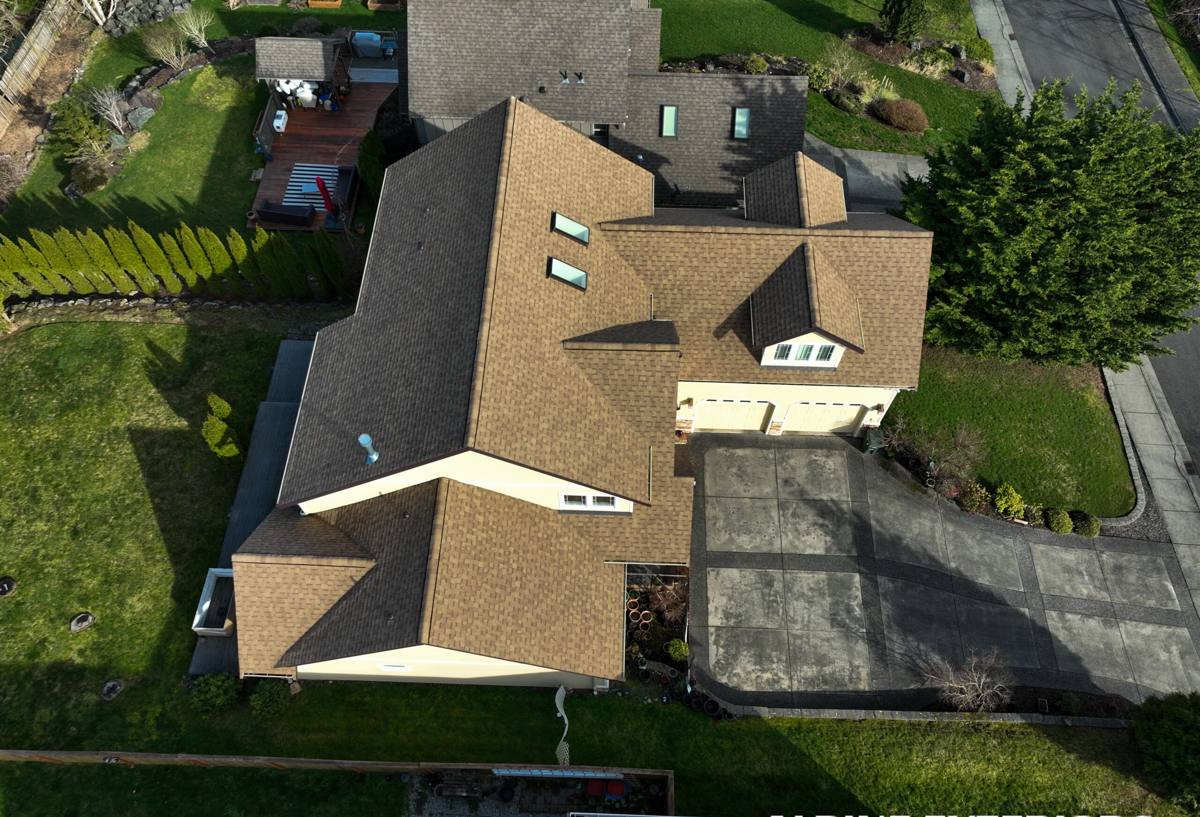
What This Climate Does to Windows Over Time
Three things drive most of the window problems we see in this area, and they compound each other:
- Salt air: Even a few miles inland from the bay, airborne salt accelerates corrosion on hardware, screens, and metal window components. Cheap fasteners and low-grade hardware fail faster here than they would in a dry climate.
- Driving rain: Storms off the Strait of Georgia and Puget Sound don't just fall straight down — wind pushes rain sideways into window assemblies, which means flashing, sealant, and drainage details matter as much as the window unit itself.
- Extended moss and mildew season: Long stretches of damp, shaded weather let moss, algae, and mildew get a foothold on sills, tracks, and wood trim. Once established, it holds moisture against the surface and speeds up rot or finish failure.
None of this means windows here fail quickly — it means the margin for error in material choice and installation is smaller than homeowners moving from drier climates often expect.
Signs a Window Is Losing the Battle
Most window failure in this climate is gradual, so it's worth knowing what to look for before a small issue becomes a bigger repair:
- Fogging or a hazy film between panes of a double- or triple-glazed unit (a sign the seal has failed)
- Soft or discolored wood at the sill, corners, or lower frame
- Windows that stick, drag, or won't stay latched — often a sign the frame has shifted or swollen
- Visible gaps around the frame, or you can feel a draft on a still day
- Persistent moss or dark streaking on the sill or lower sash that keeps coming back after cleaning
- A noticeable jump in heating costs without another clear cause
One or two of these on an older window doesn't necessarily mean full replacement — sometimes it's a re-seal or hardware fix. But when several show up together, or on multiple windows facing the same direction, that's usually the water finding a path in faster than the window can shed it.
What a Correct Custom Window Job Actually Involves
"Custom" windows means the unit is built to the exact rough opening rather than forced to fit an off-the-shelf size — which matters a lot on older Columbia-area homes where openings are rarely perfectly square or standard-sized. But the window itself is only part of the job. What separates a window that performs for 20+ years from one that fails in five is almost always in the details around it:
Before the new window goes in
- Full removal of the old unit and inspection of the framing underneath for hidden rot or moisture damage
- Repair of any compromised sheathing or framing before anything new is installed — sealing over a wet or damaged opening just hides the problem
- Correct flashing installed to shed water down and away from the opening, not just tape or caulk alone
During installation
- Precise leveling and shimming so the sash operates smoothly and the seals compress evenly
- Proper insulation of the gap between the frame and rough opening — not stuffed too tight, not left airy
- Weather-resistant sealant applied at the right points, not everywhere, so the assembly can still drain if water gets past the outer defenses
Skipping any of these steps is usually invisible on install day and only shows up as a leak, draft, or rot a year or two later — which is exactly why installation quality matters more here than the window brand name on the label.
Material and Glass Options for a Marine Climate
There's no single "best" window material — the right pick depends on the home's style, budget, and how exposed that side of the house is to wind and rain. Here's how the common options generally hold up in this climate:
| Material | How It Handles This Climate | Maintenance |
|---|---|---|
| Vinyl | Good moisture resistance, won't rot; performs well in most exposures | Low — occasional cleaning |
| Fiberglass | Excellent stability and moisture resistance, holds up well to temperature swings | Low |
| Wood-clad (wood interior, composite/vinyl exterior) | Good option for matching older home character while keeping exterior weather protection | Moderate — interior wood still needs occasional attention |
| Solid wood | Best traditional look, but exterior wood is the most vulnerable to driving rain and moss in this climate | Higher — regular painting/sealing needed |
| Aluminum | Strong and low-maintenance, but more prone to condensation and heat transfer without a thermal break | Low, but check hardware for corrosion over time |
For homes in Columbia with more traditional or older architectural character, wood-clad or well-detailed vinyl profiles are usually the practical middle ground — they preserve the look without asking exterior wood trim to survive our wet season unprotected. We'll walk through what fits your home's style and exposure during the estimate rather than pushing one material for every job.
Our Process, Start to Finish
- On-site assessment. We look at each window individually — exposure direction, condition of the surrounding framing, and how the current windows are performing — rather than quoting from a generic checklist.
- Measurement and custom ordering. Each opening is measured precisely so the replacement window fits correctly rather than requiring the opening to be reframed to fit a stock size.
- Removal and framing check. Old windows come out, and we inspect the framing before anything new goes in. If there's hidden moisture damage, we address it and explain what we found before proceeding.
- Installation with proper flashing and sealing. This is where most of the long-term performance is decided — done right, water sheds away from the home instead of finding a way in.
- Final check and cleanup. We test operation, check seals, and leave the work area clean.
What Affects the Cost
Every home and window is different, so we don't quote sight-unseen — but these are the main factors that move the price up or down:
| Factor | Why It Matters |
|---|---|
| Window material and glass package | Vinyl and fiberglass are generally more budget-friendly than wood-clad; double vs. triple glazing affects both cost and performance |
| Number and size of openings | Larger or custom-shaped windows cost more to build and install than standard sizes |
| Condition of the existing framing | Hidden rot or moisture damage found during removal adds repair work before the new window can go in |
| Access and height | Second-story or hard-to-reach windows take more time and equipment |
| Trim and finish work | Matching existing interior or exterior trim adds labor beyond the window unit itself |
As a general rule, custom window replacement is a mid-to-upper range home improvement investment per opening once material, labor, and any necessary framing repair are factored in — we'll give you a specific, itemized number after seeing the actual windows in person.
Why a Local Columbia-Area Crew Makes a Difference
Window installation isn't one-size-fits-all, and a crew that regularly works this part of Bellingham has already seen how the neighborhood's homes, exposure, and weather patterns interact. That means fewer surprises: we know to expect certain framing conditions in older homes, we know which sides of a house typically take the worst of the driving rain, and we're familiar with the permitting expectations for exterior work in the City of Bellingham. A crew that only occasionally works this area is more likely to treat every job as a blank slate, which usually shows up as slower estimates, more guesswork, and less confidence in how the finished install will actually perform through a Whatcom County winter.
Keeping New Windows Performing Long-Term
A correctly installed window in this climate still benefits from basic upkeep:
- Clear debris and moss from sills and tracks a couple of times a year, especially on shaded or north-facing windows
- Check weatherstripping annually for wear, since it's a wear item on any window regardless of brand
- Keep gutters and downspouts clear so water isn't sheeting down across window openings
- Address any new drafts, sticking, or sill discoloration early rather than waiting
None of this is heavy maintenance — it's the kind of seasonal attention that lets a well-installed window actually reach its full lifespan instead of fighting the climate unassisted.
If your Columbia-area home has windows that are drafty, fogged, sticking, or just due for an upgrade, we're happy to take a look and give you a straightforward, no-pressure estimate. Use the form below to get started.