 Bellingham Exterior
 New-Construction Windows in Cordata: Getting It Right the First Time
Building new in Cordata gives you one real advantage over a remodel: you get to install windows correctly from the start, with full access to the rough opening, the sheathing, and the house wrap before anything is closed in. That window of opportunity — no pun intended — closes fast once siding and interior finishes go on. Get the flashing, the sealing, and the fastening wrong at this stage, and you're looking at a repair down the road that costs far more than doing it right the first time.
Cordata has grown into one of Bellingham's busier residential areas, with a steady mix of new builds, infill lots, and larger developments going up alongside older homes. Whether you're a homeowner working with a builder or a general contractor bringing in a window specialist, the fundamentals of a correct new-construction window install don't change: the window has to be the right product for the exposure, and it has to be integrated into the building envelope the way the manufacturer and code actually require — not just "close enough."
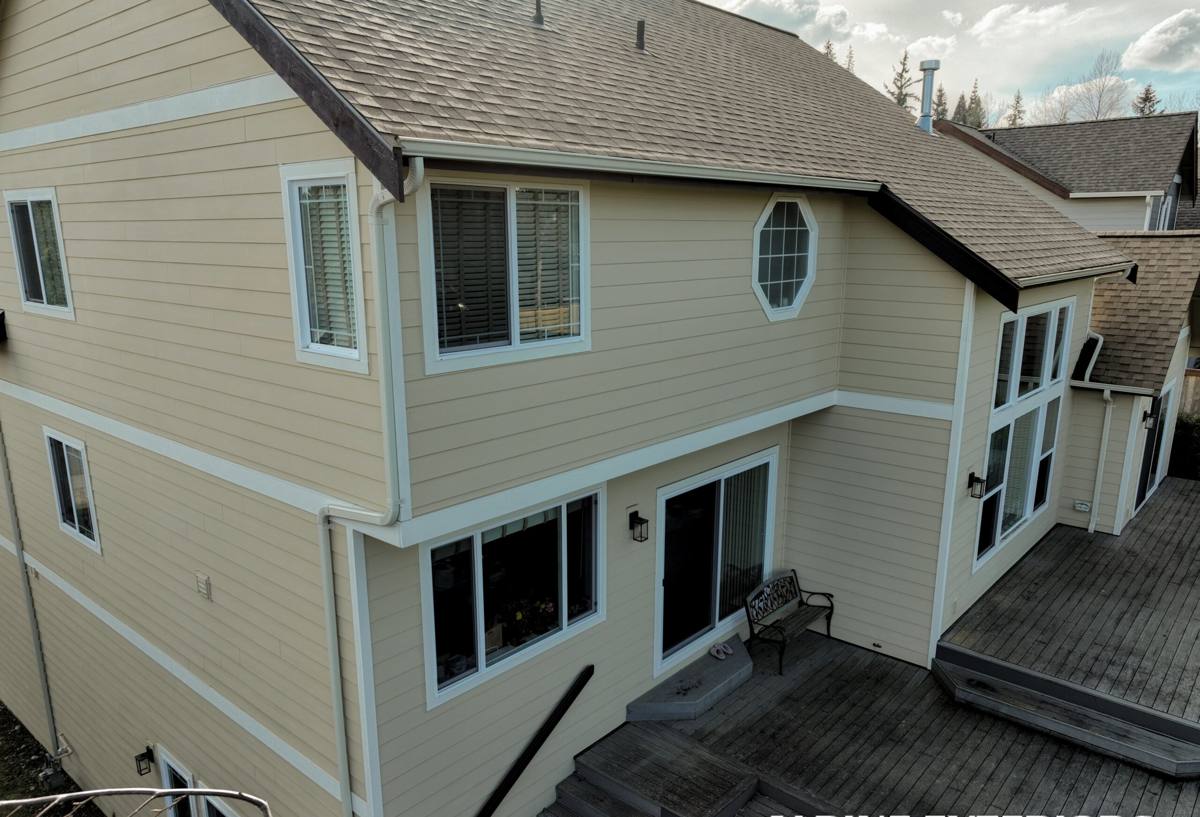
Why Whatcom County's Climate Doesn't Forgive Shortcuts
Bellingham sits in a marine climate zone, and that shapes almost every decision we make on a new-construction window job. Salt-tinged marine air, long stretches of driving rain, and a moss season that can run most of the year all put real, ongoing stress on a home's exterior envelope — windows included.
Driving rain and wind-driven moisture
Wind-driven rain doesn't just hit a window head-on — it gets pushed sideways and upward, working its way behind trim and into any gap in the flashing. A new-construction window needs a properly lapped, water-shedding flashing assembly around the entire opening, not just a bead of caulk at the corners. This is the single most common point of failure we find when we're called out to fix a window that was installed wrong the first time.
Moss, mildew, and prolonged dampness
Whatcom County's damp, mild winters keep moss and mildew active for much of the year. On a new build, that means sill details, drip caps, and cladding clearances all matter — any spot where water can sit against wood trim or sheathing for weeks at a time becomes a growth site for moss and a long-term rot risk.
Salt-influenced air and hardware corrosion
Homes closer to Bellingham Bay and the broader Puget Sound airshed see accelerated wear on exposed metal — hinges, cranks, screens, and cheaper fastener hardware corrode faster than they would inland. We factor this into hardware and fastener selection so a new window isn't fighting its own components within a few years.
What a Correct New-Construction Window Installation Actually Involves
"New construction" window installation is a specific method, different from a retrofit or pocket replacement. It uses windows with a nailing flange, installed before the exterior cladding goes on, which gives us full control over how the opening is sealed. Done correctly, the sequence looks like this:
- Rough opening checked for square, level, and correct dimension against the window schedule
- Sill pan flashing installed to shed any water that gets past the window back out, not into the wall cavity
- Window set, shimmed, and fastened per the manufacturer's exact schedule — not "close enough" spacing
- Jamb and head flashing integrated with the house wrap in the correct shingle-lap order (sides first, then head, so water always flows over the layer below it)
- Backer rod and sealant at the interior and exterior, with the assembly left to breathe rather than fully sealed on both sides
- Final operation check — every sash opens, closes, and locks the way it should before we move to the next opening
Skipping or rushing any one of those steps is how a brand-new window ends up with a moisture problem within a few winters. The window product itself is rarely the reason a new-construction window fails — the installation is.
Choosing the Right Window for a Cordata New Build
Material choice matters more here than in a drier climate. We walk builders and homeowners through the real trade-offs rather than pushing one product line:
| Frame Material | Moisture Performance | Maintenance | Typical Fit |
|---|---|---|---|
| Vinyl | Good — won't rot, handles damp exposure well | Low — occasional cleaning | Cost-conscious builds, rentals, spec homes |
| Fiberglass | Very good — dimensionally stable in temperature and moisture swings | Low | Higher-end builds, larger openings |
| Wood-clad (aluminum or fiberglass exterior) | Good on the exterior face; interior wood needs protection from condensation | Moderate — interior finish upkeep | Custom homes wanting a wood interior look |
| Solid wood, unclad | Weakest in this climate unless heavily maintained | High — regular refinishing needed | We generally steer new builds away from this in exposed elevations |
We're upfront when a product isn't a good match for a given elevation or exposure — that's a maintenance and moisture conversation, not a brand preference. On a Cordata build with a west- or south-facing wall that takes the brunt of the weather, we'll often recommend a step up in frame material or glazing package even if the rest of the house uses a standard line.
Glazing and energy performance
Most new builds in this area do well with a dual-pane, low-E, argon-filled unit rated for the Pacific Northwest climate zone. Triple-pane makes sense for larger openings, north-facing rooms that lose heat fast, or homeowners prioritizing energy performance over the added upfront cost — but it's not mandatory for a solid, code-compliant Cordata home.
Our Process on a New-Construction Job
We coordinate directly with the builder's schedule so windows go in at the right point in the framing sequence — not too early, not after the house wrap is already compromised by other trades.
- Site walk to confirm rough openings match the window order before anything is installed
- Verification that house wrap and flashing tape are compatible products (mixing incompatible tapes and wraps is a common hidden failure point)
- Installation following the sequence above, opening by opening
- Photos and notes on flashing details for the builder's records, useful for any future inspection
- Final walkthrough with operation, lock, and weep-hole checks on every unit
Common Mistakes We're Called In to Fix
A lot of our repair calls in Whatcom County trace back to a handful of repeat issues on new builds:
- Flashing tape applied out of shingle-lap order, so water gets directed into the wall instead of out
- Fully sealing the interior and exterior of the window with caulk, trapping any moisture that does get in
- Fasteners driven at the wrong spacing or angle, which can void the manufacturer's warranty
- Sill pan flashing skipped entirely — one of the most common gaps we find
- Cladding installed with no clearance gap at the sill, holding moisture and moss against the trim
None of these show up as a problem on move-in day. They show up two, five, or ten winters later, after several rainy seasons have had time to work on a weak spot.
Cost Factors on a Cordata New-Construction Window Job
Every build is different, but the main drivers of cost on a new-construction window package are consistent:
| Factor | Why It Matters |
|---|---|
| Window count and size | Larger openings and more units mean more labor and material, plain and simple |
| Frame material | Vinyl is the most economical; fiberglass and clad-wood cost more but offer different performance |
| Glazing package | Dual-pane vs. triple-pane, and any specialty coatings, shift price per unit |
| Elevation exposure | Walls facing prevailing wind and rain may warrant upgraded flashing details or hardware |
| Access and scheduling | Coordinating around other trades on an active job site affects labor efficiency |
We give straightforward, itemized estimates rather than a single bundled number, so a builder or homeowner can see exactly what's driving the price.
Why It Matters to Hire a Crew That Already Works in Cordata
A crew that regularly works Bellingham new construction already knows how local building department inspectors expect flashing details to look, how Whatcom County's rain patterns hit different elevations, and which product lines actually hold up here versus in a drier climate. That local track record shortens the learning curve on your job — we're not guessing at what this climate does to a window assembly over time, we're applying what we've already seen firsthand on other builds in the area.
It also means better coordination on-site. New-construction window work only goes smoothly when it's sequenced correctly with the framer, the house wrap installer, and the siding crew. A local installer with existing relationships and a working knowledge of other area builders tends to keep that handoff clean.
Get a Free Estimate for Your Cordata Build
If you're framing a new home in Cordata or working with a builder who needs a window subcontractor who understands this climate, we're happy to walk the plans or the site with you. There's no pressure and no obligation — just a straightforward look at what your build needs and an honest estimate. Fill out the form below to get started.