 Bellingham Exterior
 Board & Batten Siding for Lynden Homes
Board and batten has become one of the most requested siding profiles in Whatcom County, and it's easy to see why. The vertical lines read as modern on a new build and as classic farmhouse on an older Lynden property, and it pairs well with the barns, outbuildings, and agricultural architecture that shaped this part of the county. But the look is only half the job. Board and batten has a different water-shedding profile than lap siding, more seams, more fastener points, and more places for moisture to get trapped if it isn't detailed correctly. In a climate that delivers driving rain off the Nooksack valley, long stretches of damp shade, and a moss season that can run most of the year, those details decide whether the siding lasts twenty years or needs rework in five.
This page covers what board and batten actually needs to hold up here, what a correct installation looks like, and why we install it exclusively in James Hardie fiber cement rather than the vinyl or engineered-wood versions of this profile.
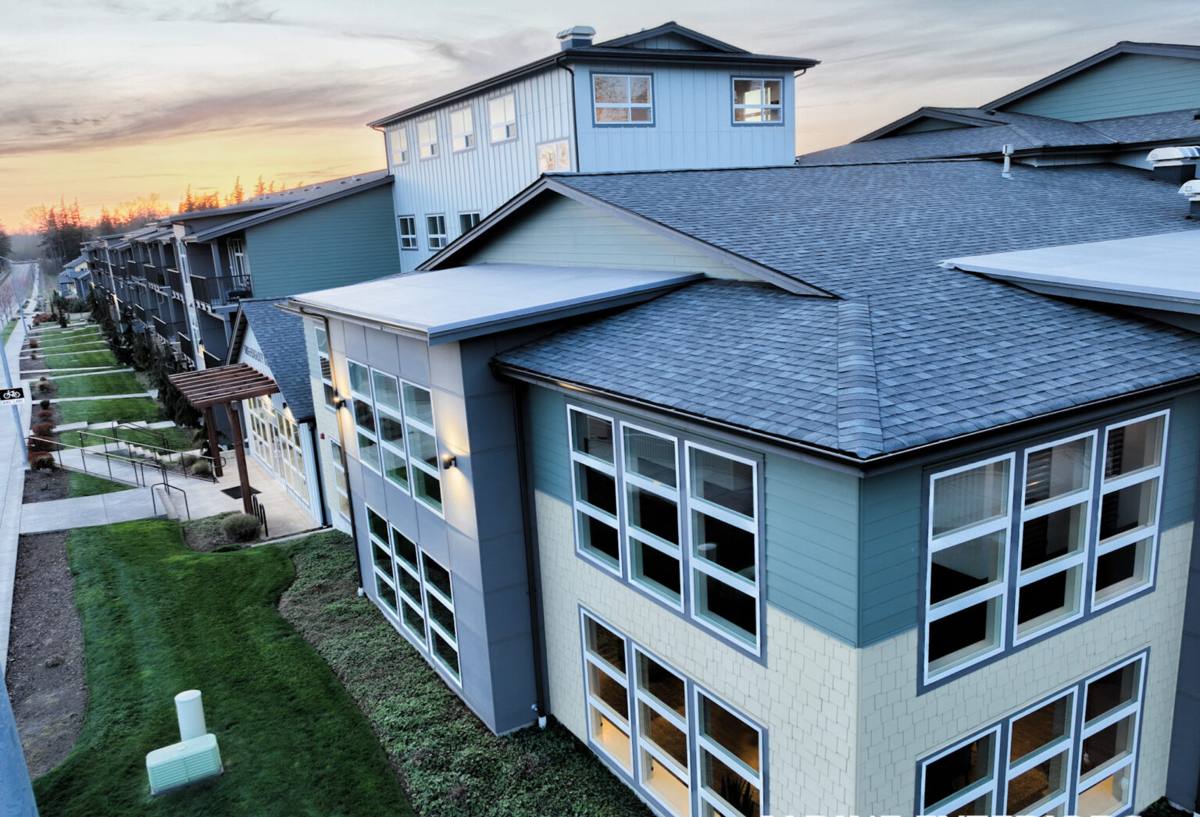
What Lynden's Climate Does to Vertical Siding
Lynden sits inland from Bellingham Bay, but it's still squarely in a Pacific Northwest weather pattern: long wet winters, wind-driven rain events, and enough overcast, shaded conditions to keep surfaces damp for days at a time. Add the proximity to saltwater air that moves through the broader Whatcom County corridor and you get a combination that's tough on any exterior material, but especially tough on a vertical siding profile with more butt joints and more places for water to sit.
Driving Rain and Vertical Seams
Lap siding is designed to shed water downward, board over board, the way shingles do. Board and batten works differently: flat panels or boards are joined edge to edge and the seams are covered with a narrow strip, the "batten." Done right, that batten strip and the gap behind it manage water well. Done wrong, wind-driven rain gets pushed sideways into the seams instead of running off, and it finds its way behind the boards where it doesn't dry out quickly.
Moss and Algae in Shaded, Damp Areas
Board and batten's texture and shadow lines are more forgiving of minor imperfections in a wall than flat lap siding, but that same texture gives moss and algae more surface area to grip, especially on north-facing walls, under eaves, and near trees. Untreated wood-based siding products are especially vulnerable here, since organic growth thrives on a surface that can absorb and hold moisture.
Salt Air and Coatings
Salt-laden air breaks down poorly bonded paint and finishes faster than it breaks down a factory-cured finish. Field-applied paint on site-primed or unfinished siding is the first thing to chalk, fade, and crack in this kind of exposure, and once the finish fails, the substrate underneath is exposed to everything else on this list.
What a Correct Board & Batten Installation Involves
The profile looks simple from the curb, but a correct install has more going on behind the boards than most homeowners realize. This is where the difference between a crew that does board and batten occasionally and one that does it regularly in this exact climate shows up.
Weather-Resistive Barrier and Rainscreen Gap
Every board and batten job should start with a continuous weather-resistive barrier over the sheathing, properly lapped and flashed at every penetration, window, and door. Behind the siding itself, a drainage gap (a rainscreen) gives any moisture that does get past the cladding a path to drain and air to dry, instead of sitting against the sheathing.
Fastening and Batten Spacing
Battens need consistent spacing and a fastening pattern that accounts for the wider boards' tendency to expand and contract with temperature and moisture swings. Fasteners that are too tight, too sparse, or driven at the wrong point in the board will eventually show as cracking, popped nail heads, or warping.
Flashing at Transitions
Every horizontal transition, window head, door head, and roofline intersection needs flashing that directs water out and away rather than letting it track behind the siding. On a vertical profile, water that gets behind a board has fewer places to escape than it would with horizontal lap siding, which makes flashing quality even more important.
Sealed and Primed Cut Edges
Every field cut exposes raw material. On fiber cement, that means sealing and priming every cut edge before installation, not after, and using corrosion-resistant fasteners so the metal doesn't fail before the siding does.
Why We Install James Hardie Board & Batten, Not Other Versions of the Profile
Board and batten is available in vinyl, engineered wood, and fiber cement, and we get asked regularly why we only offer it in James Hardie fiber cement. The honest answer is that we've made a standard for our company based on how each material actually performs in this climate over time, not just at install.
Vinyl board and batten is lightweight and inexpensive, but it's a thin material that can warp or distort in temperature swings and doesn't hold paint if a homeowner ever wants to change the color. Engineered wood products can perform well when installed and maintained exactly to spec, but they rely on factory and field-applied coatings to keep moisture out of the wood-based substrate, and any breach in that coating gives moisture a path into a material that's more vulnerable to it than fiber cement. In a climate with this much sustained dampness and moss pressure, that's a maintenance burden we don't want to put on a homeowner's shoulders, and it's not a callback we want to be doing five years down the road.
James Hardie fiber cement is non-combustible, dimensionally stable, and engineered specifically for climates like ours through its HZ5 product line. It doesn't rely on a coating to keep water out of the core material the way wood-based sidings do, and its factory-applied ColorPlus finish is baked on and warrantied against fading and cracking, which matters in an area that gets sustained UV in summer and sustained damp in winter.
Material Comparison for This Climate
| Factor | James Hardie Fiber Cement | Engineered Wood (LP-Style) | Vinyl |
|---|---|---|---|
| Moisture resistance | Core material doesn't absorb water like wood | Depends on coating integrity staying intact | Doesn't absorb water, but seams can trap it |
| Moss/algae resistance | Factory finish resists organic growth | Coating can degrade, exposing wood substrate | Surface can host growth in shaded areas |
| Fire rating | Non-combustible | Combustible, wood-based core | Combustible, can deform under heat |
| Dimensional stability | Minimal expansion/contraction | Moderate, sensitive to moisture cycling | Can warp in heat and cold |
| Repaintable | Yes, holds paint well if ever desired | Yes, but requires prep and re-coating | Limited, color is baked into the panel |
| Warranty | Strong transferable manufacturer warranty | Varies, often shorter on coating | Varies by manufacturer |
Our Process for a Lynden Board & Batten Project
Every job follows the same sequence, adjusted for the specific house and its exposure to wind, shade, and moisture.
- Assessment: We look at the existing wall assembly, sheathing condition, and any signs of past moisture intrusion before quoting the job.
- Weather barrier and rainscreen install: A continuous weather-resistive barrier goes down first, with a drainage gap built in behind the siding.
- Flashing: Windows, doors, and rooflines get flashed before a single board goes up.
- Board and batten installation: James Hardie panels or boards are installed to manufacturer spec, with correct fastener spacing and sealed, primed cut edges.
- Batten placement: Battens are set with consistent spacing and fastened to allow for normal expansion and contraction.
- Final inspection: We walk every seam, corner, and transition before calling the job done.
What to Look for in a Correctly Finished Job
- Consistent batten spacing and reveal across the entire wall, not just the front elevation
- No visible gaps at butt joints or corners where water could enter
- Flashing visible and properly lapped above windows, doors, and any horizontal trim
- Fastener heads set flush, not overdriven or crushing the board surface
- Caulking used only where specified, not as a substitute for proper flashing
- Clean, sealed cut edges with no raw material exposed
- A drainage gap behind the siding, not boards installed tight against the barrier
Maintenance in a Rain, Moss, and Salt Air Climate
James Hardie board and batten is low-maintenance, not no-maintenance. A yearly rinse to clear moss spores and debris from north-facing and shaded walls, a visual check of caulking at trim and penetrations, and prompt attention to any gutter or downspout issues that could concentrate water against a wall will keep the siding performing for decades. Homes near mature trees or with heavy shade should expect to check for moss buildup more often than homes in open, sunny exposure.
Why a Crew That Works Lynden Regularly Matters
Board and batten installed to a generic national spec will hold up fine in a dry climate. It won't necessarily hold up the same way in Whatcom County, where sustained dampness, moss pressure, and salt-laden air are the norm rather than the exception. A crew that installs siding across Bellingham and the surrounding communities regularly builds an eye for the details that matter here specifically: how much rainscreen gap this exposure needs, where flashing tends to get skipped on a rushed job, and which walls on a Lynden property are going to see the most moss pressure based on tree cover and orientation. That local pattern recognition is the difference between a board and batten job that looks right at handoff and one that still looks right in year fifteen.
If you're considering board and batten siding for a home in Lynden, we're happy to take a look and walk you through what your specific property needs. Reach out for a free, no-pressure estimate using the form below.