 Bellingham Exterior
 Windows Built for Happy Valley's Weather, Not a Showroom in Arizona
Happy Valley sits close enough to Bellingham Bay and the Salish Sea that homes here take a different kind of beating than houses twenty miles inland. Salt-laden air corrodes hardware faster than dry-climate ratings assume. Driving rain off the water finds every weak seal on a west- or south-facing wall. And the long, wet Whatcom County winter keeps siding and window frames damp for months at a stretch, which is exactly the environment moss and mildew like best. A window that tests fine in a lab in a dry climate can still underperform here if the installer didn't account for our actual weather.
We're a Bellingham-based crew and we work in Happy Valley regularly enough to know which walls in this neighborhood take the worst of the weather and which details matter most on this side of town. That's not a marketing line — it changes how we flash, seal, and space fasteners on every job.
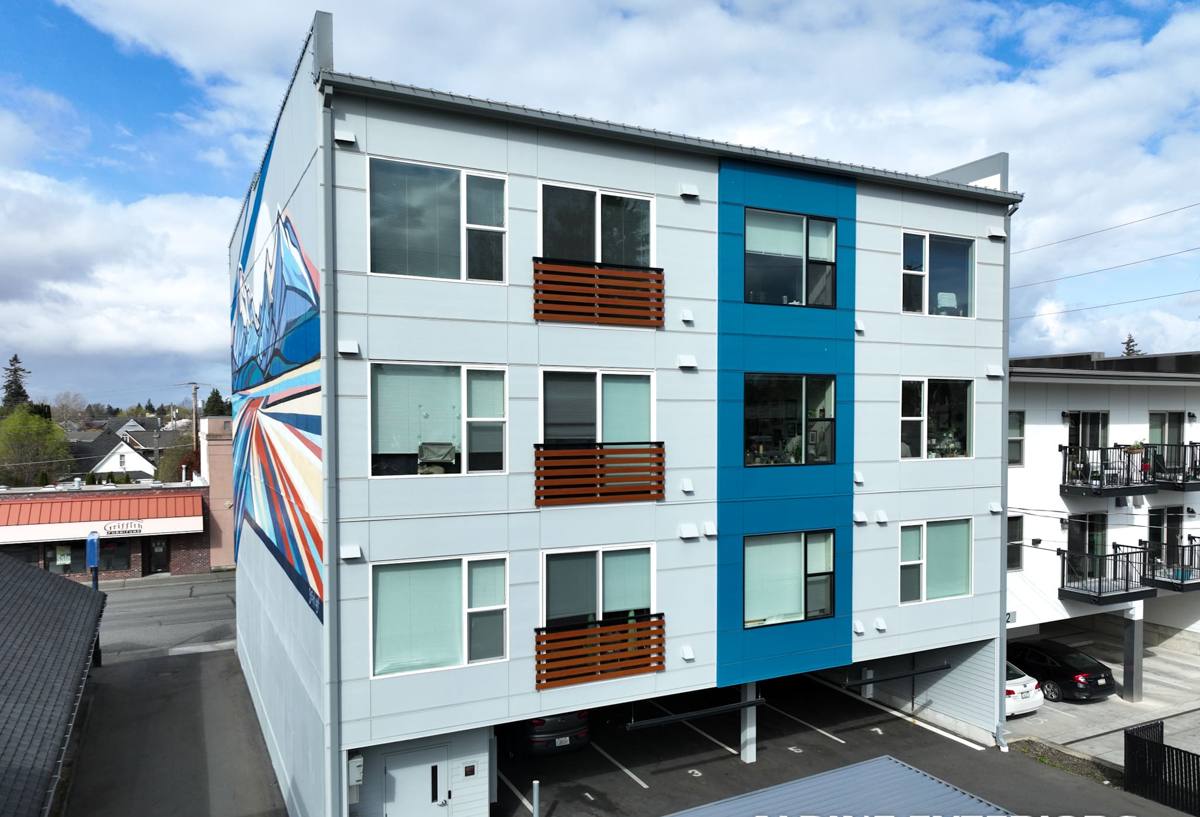
What "Energy-Efficient" Actually Means in This Climate
Energy efficiency for a window isn't one number — it's a combination of how well it insulates, how well it blocks air movement, and how well it keeps water out of the wall assembly behind it. In a marine climate like ours, that last piece matters as much as the first two. A window can have great insulating glass and still cause problems if it lets moisture into the wall cavity over time.
The Numbers Worth Knowing
- U-Factor — measures heat loss through the window. Lower is better for our cool, wet winters. This is the number that most directly affects your heating bill.
- Solar Heat Gain Coefficient (SHGC) — measures how much solar heat passes through the glass. Bellingham doesn't get intense year-round sun, so this matters less here than in a hot climate, but it still affects comfort in south-facing rooms.
- Air Leakage — measures how much air passes through the window assembly itself. Lower numbers mean less draft and less energy loss regardless of glass quality.
- Condensation Resistance — not always advertised, but relevant here. A window with poor thermal performance at the edges will fog or bead moisture on cold, damp mornings, which is common in this area.
We size and spec windows against these numbers for the specific wall they're going into — a north-facing wall that never sees direct sun performs differently than a west-facing wall catching afternoon storms off the bay, even on the same house.
Why Salt Air and Driving Rain Change the Job
Salt Air and Hardware
Cheaper window hardware — hinges, locks, balance mechanisms — can corrode noticeably faster within a few miles of saltwater compared to the same hardware inland. We look at the corrosion resistance of hardware and fasteners as a real line item, not an afterthought, especially for homes closer to the water side of Happy Valley.
Driving Rain and Flashing
Wind-driven rain doesn't just hit a window — it gets pushed sideways and upward under trim and siding if the flashing details aren't right. Most window failures we get called out to inspect aren't glass failures at all. They're water intrusion around the frame because the original install skipped or shortcut the flashing, sill pan, or sealant details. A correct install treats the window opening as a water-management system, not just a hole with a frame in it.
Moss Season and Long-Term Maintenance
Our extended damp season keeps north- and shade-facing surfaces wet longer than most climates, which is why moss and algae take hold on siding, trim, and window sills that don't drain or dry properly. Window sills and trim need to shed water cleanly and dry out between rain events, or they become one more surface feeding moss growth against your siding.
What a Correct Installation Involves
Replacing a window is straightforward in concept and easy to do poorly. The difference between a window that performs for 20+ years and one that causes problems in five comes down to details most homeowners never see once trim is back on.
- Remove the old window and inspect the rough opening for rot, soft framing, or existing water damage before anything new goes in.
- Repair any damaged framing or sheathing — installing a new window into a compromised opening just hides the problem.
- Install a sloped sill pan so any water that gets past the window drains back outside instead of pooling in the wall.
- Flash the opening in the correct shingle-lap order (sill, sides, then head) so water moving down the wall sheds over each layer, not behind it.
- Set the window level, plumb, and square — a racked frame stresses seals and hardware and shortens the life of both.
- Insulate the gap between frame and rough opening without over-packing, which can bow the frame and cause the sash to bind.
- Seal and caulk the exterior per manufacturer spec, using a sealant rated for our climate and UV exposure.
- Reinstall trim and check operation — every window should open, close, and lock smoothly before we call the job done.
Our Process for Happy Valley Homes
| Step | What Happens | Why It Matters Here |
|---|---|---|
| On-site assessment | We walk the exterior and check existing windows, trim condition, and any signs of past water intrusion or moss buildup | Identifies which walls have taken the most weather exposure over time |
| Product selection | We recommend frame material, glass package, and hardware based on the wall's sun/rain exposure and your budget | Not every window on a house needs the same spec — a sheltered wall and an exposed wall have different priorities |
| Written estimate | Clear scope, materials, and pricing before any work starts | No surprises once the job is underway |
| Removal and opening prep | Old window out, opening inspected and repaired as needed | Catches hidden rot or damage before it's sealed behind a new window |
| Install with full flashing and sealing | Sill pan, flashing, insulation, and sealant per manufacturer and climate-appropriate practice | This is the step that determines whether the window stays watertight for decades |
| Final walkthrough | We test operation, check seals, and clean up the site | You see the finished work and ask questions before we leave |
Frame Material: What Actually Holds Up Here
There's no single "best" frame material for every home — it depends on your budget, the look you want, and how much maintenance you're willing to do.
- Vinyl — the most common choice for good reason: low maintenance, solid insulating performance, and no repainting. Quality varies a lot between manufacturers, so we're selective about which vinyl lines we install.
- Fiberglass — more dimensionally stable than vinyl across temperature swings, which matters less here than in climates with big daily temperature shifts, but it's a strong, low-maintenance option with a higher upfront cost.
- Wood-clad — gives you a wood interior look with a protective exterior cladding. Beautiful, but the cladding seams and any exposed wood need to be watched over time in a wet climate like ours.
- Aluminum — durable but a poor insulator unless thermally broken, and it can feel cold to the touch in our winters. We rarely recommend it for residential replacement here unless it's matching an existing architectural style.
We'll walk you through the honest trade-offs for your specific house rather than pushing one product line — maintenance burden, upfront cost, and how the material behaves over 15-20 years of Whatcom County weather all factor into the recommendation.
Signs Your Current Windows Are Underperforming
- Visible condensation or fogging between the glass panes — this means the seal has failed and the insulating gas has escaped
- Drafts you can feel near the frame, even with the window fully closed and locked
- Soft or discolored trim and sill areas, which often indicate water has been getting behind the frame
- Windows that are difficult to open, close, or lock — often a sign the frame has shifted or the hardware has corroded
- Persistent moss, algae, or dark staining on the sill or trim below the window
- Noticeably higher heating bills without another clear explanation
- Noise transmission that seems worse than it used to be, suggesting the seal or glass has degraded
Why a Local Crew Makes a Real Difference
Window replacement isn't just a product decision — it's an installation decision, and installation quality is where most long-term problems start. A crew that works in Bellingham and Whatcom County regularly has already seen how different walls, orientations, and older construction methods in this area respond to our climate. That experience shows up in the small decisions: how much sealant is enough, which walls need extra flashing attention, and where moss and moisture tend to cause slow damage if it's not addressed at the source.
We're also positioned to actually show up if a warranty question or adjustment comes up down the road, rather than being a crew that passed through once and moved on. For a neighborhood like Happy Valley, that local accountability matters as much as the window brand on the label.
Cost Factors to Expect
We don't publish blanket per-window pricing because too many variables affect the real cost, but here's what typically drives the number up or down on a Happy Valley project:
| Factor | Effect on Cost |
|---|---|
| Number of windows and total opening size | Larger and more numerous openings increase material and labor |
| Frame material chosen | Vinyl is typically the most budget-friendly; fiberglass and wood-clad cost more upfront |
| Condition of the existing rough opening | Hidden rot or framing damage adds repair time before the new window can go in |
| Number of stories / access difficulty | Upper-floor or hard-to-access windows take more time and equipment |
| Glass package (energy performance, tempered/safety glass, grid patterns) | Higher-performance glass and custom features add cost |
| Trim and siding repair around the opening | Damaged exterior trim or siding needs replacement to close out the job properly |
We give you a written, itemized estimate after the on-site assessment so you know exactly what you're paying for and why — no vague lump-sum guesses.
If your Happy Valley home has windows that are drafty, foggy, hard to operate, or showing water staining, we're happy to take a look and give you a straightforward, no-pressure estimate — just fill out the form below to get started.