 Bellingham Exterior
 Siding Installation Is a Different Job in Fairhaven
Plenty of contractors will quote a siding installation off square footage and a photo. That works fine in a lot of places. It doesn't work well in Fairhaven, a neighborhood that sits right against Bellingham Bay with a mix of older housing stock, hillside lots, and mature tree cover that changes how a wall assembly behaves once the panels go up. We're a Bellingham exteriors contractor, and Fairhaven is one of the parts of Whatcom County where we see installation shortcuts turn into callbacks the fastest, usually two or three winters after the crew has moved on.
This page is specifically about the installation itself: what a correct job requires on a Fairhaven property, how we approach it, and why the details matter more here than they would on a dry inland lot. If you're comparing siding materials in general, that's a broader conversation. Here, we're assuming you've decided it's time for new siding and want to understand what actually goes into doing it right.
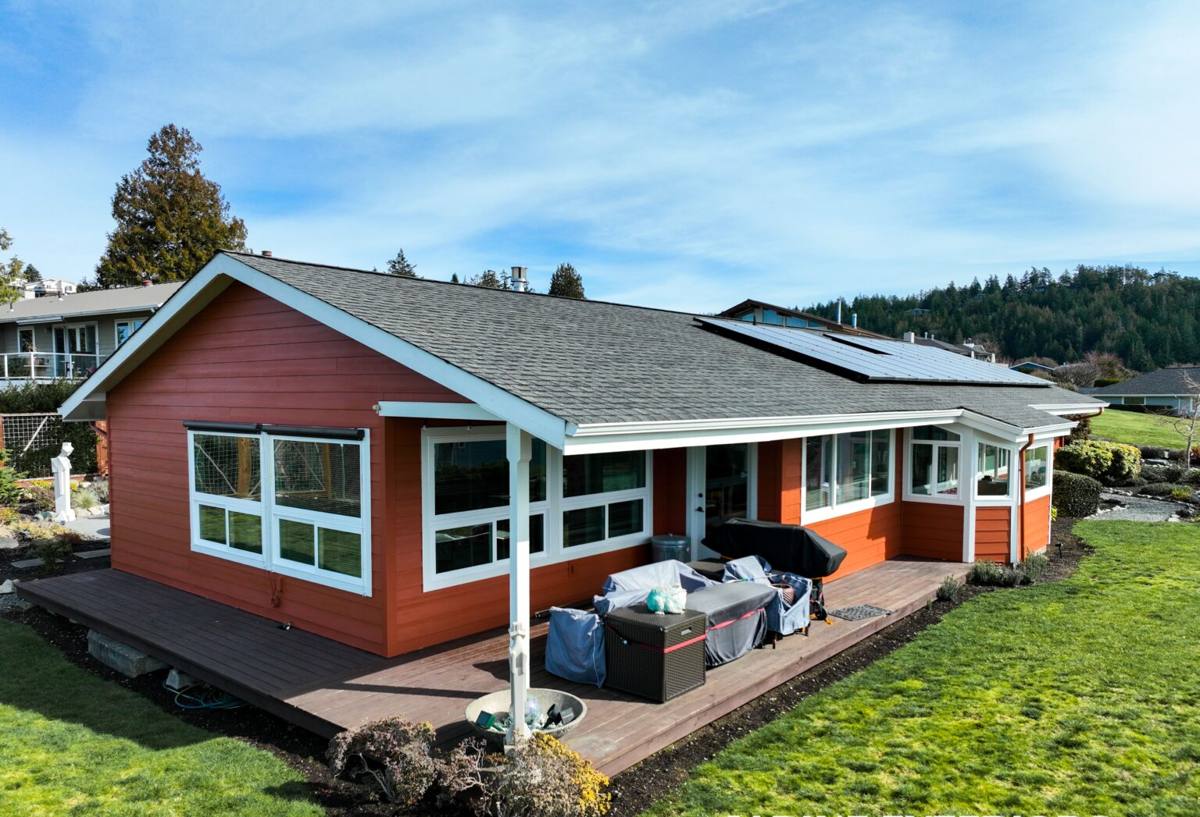
What Fairhaven's Location Demands From an Installation
Fairhaven's proximity to the water means siding here deals with salt-tinged marine air, rain that arrives sideways more often than straight down, and shaded, tree-covered lots that stay damp longer than open ground. None of that is exotic weather, but it's persistent, and persistence is exactly what exposes a mediocre installation. A wall assembly with a small gap in the weather barrier or a flashing detail skipped at a window head might go five dry years without a problem in a low-moisture climate. In Fairhaven, that same gap tends to show up as a stain or soft spot much sooner, because the wall rarely gets a long enough dry stretch to hide the mistake.
Hillside terrain adds another layer. A lot of Fairhaven's homes sit on sloped ground running up from the waterfront, which changes how water moves around a foundation and up the base of a wall during heavy rain. Installation details at the bottom of the siding, where it meets grade, deck ledgers, or a lower roofline, carry more weight on these lots than they would on flat, well-drained ground.
What a Correct Siding Installation Actually Involves
The Drainage Plane Comes First
Siding is the visible layer, but it isn't the only layer doing the work. Underneath it sits a weather-resistive barrier and, ideally, a rainscreen gap that lets any moisture that does get past the siding drain and dry out instead of sitting against the sheathing. Skipping or shortcutting this layer is one of the most common reasons a wall fails from the inside out while looking fine from the street for years.
Flashing at Every Penetration
Windows, doors, hose bibs, light fixtures, vents — every penetration through the siding is a place water can get behind the wall if it isn't flashed correctly. In a climate with this much wind-driven rain, flashing isn't a nice-to-have detail, it's the difference between a wall that sheds water and one that slowly collects it. We treat window and door flashing as part of the siding job, not something handled separately or assumed to already be right.
Fastening Pattern and Clearances
James Hardie publishes specific fastening patterns, nail spacing, and clearance requirements from grade, roofing, and decks, and those specs exist because they've been tested against real failure modes. Fastening too close to a panel edge, using the wrong nail type, or leaving too little clearance at the bottom of the siding are all things that won't show up on install day but will show up in a few years as cracking, staining, or moisture intrusion at the base of the wall.
Joints, Seams, and Corners
Lap joints need to be staggered and sealed correctly, and inside and outside corners need treatment that keeps water from tracking behind the corner trim. These are small details in terms of time spent, but they're where a rushed crew cuts corners, and they're exactly the spots where wind-driven rain finds its way in first.
Our Installation Process, Start to Finish
- Walkthrough and assessment. We look at the whole exterior system, not just the siding, and talk through what we're seeing with you before anything is quoted.
- Tear-off or recover decision. On most re-siding jobs we recommend a full tear-off so we can actually see the sheathing underneath, especially on older Fairhaven homes where hidden moisture damage is common.
- Substrate inspection and repair. Any soft, rotted, or water-damaged sheathing gets addressed before new siding goes on. Covering a compromised substrate with new siding just delays a bigger problem.
- Weather barrier and drainage plane installation. House wrap and a rainscreen gap go on as one integrated system, not two separate steps done by whoever's available that day.
- Flashing at all penetrations. Windows, doors, and other penetrations get flashed and integrated with the house wrap before siding covers them.
- Siding installation to spec. Panels go up following James Hardie's fastening pattern, clearance requirements, and joint treatment, with attention to the wall orientations that stay damp longest.
- Trim, caulking, and finish details. Corners, trim boards, and seams are finished with the same care as the field siding, since these are common failure points.
- Final walkthrough. We go over the finished job with you and explain what was done, not just hand you an invoice.
Why We Install Only James Hardie Fiber Cement
We don't offer a menu of siding brands for a Fairhaven installation. We install James Hardie, and only James Hardie, because of what a correct installation needs to hold up against this climate over time.
- HZ5 formulation: Engineered for regions with heavy sustained moisture and freeze-thaw cycling, which fits coastal Whatcom County better than a generic national product spec.
- Factory-applied ColorPlus finish: Cured under controlled conditions rather than field-applied, so it holds up to installation handling and years of salt air and UV exposure without an early repaint.
- Dimensional stability: Fiber cement doesn't swell or shift with moisture the way engineered wood can, which matters for keeping fastening and joint tolerances correct over the life of the siding.
- Non-combustible core: A material property that doesn't change based on how it's installed, but one we're glad to be putting on every home we work on.
- Transferable warranty: Backed by Hardie when the installation follows spec, which is exactly why we hold ourselves to that spec on every job.
We don't install LP SmartSide, vinyl, Cemplank, Allura, primed spruce, or cedar. Those are legitimate products, and other contractors install them competently. Our decision came down to standing fully behind one system we understand completely, rather than offering alternatives whose installation sensitivities and maintenance trade-offs we'd have to caveat later.
How Materials Compare Once Installation Is the Question
| Material | Installation Sensitivity | Behavior in Fairhaven's Climate |
|---|---|---|
| James Hardie fiber cement | Requires correct fastening pattern and clearances, but tolerant once installed to spec | Dimensionally stable; factory finish resists salt air, moss, and UV fading |
| Vinyl siding | Sensitive to house wrap and flashing quality behind the panel, easy to install poorly without it showing | Can warp in direct sun, crack in a cold snap, and trap moisture if water management underneath wasn't done right |
| LP SmartSide (engineered wood) | Cut edges and fastener penetrations need careful sealing at install | More sensitive to sustained moisture intrusion than fiber cement in a marine environment |
| Cedar or primed spruce | Needs correct priming and sealing on all sides, including cut ends, at install | Attractive but requires an ongoing paint or seal schedule that's easy to let slip in a climate this wet |
The material matters, but so does the crew putting it on. A well-installed lesser product can outperform a poorly installed premium one, which is part of why we treat installation quality as inseparable from the material decision.
Matching Fairhaven's Architectural Character
Fairhaven's residential streets mix older homes with newer infill built into the same hillside terrain, and a siding installation should respect whichever character a given house actually has rather than defaulting to whatever's easiest to install. James Hardie's lap, shingle, and board-and-batten profiles cover a wide enough range that most Fairhaven homes can get a siding system that fits their existing lines and trim detail instead of looking like an obvious retrofit. Color selection matters too: a factory-applied ColorPlus finish holds its tone against salt air and UV exposure far longer than field-applied paint, which is worth factoring in before settling on a color purely by eye.
Cost Factors Specific to a Fairhaven Installation
| Factor | Why It Affects Cost |
|---|---|
| Tear-off vs. installing over existing siding | Tear-off costs more up front but exposes hidden moisture damage before it becomes a bigger problem |
| Substrate repair needs | Rotted or water-damaged sheathing found during tear-off has to be addressed before new siding goes on |
| Home height and wall complexity | Multiple stories, dormers, and roofline intersections add labor time and staging |
| Site access on sloped lots | Hillside properties common in Fairhaven can require extra staging or scaffolding setup |
| Trim scope and profile choice | More detailed trim work and certain siding profiles take more time per square foot than a simple lap pattern |
We walk the property before quoting rather than pricing off square footage alone, since two homes with the same footprint can need very different scopes of work.
Signs Your Fairhaven Home Needs New Siding, Not a Patch
- Soft or spongy siding, especially near the base of the wall or around window and door trim
- Moss or dark staining that returns quickly after cleaning, particularly on shaded or north-facing walls
- Cracked, warped, or missing siding sections after wind events
- Visible gaps at seams, corners, or trim joints where water can track in
- Peeling or bubbling paint across multiple sections rather than one isolated spot
- Siding that's original to a home built more than a couple of decades ago and has never been replaced
- Rising heating bills that suggest the wall assembly isn't sealing the way it should
An isolated issue, like one damaged panel or a section that failed around a single window, can often be repaired rather than replaced. Widespread softness, staining, or an aging original wall assembly usually means a patch will only delay a full installation.
Why Hiring a Crew That Already Works in Fairhaven Matters
A crew that regularly works this part of Whatcom County has already seen how salt air, wind-driven rain, and moss behave on real Fairhaven walls over full seasons, not just how a product performs on a spec sheet. That shapes practical decisions on install day: which wall orientations need extra flashing attention, how to sequence work around the area's weather windows so materials aren't exposed to rain mid-installation, and which trim and corner details are worth the extra time on a hillside lot. It also means fewer surprises with permitting and inspection through the City of Bellingham, since the process is already familiar rather than being figured out on your job.
None of this replaces a good product or a correct spec. But installation quality is where most siding problems actually start, and a crew with real Fairhaven experience is less likely to be the reason your new siding needs attention again in a few years.
If you're weighing a new siding installation for a Fairhaven home, we're glad to take a look and give you a straight assessment of what your property actually needs. Reach out using the form below to schedule a free, no-pressure estimate.