 Bellingham Exterior
 New-Construction Windows in South Hill: Getting It Right the First Time
South Hill sits up on the hillside above downtown Bellingham, close enough to Bellingham Bay that the weather off the water shapes almost every exterior decision on a house — including how the windows go in. If you're building new, adding a room, or gutting a wall down to the studs, you have an opportunity that replacement-window projects don't: full access to the wall assembly before the siding closes it up. Done correctly, that's the single best chance a home gets to keep water out for decades. Done carelessly, it's also how homes end up with rot behind the trim ten years later.
This page is specifically about new-construction window installation for South Hill properties — new builds, additions, and full-tear-out remodels where the window flange is exposed to the framing and weather barrier, not slipped into an existing opening.
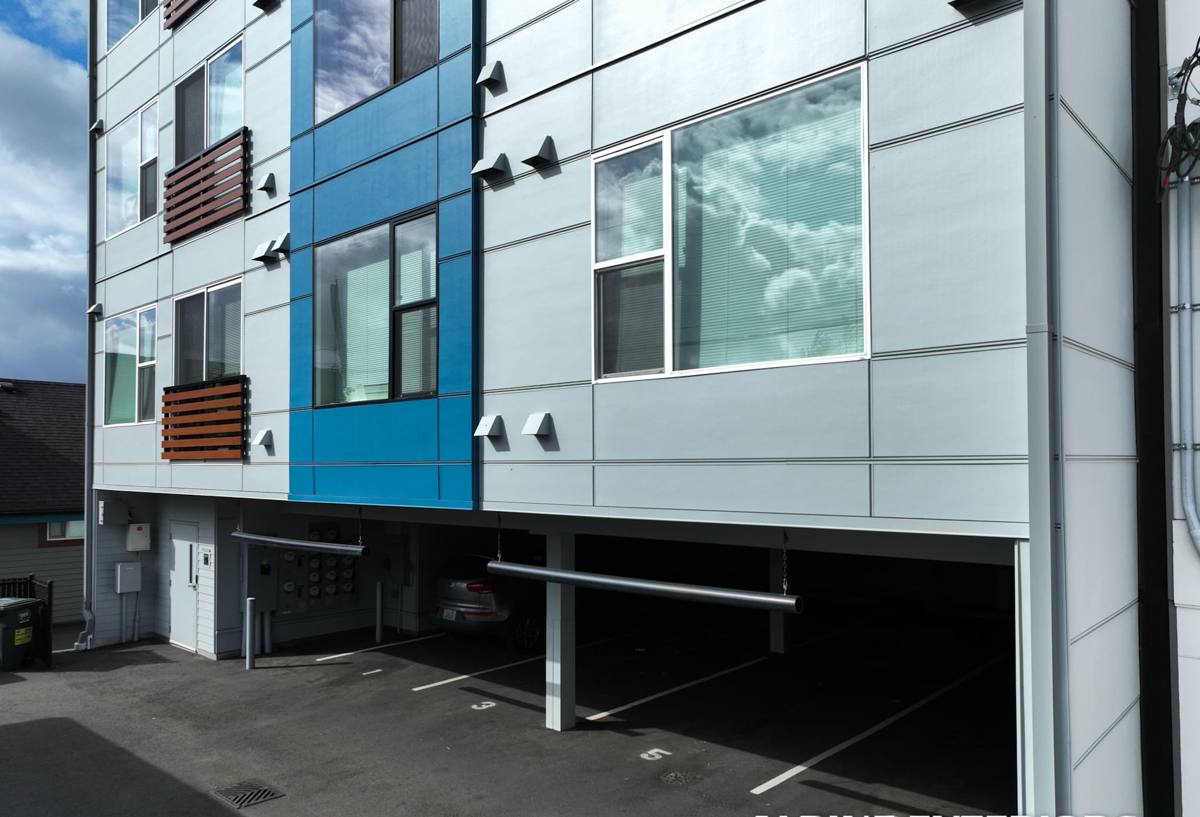
New-Construction vs. Replacement: Why the Distinction Matters
New-construction windows have a nailing fin around the perimeter of the frame. That fin gets integrated directly into the home's water-resistive barrier and flashing system during framing, before siding or trim goes on. Replacement (or "insert") windows, by contrast, are sized to fit inside an existing frame with the old exterior trim left in place — a faster, less invasive option for remodels where the wall isn't being opened up.
Neither approach is "better" in the abstract — they solve different problems. But if your project already has the wall open, using a replacement-style window there would mean giving up the chance to properly integrate flashing and drainage, which is the part of the job that actually determines whether water stays out. New construction is the right call whenever the sheathing and weather barrier are already exposed.
When New-Construction Windows Are the Right Choice
- Ground-up new home builds
- Room additions or bump-outs with new framed walls
- Full re-siding projects where sheathing is being exposed anyway
- Remodels where the exterior wall is opened for other reasons (rot repair, re-insulation, layout changes)
What South Hill's Climate Actually Demands
Whatcom County's marine climate is mild compared to most of the country, but "mild" doesn't mean easy on a building envelope. Three conditions matter most for South Hill specifically:
Driving Rain
South Hill's elevation and exposure to weather moving in off Bellingham Bay means storms often arrive with real wind behind them. Wind-driven rain doesn't just fall straight down — it gets pushed sideways and even upward under laps and trim, which is exactly what a properly shingled flashing sequence is designed to defeat. Sealant alone is never a substitute for correct flashing order; it's a secondary line of defense, not the primary one.
Salt Air
Proximity to the water means airborne salt reaches exterior hardware, fasteners, and metal flashing on South Hill homes more than it would further inland. Salt accelerates corrosion on the wrong materials — untreated steel fasteners, uncoated aluminum components — which is why fastener and flashing material selection matters more here than it would in a landlocked climate zone.
A Long Moss Season
Shaded, damp conditions persist for much of the year in this part of Whatcom County, and moss and algae will colonize any horizontal surface that holds moisture and organic debris. On a window, that means sills and trim need enough slope and clearance to shed water and shed leaf litter — a flat sill or a sill installed dead level becomes a moss farm and a slow, steady moisture problem.
The Installation Details That Actually Keep Water Out
The window itself is only part of the system. What determines whether a new-construction window performs for 20+ years is the sequence it's installed in relative to the wall's water-resistive barrier.
Sill Pan Flashing
Every opening should get a sloped, sealed sill pan before the window ever sets in place — a dedicated pan that catches any water that gets past the window and directs it back outside rather than into the framing below. This is the single most-skipped step on rushed jobs, and it's the one that matters most in a driving-rain climate.
The Shingle-Lap Sequence
Flashing tape and the weather-resistive barrier need to be layered like shingles on a roof — each layer overlapping the one below it — so water is always directed down and out, never trapped behind a lap that runs the wrong way. Head flashing goes in last, over the top flange, with a drip cap that kicks water away from the wall rather than letting it run down the face of the siding.
Fasteners and Hardware
Given the salt exposure on South Hill, we use corrosion-resistant fasteners rather than standard uncoated hardware, and we're deliberate about which metals contact each other around the opening to avoid galvanic corrosion over time.
Choosing a Frame Material for This Climate
There's no single "best" frame material — each has real trade-offs, and the right choice depends on your budget, your home's style, and how much upkeep you want to take on.
| Frame Material | Moisture & Salt-Air Behavior | Maintenance | Typical Use Case |
|---|---|---|---|
| Vinyl | Won't corrode or rot; performs well in coastal air | Low — occasional cleaning | Budget-conscious builds, additions |
| Fiberglass | Dimensionally stable, resists moisture and salt well | Low | Higher-end new construction, larger openings |
| Wood-clad | Interior wood look with an exterior weather-resistant cladding; cladding must stay intact to protect the wood beneath | Moderate — cladding seams need periodic inspection | Character-driven homes wanting a wood interior |
| Aluminum | Conducts heat and cold readily and can be more prone to corrosion near salt air unless properly finished | Moderate to high | Specific architectural styles, larger commercial-style glazing |
For most South Hill homes this close to the bay, we steer clients toward vinyl or fiberglass for the combination of low maintenance and solid moisture performance, but we'll walk through the real trade-offs for your specific project rather than push one product line.
Meeting Washington's Energy Code From the Start
New construction and additions in Washington have to meet current state energy code glazing requirements, which set maximum U-factor limits for windows based on climate zone. Whatcom County falls into a marine climate zone with meaningful heating-season requirements, so the glass package — not just the frame — matters for code compliance. Double-pane, low-E glazing with an appropriate gas fill is standard practice here; we'll spec the glass package to meet code and to actually perform in a house that sees a lot of grey, damp months where you're running heat.
Our Process for New-Construction Window Installs
Coordinating With Your Framer or GC
Timing matters. Windows need to go in after the weather-resistive barrier is on but before siding starts, and rough openings need to be framed to the correct dimensions with the right tolerances beforehand. When we're not the general contractor on a project, we coordinate directly with your framer or builder so the opening, the barrier, and the window installation happen in the right order without gaps in the schedule.
Quality Checks Before Siding Goes On
Before any siding closes up the wall, we check that sill pans are sloped and sealed correctly, that the shingle-lap sequence is intact at every opening, that fasteners are set correctly without over- or under-driving, and that the window operates smoothly and seals tight. This is the last point where a flashing mistake is cheap and easy to fix — after siding goes on, it isn't.
Questions Worth Asking Any Contractor Doing This Work
- Will you install a dedicated sill pan flashing at every opening, not just caulk the sill?
- What's your shingle-lap sequence for integrating the window with the weather-resistive barrier?
- What fastener type do you use, and is it rated for coastal/salt-air exposure?
- Can you walk me through frame material trade-offs for a home in this location rather than just recommending one product?
- Will the glazing package meet current Washington energy code for our climate zone?
- Who inspects the flashing before siding is installed — and can I see it before it's covered up?
Why a Crew That Already Works South Hill Matters
South Hill's mix of exposure levels — some lots open to wind off the bay, others tucked under mature tree cover with heavier moss and shade — means there's no one-size-fits-all detailing approach even within this one neighborhood. A crew that's worked the area already knows which lots need extra attention to drainage and which need extra attention to moss-prone shaded sills, understands Bellingham and Whatcom County permitting and inspection expectations for new openings, and has existing relationships with suppliers so materials show up when your framing schedule needs them — not weeks later.
If you're building, adding on, or opening up a wall on your South Hill property, we'd be glad to take a look and talk through what the job actually needs. Reach out for a free, no-pressure estimate using the form below.