 Bellingham Exterior
 Siding Installation Built for Lynden's Weather
Lynden sits inland from Bellingham Bay, but it doesn't escape the weather pattern that defines this part of Whatcom County. Marine air pushes in off the water and settles over the valley, driving rain comes sideways during winter storms, and the shoulder seasons stay damp and shaded long enough for moss and algae to take hold on anything that traps moisture. A siding job that isn't built with that pattern in mind will show it within a few years — not through dramatic failure, but through the slow stuff: swelling seams, streaking, soft trim, and paint that won't hold.
We install siding on homes across Whatcom County, and Lynden's mix of older farmhouses, mid-century homes, and newer subdivision builds all present the same basic challenge: keep water moving off the wall and out of the assembly, and use a material that won't degrade while it's doing that job over decades, not years.
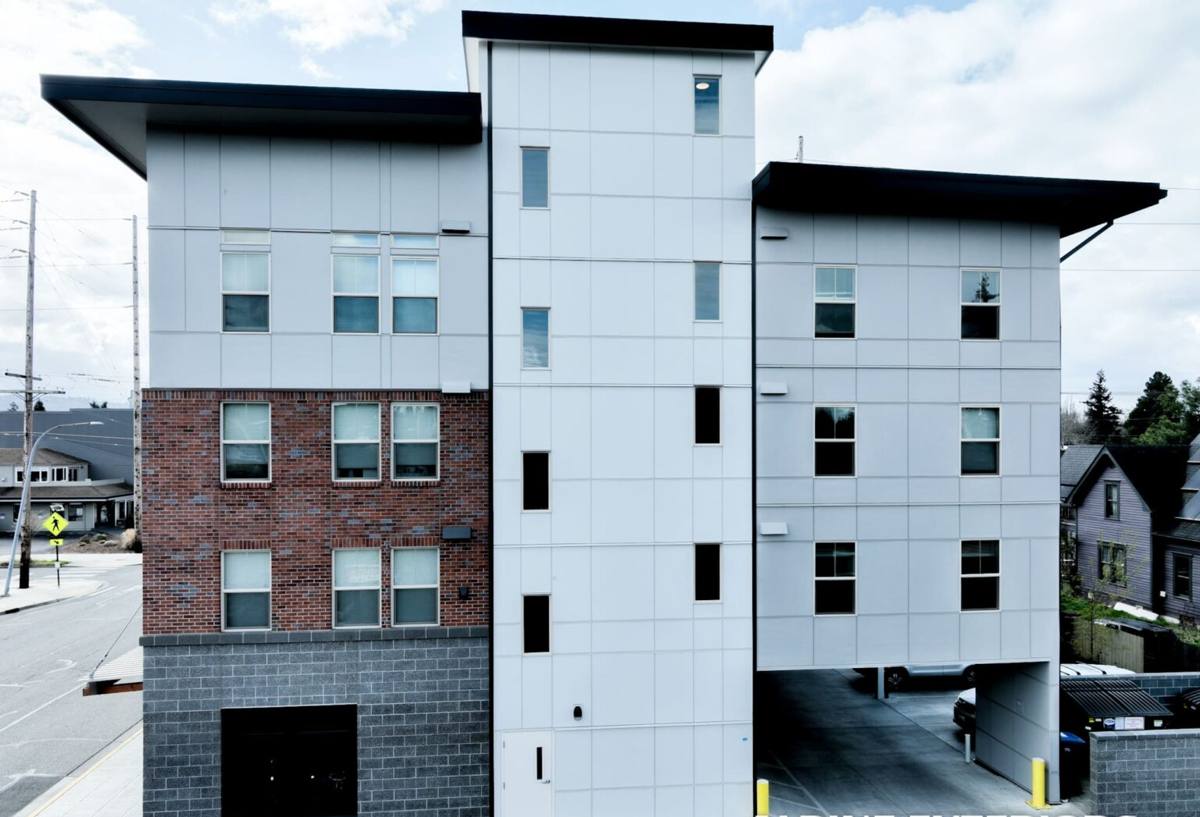
What Lynden Homes Actually Need From Their Siding
Moisture Management First
The single biggest factor in how long a siding job lasts here isn't the siding itself — it's what's behind it. A correctly installed water-resistive barrier, properly lapped flashing at every window, door, and penetration, and a drainage plane that lets incidental moisture escape rather than pool matters more than the brand name on the boards. We've seen premium siding fail early because of sloppy flashing work underneath it, and we've seen modest siding last decades because the prep work was done right.
A Material That Doesn't Feed Moss and Rot
Whatcom County's long wet season means anything organic on the exterior of a house — wood, wood-based composites, untreated trim — is on a clock. Moss and algae need moisture and a food source, and untreated or moisture-absorbent siding gives them both. That's a core reason we standardized on James Hardie fiber cement: it's cement-based, not wood-based, so it doesn't feed the same growth the way wood products can, and it doesn't swell or wick water the way wood fiber composites do.
Color That Survives UV and Rinse Cycles
Homes here get washed down periodically to keep moss and mildew in check, and they sit under overcast UV exposure for much of the year. Field-applied paint on siding tends to chalk and fade unevenly, especially at butt joints and cut edges. A factory-applied finish that's cured and warrantied holds its color more consistently through that cycle of weather and cleaning.
Why We Only Install James Hardie
We don't install vinyl, LP SmartSide, Cemplank, Allura, or bare cedar or primed spruce siding, and we're upfront about why. Each of those products can be installed correctly and can perform reasonably well in the right circumstances — that's not in question. What we're not willing to do is put a wood-based composite or a thin-gauge vinyl product on a Whatcom County home and then stand behind it for the long haul, knowing what this climate does to seams, edges, and exposed wood fiber over a 20-30 year window.
James Hardie's fiber cement is non-combustible, dimensionally stable in wet-dry cycling, and available in HZ5 formulations engineered for cold, wet climates like the Pacific Northwest. The ColorPlus factory finish is baked on under controlled conditions, backed by its own finish warranty, and the product carries a long transferable warranty when installed to Hardie's specifications. That combination — the substrate, the finish, and the warranty structure — is why we made it the only product we put on homes.
How the Common Alternatives Compare
| Material | Moisture Behavior | Typical Finish Longevity | Fire Resistance |
|---|---|---|---|
| James Hardie fiber cement | Dimensionally stable, doesn't swell or rot | Factory ColorPlus finish, warrantied | Non-combustible |
| Vinyl siding | Doesn't absorb water but can warp/buckle with heat and age | Color molded in, fades over time, can't be repainted easily | Combustible, can melt/deform near heat |
| LP SmartSide / wood composite | Wood-based, sensitive to cut-edge and seam moisture intrusion | Field or factory finish, edges are the weak point | Treated, but still wood-based |
| Cedar / primed spruce | Natural wood, absorbs moisture, needs consistent maintenance | Requires repainting/restaining on a regular cycle | Combustible |
This isn't a claim that the other products are unusable — it's an explanation of the trade-offs we weighed before deciding what we'd stand behind on a Whatcom County home, where the wet season is long and unforgiving of maintenance gaps.
What Correct Installation Actually Involves
Fiber cement siding performs the way it's designed to only when it's installed to spec. A rushed or under-informed installation can undercut even the best material. On every Lynden project, our process includes:
- Inspecting and repairing sheathing before any new siding goes on — covering rot or soft spots creates problems later, not solutions
- Installing a continuous water-resistive barrier with correctly shingled laps, top to bottom
- Flashing every window, door, and penetration so water sheds outward and down, never behind the barrier
- Maintaining Hardie's required clearances from grade, roof lines, and decks so the bottom edge of the siding isn't sitting in standing moisture
- Using stainless or coated fasteners at the correct pattern and depth — over-driven or under-driven nails are one of the most common causes of early failure
- Properly caulking and sealing joints with products compatible with the ColorPlus finish
- Final wash-down and inspection so the finished job is ready for Whatcom County weather from day one
Our Process for a Lynden Siding Project
1. On-Site Assessment
We walk the exterior, check the current siding and sheathing condition, look at drainage around the foundation, and talk through what's driving the replacement — failing siding, storm damage, a remodel, or simply wanting something that will hold up better long-term.
2. Product and Line Selection
James Hardie offers several siding profiles — lap siding, board and batten, shingle-style panels — and multiple ColorPlus color options. We help match the profile and color to the home's style and to what performs best given sun exposure and how sheltered or exposed the site is.
3. Written Scope and Timeline
Before any work starts, you get a clear scope covering prep work, flashing details, fastener spec, and cleanup, along with a realistic timeline that accounts for our weather — we don't install siding in the middle of a driving rainstorm, and we plan around that rather than rushing through it.
4. Installation and Inspection
Work proceeds in the sequence above, with checkpoints at sheathing, barrier, and flashing stages before the siding itself goes up — those hidden stages are the ones that determine whether the job lasts.
5. Walkthrough and Warranty Paperwork
We walk the finished exterior with you, and you get the documentation for both our workmanship and Hardie's product and finish warranties.
Why a Crew That Works Lynden Regularly Matters
Siding installation isn't identical from town to town, even within the same county. A crew that regularly works Lynden and the surrounding Whatcom County area already understands the local permitting expectations, has a feel for how exposed or sheltered different parts of town tend to be, and has seen firsthand how different assemblies hold up here after a few wet seasons — not just in a manufacturer's spec sheet. That local repetition is what lets us catch a moisture problem or a flashing shortcut before it becomes a five-year callback instead of guessing at what "should" work.
Cost Factors to Expect
We won't quote a number without seeing the home, but the factors that move a Lynden siding project's price are consistent:
| Factor | Why It Matters |
|---|---|
| Sheathing/structural repair needed | Rot or damage found once old siding comes off adds material and labor |
| Home size and wall complexity | More corners, dormers, and trim details mean more cutting and flashing work |
| Siding profile chosen | Lap, board and batten, and shingle-style panels have different material and labor costs |
| Story height and access | Two-story walls and limited access require more scaffolding/staging time |
| Existing siding removal | Tear-off and disposal of old material adds labor and hauling costs |
Signs Your Lynden Home May Need New Siding
Homeowners often wait until siding is visibly failing, but there are earlier signs worth acting on: persistent moss or algae staining that returns quickly after cleaning, boards that feel soft or spongy near the bottom edges, paint that's peeling or chalking heavily, visible warping or cupping, and interior signs like peeling paint or musty smells near exterior walls that suggest moisture is getting past the cladding. Catching these early usually means a straightforward siding replacement instead of also dealing with sheathing or framing damage.
If your Lynden home's siding is showing its age, or you're planning ahead for a replacement before it becomes a problem, we're happy to take a look and walk you through what we'd recommend and why. Use the form below to request a free, no-pressure estimate.