 Bellingham Exterior
 Why Lynden Decks Take a Different Kind of Beating
Lynden sits inland from Bellingham Bay, but that doesn't spare it from the same weather pattern that wears down decks across Whatcom County: long stretches of damp fall and winter weather, moss that gets a running start every year it's left unchecked, and driving rain that finds its way into any gap in the decking or flashing. Add in the area's mix of older farmhouses with decks that have been added onto or repaired piecemeal over decades, and newer builds where the deck was one of the last things finished before move-in, and you get a wide range of repair needs — but a fairly consistent set of causes.
Moisture is the root of almost every deck repair call we get in this area. It's rarely one dramatic failure. It's usually months or years of water sitting where it shouldn't, wood that never fully dries between rain events, and small maintenance gaps that turned into structural ones. Understanding that pattern is the first step to fixing a deck correctly instead of just patching what's visible.
Signs Your Deck Needs Repair — And What They Usually Mean
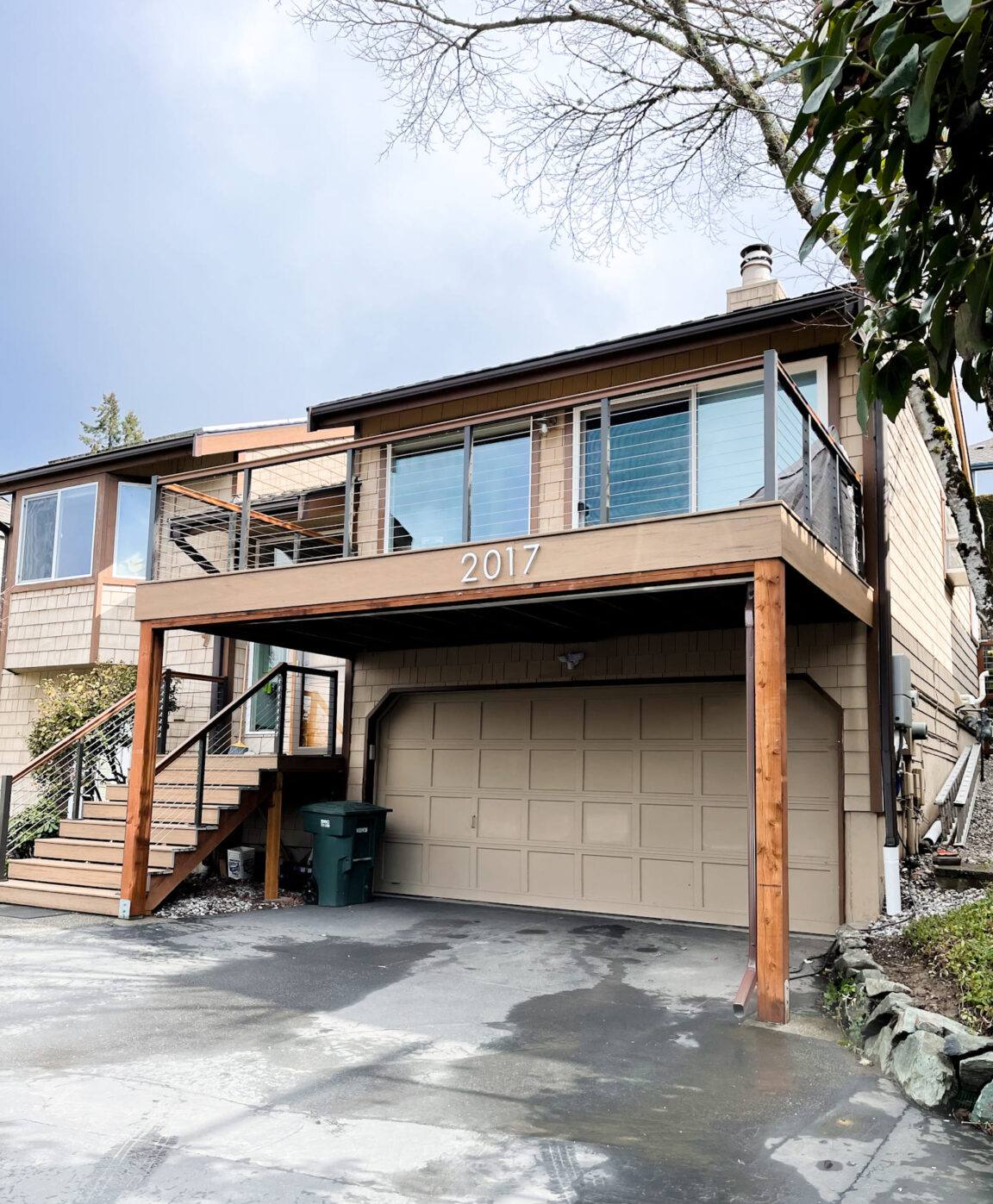
Homeowners often call us about one visible problem — a soft board, a wobbly rail — without realizing it's connected to something underneath. Here's how to read the early warning signs before they become bigger jobs.
- Soft or spongy decking boards — usually localized rot from standing water or debris trapped between boards; can be isolated or a sign of wider moisture intrusion.
- Rail posts that move or flex — often a loose or corroded connection at the base, not necessarily a problem with the rail itself.
- Green or black staining along the deck's edges — moss and algae growth that holds moisture against the wood far longer than open sun and air would allow.
- Gaps or separation where the deck meets the house — a signal to check the ledger board connection and flashing, one of the most common failure points on older decks.
- Stairs that feel uneven or bounce underfoot — often loose stringer connections or a settling footing.
- Fasteners that have rusted, popped up, or streaked the wood — a sign the original hardware wasn't rated for long-term outdoor exposure in a wet climate.
None of these on their own necessarily mean a full rebuild. But left alone through another Whatcom County winter, most of them get worse, and a few — especially ledger and footing issues — move from cosmetic to structural.
What a Correct Deck Repair Actually Involves
It starts underneath, not on the surface
A repair that only replaces what's visible from the top is a temporary fix. Before we touch a single board, we check the structure the decking sits on: joists, beams, footings, and — critically — the ledger board connection to the house, since that's the single most common source of moisture damage and structural failure in this climate. Water that gets behind a poorly flashed ledger board can rot framing for years before it ever shows on the surface.
Fasteners matter more than people think
A huge share of "mystery" deck problems trace back to hardware that was never rated for the moisture load this area sees. Galvanized fasteners that looked fine when installed can corrode within a handful of wet seasons. Part of a correct repair is upgrading connectors, screws, and joist hangers to stainless or heavy-duty coated hardware rated for ongoing wet exposure — not just replacing like-for-like with whatever was there originally.
Matching materials without creating new problems
When we replace individual boards on an otherwise sound deck, matching species, thickness, and finish matters — mismatched boards expand, contract, and weather differently, which creates new gaps and new places for water to collect. If a deck has aged past the point where new boards will blend in reasonably, we'll tell you honestly rather than patch something that will look and perform inconsistently.
Deck Materials We Commonly Repair in Lynden Homes
Different decking materials fail differently, and the right repair approach depends on what's already on your deck.
| Material | Common Failure Pattern Here | Repair Approach |
|---|---|---|
| Pressure-treated wood | Surface checking, rot at fastener points, moss buildup in shaded areas | Board-by-board replacement where rot is isolated; full resurfacing if damage is widespread |
| Cedar | Graying, softening at end grain, splitting near butt joints | Selective replacement, re-sealing, attention to end-grain sealing during repair |
| Composite decking | Fastener pull-through, edge swelling if the capstock is breached, staining from trapped moisture | Section replacement is possible with matching material; damaged boards generally can't be patched, only swapped |
| Older or mixed materials | Inconsistent wear from prior DIY repairs or partial replacements | Structural inspection first, then a decision on targeted repair vs. resurfacing |
Composite decking has become common enough locally that we get regular questions about repairing it. The honest answer: composite boards resist rot better than wood, but once the outer capstock is compromised — from an impact, a poor cut edge, or trapped moisture — that section needs to be replaced, not sealed or patched. It's a different repair mindset than wood, and it's worth knowing going in.
How We Approach a Deck Repair
- On-site inspection. We look above and below the deck — decking, rails, stairs, and the structural framing, footings, and ledger connection that most homeowners never see.
- Honest scope discussion. We tell you what's cosmetic, what's structural, and what's a judgment call — and we explain why, not just what.
- Targeted repair plan. Wherever the structure is sound, we repair rather than replace. Where it isn't, we say so before starting work, not after opening things up.
- Hardware and flashing upgrades. Any repair we do includes updating fasteners and flashing to materials rated for continuous wet-climate exposure, not a like-for-like swap of what failed.
- Finish work. Matching stain, sealant, or capstock color as closely as the existing deck allows, and cleaning up moss and debris that contributed to the original problem.
What Affects the Cost of a Deck Repair
| Factor | Why It Matters |
|---|---|
| Extent of hidden rot | Structural damage found under the decking during inspection often changes scope |
| Ledger board condition | Repairing a compromised ledger-to-house connection is more involved than surface board swaps |
| Material type | Composite section replacement and specialty wood species cost differently than standard pressure-treated repairs |
| Deck height and access | Second-story or hard-to-access decks take longer to inspect and repair safely |
| Railing and stair condition | Code-related rail and stair issues sometimes need to be addressed alongside cosmetic repairs |
Most repairs to an otherwise sound deck fall into a modest range compared to full replacement — but the only way to know where a specific deck lands is a hands-on inspection, since hidden rot is common enough here that estimates from photos alone aren't reliable.
What to Ask Before Hiring Anyone for Deck Repair
- Will they inspect the structure underneath, or only the visible decking?
- Do they explain what's driving the cost — labor, material, hidden damage — or just give a flat number?
- Are they upgrading fasteners and flashing, or reusing what's already there?
- Do they carry insurance and, where required, work under permit for structural repairs?
- Will they tell you honestly if repair isn't the right call and replacement makes more sense?
- Do they have experience with your specific decking material, especially composite or specialty wood?
A contractor who's reluctant to answer any of these, or who quotes a full repair without ever getting under the deck, is a red flag worth taking seriously.
Why Hiring a Crew That Already Works Lynden Matters
Deck repair isn't one-size-fits-all across regions. A crew used to drier climates tends to under-build for moisture exposure — lighter flashing details, standard hardware instead of wet-rated fasteners, sealing schedules that don't account for how long wood actually stays damp here. We work decks across Whatcom County regularly, including the Lynden area, and we build every repair around what actually happens to wood, hardware, and finishes through a full Pacific Northwest wet season, not a generic national spec sheet. That includes knowing which failure points show up first locally — ledger connections, shaded moss-prone areas, and fastener corrosion — and inspecting for them by default rather than only when something's already visibly wrong.
Maintaining Your Deck After the Repair Is Done
A good repair buys you years, but only if basic upkeep continues afterward. This isn't extra work — it's the difference between a repair that lasts and one you'll be calling about again in three years.
- Sweep debris and standing leaves off the deck regularly through fall, when buildup is heaviest.
- Address moss as soon as it appears rather than letting it establish through a full wet season.
- Check that gaps between boards stay clear so water can drain instead of pooling.
- Re-seal or re-stain wood decking on the schedule appropriate to the product used — don't wait for visible graying.
- Do a quick rail and stair check each spring, since freeze-thaw cycles can loosen connections even when nothing looks obviously wrong.
If your deck in the Lynden area is showing soft spots, moss buildup, a loose rail, or you're just not sure whether it needs repair or replacement, we're happy to take a look. The estimate is free, there's no pressure, and you'll get a straight answer about what's actually going on underneath — not just a quote for what's visible on top.