 Bellingham Exterior
 Board & Batten Siding in Puget: What This Style Needs to Survive Here
Board and batten is one of the most requested looks we install in Bellingham right now — the vertical lines read as clean and modern on newer builds, and they also suit the farmhouse and craftsman homes scattered through the Puget area. But the look is only half the job. Vertical siding has more seams, more fasteners, and more places for water to find a way in than a standard lap profile. In a neighborhood that sits close enough to the water to catch salt-laden air, and wet enough to grow moss on a north-facing wall by December, that detail work is what separates a board and batten job that lasts thirty years from one that's showing rot at year eight.
We treat board and batten as a system, not a pattern. Every batten placement, fastener choice, and flashing detail has to account for the way water actually moves across a Puget home through a Whatcom County winter.
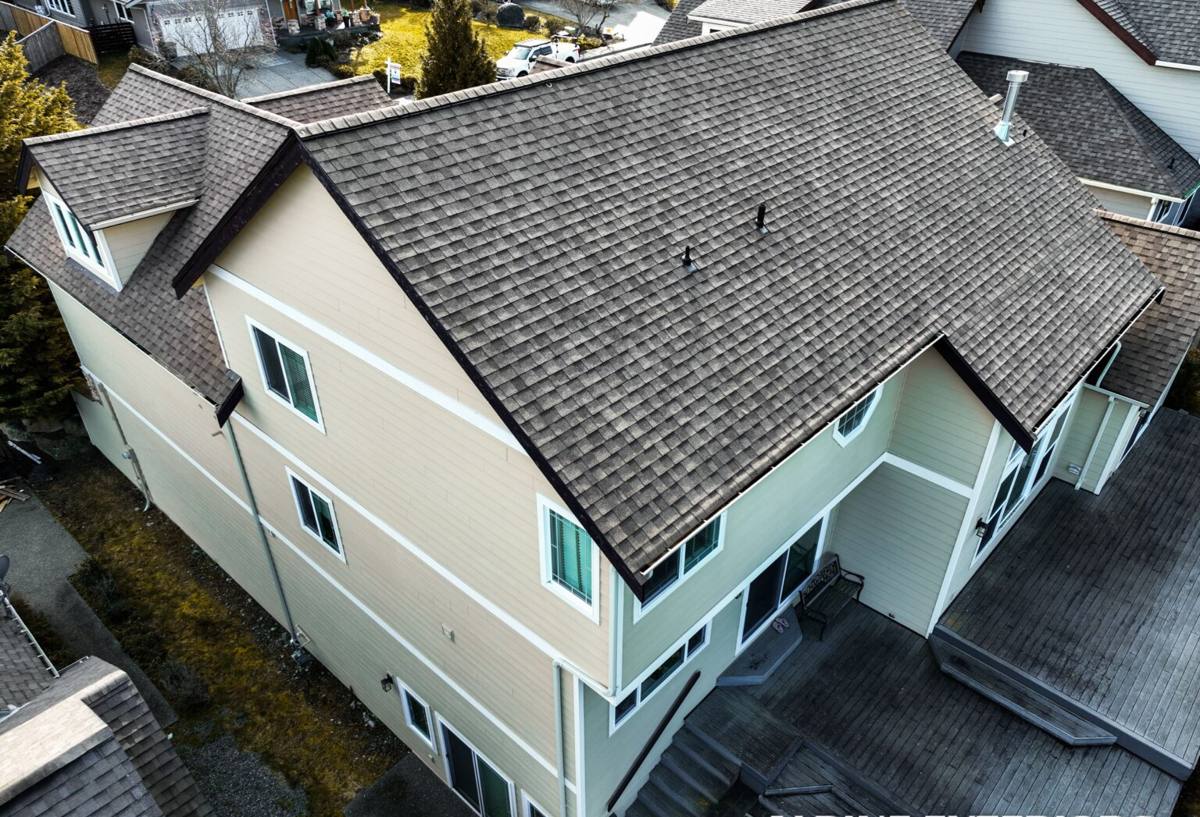
Why Puget's Climate Is Tougher on Vertical Siding
Three things stack up against exterior siding in this part of Bellingham, and board and batten is more exposed to all three than horizontal lap siding is.
Salt Air
Proximity to Bellingham Bay means airborne salt settles on siding, trim, and fasteners over time. Salt accelerates corrosion in any fastener or flashing metal that isn't rated for it, and it can leave a dull film on lower-quality paint finishes. Board and batten uses more fasteners per square foot than lap siding — every batten strip is its own line of nails or screws — so fastener quality matters more here, not less.
Driving Rain
Wind off the water pushes rain sideways into walls instead of letting it run straight down, which is exactly the condition vertical siding needs to be detailed for. The vertical battens create channels that can direct water down toward the bottom of the wall if the underlying panel isn't lapped and flashed correctly at every horizontal break — window heads, belly bands, and the base of the wall.
Moss Season
Bellingham's long wet stretch from fall through spring means shaded, poorly ventilated wall sections stay damp for months. Moss and algae don't just look bad — sustained moisture against a wall surface is what eventually finds gaps in caulking or fastener seals and starts the rot cycle underneath. North- and west-facing walls in Puget's tree cover are the areas we watch closest.
Why We Use James Hardie for Board & Batten — and Nothing Else
This is the one siding product we install. We don't offer LP SmartSide, vinyl, Cemplank, Allura, primed spruce, or raw cedar as alternatives, and for board and batten specifically the reasoning is straightforward:
- Fiber cement doesn't rot. Wood-based battens and panels (cedar, primed spruce, engineered wood) can hold moisture in the wet months typical of this area and eventually soften or delaminate at cut edges and fastener points — exactly the spots board and batten has the most of.
- Non-combustible. James Hardie panels are fiber cement, not wood or wood composite, which matters for insurance and for peace of mind regardless of fire season conditions.
- ColorPlus factory finish. A baked-on finish resists the fading and chalking that field-applied paint on wood siding is prone to after a few Bellingham winters, and it holds up better against salt film than standard paint.
- Engineered for this climate. Hardie's HZ10 product line is formulated for the Pacific Northwest's wet-cold cycle specifically, not a generic national spec.
- Real warranty backing. A manufacturer warranty on the product plus our labor warranty on the install gives you two points of accountability instead of one.
We're not against wood siding on principle — cedar has a real appeal, and we understand the draw. But we've made a professional call that on Puget's exposure profile, we'd rather stand behind one product we trust completely than offer options we'd have reservations recommending.
What a Correct Board & Batten Install Actually Involves
The finished wall looks simple — flat panels with vertical strips over the seams — but the sequence underneath determines whether it holds up.
Water-Resistive Barrier and Flashing First
Before any panel goes up, the wall gets a continuous water-resistive barrier with properly lapped seams — upper layers over lower, so gravity does what it's supposed to. Window and door openings get flashed so any water that gets behind the cladding is directed back out, not into the wall cavity.
Panel Layout
Hardie panels go up first as the base layer, with vertical and horizontal joints sealed and backed correctly — this isn't just caulk over a gap, it's a specific lapped or flashed detail depending on the joint.
Batten Placement and Fastening
Battens are set over the panel seams and into framing wherever possible, using fasteners rated to resist the corrosion that salt air accelerates. Batten spacing follows Hardie's engineering specs, not just what looks even — spacing affects both appearance and how the assembly sheds water.
Clearances
Bottom clearance from grade, deck surfaces, and roof lines is held to Hardie's minimums. This is one of the most common shortcuts we see in installs that fail early — siding set too close to grade or a deck wicks moisture up from below regardless of how good the product is.
Board & Batten vs. Other Siding Profiles for Puget Homes
| Profile | Look | Seams / Water Exposure | Best Fit |
|---|---|---|---|
| Board & Batten | Vertical lines, modern or farmhouse | More seams and fasteners; needs precise flashing | Homes wanting a distinct architectural statement |
| Standard Lap | Traditional horizontal | Fewer vertical seams; water sheds naturally with the lap | Most exposed, rain-heavy wall sections |
| Shingle/Shake Panel | Textured, traditional PNW | Many small overlaps; moderate exposure | Accent walls, gables |
| Mixed (Board & Batten + Lap) | Combines both | Varies by section, transitions need extra flashing detail | Homes wanting texture contrast without full vertical exposure |
A lot of Puget homeowners land on a mixed approach — board and batten on gables or an entry feature, lap siding on the more rain-exposed lower walls. It's a reasonable way to get the look without concentrating the extra seam work across the whole exterior.
Our Process for a Puget Board & Batten Project
- Walk the site. We look at sun exposure, tree cover, grade slope, and which walls take the worst of the wind-driven rain off the bay before we talk product.
- Check the substrate. If there's existing rot, inadequate flashing, or moisture damage under the current siding, we deal with it before anything new goes up — covering a problem never fixes it.
- Confirm layout and batten spacing. We plan panel and batten layout around your home's actual dimensions and openings, not a generic grid.
- Install to Hardie spec. Fasteners, flashing, and clearances follow manufacturer requirements — this is also what keeps the warranty valid.
- Final walk-through. We go over the finished work with you and flag anything worth watching, like a shaded section that may need periodic cleaning.
Why Hire a Crew That Already Works Puget
Installation quality depends on local judgment as much as technique. A crew that already works this part of Bellingham knows which wall orientations take the worst of the driving rain, where moss builds up fastest, and how much clearance actually holds up against a wet Whatcom County winter versus what a spec sheet says on paper. That's not something you get from a crew rotating through unfamiliar territory — it comes from having done this work on homes with the same exposure, season after season.
Signs Your Current Siding Needs a Closer Look
- Soft spots or visible swelling, especially near the base of walls or under windows
- Persistent moss or algae growth that returns quickly after cleaning
- Paint that's peeling, bubbling, or chalking heavily rather than just fading
- Visible gaps or cracking at batten or panel seams
- Staining or discoloration streaking down from fastener heads
- Any give when you press firmly on the siding surface
None of these mean you necessarily need a full replacement — but they're worth a professional look before the next wet season, especially on walls that face the prevailing weather.
Get a Straight Answer for Your Puget Home
If you're considering board and batten siding for a home in the Puget area, we're happy to take a look, walk you through what your specific walls need given their exposure, and give you an honest, no-pressure estimate. There's a form right below this section — reach out and we'll go from there.