 Bellingham Exterior
 Metal Roofing Built for South Hill's Weather
South Hill sits up on the bluff overlooking Bellingham Bay, which is exactly why the roofs up here take a different kind of beating than roofs a few miles inland. The elevation and exposure mean more wind-driven rain hitting the roof plane at an angle instead of straight down, more salt-laden air drifting up off the bay, and long stretches of shade and moisture in the fall and winter that keep moss and algae established year-round. A roof up here has to shed water fast, resist corrosion, and stay clean-able without a fight. Metal roofing, installed correctly, does all three better than most alternatives — but "installed correctly" is doing a lot of work in that sentence, and it's where most of the problems we get called out to fix actually started.
We work on South Hill regularly, alongside the rest of Bellingham and Whatcom County, so this page is about what a metal roof actually needs to perform well on this specific hill, not a generic rundown of metal roofing in general.
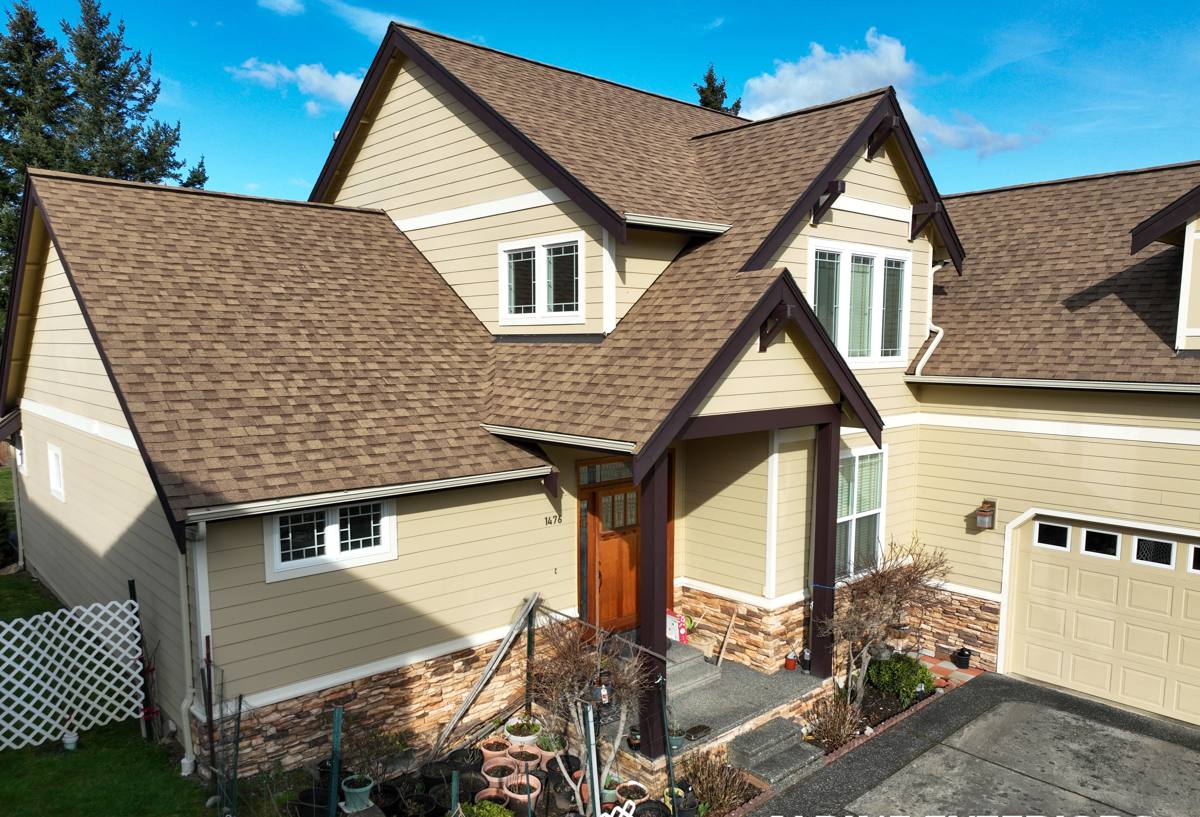
Why the Bluff Location Changes the Job
Salt Air and Metal Fastener Corrosion
Proximity to the bay means airborne salt is a real factor on South Hill in a way it isn't for homes further inland. Salt accelerates corrosion on any exposed metal fasteners, flashing seams, and cut edges that aren't properly sealed or coated. This doesn't mean metal roofing is a bad fit here — it means fastener selection, edge treatment, and flashing material all need to be chosen with that exposure in mind, not just picked from a standard spec sheet.
Driving Rain and Wind Uplift
Because South Hill catches wind off the bay with less tree buffer than some of the lower neighborhoods, rain doesn't just fall on these roofs, it gets pushed sideways into laps, seams, and penetrations. Panel overlap, sealant placement at ridges and valleys, and fastening patterns that meet real wind uplift requirements matter more here than on a sheltered lot. A roof that would hold up fine in a calm inland yard can leak on South Hill if those details are cut short.
Moss Season
Bellingham's wet season runs long, and shaded or north-facing roof sections on South Hill can stay damp for weeks at a stretch. That's a moss and algae breeding ground on organic roofing materials. Metal doesn't feed moss the way shingles or wood do, but debris and needle litter can still collect in valleys and against upslope obstructions, holding moisture against the panel and inviting growth at the edges if the roof isn't detailed and maintained properly.
What a Correct Metal Roofing Job Involves
A metal roof is only as good as the assembly underneath it. We treat the following as non-negotiable on every metal roofing job in this area, not upsells:
- Full tear-off and deck inspection — metal goes over a sound, dry deck, never over rot or existing damage
- Synthetic underlayment rated for the exposure, with ice-and-water shield at eaves, valleys, and penetrations
- Corrosion-resistant fasteners and flashing matched to the panel metal so dissimilar metals don't create galvanic corrosion
- Proper panel overlap and fastening pattern for the wind exposure on this specific roof plane, not a one-size spec
- Sealed, closed valleys and properly formed ridge caps — this is where the majority of leaks originate on poorly installed metal roofs
- Ventilation checked and corrected as part of the job, not treated as a separate line item
Skip any one of these and the roof may look fine for a year or two before the shortcuts show up as a leak, a rust streak, or premature panel failure.
Panel Types We Discuss With South Hill Homeowners
| Panel Type | Typical Fit | Trade-offs to Know |
|---|---|---|
| Standing seam steel | Most homes wanting a clean, low-maintenance long-term roof | Higher upfront cost, but concealed fasteners hold up best against wind-driven rain and salt exposure |
| Exposed-fastener steel panels | Budget-conscious projects, outbuildings, some primary homes | Lower cost, but exposed fasteners need periodic inspection and eventual re-tightening or replacement, especially in salt air |
| Aluminum standing seam | Homes very close to the bay or with heavy salt exposure | Naturally corrosion-resistant, costs more than steel, slightly softer material |
| Stone-coated steel | Homeowners wanting a shake or tile look with metal durability | More installation detail work at laps and fasteners, higher labor cost |
For most South Hill homes, we lean toward standing seam in steel or aluminum because the concealed fastener system removes the biggest long-term liability — exposed screws working loose or corroding under repeated wind-driven rain. That said, the right choice depends on your roof's exposure, your budget, and how long you plan to own the home, and we'll walk through that honestly rather than push the most expensive option by default.
Our Process on a South Hill Metal Roofing Project
1. On-Site Assessment
We walk the roof, check the deck condition where accessible, note valleys, penetrations, and any shaded sections likely to hold moisture, and look at how the roof is actually exposed to wind off the bay versus sheltered by trees or neighboring structures.
2. Written Scope and Straight Pricing
You get a clear scope of what's being torn off, what underlayment and flashing package is being used, and why — not just a total number. If there are options (steel vs. aluminum, standing seam vs. exposed fastener), we lay out the real trade-offs so you're deciding with full information.
3. Tear-Off and Deck Repair
Old roofing comes off, the deck gets inspected, and any soft or damaged sheathing is replaced before anything new goes down. This step gets skipped by corner-cutting crews more than any other, and it's the one that determines whether the new roof lasts.
4. Underlayment, Flashing, and Panel Installation
Underlayment and flashing go in first, matched to the exposure level of that specific roof. Panels are installed with fastening and overlap patterns sized to the wind and rain exposure, not a generic install pattern.
5. Final Walkthrough
We walk the finished roof with you, cover basic maintenance expectations for this climate — mainly debris clearing and periodic inspection — and make sure you know what a well-installed metal roof should and shouldn't do over time.
Maintenance That Actually Matters Up Here
Metal roofing is low-maintenance compared to shingles, but "low" isn't "zero," especially with South Hill's moss season and salt exposure. A short, practical checklist:
- Clear needle litter and debris from valleys and behind chimneys or dormers once or twice a year, especially before the wet season sets in
- Check exposed-fastener panels every couple of years for loosening or early corrosion at the screw heads
- Rinse off accumulated salt film and grime periodically if the home is on a more exposed part of the hill
- Watch for any staining at seams or penetrations after a hard wind-driven rain, and have it checked before it becomes a deck issue
- Keep gutters clear so water isn't backing up under the eave edge
Repairs vs. Replacement
Not every issue on a metal roof means starting over. A failed sealant joint, a loose panel, or a corroded fastener on an otherwise sound roof is usually a targeted repair. Widespread rust-through, a roof installed without proper underlayment or flashing detail, or repeated leaks at multiple points usually point to a systemic install problem that repair alone won't fix long-term. We'll tell you honestly which situation you're in rather than defaulting to the bigger job.
Why Hire a Crew That Already Works South Hill
Roofing crews that mostly work flatter, more sheltered parts of Bellingham or Whatcom County can install a technically fine metal roof that still underperforms on South Hill, because the wind-driven rain and salt exposure here call for different fastener, flashing, and sealant decisions than a sheltered lot needs. Working this neighborhood regularly means we're not guessing at how exposed a given roof plane is or what the moss pattern on a shaded north slope is going to do over a wet winter — we've seen it on the roof down the block. That local pattern recognition is what keeps a metal roof performing at year ten instead of just year one.
If you're considering a metal roof for a South Hill home — new install, replacement, or you're not sure whether what you have needs repair or replacement — we're glad to come take a look. The estimate is free, there's no pressure, and you'll get a straight answer about what your roof actually needs.