 Bellingham Exterior
 Roof Repair Built for Happy Valley's Conditions
Happy Valley sits close enough to the water and tucked into enough tree cover that its roofs age differently than roofs on the flatter, more open parts of Bellingham. Homes here deal with a mix of salt-tinged air moving in off the bay, driving rain that comes in sideways during winter storms, and a shade canopy from mature trees that keeps roof surfaces damp longer than they'd like to be. That combination is exactly what drives moss growth, granule loss, and slow leaks that don't show up until they've already done some damage. We repair roofs in this neighborhood regularly, and the patterns of wear we see here are consistent enough that we've built our repair process around them.
This page is specifically about roof repair — patching, fixing, and restoring an existing roof — not full replacement. If your roof is sound overall but has a problem area, this is the service that addresses it without the cost or disruption of tearing the whole thing off.
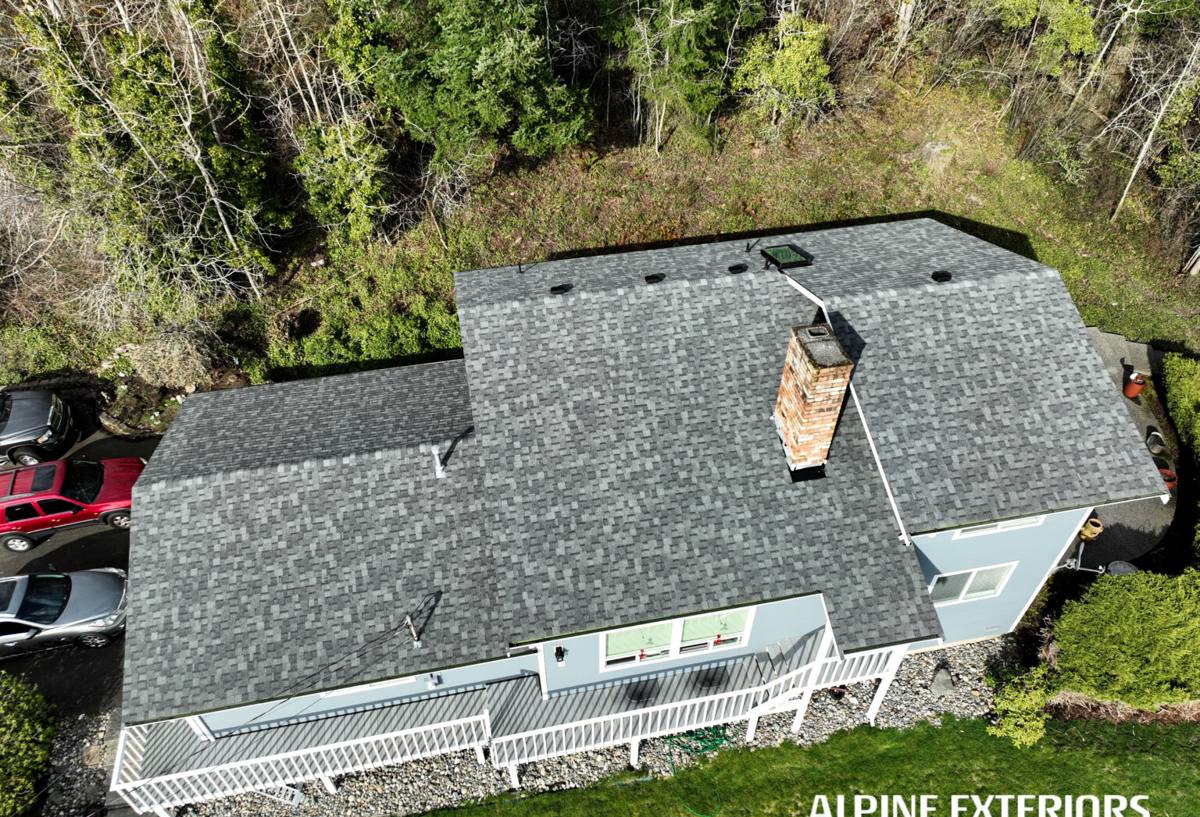
Why Happy Valley Roofs Wear the Way They Do
Salt Air and Metal Fatigue
Proximity to the water means airborne salt settles on roofing materials over time. It's not dramatic — you won't see rust overnight — but it accelerates corrosion on exposed metal flashing, fasteners, and gutter hardware. Once a fastener starts to corrode, it loses its grip, and that's often the first domino in a roof leak: a nail backs out slightly, a shingle lifts, water finds the gap.
Driving Rain and Wind-Driven Moisture
Whatcom County storms don't always come straight down. When rain comes in at an angle, it tests every lap, seam, and flashing detail on a roof — spots that would stay dry in a vertical rain event. Roofs that look fine from the ground can have wind-driven water working its way under shingles at ridges, valleys, and wall intersections. This is one of the most common causes of the "mystery leak" calls we get from this area.
Shade, Moisture, and a Long Moss Season
Tree cover is one of Happy Valley's nicer features, but it also means many roofs here get less direct sun than roofs in more open parts of Bellingham. Less sun means slower drying after rain, which means moss and algae have a longer window to establish themselves. Once moss takes hold, it holds moisture directly against the roofing material, lifts shingle edges as it grows, and can hold enough water to freeze and expand in colder snaps — which is exactly the kind of stress that turns a small crack into an active leak.
What a Correct Roof Repair Actually Involves
A repair that just covers the visible damage often isn't a repair at all — it's a delay. A correct roof repair starts with figuring out why the damage happened, not just what it looks like.
- Find the actual entry point. Water often travels along the roof deck or underlayment before it shows up as a stain inside, so the visible drip point and the actual leak source can be several feet apart.
- Check the surrounding material, not just the damaged spot. If shingles are brittle, granules are washing off, or the underlayment is degraded nearby, patching one spot without addressing the surrounding condition just moves the next leak a few feet over.
- Inspect flashing at every transition. Chimneys, skylights, vent pipes, and valleys are where most leaks start — not the open field of the roof. Flashing that's lifted, corroded, or improperly lapped needs to be corrected, not just caulked.
- Match materials appropriately. A patch using mismatched shingle profiles, incompatible metal, or the wrong fastener type can create a new weak point even if it stops the immediate leak.
- Clear moss and organic buildup before repairing, not after. Sealing a moss-covered area traps moisture underneath rather than solving the problem.
Common Roof Repair Issues We See in This Area
| Issue | Typical Cause Locally | What's Involved in the Fix |
|---|---|---|
| Moss ridges along shingle edges | Shade, slow-drying roof sections | Careful removal, treatment, inspection for lifted or cracked shingles underneath |
| Flashing leaks at chimneys or skylights | Wind-driven rain, thermal movement, corrosion | Re-flash the transition, replace corroded metal, re-seal properly |
| Granule loss / bald patches | Age combined with moisture cycling | Assess remaining shingle life; patch or replace the affected section |
| Gutter and edge rot | Trapped moisture from moss and debris | Clear debris, repair or replace affected fascia/edge material |
| Nail pops and lifted shingles | Fastener corrosion, wind uplift | Re-secure or replace affected shingles with corrosion-resistant fasteners |
| Interior water stains with no obvious roof damage | Wind-driven rain finding a seam | Diagnostic inspection tracing the leak path from deck to entry point |
How Our Repair Process Works
1. On-Site Inspection
We walk the roof and the attic or interior space below the affected area when accessible. Ground-level guessing misses too much — moss under an eave, a cracked pipe boot, a flashing lap that's opened up a quarter inch. We want eyes on it directly.
2. A Straightforward Explanation
Before any work starts, we tell you what we found, why it's happening, and what the repair involves. If the roof is old enough that repair is a short-term fix rather than a real solution, we'll say so plainly instead of selling a patch we know won't hold.
3. The Repair Itself
Depending on the issue, this might mean removing and replacing a section of shingles, correcting flashing, treating and clearing moss, or addressing damaged decking underneath. We match materials to what's already on the roof where possible, and use fasteners and flashing suited to this climate's moisture and salt exposure.
4. Cleanup and Follow-Through
We clear debris — old shingles, moss, nails — from the roof and the ground around the house. If we noticed something else during the repair that's worth keeping an eye on but doesn't need immediate work, we'll mention it rather than either ignoring it or pushing an unnecessary sale.
Signs a Happy Valley Homeowner Shouldn't Ignore
- Dark streaking or thick moss growth concentrated on shaded sections of the roof
- Granules collecting in gutters or at downspout outlets
- Shingle edges that look curled, lifted, or cracked
- Any water stain on a ceiling or wall, even a small one — these rarely stay small
- Visible daylight or gaps around chimney, skylight, or vent flashing
- Sagging or soft spots when walking the attic (a sign of deck moisture, not just a surface issue)
Repair vs. Replacement: Making the Right Call
Not every roof problem needs a full replacement, and not every problem should be treated with a repair. The honest answer usually comes down to the age and overall condition of the roof, not just the size of the current issue.
A roof that's structurally sound with an isolated flashing failure or a patch of storm damage is a good repair candidate — the fix addresses the actual problem and the rest of the roof has useful life left. A roof with widespread granule loss, brittle shingles across multiple sections, or repeated leaks in different spots is often past the point where repair makes financial sense; you'd be paying to patch a roof that's going to need replacement within a few years anyway. We'll tell you honestly which category your roof falls into rather than defaulting to whichever service is more profitable for us.
Why Local Experience with Happy Valley Roofs Matters
A contractor who mostly works drier, more open parts of Whatcom County can still do competent roof repair — but they're guessing at conditions we deal with every week. Knowing which roof orientations in this neighborhood hold moss longest, which flashing details tend to fail first under wind-driven rain, and how salt exposure affects fastener life over time isn't something you learn from a manual. It's something you learn from repairing roofs in this specific area, season after season. That local pattern recognition is often the difference between a repair that solves the problem and one that just delays it.
What a Repair Estimate Should Include
A clear estimate should spell out what was found during inspection, what specifically will be repaired, what materials will be used, and roughly how long the work will take. It should also be honest about uncertainty — sometimes a full assessment of the damage isn't possible until we start removing shingles, and a straightforward contractor will tell you that upfront rather than surprising you with it later. Cost for roof repair varies widely depending on the scope: a single flashing repair is a modest job, while damaged decking or a larger section of failed shingles is a bigger undertaking. We won't quote a number without seeing the roof first, but we'll give you a realistic range once we have.
If you're dealing with a leak, visible moss buildup, or storm damage on a Happy Valley roof, we're glad to take a look and give you a straight assessment. Fill out the form below for a free, no-pressure estimate — we'll tell you exactly what we see and what we'd recommend.