 Bellingham Exterior
 Building in Ferndale Means Building for Water, Not Just Weather
Ferndale sits close enough to Bellingham Bay and the open water of Whatcom County that salt-laden air, wind-driven rain, and long stretches of damp, low-sun weather are just part of owning a home here. New-construction window installation is where you either get ahead of that reality or set yourself up for problems that don't show up until year three, four, or five — after the framing is closed in and the finish work is done. Unlike a replacement window going into an existing opening, a new-construction window is installed before the siding, house wrap details, and interior finishes are locked in place. That's an advantage if the install is done right, because every layer of the water-management system can be built in from the start rather than patched in around an existing wall.
New Construction vs. Replacement — Why the Distinction Matters
New-construction windows have a nailing fin (or flange) that gets integrated directly into the wall's weather-resistive barrier during framing. Replacement windows are typically inserted into an existing frame with no fin, relying on the old opening's condition. On a new build or addition, you get one real shot to get the flashing sequence, sill pan, and fin integration correct — there's no siding to remove later if it's wrong. That's exactly why we treat new-construction installs as a distinct discipline, not a smaller version of a replacement job.
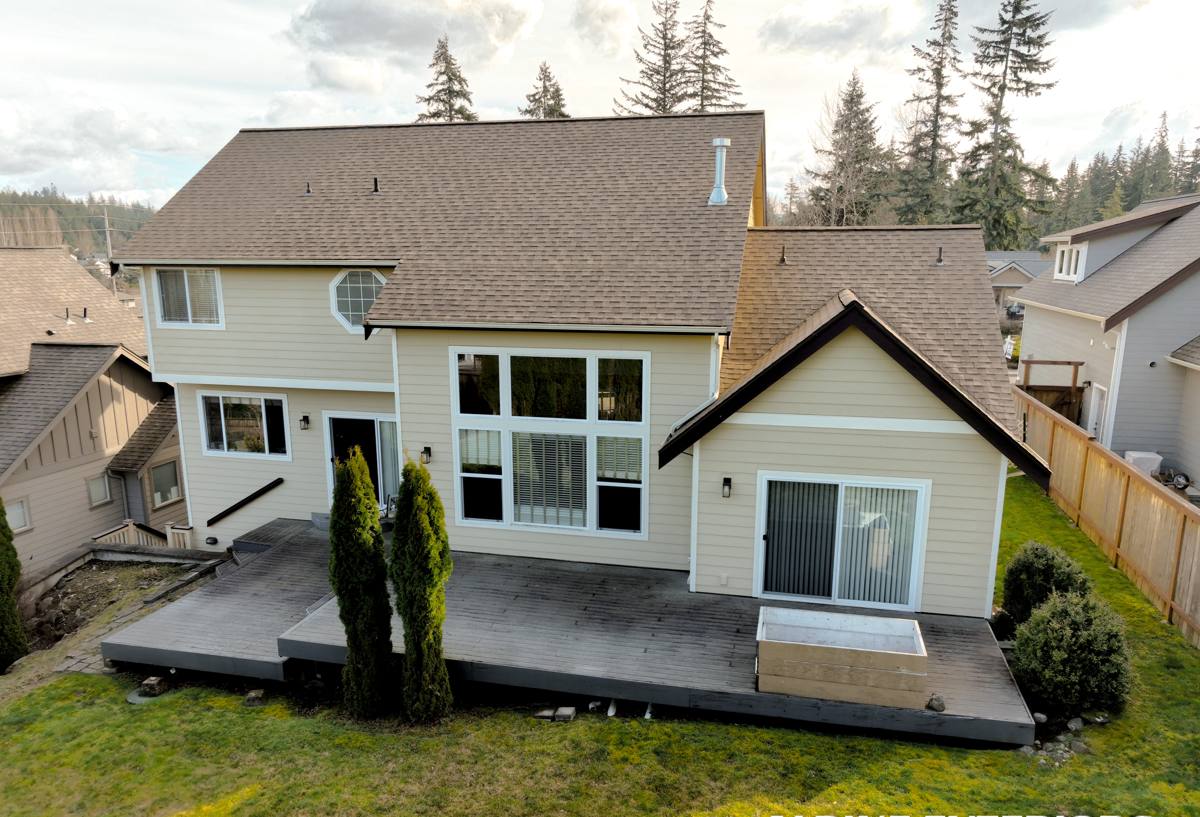
What Ferndale's Climate Actually Does to a Window Opening
Three conditions drive almost everything we plan for on a Ferndale new-construction job:
- Salt air: proximity to the bay accelerates corrosion on unprotected fasteners, cheap hardware, and certain metal flashing types over the life of the window.
- Driving rain: wind off the water pushes rain sideways into wall assemblies, meaning gravity alone can't be trusted to shed water — the flashing has to actively direct it back out.
- Moss and prolonged damp: shaded north- and west-facing walls in this part of Whatcom County stay wet longer into the season, which means any gap in the water barrier has more time to do damage before things dry out.
None of this means Ferndale needs exotic materials. It means the ordinary steps of a window install — sill pan, flashing tape, backer rod, sealant — have to be done in the correct order and with the correct materials every single time, because the margin for a shortcut is smaller here than it is in a drier inland climate.
What a Correct New-Construction Install Actually Involves
The Water-Management Sequence
Before a window ever goes into the rough opening, the sill needs a sloped, sealed pan so any water that gets past the window has somewhere to go besides the framing below it. Self-adhering flashing tape gets applied in a specific shingle-lapped order — sill first, then jambs, then head — so every layer sheds water onto the layer below it, never up into a seam. The window's nailing fin ties into that sequence, and the house wrap gets lapped over the head flashing last. Skip a step or do it out of order and you've built a pocket that traps water instead of shedding it — and on a home exposed to driving rain off the bay, that pocket will eventually get tested.
Frame Selection and Fastening
The window needs to be square, plumb, and properly shimmed before it's fastened — an out-of-square frame stresses the sash and seals over time, which shows up later as air and water infiltration even if the flashing was perfect. Fasteners and hardware exposed to salt air benefit from corrosion-resistant specs rather than the cheapest option that happens to fit. And the interior side needs a proper air seal (backer rod and low-expansion sealant, not just spray foam alone) so conditioned air isn't leaking out around a frame that looks finished from the outside.
Choosing a Window Type and Frame Material for This Climate
There's no single "best" window for every new build — it depends on budget, the home's design, and how exposed the elevation is to weather. Here's how the common frame materials generally perform in a coastal Whatcom County setting:
| Frame Material | Moisture / Salt Air Performance | Maintenance | Typical Fit |
|---|---|---|---|
| Vinyl | Good — won't corrode or rot; seams are the main watch point | Low | Most budget-conscious new builds |
| Fiberglass | Very good — stable in temperature and moisture swings, resists warping | Low | Homeowners wanting longevity without wood upkeep |
| Wood-clad | Depends heavily on cladding and detailing at the sill; interior wood needs protection from any leaks | Moderate to higher | Traditional or higher-end aesthetic where interior wood trim is wanted |
| Aluminum | Fair — durable but a poor thermal break unless thermally broken frames are used, and can show corrosion near salt air over decades | Low to moderate | Larger openings, modern designs, commercial-style glazing |
We don't push one material as universally "correct." We'll walk through your elevations, budget, and design goals and tell you honestly which option makes sense for each wall of the house — a shaded, rain-exposed north wall and a sheltered south wall don't always call for the same answer.
Our Process on a New-Construction Job
- Review the plans and framing schedule with you or your builder before windows are ordered, so rough openings and flashing details are coordinated up front.
- Confirm window sizes, egress requirements, and energy code compliance for the specific openings before ordering.
- Install sill pans and flashing in the correct shingle-lap sequence, tied into the house wrap.
- Set, shim, square, and fasten each window per manufacturer instructions and our own field standards for this climate.
- Seal the interior air barrier and document the install before siding and interior finish work covers it up.
- Walk the job with you (or your builder) before we leave the site, while everything is still visible.
That last step matters more than it sounds. On a remodel or replacement, a homeowner can often see a problem later. On new construction, the flashing and sill pan get buried under siding and trim within days — so we don't consider the install finished until it's been checked while it's still open for inspection.
Mistakes We See on New Builds Around Whatcom County
Most window problems we get called to fix on newer homes trace back to a handful of shortcuts, not bad windows. We hold our own crews to a standard that avoids these:
- Flashing tape applied in the wrong order (head before jambs, or jambs before sill), which reverses the water-shedding path.
- Sill pans skipped or improvised with sealant alone instead of a sloped, dedicated pan.
- Spray foam used as the only air seal, without a proper backer rod and sealant joint behind interior trim.
- Fasteners or hardware that aren't rated for a marine-influenced, high-moisture environment.
- Windows fastened before they're checked for square, leaving long-term stress on the seals.
None of these show up on install day. They show up as a soft spot in drywall, a musty smell, or visible moss and staining below a window two or three winters later — which is exactly the kind of "driving rain plus moss season" failure Ferndale's climate is good at finding.
Cost Factors for New-Construction Window Packages
Every new build is different, but the line items that move the price are consistent. Broad, honest ranges depend heavily on window count, size, and finish level — we'll give you real numbers once we know your plans, but here's what drives the estimate:
| Factor | Why It Matters |
|---|---|
| Frame material (vinyl, fiberglass, wood-clad, aluminum) | Material cost, longevity, and maintenance differ significantly |
| Number and size of openings | More glass and larger units mean more material, labor, and structural support |
| Glazing package (double vs. triple pane, coatings) | Affects energy performance and comfort, especially on exposed elevations |
| Elevation exposure | Walls facing prevailing wind and rain may warrant upgraded flashing details or hardware |
| Coordination with framing schedule | Installing on schedule with the builder avoids delays and rework costs |
Why Hire a Crew That Already Works in Ferndale
A window flashing detail that works fine in a drier, inland climate can fall short here. Crews who work new-construction jobs across Whatcom County regularly — not occasionally — already know which elevations in this area take the worst of the driving rain, how long moss season really lasts on shaded walls, and why salt air changes what "good enough" hardware looks like. That's not something you can fully substitute with a manufacturer's install manual alone. It's also why we coordinate directly with builders and framers on timing, so windows go in at the right point in the schedule instead of being rushed or delayed.
If you're building new or adding onto a home in Ferndale, we're happy to walk the plans with you, look at your elevations, and put together a straightforward, no-pressure estimate for the window package — just fill out the form below and we'll get in touch.