 Bellingham Exterior
 Roof Repair Built for Columbia's Older Housing Stock and Wet Climate
Columbia is one of Bellingham's closer-in neighborhoods, with a mix of older homes and infill construction sitting just a short distance from Bellingham Bay. That location means two things for a roof: it takes salt-laden air off the water almost year-round, and it sits squarely in Whatcom County's wet weather pattern of long, driving rain events followed by extended damp, shaded stretches that never fully dry out. Add mature tree cover on many Columbia lots and you get a roof environment that ages differently than a roof out in a drier, more open part of the county. Repairing a roof here isn't just patching a leak — it's understanding why that leak started in the first place and making sure the fix holds up through the next several wet seasons, not just the next storm.
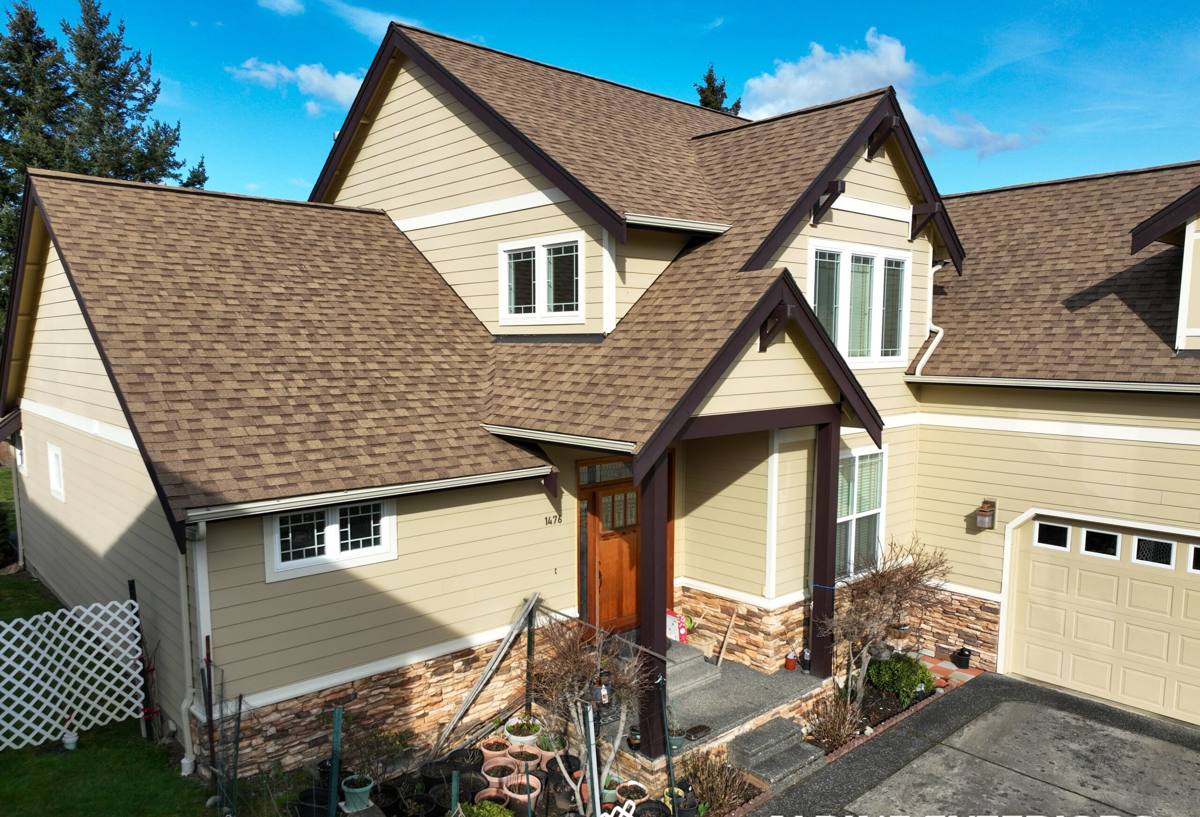
Why Columbia's Roofs Take Extra Punishment
Three climate factors combine on almost every Columbia roof we look at:
Salt Air and Metal Corrosion
Homes closer to Bellingham Bay see accelerated corrosion on exposed metal — flashing, fasteners, gutter hardware, and vent caps. Salt-laden moisture works into seams and fastener heads faster than it would inland, which is why we pay close attention to metal condition and fastener type on every repair, not just the shingles or membrane around them.
Driving Rain and Wind-Driven Water
Storms coming off the Sound don't always fall straight down. Wind-driven rain gets pushed sideways into laps, under shingle tabs, and around flashing edges that would stay dry in a calmer climate. A repair that only addresses the visible gap and ignores how water is actually traveling under wind pressure tends to fail again within a season or two.
Moss and Shade
Whatcom County's moss season runs long, and Columbia's tree cover means many roofs stay shaded and damp well after a storm passes elsewhere in town. Moss isn't just cosmetic — its root structure lifts shingle edges and holds moisture directly against roofing material, which speeds up granule loss and wood rot underneath.
Common Roof Problems We Find in Columbia Homes
Because of the age range of housing in this neighborhood, we see a wide mix of roofing systems and a fairly predictable set of failure points:
- Cracked or lifted shingles along moss-affected slopes, especially north-facing roof planes that stay shaded most of the day
- Corroded step flashing and counter-flashing where roof planes meet chimneys, dormers, or siding transitions
- Failed pipe boot seals — one of the most common leak sources on any home, and one of the fastest to fix correctly
- Clogged or sagging gutters contributing to water backing up under the first course of shingles
- Soft or discolored roof decking discovered once shingles are pulled back, usually from a slow leak that had been going unnoticed for a while
- Nail pops and fastener back-out from age and thermal cycling, common on original roofs from Columbia's older housing stock
What a Correct Roof Repair Actually Involves
A roof repair done right is not just swapping a shingle or squeezing a tube of sealant into a gap. Sealant is a short-term patch, not a repair — it breaks down in UV and temperature swings and rarely holds through a full Whatcom County wet season. A correct repair follows a sequence:
- Find the actual entry point. Water often travels along the underlayment or decking before showing up as a stain, so the visible damage inside isn't always directly below the leak.
- Inspect the decking. Any soft, delaminated, or discolored plywood or sheathing gets replaced — patching over compromised decking just relocates the problem.
- Replace flashing where needed, not just shingles. Most recurring leaks are a flashing problem wearing a shingle disguise. If step flashing, counter-flashing, or a pipe boot is corroded or improperly lapped, new shingles alone won't fix it.
- Rebuild the water path correctly. Underlayment, flashing, and shingle courses have to overlap in the right shingle-fashion order so water sheds downhill at every layer, including at valleys and penetrations.
- Match materials appropriately. New shingles, flashing metal, and fasteners should be compatible with what's already on the roof so the repair doesn't create a new weak point or an obvious mismatch.
Signs of Trouble by Roof Area
Different parts of a roof fail for different reasons. This is a quick reference for what we look at first on a Columbia service call:
| Roof Area | What to Watch For | Why It Matters Here |
|---|---|---|
| Valleys | Granule buildup, standing water, cracked metal | Concentrates the most water volume during driving rain |
| Chimney & wall flashing | Rust streaks, gapped caulk, lifted metal | Salt air accelerates flashing corrosion near the coast |
| North-facing slopes | Moss growth, dark streaking, spongy feel | Stays shaded and damp longest in tree-covered lots |
| Gutters & eaves | Sagging, overflow marks, granules in the trough | Backed-up water pushes under the first shingle course |
| Pipe boots & vents | Cracked rubber collars, gapped nails | Rubber degrades faster with repeated wet-dry cycling |
Repair or Replace? How We Help You Decide
Not every roof problem is a replacement, and not every leak is a quick fix. We look at the roof's age, how many prior repairs it's had, and how much of the decking is still sound before recommending either path.
| Factor | Repair Usually Makes Sense | Replacement Usually Makes Sense |
|---|---|---|
| Roof age | Well within expected lifespan for the material | At or past the end of its typical service life |
| Damage extent | Isolated to one area or a single system (flashing, boot, section of shingles) | Widespread granule loss, multiple leak points, or decking failure in several areas |
| Repair history | First or second repair on that roof | Recurring leaks in different spots each year |
| Decking condition | Sound plywood or sheathing under the damaged area | Soft, rotted, or delaminated decking found in multiple spots |
| Moss/algae condition | Surface growth without shingle lift | Heavy, established moss lifting shingle edges across large areas |
Honest advice matters here more than an upsell. If a repair will genuinely hold for years, that's what we recommend. If the roof is patch-worn to the point where another repair is just deferring the same cost, we'll say so plainly and explain why.
Materials We Use — and Why
We match repair materials to what's already on the roof whenever possible, since mismatched shingle profiles or incompatible metals create their own long-term problems. Where we're replacing flashing, we favor corrosion-resistant metal given how close Columbia sits to salt air off the bay — a standard we hold to on our own professional judgment, not because every alternative fails, but because it's the more forgiving choice for this specific coastal-influenced microclimate. Underlayment choices matter too: in a long moss season with extended damp periods, a synthetic underlayment with strong water resistance behind the shingle layer buys real margin if a shingle ever does fail again down the road.
We're upfront about trade-offs rather than steering every job toward one product. Some materials cost less upfront but demand more attention over time; others cost more but need less babysitting. What matters is that the choice fits the specific roof, the slope, the shade exposure, and your own tolerance for maintenance.
Our Process for a Columbia Roof Repair Call
We keep the process straightforward so you know what's happening at each stage:
- Inspection first. We get on or safely examine the roof, trace the suspected leak path, and check flashing, boots, valleys, and decking condition — not just the spot you noticed the stain.
- Plain-language explanation. We tell you what's actually wrong, what caused it, and what it will take to fix correctly — including if the honest answer is "this is a bigger job than a repair."
- A written scope and price range before work starts. No surprise add-ons once we're already on the roof.
- Repair work done to match existing materials so the fix blends in rather than standing out as an obvious patch.
- A final check of surrounding areas — gutters, adjacent flashing, nearby vents — so we're not leaving a second failure point for next season.
Between-Repair Maintenance: What Actually Helps
A few habits meaningfully extend the life of a repair in this climate:
- Keep gutters clear so water isn't backing up under the eave line during heavy rain
- Trim back tree limbs that keep a roof section shaded and slow to dry
- Have moss treated before it establishes root growth under shingle edges, not after it's already visibly thick
- Walk the attic (or have it checked) after major storms for early signs of moisture, before it shows up as a ceiling stain
- Get flashing and pipe boots checked every couple of years, since they wear out well before shingles typically do
Why a Crew That Already Works Columbia Makes a Difference
Roofing problems in this neighborhood tend to repeat in patterns — the same flashing details on similar-era homes, the same shaded slopes holding moss longer, the same salt-air wear on metal near the water. A crew that's already worked on roofs in this part of Bellingham recognizes those patterns quickly instead of treating every call as a blank slate. That local familiarity with Whatcom County's climate and Columbia's housing stock translates into faster, more accurate diagnosis and repairs that are built for the conditions this specific roof actually faces, not generic conditions from somewhere drier or more inland.
If you're dealing with a leak, missing shingles, moss buildup, or just want an honest read on your roof's condition, we're happy to take a look. Reach out for a free, no-pressure estimate using the form below.