 Bellingham Exterior
 Decks in York Take a Different Kind of Beating
York is one of Bellingham's older, established residential neighborhoods, and that comes with a mature tree canopy, homes with real character, and decks that have usually been through a few decades of Whatcom County weather by the time we get a call. That combination — shade, moisture, and age — is exactly what shortens a deck's life here. It's rarely one dramatic failure that brings a deck down. It's years of driving rain soaking into end grain, salt-laden air off the Bellingham Bay side of the county working into fasteners and flashing, and moss holding moisture against boards and framing long after a sunnier yard would have dried out.
A deck built or repaired without accounting for that reality tends to look fine for a few years and then fail all at once — soft decking, rusted hardware, or worse, framing you can't see going soft underneath a deck that still looks okay on top. Replacement done right in this climate is as much about what's underneath the decking as what's on top of it.
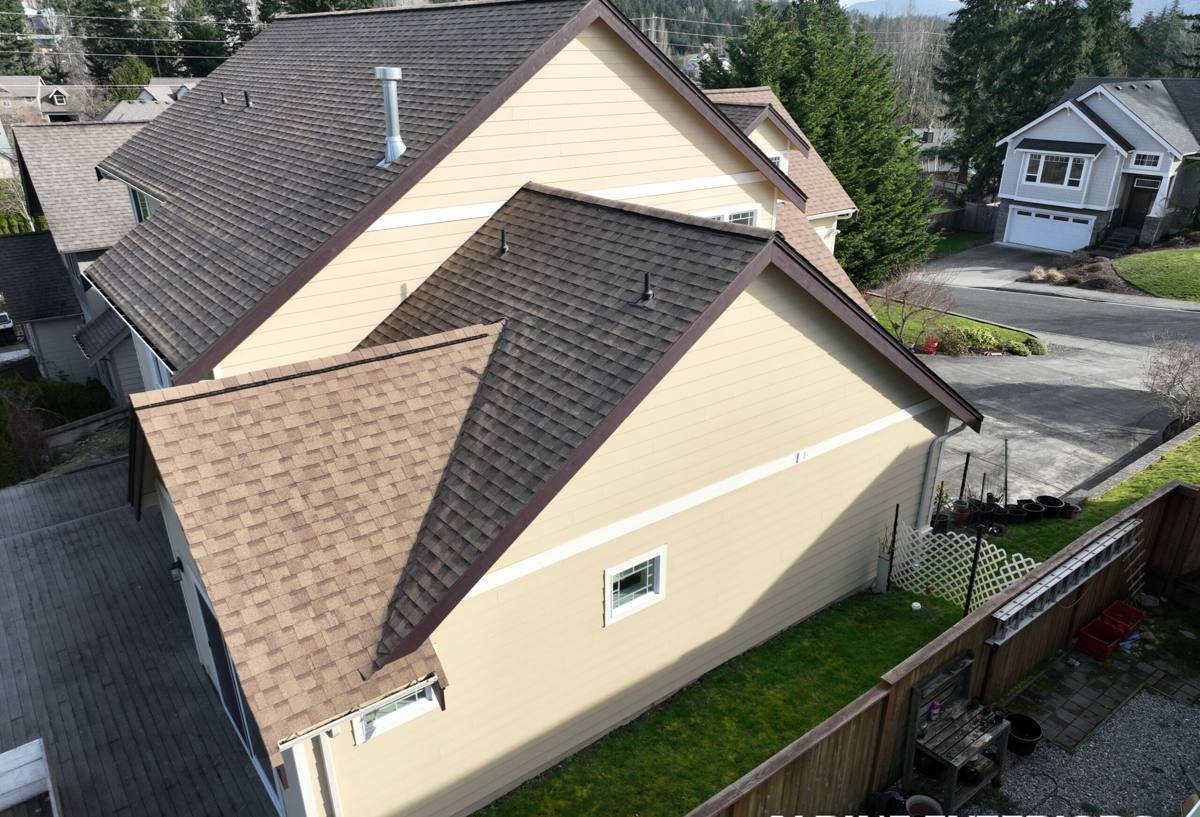
Why Salt Air, Rain, and Moss Matter More Here Than the Boards Themselves
Salt Air and Fasteners
Bellingham's proximity to the water means a steady, low-level exposure to salt-laden moisture, even on properties that aren't waterfront. Over time this accelerates corrosion in screws, nails, and structural hardware — post bases, joist hangers, and bolts — faster than a manufacturer's generic warranty language usually accounts for. A deck that used standard fasteners ten or fifteen years ago is a good candidate for hidden hardware corrosion even if the decking boards themselves look serviceable.
Driving Rain and Ledger Connections
Whatcom County's rain doesn't just fall straight down — wind-driven rain finds its way into ledger board connections, under improperly flashed rim joists, and into end grain on cut boards that weren't sealed. The ledger board — where the deck attaches to the house — is the single most common point of hidden rot we find on older York decks, because it's also the hardest point for a homeowner to inspect without pulling decking boards.
Moss and Shade
Mature trees are part of what makes York a nice place to live, but the same shade that keeps yards cool also keeps decks damp. Moss and algae don't just look bad — they hold moisture against the wood surface, make boards dangerously slick, and accelerate surface decay on both wood and some composite products if left unaddressed.
Signs a York Deck Needs Replacement, Not Just Repair
Not every tired-looking deck needs to be torn out. But there's a point where patching individual boards is spending money without solving the underlying problem. Common signs we look for on inspection:
- Soft or spongy spots when walking the deck, especially near the house connection
- Visible rust staining running down from fasteners or hardware
- Gaps or movement where the ledger meets the house
- Posts that feel loose or show soft wood at the base, where they sit closest to grade
- Persistent moss or algae that returns within weeks of cleaning
- Boards that have cupped, split, or delaminated (common on older composite generations)
- A deck older than 15-20 years that has never had fasteners, flashing, or framing inspected
If it's mostly surface wear — a few worn boards, faded finish, cosmetic moss — repair or refinishing is often the honest answer. If the framing, ledger, or footings are compromised, replacement is the only option that actually fixes the problem instead of deferring it.
What a Correct Deck Replacement Actually Involves
A deck replacement that's built for this climate isn't just swapping old boards for new ones. The parts nobody sees are what determine whether the next deck lasts 10 years or 30.
Structure First
We evaluate and, where needed, rebuild the ledger connection with proper flashing so water is directed away from the house rather than into the rim joist. Footings are checked for frost depth and soil contact — Whatcom County's wet ground can shift undersized or shallow footings over time. Joists, beams, and posts get sized and spaced for the actual load and span, not just matched to what was there before.
Hardware That Matches the Exposure
Given the salt-air exposure common across Bellingham, we use fasteners and structural connectors rated for corrosion resistance appropriate to the site, not just whatever meets minimum code in a drier climate. This is one of the areas where cutting corners doesn't show up as a problem for years — by which point it's a framing repair, not a fastener swap.
Drainage and Airflow Underneath
Low decks with poor airflow underneath trap moisture and encourage rot and moss growth from below, where it's hardest to spot. Where grading and height allow, we build in ventilation and slope grading away from the structure rather than just laying joists flat on grade.
Choosing Decking Material for a York Yard
Material choice matters more in a shaded, wet, salt-influenced yard than it does in a dry, sunny one. There's no single right answer for every home — it depends on budget, how much upkeep you want to take on, and how much direct sun versus shade the deck gets.
| Material | Upkeep in this climate | Moss/algae resistance | Typical lifespan |
|---|---|---|---|
| Pressure-treated wood | Annual cleaning, periodic sealing | Low — needs regular cleaning | 15-20 years with maintenance |
| Cedar | Regular sealing to hold color and resist moisture | Moderate | 15-25 years with upkeep |
| Composite decking | Occasional washing, no sealing/staining | Better on most modern products, still needs cleaning in heavy shade | 25-30+ years, manufacturer warranty-backed |
| PVC/capped composite | Lowest — wash as needed | Good, though shaded areas still need occasional cleaning | 25-30+ years, manufacturer warranty-backed |
We'll walk through these trade-offs honestly during your estimate — including where a given product's warranty structure does and doesn't cover installation-related issues, since that's often where homeowners get surprised later rather than with the material itself.
Our Deck Replacement Process
- On-site evaluation: We inspect the existing deck, ledger, footings, and framing before quoting anything, so the estimate reflects what your deck actually needs rather than a generic package.
- Removal: Full teardown of the old structure, checking framing and the house connection as we go for hidden rot or hardware corrosion.
- Structural rebuild: Footings, posts, beams, and joists brought up to current code and sized for the deck's actual use, with corrosion-appropriate hardware throughout.
- Ledger and flashing: Proper flashing installed at the house connection — the single biggest long-term factor in preventing hidden rot.
- Decking installation: Boards installed per manufacturer spec (fastener spacing, gapping for drainage, ventilation) so any product warranty stays valid.
- Railings and finishing: Code-compliant railings, stairs, and any trim or skirting, with attention to airflow underneath.
- Final walkthrough: We go over care and maintenance specific to the material you chose, so you know what upkeep to expect given York's shade and moisture conditions.
Permits and Local Requirements
Deck replacements in Bellingham typically require a building permit, especially when the structure is being rebuilt rather than just re-decked, and inspections are usually required at the framing stage before decking goes down. Requirements can vary based on deck height, attachment method, and whether the footprint is changing. We handle the permit process as part of the job rather than leaving it to the homeowner to navigate the city's requirements alone.
Maintaining Your New Deck in York's Conditions
Whatever material you choose, a little seasonal attention goes a long way in a climate this wet and shaded:
- Sweep leaves and debris off the deck regularly, especially in fall — trapped organic matter holds moisture and feeds moss
- Wash the deck surface at least once or twice a year to remove algae and moss buildup before it takes hold
- Check and clear gaps between boards so water can drain rather than pool
- Re-seal wood decking on the manufacturer or product-recommended schedule — don't wait until it looks obviously weathered
- Look underneath the deck once a year for early signs of moisture, rust staining, or soft wood near the ledger
- Keep gutters and downspouts near the deck clear so runoff isn't draining directly onto or under it
Why Hiring a Crew That Already Works in York Matters
A deck built to a generic spec sheet, without accounting for Whatcom County's rain patterns, salt exposure, or the shade that comes with an established tree canopy, is a deck that ages faster than it should. Working regularly in neighborhoods like York means we're not guessing at how a ledger connection, a set of footings, or a given decking product will hold up here — we've seen what does and doesn't last in these exact conditions, and we build accordingly from the first footing to the last board.
If your deck is showing signs of age, feels soft in places, or you're just ready to stop patching and do it right, we're happy to come take a look. There's no pressure and no cost to get an honest assessment of whether your deck needs replacement or just some targeted repair — use the form below to request a free estimate.