 Bellingham Exterior
 Barkley's Climate Is Harder on Siding Than Most Homeowners Realize
Barkley sits close enough to Bellingham Bay and the Salish Sea that homes here deal with a combination most inland siding never has to survive: salt-laden air, long stretches of driving rain off the water, and a moss season that, in Whatcom County's mild, wet winters, can run nearly year-round on shaded elevations. None of these are dramatic events. They're slow, constant pressure — and slow, constant pressure is exactly what wears out the wrong siding material years before it should fail.
Homeowners in Barkley often don't notice the damage until it's already done: a soft spot under a window, a stretch of paint that won't hold anymore, trim that's gone spongy where moss has been sitting against it for a season or two. The siding on a Barkley home isn't decorative. It's the first line of defense against a climate that never really lets up, and it needs to be chosen and installed with that in mind.
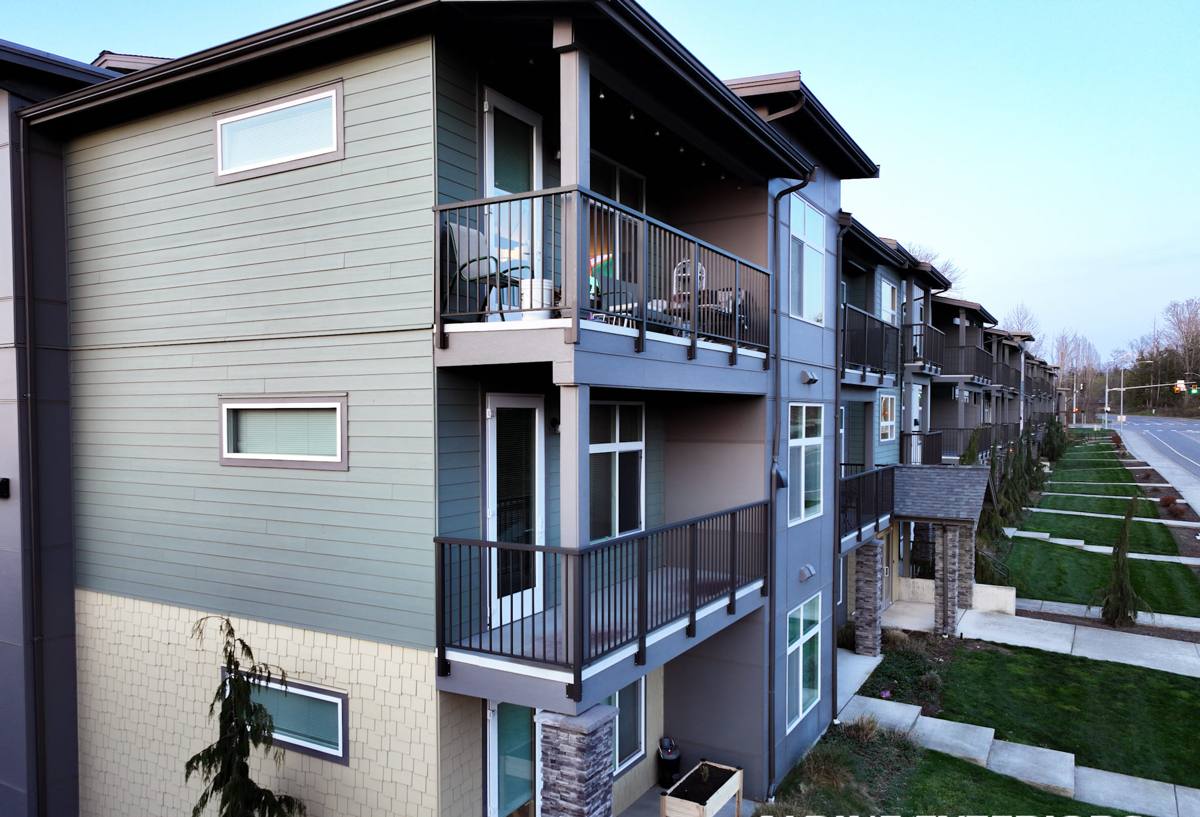
What Salt Air, Rain, and Moss Actually Do to a Wall System
Salt air is corrosive to metal — fasteners, flashing, and trim hardware all take a slower beating near the water than they would further inland. Over enough years, that corrosion can compromise the very details that are supposed to be keeping water out.
Driving rain, especially wind-driven rain off the Sound, doesn't just wet a wall — it pushes moisture sideways, into laps, seams, and butt joints that a calmer climate might never test. A siding system with weak flashing details or poor water-shedding geometry will eventually let that moisture in, even if it looks fine from the curb.
Moss is the one homeowners underestimate most. On shaded north and west-facing walls, which are common on the wooded lots around Barkley, moss and algae can establish themselves on siding surfaces and hold moisture against the material far longer than open air ever would. On wood-based or wood-fiber products, that trapped moisture accelerates rot. On a poor paint film, it accelerates peeling and staining. It's a slow problem, which is exactly why it's dangerous — it's rarely caught early.
Why This Crew Installs Only James Hardie Fiber Cement
We made a decision a long time ago to install James Hardie fiber cement siding exclusively. We don't install vinyl, LP SmartSide, cedar, primed spruce, or other fiber cement brands. That's not a marketing position — it's a standard we hold because of what we've seen happen to other products in exactly this kind of climate.
Wood and wood-fiber sidings need their paint or coating to stay intact to keep moisture out, and in a climate with this much sustained dampness and moss pressure, that coating is under constant attack. Vinyl doesn't rot, but it isn't rigid, it can warp or fade, and it relies entirely on what's behind it — the water-resistive barrier and flashing — to actually keep a house dry, since the panels themselves aren't a sealed system. James Hardie fiber cement is engineered specifically for climates like this: it's non-combustible, it doesn't feed moss or fungal growth the way organic materials can, and it holds a factory-applied finish that's built to handle sustained moisture exposure without the maintenance cycle that wood-based sidings demand.
We're not saying other products can't be installed correctly by someone. We're saying that, given what Barkley's climate does to a wall system over twenty or thirty years, Hardie is the material we're willing to put our name behind.
The James Hardie Product Lines That Make Sense for a Barkley Home
James Hardie makes several siding profiles, and they're engineered by climate zone — homes in Western Washington fall into Hardie's HZ5 engineering, which accounts for exactly the kind of sustained moisture exposure Barkley sees. The right profile for a given home depends on its architecture, its exposure, and the homeowner's preference for texture and reveal.
| Product Line | Best For | Why It Fits This Climate |
|---|---|---|
| HardiePlank Lap Siding | Most single-family homes, traditional and modern styles | Overlapping lap profile sheds wind-driven rain effectively; wide range of textures and reveals |
| HardiePanel Vertical Siding | Modern homes, accent walls, gable ends | Fewer horizontal seams for water to test; often paired with battens for a clean vertical look |
| HardieShingle Siding | Craftsman and cottage-style homes | Individual shingle profile without the rot risk of real wood shingles in a damp climate |
| Statement Collection | Homeowners wanting a bolder, dimensional look | Factory ColorPlus finish with deeper texture options and the same climate-engineered core |
ColorPlus Factory Finish
Most of what we install carries Hardie's ColorPlus finish — baked on at the factory rather than sprayed or brushed on site. In a climate where field-applied paint is fighting rain and moss almost immediately after it goes on, a factory-cured finish with better adhesion and UV resistance holds up longer with far less touch-up work over the years.
What a Correct Hardie Installation Involves
James Hardie siding is only as good as the installation behind it. The product is engineered to perform, but a rushed or careless install can undermine all of that engineering — and in a climate that tests every seam and penetration the way Barkley's does, the details matter more than they would somewhere drier.
- A properly lapped, continuous weather-resistive barrier behind the siding — not just house wrap stapled up quickly
- Correct minimum clearance between the bottom of the siding and grade, decks, or roof lines to prevent wicking
- Flashing at every window, door, and penetration, integrated with the barrier so water is directed out, not in
- Manufacturer-specified nailing patterns and fastener spacing — not painter's staples or the wrong nail depth
- Factory-primed cut edges sealed in the field, since an unsealed cut edge is a weak point for moisture
- Proper expansion gaps at butt joints and trim, sized to the manufacturer's specification
- Caulking limited to where Hardie actually calls for it — over-caulking can trap moisture instead of shedding it
These aren't optional refinements. They're the difference between a wall system that handles decades of Whatcom County weather and one that starts showing problems within a few years.
Our Process, Start to Finish
Every project starts with an on-site look at the home — not a generic estimate over the phone. We walk the exterior, check the existing siding and sheathing for hidden moisture damage, and note anything specific to the home's exposure that will affect the install, like heavily shaded walls or areas already showing moss buildup.
From there we go over product line, profile, and color together, including how ColorPlus finishes will look and wear on the home's specific elevations. Once material is ordered, we handle removal of the old siding, inspect and repair sheathing as needed before anything new goes up, and install the weather-resistive barrier and flashing correctly before a single piece of Hardie board is hung. The siding install itself follows manufacturer spec on fastening, gapping, and sealing. We finish with a walkthrough so the homeowner can see the completed work and ask questions before we consider the job done.
What Drives Cost on a Barkley Siding Project
Every home is different, and we don't quote sight unseen — but these are the factors that most affect what a project costs.
| Factor | Why It Matters |
|---|---|
| Home size and number of stories | More surface area and taller walls mean more material and labor, plus added access needs |
| Condition of existing siding and sheathing | Hidden moisture damage found during tear-off may need repair before new siding goes on |
| Trim and detail complexity | Homes with more windows, dormers, and architectural detail require more flashing and cutting |
| Product line and finish selection | Panel profiles, shingle siding, and Statement Collection finishes vary in material cost |
| Site access and lot conditions | Wooded or tight lots common around Barkley can add setup and material handling time |
Why Hiring a Crew That Already Works in Barkley Matters
A crew that's worked in and around Barkley knows what to expect before the first piece of old siding comes off. That means recognizing which elevations on a typical Barkley lot are going to have the heaviest moss exposure, understanding how the mix of newer construction and established homes in the area were originally built and flashed, and knowing what Bellingham's permitting and inspection process expects for a residential siding replacement.
It also means showing up prepared for the weather instead of getting stalled by it. A crew unfamiliar with Whatcom County's rain patterns can lose real time to weather delays or, worse, push through installation in conditions that compromise the barrier and flashing work underneath the siding. Local experience isn't a sentimental selling point — it directly affects how well the job gets done.
Keeping Hardie Siding Looking Right Through Whatcom County Winters
James Hardie siding is low-maintenance compared to wood or vinyl, but "low-maintenance" doesn't mean "no maintenance" in a climate like this one. A periodic gentle rinse — garden hose pressure, not a pressure washer aimed directly at seams — keeps moss and algae from establishing on shaded walls. Gutters and downspouts should stay clear so runoff isn't sheeting down a wall section repeatedly. It's also worth a walk-around every year or two to check caulking at trim and penetrations, since caulk is the one component in the system that does wear out and need periodic renewal, unlike the siding itself.
Handled this way, a correctly installed Hardie system on a Barkley home is built to go decades without the paint failure, warping, or rot issues that shorter-lived materials run into in this same climate.
If your Barkley home's siding is showing its age — or you're planning ahead before it becomes a bigger problem — we're happy to take a look and walk you through what we'd recommend. The estimate is free, there's no pressure, and you'll get a straight answer about what your home actually needs.