 Bellingham Exterior
 Decking in Barkley Has to Answer to Bellingham's Weather
Barkley sits close enough to Bellingham Bay that salt-laden air reaches the neighborhood on a regular basis, and it sits under enough tree cover and cloud that moisture rarely gets a real chance to dry out. That combination is hard on outdoor structures. A deck built here isn't just furniture for the yard — it's exposed to driving rain that comes in sideways off the Sound, a moss season that can run from October well into April, and the kind of humidity that keeps wood damp for days after a storm has passed.
Composite decking exists specifically to handle that kind of exposure better than wood does. But "composite" isn't one product — it's a category that spans a wide range of board quality, core materials, and cladding systems, and not all of it performs the same way once it's sitting under a stand of firs in Whatcom County for ten winters. This page is about what actually matters when you're putting composite decking on a Barkley property, not the marketing version.
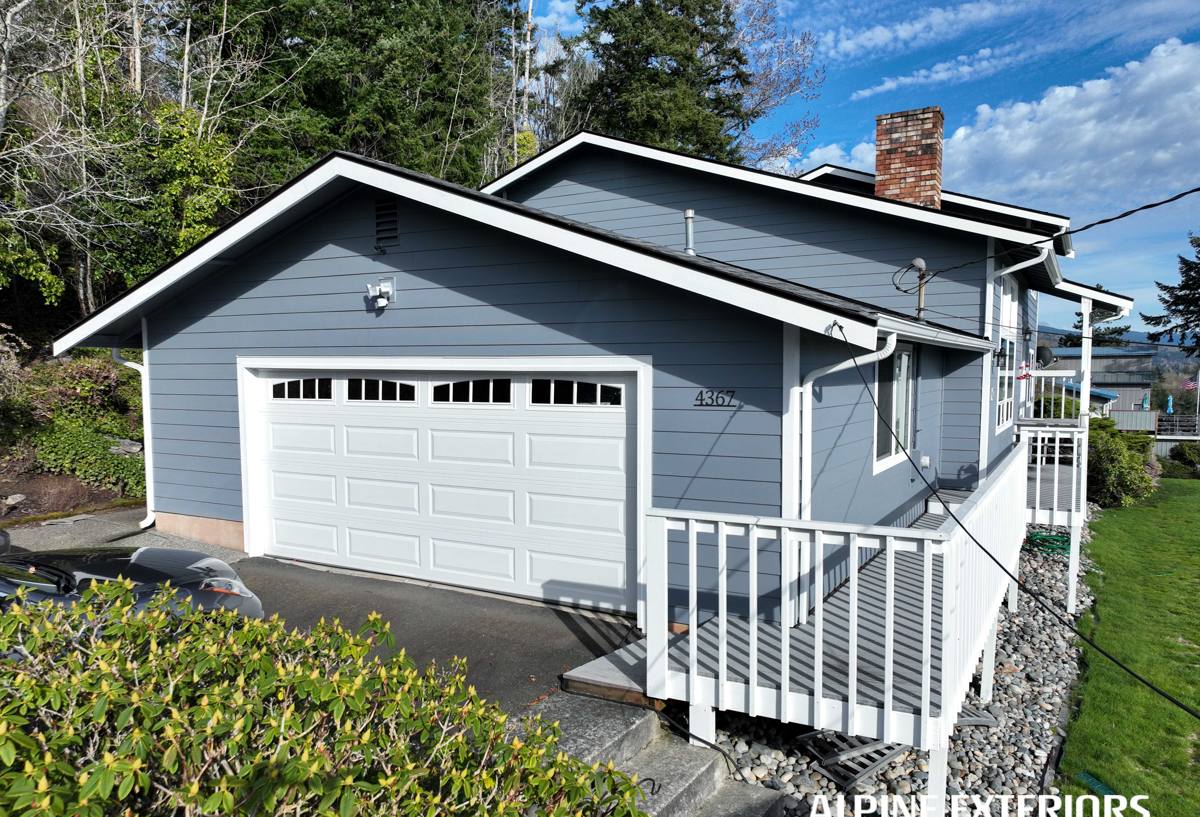
What This Climate Actually Does to a Deck
Salt Air
Proximity to Bellingham Bay means airborne salt settles on exposed surfaces, including fasteners, railing hardware, and any metal framing components. On wood decks this accelerates fastener corrosion and can streak the boards. On composite decking the boards themselves shrug off salt exposure, but the hardware holding everything together doesn't automatically get a pass — fastener and bracket selection still matters.
Driving Rain
Rain in this area doesn't just fall straight down — wind off the water pushes it sideways into ledger connections, under rail posts, and into any gap where end grain or a cut edge is exposed. A deck that isn't detailed for wind-driven rain will find water intrusion points that a calmer climate would never expose.
Long Moss Season
Shaded lots, conifer cover, and months of damp weather add up to a moss and algae season that's longer here than in drier parts of the state. Moss needs organic material and standing moisture to get started. Composite boards don't feed moss the way untreated wood fibers do, but they aren't immune — pollen, needle debris, and shade all still create conditions where a board can grow a green film if it's never cleaned.
What a Correct Composite Deck Install Actually Involves
The board itself gets most of the attention, but the board is only one part of a system. A composite deck that holds up in Barkley's climate depends just as much on what's underneath and around it.
Framing and Ledger Flashing
Where the deck attaches to the house, the ledger board and its flashing are the single most common source of long-term water damage on any deck, composite or wood. Proper flashing directs water away from the house framing rather than letting it wick behind the ledger. This is invisible once the deck is finished, which is exactly why it's worth confirming before the boards ever go down.
Joist Protection and Ventilation
Composite boards don't rot, but the wood joists and beams underneath most composite decks still can if they're not protected and if the space under the deck can't breathe. Joist tape, proper joist spacing for the board span, and enough clearance for air movement all reduce the chance of hidden framing problems years down the road.
Drainage Under the Deck
On a sloped or low-clearance lot — common on plenty of Barkley properties — water needs somewhere to go. Grading, gravel, or a below-deck drainage system keeps water from pooling against posts and footings through a wet Whatcom County winter.
Fastening System
Hidden fastener clips are standard on most composite decking today and, done correctly, they eliminate the screw-head staining and moisture entry points that face-screwing can create. The clips and screws should be stainless or coated hardware rated for coastal exposure, not generic zinc-plated fasteners that will corrode faster in this air.
Choosing the Right Composite Board
Not every composite board is built the same way, and the differences matter more in a wet, shaded climate than they would somewhere dry.
| Board Type | Moisture Behavior | Moss/Algae Resistance | Maintenance |
|---|---|---|---|
| Uncapped composite (older-style wood-plastic blend) | Can absorb moisture at cut edges over time | Lower — more porous surface | Occasional cleaning, edge sealing on cuts |
| Capped composite (polymer shell over composite core) | Shell resists moisture intrusion well | Good with regular rinsing | Low — periodic wash-down |
| Mineral-based composite | Very low absorption, dense core | Very good | Low |
| Cellular PVC (not wood-composite, but often compared) | Essentially non-absorbent | Good, though slicker surface films can show | Low, but scratches show differently than composite |
For most Barkley homes we lean toward fully capped or mineral-based composite boards precisely because they hold up better against sustained moisture exposure and don't need edge sealing at every cut. Uncapped composite can still be a reasonable budget choice, but it comes with maintenance trade-offs that matter more here than in a drier region.
Color and Surface Texture
Darker composite boards absorb more heat and dry faster after rain, which can help in a climate where boards spend a lot of time damp — but they also show pollen and moss film more visibly against a dark background. Lighter and mid-tone boards hide seasonal debris better but may hold surface moisture a little longer in deep shade. Neither is wrong; it's a trade-off worth thinking through before you pick a color, not after.
How We Approach a Barkley Composite Deck Project
- Site walk and drainage assessment — we look at slope, shade, tree cover, and how water currently moves across the lot before we talk about boards.
- Structural evaluation — existing framing gets checked for rot, proper ledger attachment, and code-compliant footings; anything undersized or compromised gets addressed, not built over.
- Flashing and waterproofing detail — ledger flashing, post base isolation from standing water, and joist protection go in before a single board is installed.
- Board and fastener installation — hidden fastener systems, correct board spacing for expansion, and coastal-rated hardware throughout.
- Railing, stairs, and fascia — matched or complementary materials that get the same moisture-conscious detailing as the deck surface.
- Final walkthrough — we go over what maintenance the specific board you chose actually needs, in plain terms, before we leave.
Living With Composite Decking Through Whatcom County's Moss Season
Composite decking is lower-maintenance than wood, not maintenance-free. In a climate with this much shade and rainfall, a deck still needs attention:
- Rinse or sweep debris (needles, pollen, leaves) off the surface regularly through fall and winter so it doesn't sit and feed moss growth
- Wash the deck with a soft-bristle brush and a composite-safe cleaner once or twice a year, more often in heavily shaded areas
- Keep gutters and downspouts clear so roof runoff isn't dumping extra water directly onto or under the deck
- Trim back overhanging branches where practical to let more light and air reach the deck surface
- Check railing posts and stair connections annually for movement, since these take the brunt of wind-driven rain
- Avoid pressure-washing at close range or high pressure — it can etch the surface texture on some composite boards
None of this is heavy work, but skipping it in a climate like Bellingham's is how a deck that should look good for twenty-five years starts looking tired in five.
Why a Crew That Already Works Barkley Matters
A lot of what makes a composite deck last here isn't in the product spec sheet — it's in details specific to this area: how footings need to be set given local frost depth and drainage patterns, how Whatcom County permitting and setback rules apply to deck additions, and which parts of a given lot tend to hold water or shade longest through the wet months. A crew that's worked other properties in and around Barkley has already seen how these lots behave through a full year of Bellingham weather, not just on a sunny install day.
That familiarity shows up in small decisions — where extra flashing gets added, how footings get sized for the soil, which side of the house needs better ventilation under the deck — that a generalist crew unfamiliar with this specific microclimate might not think to flag.
What to Expect From Us
We're not going to oversell composite decking as maintenance-free or push a specific brand because it pays a better margin. We'll walk your property, tell you honestly what your site's shade and drainage situation calls for, and explain the real trade-offs between board types so you're picking based on how your yard actually behaves — not a showroom sample.
If you're in Barkley or elsewhere around Bellingham and thinking about a composite deck, we're happy to come take a look and put together a straightforward, no-pressure estimate. Use the form below to get started.