 Bellingham Exterior
 Siding Repair in Barkley: What the Salt Air and Moss Season Actually Do to a Home
Barkley sits close enough to the water and tree cover that its homes take on a particular kind of weather stress: salt-laden air moving in off Bellingham Bay, long stretches of driving rain through fall and winter, and a moss season that can run half the year on north-facing walls and anything shaded by mature landscaping. None of that is unusual for Whatcom County, but it adds up differently depending on what your siding is made of and how it was installed. We get called into Barkley regularly for siding repair, and the patterns are consistent enough that we can tell you what to expect before we even see the house.
This page is about repair specifically — what actually needs fixing, what a correct repair looks like, and how we handle it when we're already working in this neighborhood. If your siding is past the point of patching, that's a different conversation, but most of what we see in Barkley is fixable if it's caught in time.
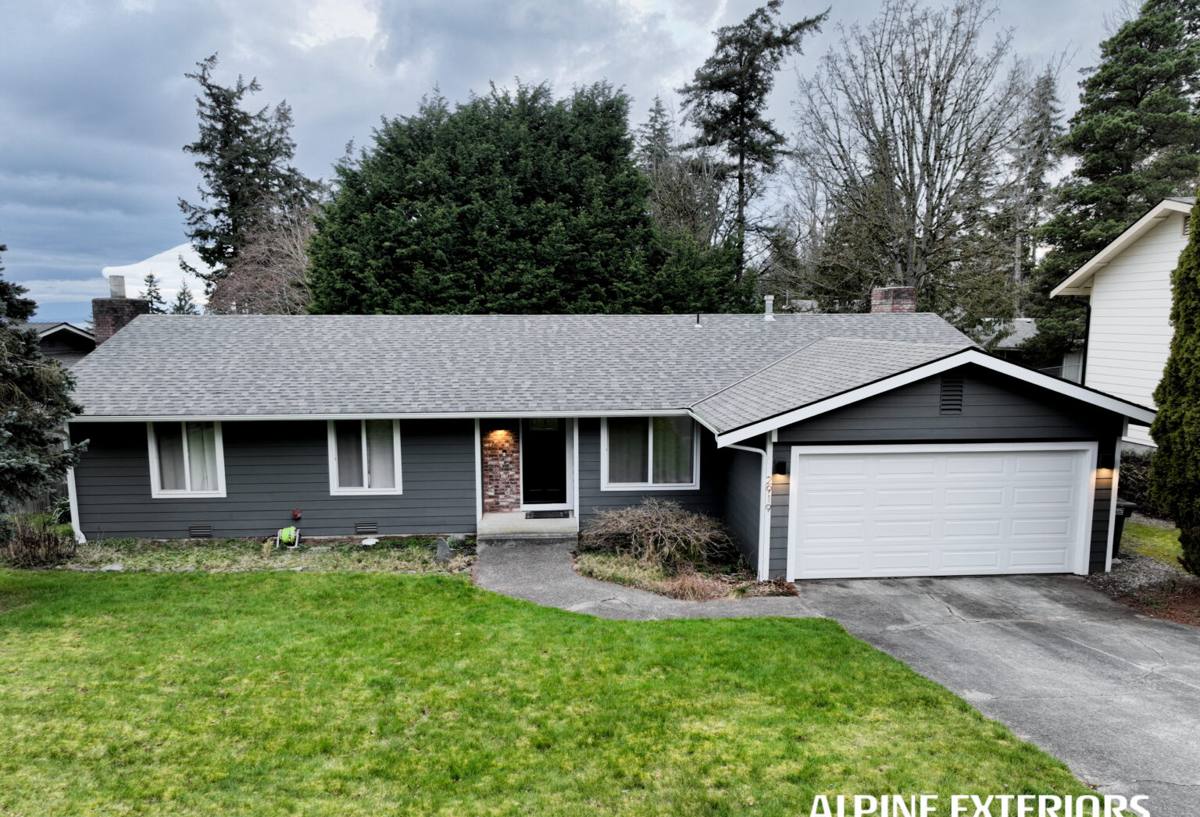
Why Barkley's Conditions Are Harder on Siding Than People Expect
Homeowners often assume rot and damage come from one big storm or one obvious leak. In practice, the damage we find in Barkley is almost always cumulative — small failures that had months or years to work on the wood or substrate underneath the siding before anyone noticed.
Salt Air and Metal Fasteners
Proximity to the bay means airborne salt settles on exterior surfaces and works into fastener heads, flashing seams, and any exposed metal trim. Over time this accelerates corrosion in lower-grade fasteners and can stain or degrade caulking faster than it would inland. Repairs done with the wrong fastener type are a common reason we see repeat failures at the same spot on a wall.
Driving Rain and Wind-Driven Moisture
Bellingham's rain doesn't always fall straight down. Wind off the water pushes it sideways into wall assemblies, which is exactly the condition lap siding and flashing details are supposed to be engineered for. When laps are under-lapped, caulked instead of flashed, or installed with insufficient clearance at trim and window returns, wind-driven rain finds its way behind the cladding. That's where the real damage happens — not on the visible face, but in the sheathing and framing behind it.
Moss, Shade, and Slow-Drying Walls
Barkley's tree cover is part of what makes the neighborhood attractive, but shaded, slow-drying wall sections are where moss and organic growth take hold fastest. Moss holds moisture against the siding surface far longer than an open, sun-exposed wall would ever experience, and it's especially aggressive on porous or absorbent siding materials. Even where it doesn't directly cause rot, it keeps a wall wet longer after every rain, which shortens the service life of paint, caulk, and the substrate underneath.
What We Actually Find When We Inspect Barkley Siding
Every house is different, but repair calls in this neighborhood tend to fall into a handful of categories:
- Soft or delaminating panel edges where moisture has been wicking in at butt joints or cut ends that were never sealed
- Rot at the base of walls near grade, decks, or downspout discharge points where water sits or splashes back against the siding
- Failed caulk joints around windows, trim, and penetrations that have hardened, cracked, or pulled away
- Board separation or buckling from movement, poor fastening, or expansion issues, especially on lower-quality or improperly acclimated materials
- Moss and algae staining on shaded elevations, sometimes cosmetic, sometimes a sign of ongoing moisture retention
- Corroded or popped fasteners leaving visible rust streaks and loose panels
The distinction that matters most is whether the damage is isolated to the cladding itself, or whether moisture has already reached the sheathing and framing. That difference changes the scope of the repair significantly, and it's not something you can always tell from the outside — it's why a proper inspection involves more than a visual walk-around.
What a Correct Siding Repair Actually Involves
A repair that just covers up the visible damage without addressing the cause is a repair you'll be paying for again in a few years. We treat every repair call as a chance to find and fix the underlying issue, not just the symptom.
Our Process
- Inspect beyond the visible damage. We check adjacent panels, flashing, trim, and — where damage suggests it — probe the sheathing behind the affected area to confirm how far moisture has traveled.
- Identify the moisture source. Repairing siding without correcting the flashing, grading, or gutter issue that caused the damage just resets the clock on the same failure.
- Remove only what's compromised. We don't tear out more than necessary, but we don't stop short either — any soft or delaminated material gets replaced, not patched over.
- Repair or replace substrate as needed. If sheathing or framing has been affected, that gets addressed before new siding goes back on.
- Re-flash and re-seal correctly. Proper lap, house wrap integration, and sealant placement at penetrations — done to the manufacturer's actual installation spec, not shortcuts.
- Match and finish. Where we're repairing existing James Hardie siding, we match the profile and, where possible, the ColorPlus finish so the repair blends rather than standing out as a patch.
Repair vs. Replacement: How We Help You Decide
Not every damaged section needs full replacement, but there's a point where patch repairs stop making financial sense. We walk Barkley homeowners through this honestly rather than defaulting to the bigger job.
| Factor | Favors Repair | Favors Replacement |
|---|---|---|
| Extent of damage | Isolated to one or two sections | Spread across multiple elevations |
| Substrate condition | Sheathing and framing intact | Rot has reached structural framing |
| Age of existing siding | Still within useful service life | Near or past expected lifespan |
| Material type | James Hardie or similarly durable cladding | Original material prone to repeat failure |
| Root cause | Fixable flashing/drainage issue | Systemic moisture problem across the assembly |
If your existing siding is James Hardie, repair is usually the right call — the material itself isn't the problem, and a well-matched repair can extend its life for years. If the damage is on an aging vinyl, LP SmartSide, or cedar installation with widespread failure, we'll tell you honestly when repair is just delaying a replacement you're going to need anyway.
Why We Only Install James Hardie — And What That Means for Repairs
We standardized on James Hardie fiber cement for every full installation we do, including in Barkley. It's non-combustible, holds up to the wet-dry cycling that Whatcom County's climate puts siding through, and comes with a factory-applied ColorPlus finish that resists the fading and chalking that repainting cycles on other materials require. When repair work eventually turns into replacement, Hardie's engineered HZ product lines are built specifically for climates like this one — Pacific Northwest moisture exposure was part of the design brief, not an afterthought.
That matters for repair work too. When we're patching or replacing sections of existing Hardie siding, we're working with a material that behaves predictably — it doesn't swell, warp, or absorb moisture the way wood-based or vinyl products can, so a well-executed repair actually holds. We don't install LP SmartSide, vinyl, Cemplank, Allura, primed spruce, or cedar on new work, and if your current siding is one of those materials and it's failing broadly, we'll be straightforward that a Hardie replacement is likely a better long-term investment than continued patching.
Why Local Experience in Barkley Matters
Repair work rewards familiarity with a specific neighborhood's conditions. A crew that's worked in Barkley knows which elevations tend to hold moisture longest, how tree cover affects drying time on shaded walls, and what flashing details tend to fail first given the wind and rain patterns off the bay. That local pattern recognition shortens the diagnostic process and helps us catch problems before they're visible from the street.
It also means we're not guessing at what "normal" looks like for a Bellingham home. A repair approach that works fine in a drier inland climate can fall short here, and we build every repair around what this specific environment demands.
Simple Maintenance Checks Between Repairs
A few habits go a long way toward catching problems before they need professional repair:
- Walk the exterior after major storms and look for lifted, cracked, or missing caulk at trim and window edges
- Check for moss buildup on shaded or north-facing walls, especially where tree cover is heavy
- Confirm gutters and downspouts are directing water away from the foundation, not splashing back onto lower siding
- Look for soft spots by gently pressing on siding near grade, decks, and any known past repair areas
- Note any fastener heads showing rust streaks, which often signal early corrosion issues
Get an Honest Look at Your Siding
If you're seeing soft spots, staining, moss buildup, or failed caulk on a Barkley-area home, it's worth having someone look before it turns into a bigger repair. We'll give you a straight answer on what's actually needed — repair, partial replacement, or a longer-term plan — with no pressure either way. Reach out for a free estimate using the form below.