 Bellingham Exterior
 Why Barkley Roofs Wear the Way They Do
Barkley sits close enough to the water and to the timbered slopes around Bellingham that its roofs take on a specific combination of stress: salt-laden air off Bellingham Bay, long stretches of driving rain, and shade from mature trees and landscaping that keeps roof surfaces damp far longer than homes in drier parts of Whatcom County. None of these factors are dramatic on their own, but together they shorten the useful life of a roof and speed up the kind of wear that's easy to miss until it becomes a leak.
Salt air is corrosive to exposed metal — nails, flashing, vent caps, and fastener heads all degrade faster here than they would inland. Constant rain doesn't just test a roof's waterproofing; it keeps organic debris wet, which is exactly what moss and algae need to take hold. And moss doesn't just look bad. Its root structure works into shingle granules and seams, holding moisture against the roof deck long after the rain has stopped. Over years, that's what turns a routine roof into one that needs full replacement rather than another round of patching.
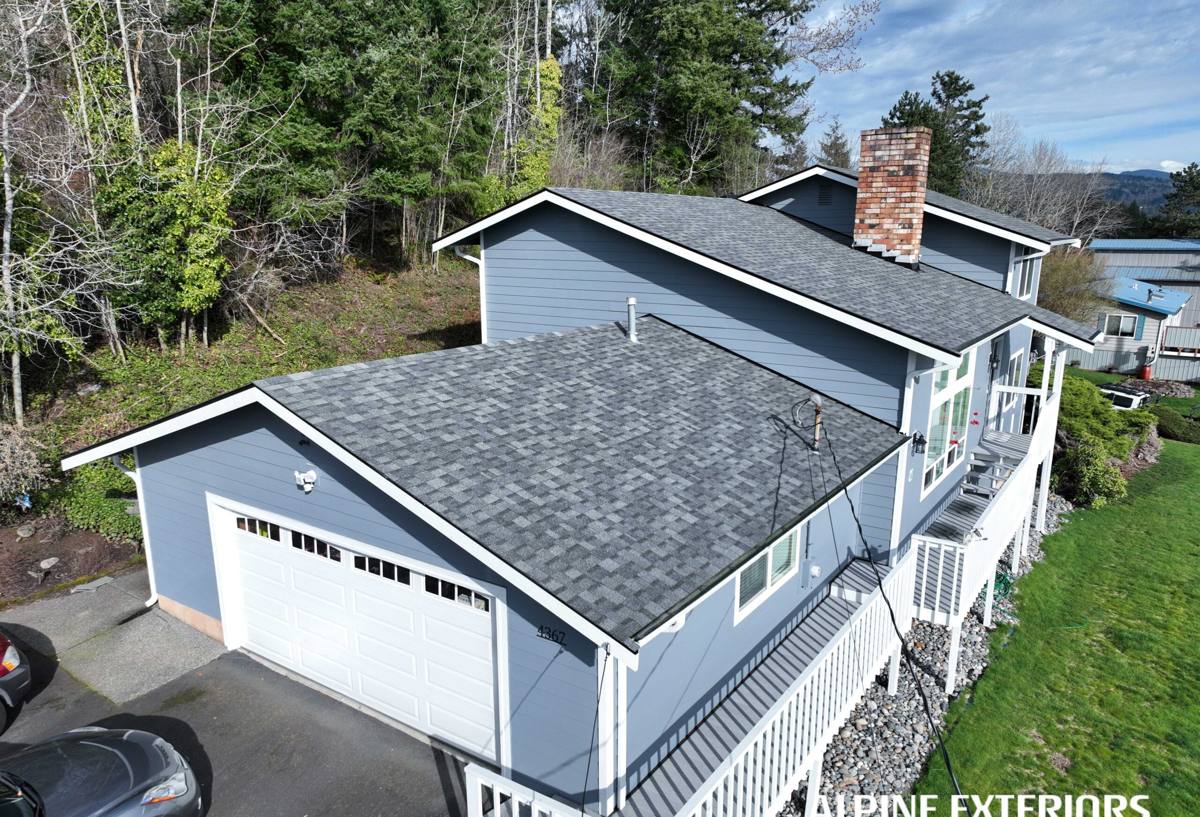
Signs a Barkley Home Has Outgrown Repair
Every roof reaches a point where repair stops making financial sense. In this climate, that point often shows up earlier than manufacturer lifespan charts suggest, because those charts assume drier, sunnier conditions than Bellingham actually gets.
Look for these before scheduling a repair call
- Moss growth that returns within a season of being cleaned off, especially on north-facing slopes
- Granule loss visible in gutters or downspout runoff after rain
- Curling, cupping, or cracking shingles, particularly on slopes that get the most sun and wind exposure
- Soft spots, sagging, or discoloration on the underside of the roof deck visible from the attic
- Flashing around chimneys, skylights, or roof-to-wall transitions that's rusted, lifted, or resealed multiple times
- A roof that's already had two or more repair visits in the last few years for different leaks
One or two of these on their own might mean a targeted repair is still reasonable. Several at once, especially on a roof already past the middle of its expected lifespan, usually means the underlying materials are failing broadly — patching one spot just shifts the problem to the next.
What a Correct Roof Replacement Actually Involves
A roof replacement is more than swapping old shingles for new ones. The parts of the job that don't show from the ground are usually the parts that determine whether the new roof actually holds up to another 20-plus years of Bellingham weather.
The steps that matter most
Full tear-off, not overlay. Installing new shingles over old ones traps moisture and hides deck problems. A proper replacement strips the roof to the deck so it can be inspected directly.
Deck inspection and repair. Years of trapped moisture under moss or failed flashing often soften or rot sections of the plywood or plank decking underneath. Any soft or delaminated decking gets replaced before anything new goes down — skipping this is one of the most common shortcuts that leads to early failure.
Underlayment built for wet climates. A synthetic or self-adhered underlayment that resists moisture intrusion matters more here than in drier regions, since the roof deck spends more of the year damp.
Ice and water shield at vulnerable points. Valleys, eaves, and any low-slope transitions get extra protection where water is most likely to back up or pool.
New flashing throughout. Chimneys, skylights, sidewalls, and vent penetrations get new flashing rather than reused old pieces — reused flashing is a common source of "new roof, old leak."
Attic ventilation check. Proper intake and exhaust ventilation keeps the underside of the deck dry and reduces the moisture that feeds moss and mildew from below.
Choosing the Right Roofing Material for This Climate
There's no single "best" roofing material — the right choice depends on the home's roof pitch, budget, and how much upkeep the homeowner wants to take on. What matters is being honest about how each option performs specifically in a wet, moss-prone, salt-air environment like Barkley.
| Material | Moss & Algae Resistance | Typical Lifespan Here | Maintenance Load |
|---|---|---|---|
| Standard architectural asphalt shingle | Moderate — improves with algae-resistant granules | 18–25 years | Periodic moss removal recommended |
| Premium/algae-resistant asphalt shingle | Better — copper or zinc granules slow regrowth | 20–30 years | Lower, still benefits from occasional cleaning |
| Standing seam metal | High — smooth surface sheds moss more easily | 40–50+ years | Low, but fasteners and coatings need inspection near salt air |
| Wood shake/shingle | Low without diligent upkeep | Variable, heavily maintenance-dependent | High — constant moisture control needed in this climate |
We install and stand behind asphalt and metal roofing systems for the majority of Barkley homes because they offer the most predictable long-term performance for the amount of upkeep most homeowners are realistically willing to do. Wood shake can look great, but its moisture behavior in a rain-heavy, moss-prone climate means it demands a maintenance schedule that's tough to keep up with year after year — that's a trade-off worth knowing before committing to it, not a knock on the material itself.
Color and Granule Considerations
Darker roof colors tend to show moss growth and streaking more visibly than lighter, mid-tone colors, simply because the contrast is sharper. That's not a reason to avoid dark shingles, but it's worth factoring in if low-maintenance appearance matters as much as the roof's actual performance.
What Drives Cost on a Barkley Roof Replacement
We won't quote a number without seeing the roof, but the factors that move a project's cost up or down are consistent from house to house.
| Factor | Why It Matters |
|---|---|
| Roof size and number of facets | More square footage and more cuts around valleys, dormers, and hips increase labor time |
| Pitch and access | Steep or high roofs require more safety equipment and slower, more careful work |
| Number of existing layers | Tear-off of two layers takes longer and generates more debris than one |
| Decking condition | Rot or soft spots found during tear-off mean added material and labor to replace it |
| Material selection | Asphalt, premium asphalt, and metal carry different material and installation costs |
| Flashing and penetrations | Chimneys, skylights, and multiple vents each add detail work |
The one factor homeowners can't know in advance is deck condition — that's why an honest estimate includes a clear explanation of what happens if hidden rot turns up mid-project, and what that would change about the price.
How Our Process Works
- On-site inspection. We walk the roof and attic, not just look from the ground, so the estimate reflects the actual condition rather than a guess.
- Written estimate. A clear breakdown of materials, labor, and any decking allowance, with the reasoning behind our material recommendation for that specific roof.
- Scheduling around weather. Given how much rain Whatcom County gets, we plan tear-off and dry-in carefully so the deck isn't left exposed longer than necessary.
- Tear-off and deck inspection. Old roofing comes off, the deck is checked board by board, and any repairs are reviewed with the homeowner before covering them up.
- Installation. Underlayment, ice and water shield, flashing, and roofing material go on to manufacturer specification.
- Cleanup and magnetic sweep. Debris and stray fasteners are cleared from the yard and driveway before we consider the job finished.
- Final walkthrough. We review the completed roof and warranty paperwork together before wrapping up.
Why Local Experience in Barkley Actually Matters
Roofing crews that mostly work outside this region tend to underestimate two things about Bellingham roofs: how much moss really comes back without the right prep work, and how much rain a job schedule has to account for. A crew that regularly works in and around Barkley already knows which slopes on which home orientations collect the most moss, how nearby tree cover affects drying time after rain, and how to sequence a tear-off so a home isn't left exposed when a system rolls in off the water. That local pattern recognition doesn't replace good workmanship, but it does mean fewer surprises during the job and a roof that's built with this specific climate in mind rather than a generic install.
Protecting Your New Roof After Installation
A correctly installed roof in this climate still benefits from basic upkeep. None of it is complicated, but skipping it shortens the roof's life.
- Keep gutters clear so water doesn't back up under the roof edge, especially during fall leaf drop
- Have moss growth addressed early rather than left to spread across a full slope
- Trim back overhanging branches that keep sections of the roof shaded and damp
- Schedule a visual check after major windstorms to catch lifted flashing or shingles early
- Avoid pressure washing the roof surface directly — it can strip granules and shorten shingle life
If you're weighing repair against replacement, or just want a straight answer on where your roof actually stands, we're happy to take a look. The estimate is free, there's no pressure attached to it, and you can use the form below to get on our schedule.