 Bellingham Exterior
 Why Metal Roofing Makes Sense for Barkley Homes
Homes in the Barkley area of Bellingham deal with a specific combination of weather that not every roofing material handles well over the long run. Whatcom County sits close enough to Bellingham Bay and the Salish Sea that salt-laden air is a real factor in how fast metal, fasteners, and finishes age. Add in the region's long stretch of driving rain through fall, winter, and spring, plus a moss season that can run most of the year in shaded, north-facing areas, and you have a climate that rewards roofing systems built to shed water fast, resist corrosion, and discourage organic growth.
Metal roofing, installed correctly, checks all three boxes. It sheds rain quickly instead of absorbing it, it doesn't provide the rough, granulated surface that moss and algae spores latch onto as easily as they do on asphalt shingles, and modern coated steel and aluminum systems are engineered specifically to resist the kind of coastal corrosion that Barkley's proximity to salt air can accelerate. That doesn't mean every metal roof performs the same way here — the details of the install matter as much as the material itself, which is what the rest of this page walks through.
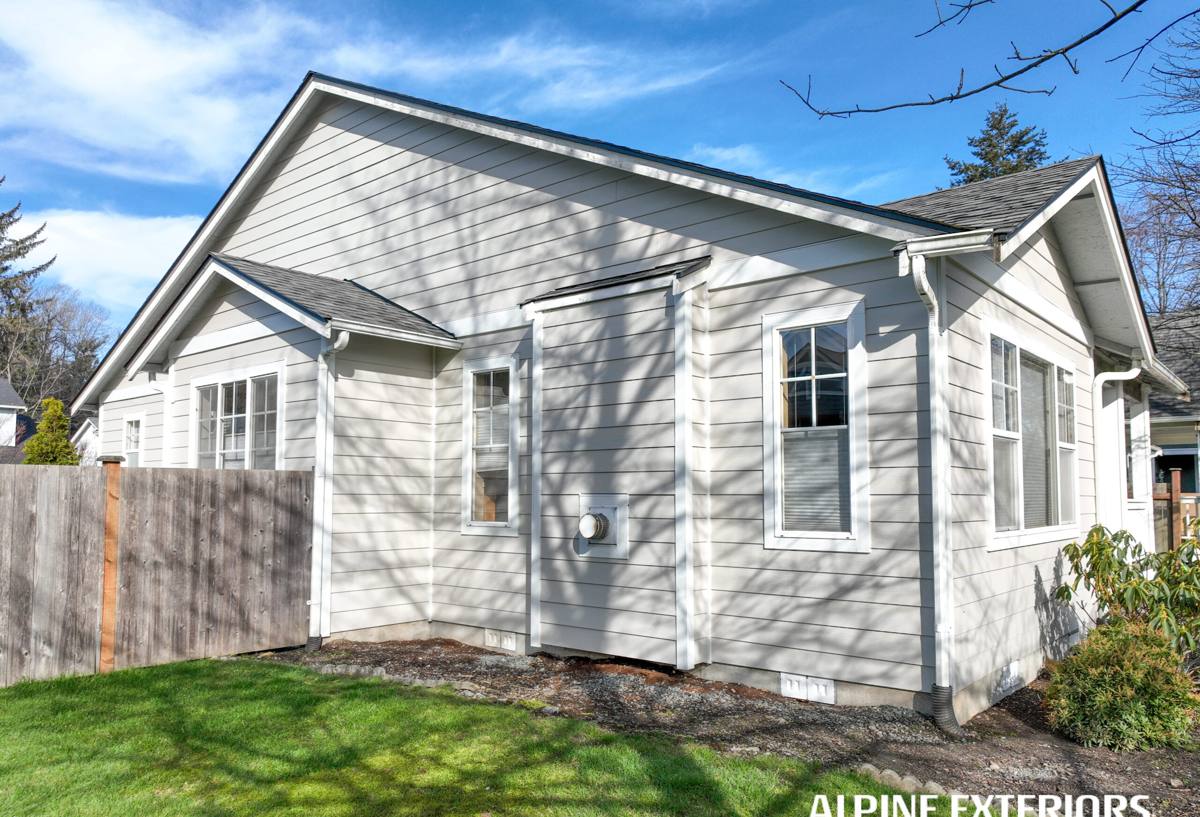
What Barkley's Climate Actually Does to a Roof
Salt Air and Corrosion
Bellingham's coastal position means airborne salt reaches homes well inland of the immediate waterfront, especially during winter storms off the Sound. Salt exposure doesn't damage a roof overnight, but over years it can attack unprotected fasteners, cut edges, and lower-grade coatings — showing up first as small rust bleed points around screws or panel seams. The fix isn't avoiding metal roofing; it's specifying the right coating and fastener package for a coastal-influenced climate from the start.
Driving Rain
Whatcom County doesn't just get a lot of rain — it gets wind-driven rain that hits roof planes at an angle instead of falling straight down. That matters for anything with seams, laps, or fastener penetrations, because wind-driven water finds its way under improperly lapped panels or through underlayment gaps that would never leak in calmer weather. Flashing detail and underlayment choice carry more weight here than in drier climates.
Moss and Algae
Shaded roof sections, north-facing slopes, and areas under overhanging trees stay damp for extended stretches through the Bellingham off-season. Moss doesn't just look bad — its root structures work into roofing material and lift edges, and the moisture it holds against the surface accelerates whatever degradation is already happening underneath. Metal's smooth surface makes it inhospitable to moss compared to more porous roofing materials, but valleys, panel overlaps, and areas where debris collects still need attention.
What a Correct Metal Roof Installation Involves
A metal roof is only as good as its installation. The panels themselves are usually the most durable part of the system — what fails, when metal roofs fail early, is almost always something underneath or around them. On a Barkley home, we pay particular attention to:
- Underlayment: a synthetic or self-adhered underlayment rated for high-moisture climates, not a bargain felt product that breaks down under sustained dampness.
- Fastener selection: corrosion-resistant fasteners matched to the panel metal, so you don't get galvanic corrosion between dissimilar metals over time.
- Flashing at every penetration: chimneys, vents, skylights, and wall transitions are where wind-driven rain finds its way in — these get layered, lapped flashing, not just sealant.
- Panel overlap and seam direction: laps run with the prevailing weather exposure, not just downhill, so wind-driven rain can't work its way upstream under a seam.
- Ventilation: proper intake and exhaust airflow so moisture from inside the home doesn't condense against the underside of the metal.
Skipping any one of these doesn't usually cause an immediate problem — it causes a problem in year four or five, after a few hard winters, which is exactly the kind of failure that's expensive to trace back to its source.
Choosing the Right Metal System for a Barkley Roof
Not all metal roofing is the same product wearing different colors. The two main categories homeowners choose between are standing seam and exposed-fastener panels, and the right choice depends on roof pitch, budget, and how much long-term maintenance you want to take on.
| Factor | Standing Seam | Exposed Fastener |
|---|---|---|
| Fasteners | Hidden, clipped underneath panels | Visible screws through the panel face |
| Long-term maintenance | Very low — no exposed fasteners to fail | Fastener washers need periodic inspection and eventual replacement |
| Coastal/salt air performance | Stronger, since fastener penetrations aren't exposed to weather | Good with quality fasteners, but exposed points are the first place wear shows |
| Upfront cost | Higher | Lower |
| Best fit | Homes prioritizing lowest long-term maintenance and cleanest appearance | Homeowners balancing budget with solid performance |
For a home in Barkley, either system can perform well when installed correctly, but we're upfront with homeowners about the trade-off: exposed-fastener systems cost less initially but carry a maintenance task — inspecting and eventually replacing fastener washers — that standing seam avoids entirely. In a climate with this much sustained moisture and salt exposure, that's a real factor worth weighing against the price difference, not just a footnote.
Our Installation Process
- On-site assessment: we walk the existing roof, check the deck condition, note shaded and moss-prone areas, and look at how wind and rain typically hit the structure.
- System recommendation: based on pitch, exposure, and your budget, we recommend a panel type, gauge, and coating suited to Bellingham's coastal climate — not a one-size-fits-all package.
- Deck prep: any soft, water-damaged, or under-ventilated decking gets addressed before a single panel goes down. Installing new roofing over a compromised deck just hides the problem.
- Underlayment and flashing: high-moisture-rated underlayment and properly lapped flashing at every penetration and transition.
- Panel installation: panels run and overlapped with attention to prevailing wind and rain direction across the specific roof planes.
- Final walkthrough: we review the completed roof with you, explain what maintenance (if any) it needs, and go over warranty coverage in plain terms.
What Metal Roofing Costs — and What Moves the Number
Metal roofing costs more upfront than asphalt shingles, and the honest range depends heavily on the specific home. Rather than quote a number that doesn't mean much without context, here's what actually drives cost up or down on a Barkley project:
| Cost Factor | Why It Matters |
|---|---|
| Panel system (exposed fastener vs. standing seam) | Standing seam runs higher due to material and labor complexity |
| Roof pitch and complexity | Steep roofs, multiple valleys, and dormers add labor time and flashing work |
| Existing deck condition | Any repair or replacement of damaged decking adds to the scope |
| Tear-off vs. overlay | Removing old roofing adds cost but avoids trapping moisture problems underneath |
| Coating and gauge | Heavier gauge and higher-grade coatings cost more but last longer in coastal air |
A metal roof typically outlasts asphalt shingles by decades when installed correctly, which changes the real cost comparison once you factor in one, or possibly zero, replacements over the life of the home instead of two or three.
Why Hiring a Crew That Already Works Barkley Matters
Roofing crews who install across a range of climates sometimes bring a generic approach — the same underlayment, the same fastener spec, regardless of where the house sits. That works fine in drier parts of the country. It's a weak point here. A crew that regularly works Barkley and the rest of Bellingham already knows which roof orientations collect moss fastest, how far salt exposure reaches inland from the water, and where wind-driven rain tends to find weak flashing details on this style of home.
That local knowledge shows up in small decisions during the install — the underlayment grade chosen, how flashing gets lapped at a chimney, which fasteners get specified — that don't show up on a spec sheet but determine whether the roof is still performing well in fifteen years or showing early corrosion and leaks in five.
Questions Worth Asking Any Metal Roofing Contractor
- What underlayment do you use, and is it rated for sustained high-moisture exposure?
- How do you handle flashing at chimneys, skylights, and wall transitions?
- What fastener material do you use, and is it matched to avoid corrosion with the panel metal?
- Do you tear off the existing roof or install over it, and why?
- What does the manufacturer's warranty actually cover — panels only, or the finish and fasteners too?
- Have you installed metal roofs elsewhere in Bellingham or Whatcom County?
- Is your crew licensed and insured to do work in Washington State?
Signs It Might Be Time to Look at Metal Roofing
Not every Barkley home needs a new roof right now, and we'd rather tell you that honestly than talk you into a replacement you don't need yet. Some signs worth a closer look include persistent moss regrowth shortly after cleaning, granule loss on aging asphalt shingles, visible sagging along the roofline, recurring leaks near flashing points, or an asphalt roof that's already past or approaching the end of its expected lifespan. If you're seeing any of these, it's worth getting an honest assessment before a small issue becomes a deck-level repair.
If you'd like a straightforward look at your roof's condition and what a metal roofing system would involve for your specific home, we offer free, no-pressure estimates — just fill out the form below and we'll take it from there.