 Bellingham Exterior
 Custom Decks Built for Birchwood's Climate
A deck in Birchwood lives outside year-round, and the weather here doesn't go easy on it. Salt-tinged marine air drifts in off the water and works on exposed fasteners, hardware, and metal connectors long before any of that damage is visible from the surface. Rain doesn't just fall here — it gets driven sideways for stretches at a time, finding its way into ledger connections, board gaps, and post bases that weren't detailed with that kind of exposure in mind. And wherever tree cover keeps a deck shaded through the wet months, a long moss season settles into the boards and stays there, turning a nice surface slick and, over time, breaking it down from the top.
None of that makes a custom deck a bad investment for a Birchwood home. It means the build has to account for those specific conditions from the footings up, not follow a generic plan that would work fine somewhere drier and more sheltered. This page covers what a correctly built deck actually involves for a home in Birchwood, the material and hardware choices that hold up here, and how we run a deck project from first visit to final walkthrough.
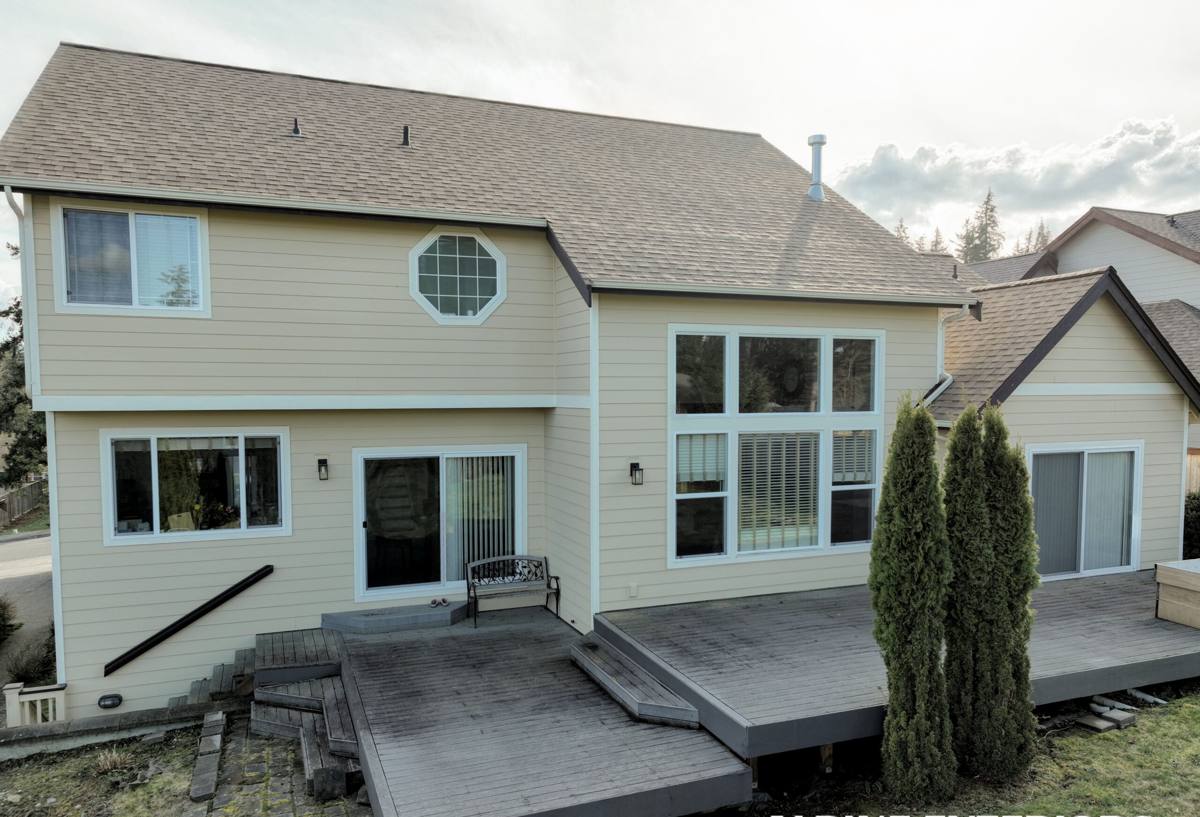
What Local Conditions Actually Demand From a Deck
Most of what separates a deck that lasts from one that starts failing early isn't visible once the project is finished. It's in the framing, the fasteners, and the details worked out before the first board ever gets installed.
What Local Weather Actually Demands
- Corrosion-resistant fasteners and connectors: Salt-laden air accelerates rust on standard or undersized hardware, and a corroded joist hanger or ledger bolt is a structural problem, not a cosmetic one.
- Proper ledger flashing and standoff: Where a deck attaches to the house, flashing has to be installed correctly and the ledger board kept clear of standing water, or wind-driven rain finds its way into the rim joist and starts rot from the inside out.
- Gapping and airflow underneath the decking: Boards need consistent spacing and enough clearance below the frame for air to move, so moisture from rain and morning dew doesn't sit trapped against the wood.
- Decking material suited to shaded, damp conditions: On lots with heavy tree cover, the surface material matters more than it does on an open, sunny lot, since some products handle sustained moss and mildew exposure far better than others.
What a Correctly Built Deck Involves
A deck is a structure first and a surface second. Getting the structure right is what determines whether the deck is still solid in fifteen years, long after the finish on the boards has been refreshed once or twice.
Footings and Framing
Footings need to be sized and set to the proper depth for the soil and load they're carrying, not poured to a shortcut minimum. Framing lumber should be rated for ground contact or exterior exposure wherever it's within range of splashback or standing moisture, and beam and joist spans need to match the actual load and species of lumber used, not a rough guess based on what looks about right.
Ledger Board Attachment
Where the deck ties into the house, the ledger board is one of the most safety-critical connections in the entire structure, and it's also one of the most common places water gets in on a poorly built deck. Correct flashing, proper lag or through-bolt fastening into solid framing, and a small standoff gap to keep the ledger from sitting flush against wet siding all matter here.
Fasteners and Hardware
Every joist hanger, post base, and structural screw should be rated for exterior or coastal exposure. This isn't an area worth cutting a corner on to save a small amount on materials, since hardware failure is a structural failure, and it's usually hidden from view until something gives.
Decking Surface Installation
Board spacing, fastening pattern, and picture-framing at the edges all affect both the finished look and how well the surface sheds water and resists warping over time. Hidden fastener systems give a cleaner look but need to be installed to spec to hold up under repeated wet-dry cycles.
Comparing Decking Material Options for Birchwood
| Material | Typical Lifespan | Fit for Birchwood Conditions |
|---|---|---|
| Pressure-Treated Pine | 10-15 years | Lowest upfront cost, but needs regular sealing and is more prone to splintering and graying without consistent maintenance |
| Cedar | 15-20 years | Naturally moisture- and insect-resistant with a warmer look, but still needs periodic staining or sealing to hold color and resist moss on shaded lots |
| Composite | 25-30 years | Highest upfront cost, but resists moisture absorption, splintering, and moss staining with minimal upkeep — often the better fit for heavily shaded or damp lots |
There's no single right answer for every property. A sunny, open lot with good airflow can do very well with cedar or even treated pine if it's maintained on schedule. A shaded lot under mature trees, where moisture and moss pressure are constant, is usually where composite decking earns back its higher upfront cost the fastest.
Cost Factors Worth Understanding
Two deck bids for what looks like the same basic project can land far apart, and the gap almost always comes down to real differences in scope rather than one contractor simply pricing lower. Knowing what drives the number makes it much easier to compare estimates that don't look alike on paper.
| Factor | What It Affects |
|---|---|
| Footing depth and count | Structural stability and long-term settling resistance |
| Framing lumber grade | How well the structure resists rot and holds up under load over time |
| Decking material | Upfront cost versus long-term maintenance and lifespan |
| Railing style and material | Code compliance, appearance, and maintenance going forward |
| Height and multi-level design | Engineering requirements, permitting, and labor complexity |
| Site access and prep | Labor time and equipment needs to get materials to the build site |
An itemized written estimate that breaks these pieces out separately tells you far more than a single bottom-line number. It's worth asking any contractor to walk through exactly what's included before comparing two bids side by side.
Drainage, Slope, and Moss Prevention
Moss on a deck isn't just a cosmetic issue — a mossy surface holds moisture against the boards and gets slick fast, which is a real fall hazard on stairs and landings. Correct board spacing and a frame built with enough airflow underneath go a long way toward keeping a deck drier between rainfalls, which slows moss growth considerably compared to a tightly built, poorly ventilated deck. Grading around and under the deck matters too — water needs somewhere to go rather than pooling under the structure, where it keeps the framing damp long after the surface has dried. On lots with heavy shade, we also talk through realistic upkeep expectations up front, since even the best-built deck in a consistently damp, shaded spot will need periodic cleaning to stay ahead of moss buildup.
How Our Process Works
We keep the process straightforward, because a project this size on your property deserves clear communication at every step, not surprises partway through.
- In-person site visit: We walk the property with you, look at grade, drainage, sun and shade exposure, and how the deck will tie into the house.
- Design and written estimate: You get a clear plan and an itemized bid covering footings, framing, decking material, railings, and cleanup — not a single vague number.
- Permitting and engineering: We handle the permit process and any required engineering for elevated or multi-level structures, so the finished deck is built to code, not just built to look right.
- Scheduling around weather: We build reasonable flexibility into the timeline, since wet-season delays are a normal part of building outdoors in this region.
- Footings, framing, and structure: This is where the real quality of a deck gets decided, and we don't rush this stage to get to the visible surface work faster.
- Decking, railings, and finish work: Surface material and railings go on to manufacturer and code specification, with attention to spacing and fastening details that affect long-term performance.
- Final walkthrough: We review the finished deck with you in person and cover basic maintenance expectations before we consider the job done.
Why Hiring a Crew That Already Works in Birchwood Matters
A crew that regularly builds decks in and around Birchwood has already seen how salt air corrodes underspecified hardware, how a poorly flashed ledger board leaks into a rim joist over a few wet seasons, and which lots hold moss longest through the year. That's practical, earned knowledge that shapes dozens of small decisions over the course of a build — decisions a crew unfamiliar with this specific stretch of coastline and its tree cover might not think to make at all.
It also matters after the project is finished. A workmanship warranty only means something if the company behind it is still around and reachable years later, and a contractor with an established, ongoing presence in the area is one you can actually call if a question comes up down the road.
A Practical Checklist Before You Choose a Deck Builder
- Do they pull permits and handle engineering for elevated or multi-level decks, rather than working around the requirement?
- Does the estimate specify footing depth, framing lumber grade, and hardware type, not just "deck materials"?
- Is ledger board flashing explicitly addressed in the bid, not treated as a given?
- Do they carry current WA contractor licensing, liability insurance, and workers' compensation?
- Can they point to recent, real deck work in or near Birchwood?
- Does the bid clearly separate manufacturer material warranty from the contractor's own workmanship warranty?
Signs an Existing Birchwood Deck May Need Attention
Decks tend to show trouble gradually, and catching it early is usually the difference between a repair and a full rebuild.
- Soft or spongy spots underfoot, especially near the ledger board or stair stringers
- Rust staining bleeding from fastener heads or connector hardware
- Persistent moss or dark staining that comes back quickly after cleaning
- Gaps opening up between boards or visible cupping and warping
- Railings or posts that feel loose or flex more than they used to
If any of this sounds familiar, it's worth having the deck looked at before it sees another wet season, rather than waiting until a soft board or loose railing turns into a safety issue.
If you'd like an honest, no-pressure look at a new or existing deck at your Birchwood property and a written estimate you can compare against anything else you've received, we're glad to come take a look. Use the form below to request a free estimate.