 Bellingham Exterior
 Deck Replacement in Barkley: Knowing When a Rebuild Is the Right Call
A deck doesn't fail all at once. It fails a board at a time, a fastener at a time, until one day the repairs that used to hold it together stop being worth doing. That's the point where replacement — a full teardown and rebuild rather than another round of patching — actually makes sense, and it's a different job than deck repair in almost every respect: different scope, different decision-making, and a different result at the end.
Barkley sits inside Whatcom County's broader coastal weather pattern, and that pattern is hard on an outdoor structure with no roof to protect it. Salt air moving through the area accelerates corrosion in exposed hardware. Driving rain gets pushed sideways by wind more often than it falls straight down, working its way into ledger connections and board gaps that a calmer climate wouldn't test as hard. And a moss season that runs long here — stretching well beyond fall and winter into spring — gives organic growth a real foothold on any horizontal surface that stays damp. A deck takes all three of these head-on, every year, for as long as it's standing.
This page covers deck replacement specifically for Barkley: how to know when a deck is actually done, what a correct rebuild involves in this climate, and how our process works from first look to finished deck.
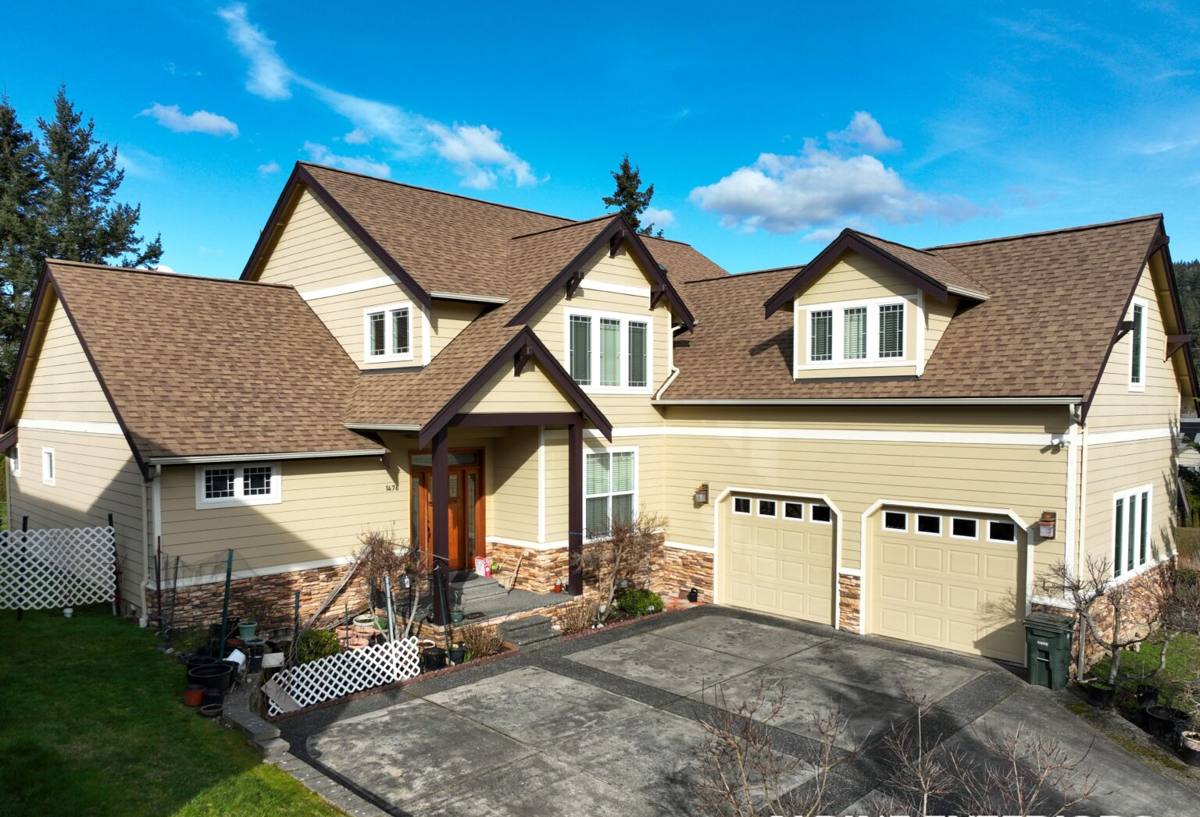
What Works Against a Barkley Deck Year-Round
Salt Air and Hardware Corrosion
Salt-laden air doesn't need to sit right on the water to matter — it moves through Whatcom County broadly and settles on any exposed metal, including deck fasteners, joist hangers, and railing hardware. Corrosion in that hardware starts well before it's visible from the top of the deck, and by the time a fastener is visibly rusted, it's usually already lost meaningful holding strength. On an aging deck built with standard-grade hardware, this is one of the quieter reasons a structure that "looks fine" turns out not to be once you get underneath it.
Driving Rain at Every Seam
Wind-driven rain doesn't behave like a straight-down shower. It gets forced into board gaps, under railings, and into the ledger connection where the deck ties into the house — the single most common serious failure point on any deck. A deck built without that wind-driven pattern in mind can look adequate for years before the moisture that's been working its way into those connections finally shows up as a soft spot or a shifting post.
A Moss Season That Doesn't Let Up
Horizontal surfaces hold water longer than walls do, and a deck is nothing but horizontal surface. Combined with Whatcom County's long stretch of damp, mild weather, that makes decking one of the first places moss and mildew take hold on a property, especially anywhere shaded or facing north. On wood decking, ongoing dampness isn't just a staining problem — sustained moisture against an absorbent material eventually leads to softening and rot at the edges and seams, which is exactly where a lot of aging decks start to fail structurally.
Signs a Deck Has Reached the End of Its Service Life
Not every aging deck needs a full rebuild, but certain signs point toward replacement rather than another repair cycle:
- Soft or spongy decking in multiple areas, not just one isolated board
- Visible rot, splitting, or decay at the framing or substructure level, not just the surface
- A ledger connection that shows movement, gaps, or water staining where the deck meets the house
- Widespread fastener corrosion — rust staining around most or all hardware rather than a few spots
- Railings or posts that flex, wobble, or no longer feel solid
- A structure that was never built to current code, especially around railing height, guard spacing, or footing depth
- A deck that's already been repaired multiple times, with new problems appearing faster than the last round of fixes
Any one of these on its own might still be a repair. Several of them together, especially anything involving the substructure or ledger connection, usually means the honest answer is a rebuild.
Repair or Replace? How That Decision Actually Gets Made
Homeowners often assume the two are interchangeable options at different price points. They aren't — they solve different problems, and the right call depends on where the deck actually stands.
| Factor | Favors Repair | Favors Replacement |
|---|---|---|
| Substructure condition | Sound framing, isolated damage | Rot or corrosion spread through multiple joists or the ledger |
| Age of the structure | Relatively young, one clear issue | Near or past its practical service life |
| Code compliance | Meets current railing and footing standards | Built to older standards that no longer meet code |
| Surface material condition | Solid framing, worn or faded boards only | Decking failing in step with the structure underneath |
| Repair history | First real issue on an otherwise sound deck | Pattern of repeated repairs in different areas |
We'll walk a deck and give a straight answer on which side of that table it falls on, including when a repair genuinely is the better use of the budget. Replacement isn't the answer just because it's the bigger job.
Choosing Decking Material for a Barkley Rebuild
Once replacement is the right call, material choice matters more here than it would in a drier, more sheltered climate, because the gap between a well-suited product and a poorly-suited one shows up faster under sustained salt air, rain, and moss pressure.
Wood
Pressure-treated lumber and cedar remain popular for their look and lower upfront cost, but both need regular sealing or staining to hold up against sustained moisture, and both are typically the first material to show moss, graying, and soft spots when maintenance lapses.
Capped Composite
Capped composite boards have a plastic shell around a wood-fiber core, which resists moisture absorption and fading far better than wood or uncapped composite. That cap layer is doing real work in a climate like this one — it's the difference between a board that needs occasional washing and one that needs ongoing sealing to stay ahead of moisture.
Cellular PVC
PVC decking has no wood fiber at all, so there's nothing for moisture to absorb into, even at cut edges or fastener holes. It costs more than composite and can flex more under heavy point loads, but for a deck that stays shaded or holds moisture longer than most, some homeowners find the added resistance worth it.
| Material | Moisture & Moss Behavior | Typical Upkeep |
|---|---|---|
| Cellular PVC | Excellent — no wood fiber to absorb moisture | Occasional washing |
| Capped composite | Strong — cap layer resists moisture and staining | Occasional washing |
| Uncapped composite | Moderate — some absorption at exposed fiber | Periodic cleaning |
| Cedar | Moderate — natural resistance, needs sealing | Regular oiling or sealing |
| Pressure-treated wood | Weakest against sustained damp exposure | Regular sealing or staining |
What a Correct Deck Replacement Involves
A rebuild is a chance to fix everything a repair can't — not just the visible decking, but the framing, fasteners, and drainage details underneath that actually determine how long the new deck lasts. A correct replacement in this climate includes:
- Complete removal of the old deck down to the ledger and posts, so nothing hidden gets built over
- New ledger flashing where the deck ties into the house, since this connection is the most common serious failure point on an aging deck
- Framing sized and rated for the actual span and load, not just matched to what was there before
- Stainless steel or coastal-grade corrosion-resistant fasteners and hangers throughout
- Correct board gapping for drainage and material movement, so wind-driven rain and standing moisture can actually drain and dry
- Post footings set to current code depth and bearing requirements
- Railing and guard height and spacing built to current code, not whatever the original deck happened to meet
- Grading and airflow underneath the deck so moisture doesn't sit against the new framing between storms
Skip any of these and a new deck can still look right on day one. The difference shows up years later, in exactly the same places the old deck failed.
How Our Deck Replacement Process Works
We start with a site visit and an honest inspection of what's there — how far the damage has spread, whether the framing and ledger are salvageable, and what that means for repair versus full replacement. If replacement is the right call, we talk through decking material and layout options against your budget and how the space actually gets used.
Permitting for deck replacement in Bellingham and the surrounding area generally follows standard setback, structural, and guard-height requirements, and we handle that as part of the job. Teardown comes first, followed by new substructure and framing sized and fastened for what the site actually sees, then decking, railing, and any stairs. We finish with a walkthrough covering what your specific material needs going forward — for most modern decking, that's not much, but it isn't nothing either.
Why a Crew That Already Works Barkley Matters
A crew that mostly builds decks elsewhere in the state can still frame a deck competently, but a lot of what determines whether it lasts here comes down to details a generic, out-of-area crew tends to underestimate: how much wind-driven rain a given orientation actually takes on, where moss establishes first based on shade and drainage, and what fastener grade is actually worth the extra cost versus an upsell. A crew that works Whatcom County exteriors regularly has already seen which decking lines and hardware hold up against this specific combination of salt air, rain, and moss, and which don't.
That familiarity also means a more accurate first estimate, with fewer surprises once the old decking comes off and the framing underneath is finally visible.
If your Barkley-area deck is past the point where another repair makes sense, we're glad to take a look and give you a straight answer on what it needs. Reach out using the form below to schedule a free, no-pressure estimate.