 Bellingham Exterior
 Window Installation for Barkley Homes
Barkley sits close enough to Bellingham Bay and the surrounding wetlands that its homes take on a particular kind of weather beating — one that's different from what a house fifteen miles inland deals with. Salt-laden air moves in off the water, driving rain arrives sideways more often than straight down, and a long, damp moss season settles in every fall and doesn't fully let go until late spring. Windows are one of the first parts of a house to show the effects of that combination, and one of the most expensive parts to get wrong. A window installed correctly for this specific stretch of Whatcom County will outlast one installed to a generic national standard by years, sometimes decades.
This page covers what window installation actually means for a Barkley home — not a general overview of window types, but the specific conditions your windows are up against here, what a proper installation looks like, and how our process addresses both.
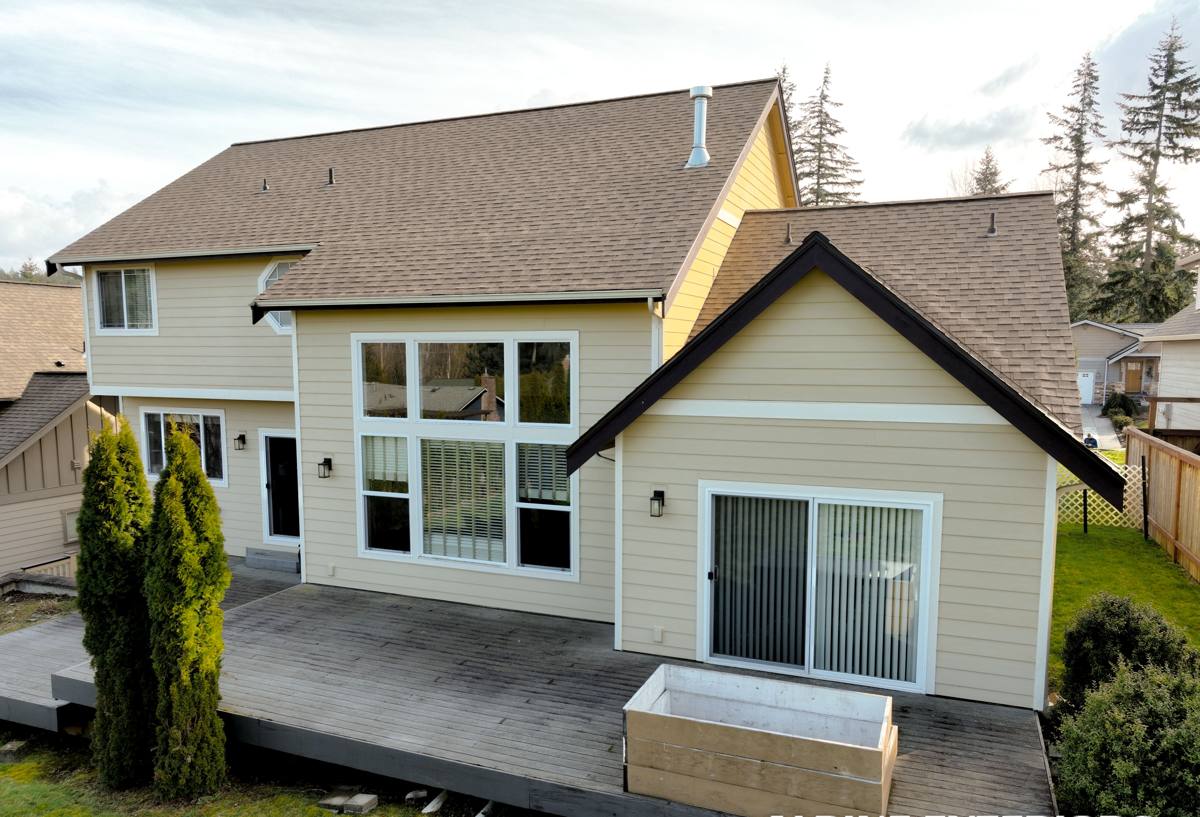
What Bellingham's Climate Does to Windows Over Time
Three forces work on windows in this part of Whatcom County, and they work together, not separately.
Salt Air
Even a few miles inland from Bellingham Bay, airborne salt accelerates corrosion on exposed metal hardware — hinges, locks, and cranks — and can degrade lower-grade aluminum components faster than the manufacturer's warranty timeline assumes. It also breaks down cheap sealants and finishes over time, which is why hardware quality and finish selection matter more here than in a dry inland climate.
Driving Rain
Wind-driven rain doesn't just fall on a window — it gets pushed sideways and upward into gaps that vertical rain would never reach. Most window failures we see aren't failures of the window itself; they're failures of the flashing, sealant, and integration with the wall assembly around it. A window that's watertight when tested from directly in front can still leak in a Bellingham storm if the sill pan, head flashing, or side flashing wasn't detailed correctly.
Moss and Sustained Moisture
Bellingham's moss season isn't just a roof problem. Moss and algae hold moisture against exterior surfaces for extended periods, including window sills, trim, and the wall area immediately surrounding a window. Wood trim and inadequately sealed frames stay wet longer than they would in a drier climate, which is exactly the condition that leads to rot, mold, and slow structural decay behind the wall.
How to Tell a Barkley Home Needs New Windows
Not every window problem calls for full replacement, but certain signs point strongly in that direction:
- Visible fogging or moisture between the panes of a double-pane window (a sign the seal has failed)
- Soft or discolored wood trim around the window frame, especially at the bottom sill
- Persistent drafts even with the window fully latched
- Difficulty opening, closing, or locking the window smoothly
- Visible gaps, cracked caulking, or daylight around the frame edges
- Noticeable temperature difference near the window compared to the rest of the room
- Paint bubbling or peeling on interior trim near the window
Any one of these on its own might be a minor repair. Several together, or any sign of moisture intrusion into the wall cavity, usually means the window and its surrounding assembly need to be addressed as a unit rather than patched.
What a Correct Window Installation Actually Involves
Setting a new window into an existing opening is straightforward. Setting it in a way that keeps water out of the wall for the next twenty years takes more care, and it's where most of the real work — and most of the mistakes we see from rushed installs — actually happens.
A correct installation in this climate includes:
- Removing the old window and inspecting the framing and sheathing underneath for hidden rot or moisture damage before anything new goes in
- Installing a proper sill pan flashing so any water that does get past the window has a way to drain back out, not into the wall
- Integrating the window flashing correctly with the house's weather-resistive barrier, lapped in the right order so water sheds downward and outward
- Using sealants and flashing tapes rated for the temperature and moisture range of a marine climate, not generic all-purpose products
- Shimming and leveling the window so it operates smoothly and doesn't rack over time as the house settles
- Insulating the gap between the window frame and the rough opening without over-packing it, which can bow the frame
- Finishing the interior and exterior trim in a way that sheds water away from the window rather than trapping it
Skip any one of these steps and the window can look perfect for a year or two before problems show up — usually as a soft spot in the drywall or a musty smell that means moisture is already inside the wall.
Choosing the Right Window for a Barkley Home
Frame material and glass package both affect how well a window holds up to salt air, rain, and sustained dampness. There's no single right answer for every home — it depends on your home's age, exposure, and budget — but the trade-offs are worth understanding before you decide.
| Frame Material | How It Handles This Climate | Maintenance |
|---|---|---|
| Vinyl | Good moisture and salt resistance; won't rot or corrode | Low — occasional cleaning |
| Fiberglass | Excellent dimensional stability in temperature and moisture swings | Low |
| Aluminum | Prone to corrosion in salt air unless properly coated; conducts cold | Moderate to high |
| Wood (unclad) | Attractive but vulnerable to rot without diligent upkeep in this climate | High — regular painting/sealing |
| Wood-clad (vinyl or aluminum exterior) | Combines interior wood look with a weather-resistant exterior shell | Low to moderate |
For glass, we generally recommend a low-E coated, argon-filled dual-pane unit as a baseline for this area — it manages both heat loss and the condensation that comes with our damp winters. Triple-pane is worth discussing on north- or west-facing walls that catch the worst of the wind-driven rain, but it isn't necessary on every elevation of every home.
Our Installation Process
We keep the process straightforward and communicate clearly at each stage:
- On-site assessment. We look at your existing windows, the condition of the framing where accessible, and the exposure of each elevation of the home — a wall facing prevailing wind and rain gets treated differently than a sheltered one.
- Product recommendation. We walk through frame and glass options based on your home's age, exposure, and budget, without pushing a single "one size fits all" product.
- Written estimate. Clear scope, materials, and pricing before any work begins.
- Removal and inspection. Old windows come out carefully, and we inspect the opening for hidden moisture or rot before installing anything new.
- Flashing and installation. Sill pan, flashing integration, shimming, and sealing done to a standard built for this climate, not a bare-minimum standard.
- Interior and exterior finish. Trim work completed to shed water properly and match the look of your home.
- Final walkthrough. We test operation and go over care on every window before we consider the job done.
What Window Installation Costs Depend On
Every home is different, so we won't quote a number without seeing the job, but the main cost factors are consistent:
| Factor | Why It Matters |
|---|---|
| Number and size of windows | Larger and more numerous openings add material and labor |
| Frame material chosen | Vinyl, fiberglass, and clad-wood carry different price points |
| Condition of existing framing | Hidden rot or moisture damage found during removal adds repair scope |
| Glass package | Standard dual-pane vs. upgraded low-E, argon, or triple-pane options |
| Access and elevation | Second-story or hard-to-reach windows take more time and equipment |
| Trim and finish work | Matching existing interior/exterior trim vs. simple capping |
As a rough guide, most single-window replacements land in the low-to-mid four figures per window once labor, materials, and finish work are included, with whole-house projects priced accordingly. Homes with hidden framing damage from long-term moisture intrusion will run higher once that repair is factored in — which is exactly why the inspection step during removal matters.
What to Ask Before Hiring Anyone
Window installation is one of those jobs where the visible result can look fine even when the underlying work is wrong. Before hiring anyone in the Bellingham area, it's worth asking:
- Do you use sill pan flashing on every installation, not just when requested?
- Will you inspect the framing for hidden moisture damage before installing the new window?
- What sealants and flashing materials do you use, and are they rated for a marine climate?
- Are you licensed and insured to work in Washington State?
- Can I see or hear about work you've done on homes with similar exposure to wind and rain?
- What does your workmanship warranty actually cover, and for how long?
A contractor who answers these clearly and without hesitation is generally one who does this correctly as a matter of habit, not just when a customer asks the right questions.
Why Local Experience in Barkley Matters
Bellingham's microclimates vary more than people expect across a fairly small area — proximity to the bay, elevation, tree cover, and prevailing wind direction all shift how hard a given home gets hit by rain and salt air. A crew that regularly works in and around Barkley has a feel for how those conditions play out on this side of town specifically: which elevations tend to take the worst weather, how moss and moisture behave on the trim styles common in this area, and what level of flashing detail actually holds up here versus what merely passes inspection. That's the kind of judgment that comes from doing the work locally and repeatedly, not from a manufacturer's install manual alone.
If your windows are showing wear, drafting, fogging, or you're simply planning ahead before Bellingham's next wet season sets in, we're happy to take a look and give you a straightforward, no-pressure estimate. There's no obligation — just an honest read on what your home actually needs. Fill out the form below to get started.