 Bellingham Exterior
 Roofing Built for Columbia's Conditions, Not a Generic Climate
The Columbia neighborhood sits close enough to Bellingham Bay that its roofs deal with a different set of stresses than homes further inland in Whatcom County. Salt-laden air off the water, wind-driven rain that gets pushed sideways under poorly sealed edges, and a moss season that can run most of the year all add up over time. An asphalt shingle roof that's installed correctly for these conditions can go the distance. One that's installed to a generic spec, without attention to the details that matter here, tends to show problems early — granule loss, soft spots at the eaves, moss creeping under tab edges, and fastener corrosion that shows up years before it should.
This page is about one service, one place: asphalt shingle roofing for homes in and around Columbia. Not a national overview of shingle types, and not a pitch for every service we offer — just what a Columbia homeowner actually needs to know before replacing or repairing a shingle roof in this part of Bellingham.
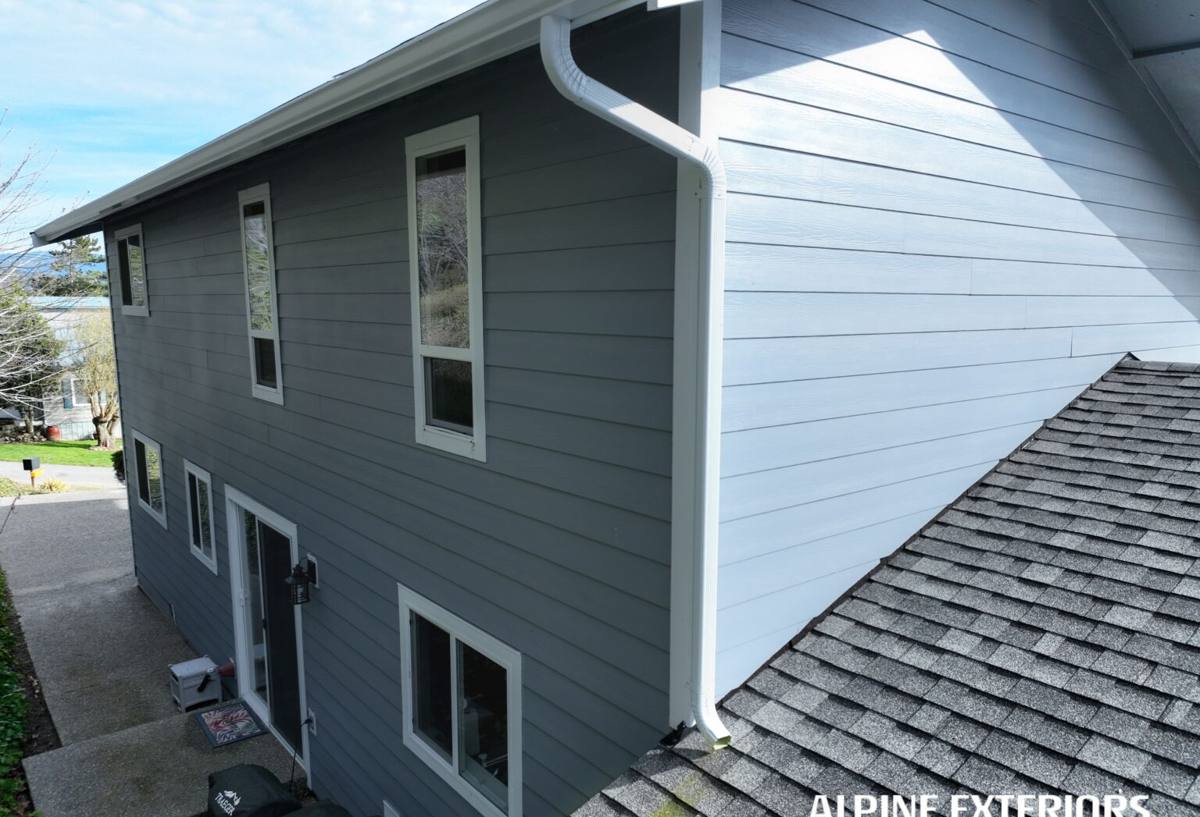
What Salt Air, Rain, and Moss Actually Do to a Shingle Roof
Salt Air and Metal Fasteners
Homes closer to the bay get more airborne salt than homes further inland, even a few miles can make a real difference. Salt accelerates corrosion on exposed metal — nail heads, flashing edges, drip edge seams, and vent stack collars are the first places it shows up. Once corrosion starts at a fastener, water finds its way in long before the shingle itself has failed. This is why fastener material and flashing quality matter more here than they would on a roof twenty miles inland.
Wind-Driven Rain
Bellingham doesn't get the heaviest rainfall totals in Washington, but it gets a lot of wind-driven rain — the kind that comes in at an angle instead of falling straight down. That matters because it pushes water sideways, up under shingle tabs, and into any gap in the underlayment or flashing that a standard rain wouldn't reach. A roof that would hold up fine under vertical rain can still leak under wind-driven rain if the underlayment laps and flashing details weren't done with that in mind.
Moss, Algae, and a Long Wet Season
Whatcom County's mild, damp climate means moss and algae have most of the year to establish themselves, especially on north-facing slopes and shaded sections under trees. Moss isn't just cosmetic — its root structure lifts shingle edges as it grows, which lets water underneath. Left unaddressed for a few seasons, a moss problem turns into a leak problem. Regular, proper cleaning and shingle choice both play a role in managing this, and we'll cover both below.
Choosing the Right Shingle for a Columbia Home
Not every asphalt shingle is built the same way, and the right choice depends on how exposed your roof is, how much shade and moss pressure it deals with, and what you're trying to balance between upfront cost and long-term maintenance. Here's how the common categories compare for a home in this area:
| Shingle Type | Typical Lifespan | Best Fit For | Trade-offs |
|---|---|---|---|
| 3-tab (standard) | 15-20 years | Budget-conscious replacements, rental properties | Lower wind rating, less algae resistance, thinner profile |
| Architectural / dimensional | 25-30 years | Most Columbia homes — good balance of durability and cost | Higher upfront cost than 3-tab, still needs algae-resistant option in shaded areas |
| Algae-resistant (AR) shingles | 25-30+ years | North-facing slopes, tree-shaded roofs, moss-prone sections | Slightly higher cost; resistance fades gradually over the shingle's life |
| Impact-rated (Class 4) | 30+ years | Homeowners prioritizing storm and debris resistance | Highest material cost; may qualify for insurance discounts |
Our general standard for Columbia homes is architectural shingles with algae-resistant granules built in, especially on any slope that doesn't get much direct sun. It costs a little more than a bare-bones 3-tab job, but the maintenance savings and extended service life usually make up the difference well before the roof needs replacing again.
What a Correct Installation Actually Involves
A shingle roof is only as good as the layers underneath it. Most of the failures we get called out to inspect trace back to shortcuts in the parts nobody sees once the job is done.
Tear-Off and Deck Inspection
We remove the old roofing down to the deck rather than layering over it. That lets us actually see the plywood or OSB underneath — soft spots, delamination, or rot from a prior leak all need to be caught and replaced before anything new goes down. Roofing over a compromised deck just hides the problem for another season.
Underlayment and Ice-and-Water Barrier
Synthetic underlayment goes down first as the roof's secondary water barrier. In vulnerable spots — eaves, valleys, and anywhere wind-driven rain is most likely to get pushed uphill under a shingle — we add a self-adhering ice-and-water membrane for an extra layer of protection.
Flashing at Every Transition
Flashing is where most leaks actually start, not the shingle field itself. Chimneys, skylights, vent stacks, and roof-to-wall transitions all need properly formed, correctly lapped flashing — not just a bead of sealant covering a gap. Given the corrosion risk from salt air, we pay close attention to flashing material and fastener choice here specifically.
Ventilation
Proper intake and exhaust ventilation keeps the attic temperature and moisture in check, which protects the shingles from underneath and helps prevent premature aging, deck rot, and ice damming in cold snaps. A roof can be installed perfectly on top and still fail early if the attic underneath isn't breathing correctly.
Shingle Installation
Correct nail placement (not staples, not overdriven or underdriven nails), proper exposure lines, and manufacturer-specified nailing patterns all affect wind resistance and warranty validity. This is also where fastener corrosion resistance matters most in a salt-air environment — we use fasteners rated for the exposure this area actually sees.
How We Approach a Columbia Roofing Project
- Inspection and assessment. We look at the whole roof system — shingles, flashing, decking, ventilation, and any moss or moisture damage — not just the obvious problem spot.
- Honest scope discussion. We'll tell you plainly whether you need a repair, a partial re-roof, or a full replacement, and why.
- Written estimate. Materials, scope, and timeline laid out clearly before any work starts — no vague allowances.
- Tear-off and deck check. Old roofing comes off, the deck gets inspected, and any damaged sheathing is flagged and replaced.
- Underlayment, flashing, and ventilation work. The parts that determine whether the roof actually holds up long-term.
- Shingle installation. Installed to manufacturer spec, with fastener and flashing choices suited to this area's exposure.
- Final walkthrough. We go over the finished roof with you, including basic maintenance guidance specific to your home's exposure and moss risk.
Repair, Maintenance, or Full Replacement?
Not every roof problem in Columbia means a full tear-off. The right call depends on the roof's age, how widespread the damage is, and what's causing it.
- Localized leak, roof under 15 years old: Usually a flashing or isolated shingle repair.
- Moss buildup with no active leak: Cleaning and treatment now can prevent a repair need later — this is maintenance, not replacement.
- Granule loss, curling, or brittleness across most of the roof: Sign the shingles are near the end of their service life, even without an active leak yet.
- Multiple leak points or deck damage found during inspection: Usually points toward full replacement being more cost-effective than repeated repairs.
- Roof approaching or past its expected lifespan: Worth planning replacement proactively rather than waiting for a failure during a winter storm.
We'll always tell you when a repair is the right call instead of pushing a full replacement you don't need yet — that's a judgment call we take seriously, especially with homeowners we hope to work with again down the road.
What Affects the Cost of a Columbia Roofing Project
Every roof is different, so we don't quote sight-unseen numbers on a webpage — but these are the main factors that move the price up or down on most jobs in this area:
| Factor | Why It Matters |
|---|---|
| Roof size and number of slopes | More area and more complex geometry both add material and labor time |
| Shingle tier chosen | 3-tab, architectural, and algae-resistant/impact-rated shingles vary in material cost |
| Deck condition | Rotted or damaged sheathing found during tear-off adds material and labor |
| Number of penetrations | Chimneys, skylights, and vent stacks each need individual flashing work |
| Access and pitch | Steep or hard-to-access roofs take longer and require more safety setup |
| Existing moss or moisture damage | May require deck repair or additional treatment before shingles go on |
Broadly, a straightforward architectural shingle replacement on an average-size Columbia home tends to land in the mid five figures, with simple repairs far below that and larger or more complex roofs above it. We'll give you an exact number after we've actually looked at your roof, not before.
Simple Maintenance That Extends the Life of Your Roof
A shingle roof in this climate benefits from a small amount of regular attention. None of this requires a homeowner to get on the roof themselves — most of it is about knowing what to watch for and when to call someone.
- Have moss and debris cleared from the roof and gutters at least once a year, more often under heavy tree cover.
- Check attic ventilation isn't blocked by insulation, especially after any attic work.
- Watch for granules collecting in gutters or downspouts — a sign of aging shingles.
- Get flashing around chimneys, skylights, and vents inspected every few years, since that's where salt-air corrosion shows up first.
- Address small leaks immediately rather than waiting for the next dry season — trapped moisture does damage even when it isn't actively dripping.
Why Local Experience in Columbia Actually Matters
Roofing crews that work regularly in this part of Whatcom County build a working knowledge of things a generic roofing spec doesn't cover — which slopes in Columbia tend to hold moss longest, how much extra attention flashing needs this close to the bay, and how wind-driven rain from storms coming off the water behaves differently than a straight downpour. That's not something you get from a manufacturer's installation manual; it comes from doing the work here repeatedly and paying attention to what actually happens to roofs in this specific setting. It also means faster response for repairs, familiarity with local permitting, and a crew that's still around and reachable years after the job is finished if you have a question about your roof's condition.
If you're weighing a repair, a partial re-roof, or a full replacement for a Columbia home, we're happy to take a look and give you a straight answer — no pressure, no inflated scope. Fill out the form below for a free estimate and we'll go from there.