 Bellingham Exterior
 Deck Building in Columbia: What This Climate Does to a Deck
A deck takes more direct, sustained weather exposure than almost any other part of a house. It's horizontal, it's outside, and unlike a wall it doesn't have siding or roofing protecting it from above. In Columbia and the surrounding Bellingham area, that exposure comes with a specific set of pressures: salt-laden air drifting in off the water, rain that's frequently driven sideways by wind rather than falling straight down, and a moss season that runs far longer here than in drier parts of the state. None of those factors are dramatic on any given day, but on a structure that sits outdoors year-round, they add up fast.
We build and repair decks throughout Columbia and the wider Whatcom County area, and the decisions we make on materials, fasteners, framing, and drainage are built around this specific combination of moisture and salt exposure — not a generic weather profile borrowed from a drier climate.
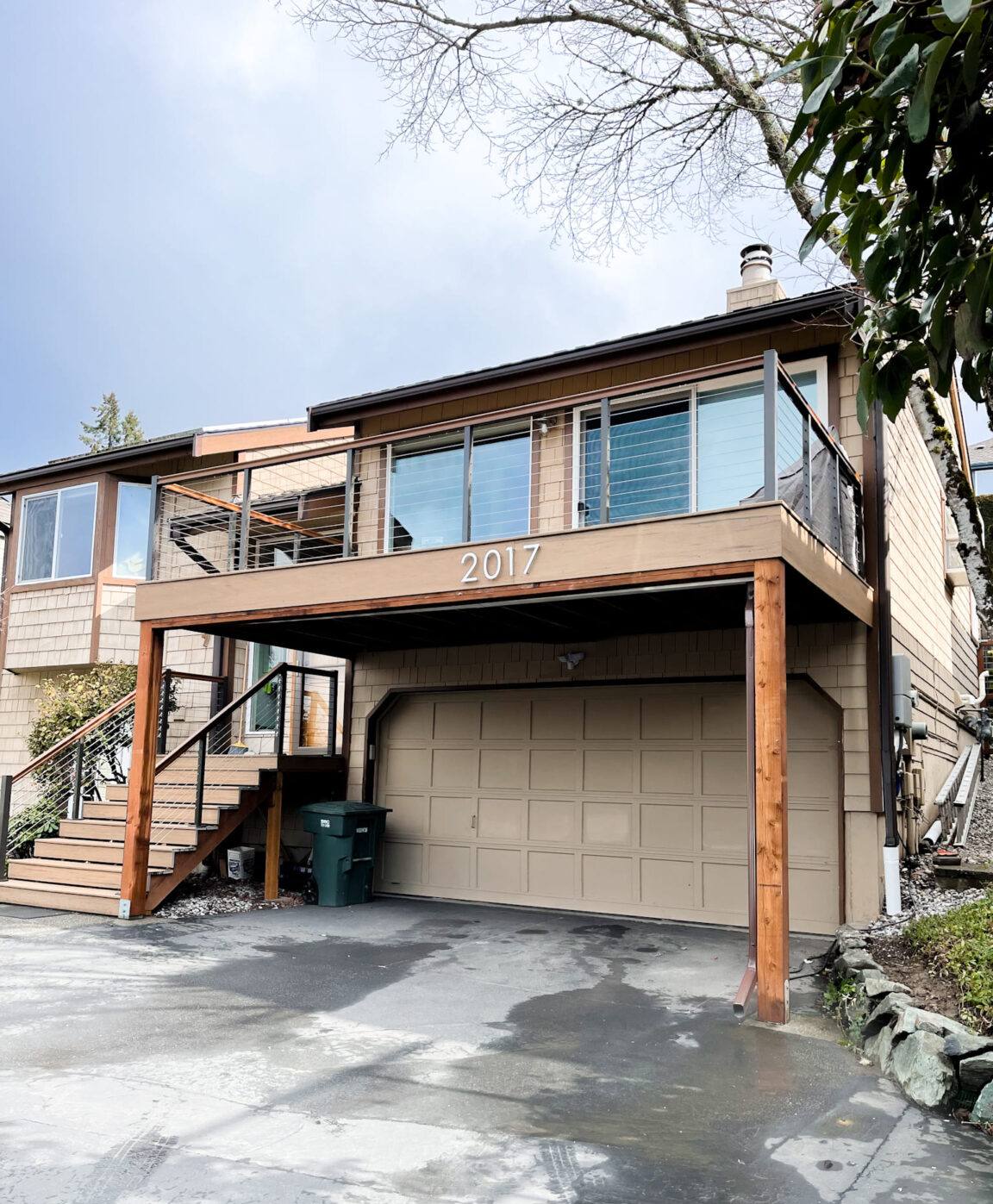
Where Decks Actually Fail in This Climate
Most deck problems we see in this region trace back to one of three things: water getting trapped somewhere it can't dry out, hardware corroding faster than it should, or moss and mildew turning a walking surface into a slip hazard. Understanding where these show up helps explain why the build details matter as much as the materials.
Ledger Board Attachment
The ledger board — the piece that attaches a deck to the house itself — is the single most common source of serious, structural deck failure in wet climates. If it isn't flashed correctly where it meets the siding or sheathing, water works its way behind it over time and rots the framing from the inside, often with almost no visible warning until the damage is significant. In a climate with this much sustained rain, ledger flashing isn't an optional detail; it's the difference between a deck that lasts decades and one that develops a hidden structural problem within a handful of years.
Fastener and Hardware Corrosion
Salt air accelerates corrosion on any exposed metal — screws, joist hangers, bolts, and structural connectors included. Hardware that's rated for a dry inland climate can start showing rust streaks and weakening well ahead of schedule here. Using the correct corrosion-resistant fasteners and connectors throughout the frame, not just on the visible decking screws, is one of the more overlooked factors in how long a deck's structure actually holds up.
Trapped Moisture and Poor Airflow
Decks built low to the ground, or without enough airflow underneath, stay damp longer after every rain. That sustained dampness is exactly what allows rot to establish in framing lumber and what feeds moss and algae growth on the decking surface itself, particularly on shaded or north-facing sections of a yard.
Choosing the Right Decking Material for Columbia
There isn't a single right answer for every homeowner — budget, maintenance tolerance, and appearance preferences all factor in. What matters is going in with an honest understanding of how each option actually performs under this area's rain and moss exposure, not just how it looks on install day.
| Material | How It Performs Here | Maintenance Reality |
|---|---|---|
| Pressure-treated lumber | Affordable and structurally solid when detailed correctly, but the wood still absorbs moisture and needs consistent upkeep to resist rot and moss staining | Regular cleaning, periodic sealing or staining, more frequent board replacement over time |
| Cedar | Naturally more rot-resistant than most softwoods and a look many homeowners prefer, but still a wood product that will gray, check, and take on moss without upkeep | Annual or biennial cleaning and sealing to hold color and resist moisture |
| Composite decking | Resists moisture absorption, rot, and moss far better than wood since it doesn't feed the organic growth the way a wood surface does | Occasional washing; no sealing or staining required, though surface can still get slick when damp and needs periodic cleaning |
For a lot of Columbia-area homeowners, composite decking ends up being the lower-hassle long-term choice specifically because of how much moss and standing moisture this climate produces. That said, wood — especially cedar — still has a place when the priority is a specific traditional look and the homeowner is realistic about the upkeep it takes to hold up here.
Footings, Framing, and Structural Details That Matter Locally
A deck is only as good as what's underneath it, and this is where a lot of the real engineering decisions happen — decisions most homeowners never see once the decking boards go down.
Footings need to be set to the correct depth for this region's frost and soil conditions, and sized appropriately for the loads the deck will actually carry. Framing lumber should be rated for ground contact where it's close to grade, joist spacing needs to match the decking material's actual span requirements rather than a generic rule of thumb, and every connection point — post to beam, beam to joist, joist to ledger — needs hardware rated for sustained outdoor exposure. Skipping or shortcutting any one of these doesn't necessarily show up as a problem right away, but it shortens the deck's real service life and can create safety issues down the road.
We also pay attention to drainage and slope across the deck surface itself. A deck that's built dead level rather than with a slight pitch away from the house holds standing water after every rain, which speeds up moss growth and shortens the life of whatever decking material is used.
Permits, Guardrails, and Code Requirements
Most deck projects of meaningful size require a building permit, and for good reason — guardrail height, baluster spacing, stair rise and run, and structural connection details all have code requirements that exist specifically to prevent failures and injuries. This isn't paperwork for its own sake; it's a second set of eyes on the structural decisions that keep a deck safe for years of actual use.
We handle the permitting process as part of the job rather than leaving it to the homeowner to navigate, and we build to the applicable code requirements as a baseline, not an afterthought layered on at the end.
Our Process for a Columbia Deck Project
A deck project moves through a fairly consistent sequence, though the details shift based on the site and what the homeowner wants out of the space:
- On-site consultation: We look at the site, discuss how the deck will actually be used, and talk through material and layout options honestly, including trade-offs.
- Design and permitting: We finalize the layout, size, and material selections, then handle the permit application and any required plan details.
- Footings and framing: Footings are set to the correct depth, and the frame is built with corrosion-resistant hardware and ledger flashing detailed for this climate.
- Decking and railing installation: Decking is installed with proper board spacing and slope for drainage, and railings are set to code for height and baluster spacing.
- Final walkthrough: We walk the finished deck with the homeowner, confirm everything meets expectations, and cover basic maintenance guidance specific to the material installed.
Maintaining a Deck Through a Whatcom County Wet Season
However well a deck is built, some ongoing maintenance is part of owning one in this climate. A few habits go a long way toward protecting the investment:
- Sweep leaves and debris off the surface regularly, especially in fall, so damp organic matter doesn't sit against the boards
- Clean moss and algae off the surface periodically before it gets established, rather than waiting until it's visibly thick
- Check that gaps between boards stay clear so water can drain through rather than pooling
- Inspect the ledger board area and any visible flashing once a year for signs of water staining or separation
- Look for rust streaks at fasteners or hardware, particularly on older or lower-grade connectors
- Reseal or restain wood decking on the schedule appropriate to the product, rather than letting it lapse for several seasons
Why a Local Crew Matters for a Columbia Deck
A lot of what separates a deck that holds up for decades from one that develops problems within a handful of years comes down to details a crew unfamiliar with this specific climate tends to underestimate: how much clearance and ventilation a low deck needs given how consistently damp the ground stays here, how aggressively salt air will work on hardware over time, and how much slope a surface actually needs to shed water through a long, wet moss season rather than just look level on a dry install day.
A crew that builds decks in Whatcom County regularly, including in Columbia specifically, starts to recognize these patterns from one property to the next — which framing details are worth the extra time, which fastener grade is actually justified here versus optional elsewhere, and how a given yard's sun exposure and drainage should shape the build. That familiarity shows up in decisions homeowners rarely notice directly, but feel in how the deck performs years down the line.
If you're planning a new deck or need an honest look at one that's showing its age, we're glad to take a look. Reach out using the form below to schedule a free, no-pressure estimate for your Columbia-area property.