 Bellingham Exterior
 Asphalt Shingle Roofing Built for York's Weather
York is one of Bellingham's older, tree-canopied neighborhoods, and that combination of mature trees, close proximity to the water, and Whatcom County's wet winters creates a specific set of demands on a roof. Asphalt shingles remain the most practical, cost-effective choice for most homes here, but only when the installation accounts for what this particular corner of the county throws at a roof year-round: salt-laden air rolling in off the bay, long stretches of driving rain, and a moss season that can run from October through May. A shingle roof that would hold up fine in a drier inland climate can fail early here if it's installed without those factors in mind.
This page covers what York homeowners specifically need to know about asphalt shingle roofing — the climate pressures, what a correctly done job looks like, how we approach the work, and why local experience matters more than it might seem.
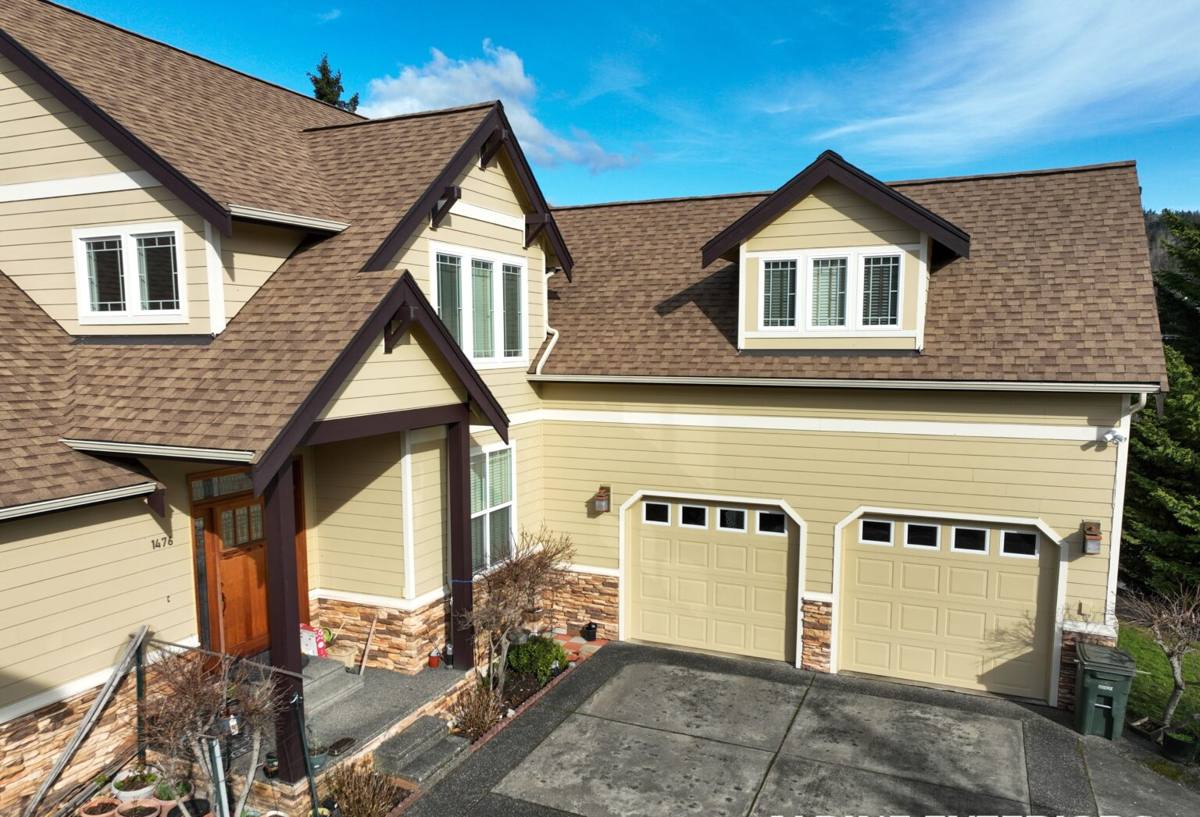
What Salt Air, Rain, and Moss Actually Do to a Roof
Salt Air
Homes in York that sit closer to Bellingham Bay deal with airborne salt that settles on roofing materials and accelerates corrosion of exposed metal — flashing, fasteners, vent caps, and gutter hardware. Standard galvanized fasteners can start showing rust streaks years before a comparable roof further inland. It's not usually enough to ruin a roof on its own, but it shortens the service life of any metal component that isn't rated for coastal exposure.
Driving Rain
Whatcom County doesn't just get a lot of rain — a good share of it comes in sideways off Pacific storm systems, which pushes water into places a roof designed only for straight-down rain wouldn't need to worry about: under shingle tabs, around chimney and skylight flashing, and into any gap where underlayment laps weren't sealed with wind-driven rain in mind.
Moss
York's tree cover is part of what makes the neighborhood attractive, but shaded, north-facing roof slopes here can stay damp for days after a storm, which is exactly what moss needs to establish. Once moss takes hold, it lifts shingle edges as it grows, holds moisture against the shingle mat, and works its way under tabs — all of which shortens shingle life well before the manufacturer's rated lifespan.
What a Correct Shingle Roof Actually Involves
A shingle roof is a system, not just a layer of shingles nailed to a deck. Skipping or shortcutting any layer is where most premature failures in this climate start.
- Deck inspection and repair — any soft, delaminated, or water-stained sheathing gets replaced before anything new goes down, not covered over.
- Ice-and-water shield at eaves, valleys, and around penetrations, which is cheap insurance against wind-driven rain and ice damming on colder nights.
- Synthetic underlayment across the full deck as the roof's real waterproofing layer — the shingles above it are the weather and wear surface, but the underlayment is what keeps a roof dry if wind ever drives water under a shingle tab.
- Proper flashing at every chimney, skylight, sidewall, and valley, using corrosion-resistant metal given the salt-air exposure common in York.
- Balanced attic ventilation — intake at the eaves, exhaust at the ridge — so moisture from inside the home doesn't condense against the underside of the deck and rot it from below.
- Correct nailing pattern per the shingle manufacturer's specs, which is also what keeps a manufacturer's wind warranty valid.
Our Process for a York Roofing Project
1. On-Site Inspection
We walk the roof (not just look at it from the ground), check the attic for ventilation and moisture issues, and look at flashing, valleys, and any moss or algae staining before quoting anything.
2. Written Estimate
You get a clear scope: what's being torn off, what deck repair (if any) is anticipated, the shingle line being used, and what flashing and ventilation work is included — no vague allowances.
3. Tear-Off and Deck Check
Old roofing comes off down to the deck so we can actually see the sheathing condition, rather than layering new shingles over old.
4. Installation
Underlayment, flashing, and shingles go down per manufacturer spec, with attention to the details — valley treatment, fastener corrosion resistance, and ventilation — that matter most in a salt-air, high-rainfall climate.
5. Cleanup and Walkthrough
Magnetic sweep for nails, debris hauled off, and a final walkthrough so you know what was done and what to watch for going forward.
Choosing a Shingle for York's Conditions
Not every asphalt shingle product is a good fit for a shaded, damp, salt-air neighborhood. The table below covers the main practical differences homeowners weigh.
| Shingle Type | Typical Lifespan | Moss/Algae Resistance | Best Fit |
|---|---|---|---|
| 3-Tab Asphalt | 15–20 years | Standard (no built-in resistance unless specified) | Budget-conscious projects, less shaded roof slopes |
| Architectural (Laminate) | 25–30 years | Often available with algae-resistant granules | Most York homes, especially shaded or north-facing roofs |
| Algae-Resistant (AR) Shingles | 25–30 years | Copper- or zinc-infused granules resist streaking and slow moss/algae growth | Tree-covered lots and roofs that stay damp longer between storms |
We generally steer York homeowners toward an algae-resistant architectural shingle unless there's a specific reason not to. It costs a bit more up front than standard 3-tab, but on a shaded, moisture-prone lot it's the difference between a roof that needs moss treatment every year or two and one that mostly takes care of itself.
What Affects the Cost of a Shingle Roof
| Factor | Why It Matters |
|---|---|
| Roof size and pitch | Steeper roofs take longer and need more safety setup, which affects labor cost |
| Number of layers being removed | Tear-off of multiple old layers costs more than a single-layer strip |
| Deck condition | Rotted or delaminated sheathing found during tear-off adds material and labor |
| Shingle grade chosen | 3-tab, standard architectural, and algae-resistant lines are priced differently |
| Flashing and ventilation scope | Chimneys, skylights, valleys, and added ventilation all add material and labor |
| Roof access and tree cover | Tight lots or heavy tree canopy common in York can slow material staging and cleanup |
Most asphalt shingle roof replacements land in a broad mid-range for a typical single-family home, with the specifics above moving the number up or down. We won't know your real cost until we've actually walked the roof — anyone quoting a firm price over the phone without seeing the roof is guessing.
Keeping a Shingle Roof Healthy Between Installs
A well-installed roof still needs basic upkeep, especially with York's tree cover and rainfall. A short annual routine catches most problems while they're still cheap to fix.
- Clear gutters and downspouts each fall before the heavy rains start — clogged gutters back water up under the roof edge.
- Have moss and debris cleared from shaded slopes before it builds up thick enough to lift shingle tabs.
- Trim back branches that overhang the roof, both to reduce shade/moisture buildup and to prevent limb damage in wind.
- After any major windstorm, do a visual check (or have someone check) for lifted, cracked, or missing shingles.
- Watch for granule buildup in gutters, which signals a shingle surface that's wearing down.
- Check attic ventilation isn't blocked by insulation, stored items, or debris — poor airflow shortens roof life from underneath.
Why a Crew That Already Works in York Matters
Roofing crews that mainly work drier, inland climates don't always build the same habits around underlayment coverage, flashing detail, and ventilation that a wet, shaded, salt-exposed neighborhood like York actually requires. We work throughout Bellingham and Whatcom County, and the roofs we see fail early here are almost always missing one of the same handful of things: inadequate underlayment at the eaves, corroded fasteners that weren't rated for salt exposure, or ventilation that was never balanced properly. Knowing that pattern going in means fewer surprises during tear-off and a roof that's built for the conditions it actually has to survive, not generic conditions.
Repair or Replace?
Not every roof problem in York calls for a full replacement. A few missing shingles after a storm, an isolated flashing leak, or moss on an otherwise sound roof can often be repaired. Full replacement makes more sense when a roof is near the end of its rated life, has widespread granule loss, shows deck damage in multiple areas, or has been patched repeatedly without solving the underlying cause. We'll always tell you honestly which situation you're in rather than defaulting to the bigger job.
If you're weighing a shingle roof replacement or repair for a home in York or elsewhere in Bellingham, we're happy to take a look and give you a straightforward, no-pressure estimate — just fill out the form below.