 Bellingham Exterior
 Roof Repair Built for Birchwood's Conditions
Birchwood homes deal with a specific combination of weather that not every roof in this region has to handle the same way. Proximity to the water means salt-laden air working on metal fasteners, flashing, and vent components year-round. Bellingham's wet season brings driving rain that finds its way sideways under poorly lapped shingles or worn flashing. And the shaded, tree-lined character of many Birchwood streets means moss and algae get a long growing season with plenty of moisture and just enough shade to keep things damp between rains. None of these factors are dramatic on their own, but stacked together over a Whatcom County winter, they add up to real wear on a roof faster than homeowners moving from drier climates usually expect.
A roof repair here isn't just patching a leak and moving on. It's understanding why that spot failed first, what else nearby is likely close behind, and what the repair needs to hold up to next season's rain and the moss that will try to come back. That's the approach we bring to every Birchwood repair call.
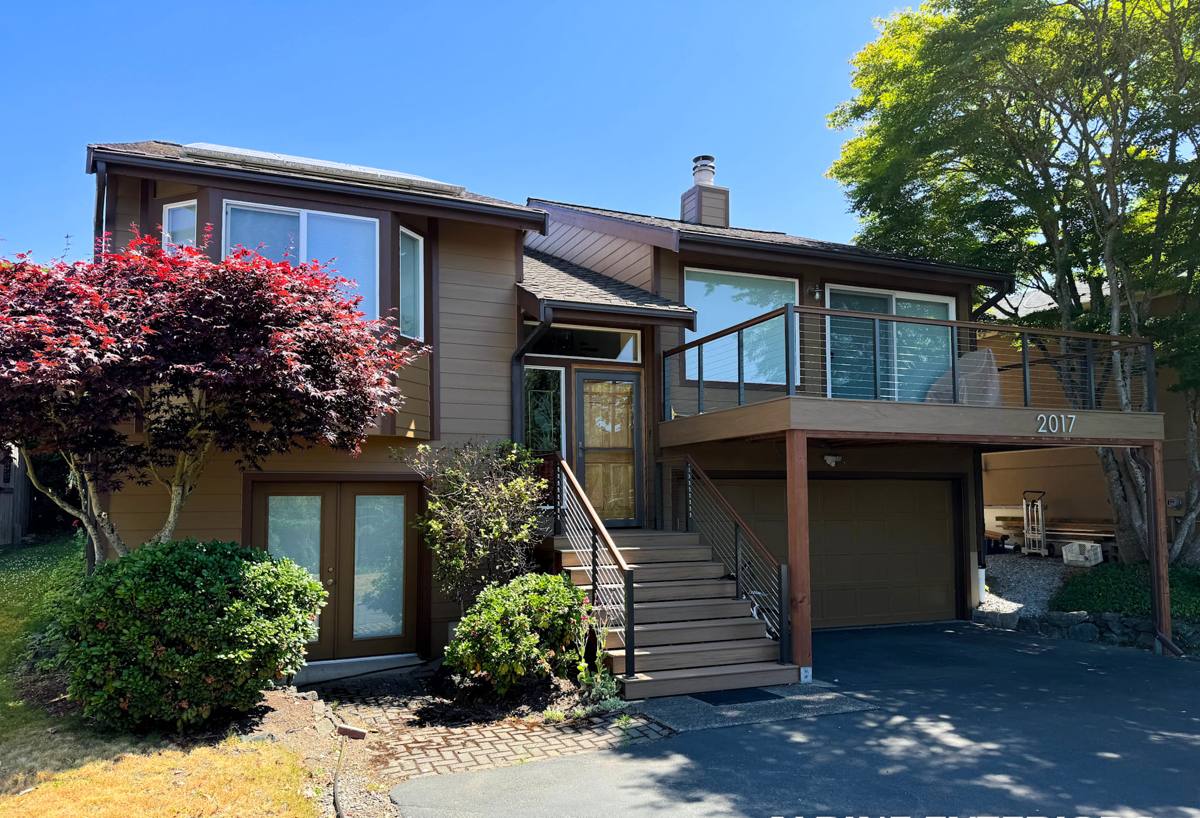
Signs a Birchwood Roof Needs Repair, Not Replacement
Most roofs don't fail all at once. They show localized problems first, and catching those early is what keeps a repair a repair instead of turning into a full tear-off. Homeowners in this area should watch for:
- Dark streaking or thick moss growth concentrated on north-facing or shaded slopes
- Granules collecting in gutters or at downspout outlets, a sign shingles are wearing thin
- Soft or discolored ceiling spots after a heavy rain, especially near chimneys, skylights, or where two rooflines meet
- Curling, cupping, or lifted shingle edges, particularly on slopes that catch prevailing wind and rain
- Rust staining or visible gaps around metal flashing and pipe boots
- Daylight visible through the roof deck from inside an attic space
Any one of these can usually be addressed with a targeted repair if it's caught before water has had months or years to work its way into the deck and framing. Waiting is what turns a manageable repair into a bigger project.
What a Correct Roof Repair Actually Involves
A repair that actually solves the problem starts with finding the real source of the leak or damage, not just the spot where water showed up inside the house. Water often travels along the underside of the roof deck or down a rafter before it drips somewhere visible, so the stain on a ceiling can be several feet from the actual entry point. Getting this wrong means a homeowner pays for a repair that doesn't fix anything.
A thorough repair typically includes:
- A full inspection of the affected area and the surrounding roof plane, not just the failure point
- Removal of damaged shingles, underlayment, or decking back to sound material
- Inspection of the roof deck itself for soft spots, rot, or delamination that needs to be cut out and replaced
- Correct re-flashing at any valleys, walls, chimneys, or penetrations in the repair zone
- Proper underlayment integration so the new material ties into the existing roof system instead of just sitting on top of it
- Matching shingle or material replacement, woven or laced into the surrounding roof correctly
- A check of attic ventilation in that area, since poor airflow is a common hidden contributor to moisture problems
Skipping any of these steps is how a "repair" ends up leaking again within a year or two.
Moss, Algae, and Salt Air: The Ongoing Maintenance Factors
Two things separate roof repair here from repair work in drier parts of the country: moss and salt exposure.
Moss
Moss holds moisture directly against the roofing material, and on shaded slopes common throughout Birchwood, it can establish itself within a season or two if left unchecked. Left alone long enough, moss roots work their way under shingle edges and lift them, which is exactly the kind of small gap that lets driving rain in during a Whatcom County storm. Repair work in a moss-prone area needs to account for this: cleaning and treating the surrounding roof, not just the failed section, so the same area isn't back on our schedule the following winter.
Salt air
Being close to the water means airborne salt accelerates corrosion on exposed metal — nail heads, flashing, vent stacks, and gutter hardware in particular. A repair that uses standard-grade fasteners or flashing in a salt-exposed location is a repair that's likely to need attention again sooner than it should. We factor in corrosion-resistant materials for repairs in this area as a matter of course, not as an upsell.
How We Approach a Birchwood Repair Call
- Inspection. We look at the reported problem area and the full roof plane around it, plus attic access where available, to understand scope before quoting anything.
- Honest assessment. We tell you plainly whether this is a contained repair, a larger repair, or a situation where repair no longer makes sense compared to replacement — and why.
- Written scope and estimate. You know exactly what's being replaced, what materials are used, and what the repair covers before work starts.
- The repair itself. Damaged material removed back to sound decking, correct flashing and underlayment work, matched materials installed and properly integrated.
- Site cleanup. Old material, nails, and debris cleared from the property and gutters.
- Follow-up. We're straightforward about maintenance steps that will extend the life of the repair, like periodic moss treatment or gutter clearing, given the local climate.
Repair vs. Replacement: How We Decide
Not every damaged roof needs a full replacement, and not every roof is a good candidate for another repair. We weigh a handful of honest factors rather than defaulting to the more expensive option:
| Factor | Favors Repair | Favors Replacement |
|---|---|---|
| Age of roofing material | Well within expected service life | Near or past typical lifespan for the material |
| Extent of damage | Localized to one area or slope | Multiple slopes or widespread granule loss |
| Deck condition | Sound decking under the damaged area | Soft, rotted, or delaminated decking in several spots |
| Repair history | First or second repair in that location | Same spot has needed repeated repairs |
| Material availability | Matching shingle or material still obtainable | Discontinued material with no reasonable match |
When repair is the right call, that's what we recommend. When it isn't, we'll explain the reasoning in plain terms so you can make an informed decision, not a pressured one.
What Affects the Cost of a Roof Repair
Every repair is different, so we don't quote blind numbers on a website — but homeowners deserve to understand what actually drives the cost before we show up:
| Cost Factor | Why It Matters |
|---|---|
| Size of the damaged area | More removal, more decking, more material to match and install |
| Roof pitch and access | Steeper or harder-to-access roofs take longer and require more safety setup |
| Deck repair needed | Rotted decking adds material and labor beyond the surface repair |
| Flashing complexity | Valleys, chimneys, and skylights require more precise, time-intensive work |
| Material match | Older or discontinued materials can be harder to source and blend in |
| Moss or algae removal | Treating the surrounding roof area adds a step but protects the repair |
Broadly, a small, contained shingle repair is a modest expense measured in a few hundred dollars, while repairs involving deck replacement, complex flashing, or larger sections of roof climb from there. We'll always give you a specific number in writing after seeing the actual damage.
Why Local Experience in Birchwood Matters
A crew that already works in this part of Bellingham knows which slopes in this neighborhood tend to hold moss longest, how salt exposure from the water affects metal components differently than it does further inland, and what the driving rain patterns common to Whatcom County winters do to poorly sealed flashing. That local knowledge shapes real decisions — which fasteners to use, where to pay extra attention during flashing work, and what maintenance advice actually applies to your specific roof and its exposure.
It also means a contractor who isn't guessing at permit requirements, isn't unfamiliar with the housing stock and roof styles common in the area, and can be reached again down the road if a follow-up question comes up. We'd rather build that kind of ongoing relationship with Birchwood homeowners than treat every job as a one-time transaction.
What to Look for When Hiring a Roof Repair Contractor
Whether you call us or someone else, a few basics protect you on any roof repair:
- Confirm the contractor is licensed and insured in Washington, and ask to see current documentation
- Get the scope of work and materials in writing before anything is removed from your roof
- Ask what happens if they find deck damage once they open up the area — how is that priced and communicated
- Ask about warranty coverage on both materials and labor, and get it in writing
- Be cautious of anyone pushing full replacement before a genuine inspection has been done
If you're dealing with a leak, moss buildup, or damaged shingles on a Birchwood roof, we're happy to take a look and give you a straight answer about what it needs. Reach out for a free, no-pressure estimate using the form below.