 Bellingham Exterior
 Why Columbia Homes Need a Different Window Approach
The Columbia neighborhood sits close enough to Bellingham Bay that salt-laden air is a daily fact of life for anything installed on the exterior of a house. Add Whatcom County's long wet season, driving rain off the water, and months of shade and moss pressure on the north and west sides of older homes, and you've got a climate that is genuinely harder on windows than most manufacturers' warranty language assumes. Standard big-box window units are engineered for a generic national market — they're not wrong for Ohio, but they're not right for a block in Columbia either.
When we replace windows in this neighborhood, we're solving for three things at once: keeping conditioned air inside (energy efficiency), keeping wind-driven moisture and salt corrosion out (durability), and doing it in a way that won't need to be redone in eight years because the wrong hardware or flashing detail was used. Those three goals pull against each other if you're not careful, and that's where a lot of window jobs go wrong.
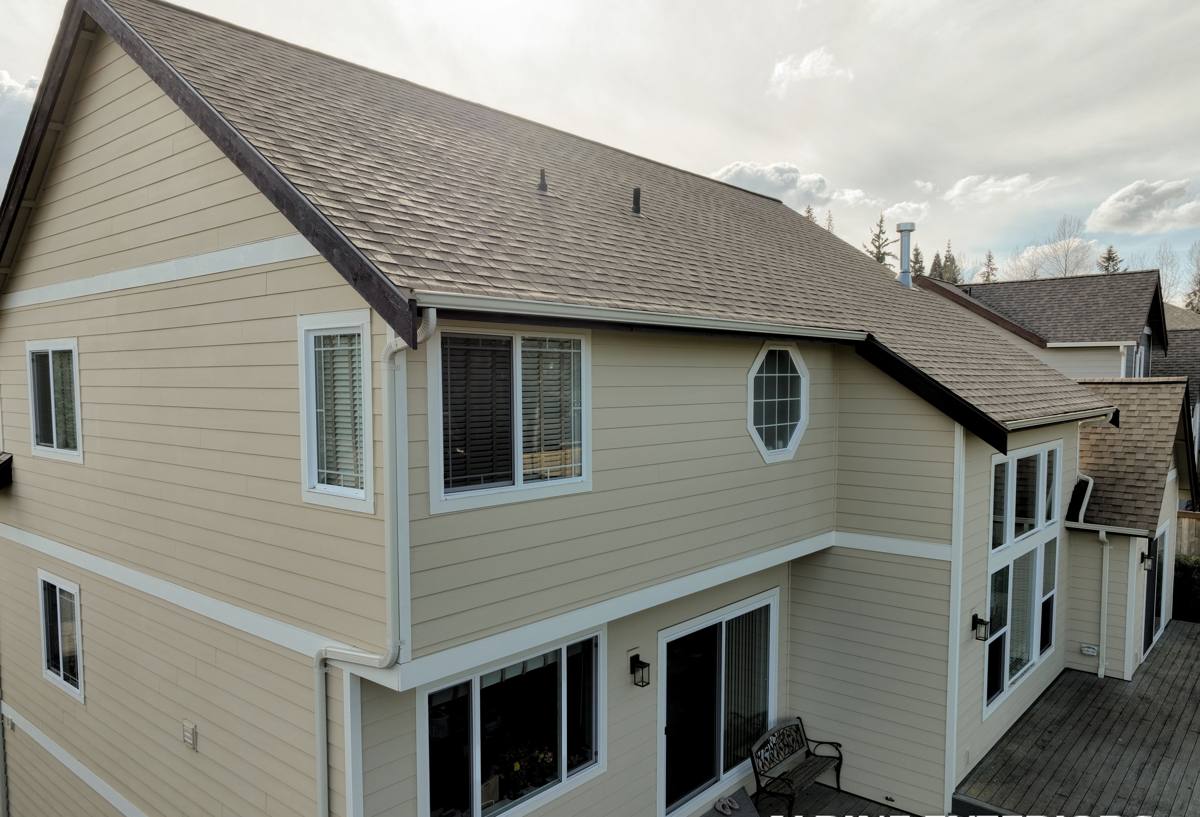
What "Energy-Efficient" Actually Means Here
Energy efficiency in a marine climate like Bellingham's isn't primarily about blocking summer heat — it's about controlling heat loss during eight or nine months of cool, damp weather, and controlling condensation, which is the quiet destroyer of window frames and interior sills in this region. A window can carry a great efficiency rating on paper and still perform poorly here if the installation lets moist air infiltrate around the frame.
The Numbers That Matter Locally
- U-factor: Lower is better for heat retention. In our climate zone, we look for U-factor around 0.27–0.30 or lower on standard replacement units.
- Condensation Resistance (CR): Often overlooked, but critical here — a higher CR rating means less interior fogging and less moisture sitting on the frame during our wet winters.
- Air Leakage (AL): Lower numbers matter more on west- and south-facing walls that take direct wind off the bay during storms.
- Solar Heat Gain Coefficient (SHGC): Less critical here than in sunnier climates, but a moderate SHGC still helps on the handful of clear days we get.
We don't chase the single highest-rated window on the market — we match glass package and frame material to each elevation of the house, because a window facing prevailing wind and rain off the bay has different requirements than one tucked under an eave on the leeward side.
Frame Material: What Actually Holds Up in This Climate
This is where most of the long-term failures happen, and it's worth being direct about trade-offs rather than pretending one material is perfect.
| Frame Material | How It Handles Salt Air & Rain | Maintenance | Our Take |
|---|---|---|---|
| Vinyl | Good — won't corrode or rot, seams can be a weak point if welding quality is poor | Low | Solid value option; we're selective about which vinyl lines we install based on corner-weld quality |
| Fiberglass | Excellent — dimensionally stable, doesn't expand/contract with damp-dry cycles | Low | Our default recommendation for exposed elevations near the water |
| Aluminum-clad wood | Good exterior protection, but any breach in the cladding lets moisture reach the wood core | Moderate to high | Beautiful interior look, but we're careful about sill and corner detailing given our rain volume |
| Bare wood | Poor without diligent upkeep — driving rain and salt accelerate rot at joints | High | We'll install it if a homeowner wants the look and commits to maintenance, but we say so upfront |
None of these materials are "bad" products — the failures we get called out to fix are almost always installation failures, not material failures. That said, in a neighborhood this close to the bay, we lean toward fiberglass or quality vinyl for most projects because they remove one variable from the equation entirely: corrosion and rot risk at the frame itself.
The Installation Details That Separate a 10-Year Job From a 30-Year Job
Glass and frame get all the marketing attention, but the flashing, sealant, and drainage details are what actually determine whether a window performs through a Whatcom County winter. A poorly flashed window in a dry climate might go unnoticed for years. Here, water finds the gap fast.
What a Correct Installation Includes
- Full removal of the old unit and inspection of the rough opening for hidden rot or moisture damage before anything new goes in
- Proper flashing tape sequencing — sill pan first, then jambs, then head flashing lapped correctly so water sheds outward at every layer
- A back-dam or sloped sill pan so any water that does get past the exterior seal drains back out instead of pooling against the sill
- Correct shimming and squaring so the sash operates smoothly and the seal compresses evenly all the way around
- Compatible, weather-rated sealant at the exterior — not just caulk, and not skipped because "the flashing tape should handle it"
- Interior air-sealing with low-expansion foam or backer rod, separate from the exterior weatherproofing layer
- Verification that weep holes and drainage paths are clear and functioning before trim goes back on
Skipping any one of these is often invisible for a year or two — then shows up as a soft spot in the siding, a musty smell, or fogging between panes that signals a failed seal. We've been called to re-flash windows installed by other crews where the glass itself was fine but the installation let water track behind the siding for months before anyone noticed.
Moss, Shade, and the North-Wall Problem
Columbia, like most of Bellingham, has plenty of mature tree cover and homes built close together, which means a lot of north- and east-facing walls stay damp and shaded for long stretches of the year. Moss doesn't just grow on roofs here — it colonizes window sills, trim, and any horizontal surface that holds moisture. On older wood-trimmed windows, that moss growth traps water against the wood and accelerates rot right at the sill, which is exactly the spot that's hardest to repair without replacing the whole unit.
When we plan a window replacement on a shaded elevation, we pay extra attention to sill slope and drip-edge detailing so water actually leaves the surface instead of sitting there feeding moss growth. It's a small detail that makes a real difference in how long the trim and sill last on the shadier sides of a Columbia home.
Our Process for a Columbia Window Project
1. On-Site Assessment
We walk the exterior, elevation by elevation, noting sun/shade/wind exposure, existing rot or moisture staining, and how the current windows are performing — drafts, condensation, sticking sashes. This tells us where to prioritize frame material and drainage detail.
2. Product Selection
We recommend frame material and glass package per elevation, not a single blanket spec for the whole house. A bay-facing wall and a sheltered courtyard wall don't need identical hardware.
3. Written Estimate
Clear scope, materials, and pricing — no vague allowances that turn into change orders once the old windows are opened up.
4. Removal and Opening Inspection
Every rough opening gets inspected once the old window is out. If we find rot or moisture damage — not uncommon on older Bellingham homes — we stop and talk to you before proceeding, rather than sealing a problem behind a new window.
5. Installation
Full flashing, drainage, and air-sealing sequence as outlined above, on every window, every time — not just on the ones facing the street.
6. Final Walkthrough
We test operation, check seals, and walk the exterior with you so you know what was done and why.
What This Costs and What Drives the Range
Window replacement pricing varies widely based on size, frame material, glass package, and how much rough-opening repair is needed once the old units come out. Rather than quote a number that won't mean much without seeing your house, here's what actually moves the price:
| Factor | Why It Matters |
|---|---|
| Frame material (vinyl vs. fiberglass vs. clad-wood) | Material cost and longevity trade off directly against upfront price |
| Number of window openings and sizes | Larger or custom-sized units cost more per opening |
| Condition of the rough opening | Hidden rot found during removal adds carpentry work most homeowners don't budget for upfront |
| Elevation exposure | Bay-facing or storm-exposed walls may warrant upgraded flashing and glass packages |
| New construction vs. retrofit/insert | Full-frame replacement costs more than insert replacement but performs better long-term on older, moisture-exposed homes |
We'll always give you the honest range for your specific house during the on-site visit, and we'll flag if we think an insert replacement is cutting corners on a wall that really needs full-frame work.
Why Hire a Crew That Already Works This Neighborhood
A contractor who mostly works inland doesn't think about salt air corrosion on hardware or moss-driven sill rot by default — it's not part of their everyday problem-solving. Working regularly in neighborhoods like Columbia means we've already seen how specific product lines and installation shortcuts hold up after a few real Bellingham winters, not just how they look on a spec sheet. That experience shows up in small decisions — which sealant to use on a bay-exposed wall, how much sill slope is enough, when insert replacement is fine versus when full-frame is the right call — that a generic install crew won't necessarily get right the first time.
If your windows are drafty, fogging, sticking, or just old enough that you're wondering whether repair or replacement makes more sense, we're happy to take a look. We'll give you a straight assessment of what your home actually needs — no pressure, no inflated scope — and a free estimate based on what we see on-site.